
Navigating the intricacies of vehicle ownership in Texas can sometimes involve administrative procedures that, while not directly related to tourism, often intersect with the practicalities of travel and lifestyle. One such process is changing a vehicle’s title, a necessary step when a vehicle changes hands, either through purchase, inheritance, or as a gift. Understanding the associated costs is crucial for budgeting and ensuring compliance with Texas Department of Motor Vehicles (TxDMV) regulations. This guide aims to demystify the expense of a title change in the Lone Star State, offering insights for residents and visitors alike who might be acquiring a vehicle for local exploration or long-term stays.

Understanding the Title Change Process in Texas
A vehicle title is the legal document that proves ownership. When ownership transfers, the title must be updated to reflect the new owner’s name. This process is managed by the TxDMV, which delegates much of the title and registration work to county tax assessor-collector offices. The “title change” itself is officially termed a “title transfer,” and it’s invariably linked to the registration of the vehicle in the new owner’s name. Therefore, the cost of changing a title in Texas isn’t a standalone fee but rather a combination of several charges.
Key Components of the Title Transfer Cost
The total expense for a title change in Texas is comprised of several distinct fees, each contributing to the overall financial outlay. These fees can vary slightly based on the county and the specifics of the transaction.
Title Application Fee
The primary fee associated with changing a vehicle title is the title application fee. This is a state-mandated fee that covers the administrative costs of processing the new title document. As of the latest TxDMV guidelines, this fee is set at a standard amount.
- Standard Title Fee: The base fee for applying for a new title in Texas is typically $25. This fee goes directly to the state to fund the operations of the TxDMV. It’s important to note that this fee is non-negotiable and applies to most title transfer scenarios.
Registration Fees
In Texas, a vehicle must be registered annually to be legally operated on public roads. When a title is transferred, the new owner must also register the vehicle. The cost of registration varies significantly based on several factors, including the type of vehicle, its age, its weight, and the county in which it is registered.
- Vehicle Type: Different classes of vehicles—such as passenger cars, trucks, motorcycles, and RVs—have different registration fee structures. For instance, larger or heavier vehicles often incur higher registration costs.
- Vehicle Age: Older vehicles may sometimes have lower registration fees, although this is not universally applied.
- County of Residence: While the title fee is standard, registration fees can have a small county-level component. This means the exact registration cost might differ slightly depending on where in Texas you reside. Generally, this county portion is a modest amount.
- Apportioned Registration: For commercial vehicles operating across state lines, a more complex registration system called “apportioned registration” applies, with costs varying widely based on mileage and other factors. This is outside the scope of typical personal vehicle title changes.
Other Potential Fees
Beyond the title application and registration, a few other fees might be encountered during the title transfer process, though these are not always applicable.
- License Plate Fees: If you are transferring a vehicle that has expired or invalid license plates, or if you are purchasing a vehicle without existing plates, you will need to purchase new license plates. The cost for a standard set of Texas license plates is usually around $25 to $30.
- Sales Tax: When a vehicle is purchased from a dealer or an individual, Texas imposes a sales tax. The current state sales tax rate on vehicles is 6.25% of the purchase price or market value, whichever is greater. However, there are exemptions and credits available, such as for trade-ins or vehicles purchased out of state where sales tax has already been paid. This is a significant cost component that is directly tied to the transaction’s value, not just the administrative process.
- Title Service Fees (Optional): Some private companies offer title transfer services. These services can be convenient, especially if you are not physically located in Texas or have limited time. However, they charge an additional fee for their assistance, which can range from $50 to $150 or more, on top of the state-mandated fees. These are entirely optional and are not part of the official government charges.
- Lien Recording Fees: If you are financing a vehicle, the lender will place a lien on the title. There is a small fee to record this lien, typically around $10-$15.
Estimating the Total Cost
Given the various components, estimating the precise cost of a title change in Texas requires considering the specific circumstances of the transaction. Let’s break down a typical scenario.
Scenario: Purchasing a Used Passenger Vehicle from an Individual
Imagine you purchase a used passenger car for $15,000 from a private seller in Dallas. You are a Texas resident.
- Title Application Fee: $25 (standard for all title transfers)
- Sales Tax: 6.25% of $15,000 = $937.50. This is a significant portion of the total cost.
- Registration Fee: For a passenger car, this can vary, but let’s estimate a range. A typical annual registration fee for a standard passenger vehicle in Texas might fall between $27.50 and $50.00, depending on the county. Let’s use $35 as an average.
- License Plates: Assuming the car has valid plates that can be transferred, or you are getting new ones if needed, let’s budget $30 for new plates if required.
- Lien Recording Fee: If you financed the car, you might add another $15.
Estimated Total for this scenario:
- $25 (Title) + $937.50 (Sales Tax) + $35 (Registration) + $30 (Plates) = $1027.50.
- If financing, add $15 for lien recording, bringing the total to $1042.50.
This estimate demonstrates that while the title application itself is relatively inexpensive, the sales tax and registration fees are the primary cost drivers.
Scenario: Inheriting a Vehicle
If you inherit a vehicle in Austin, the process and associated costs differ.
- Title Application Fee: $25.
- Sales Tax: Typically, inherited vehicles are exempt from sales tax, provided the proper documentation is submitted to prove the inheritance (e.g., a death certificate, will, or affidavit of inheritance).
- Registration Fee: You will still need to register the vehicle, so the registration fee will apply (estimated $35).
- License Plates: Similar to the purchase scenario, you may need new plates if the old ones are expired or not transferable. Budget $30 if needed.
Estimated Total for this scenario:
- $25 (Title) + $35 (Registration) + $30 (Plates, if needed) = $90 to $60.
This highlights how exemptions can significantly reduce the financial burden of a title change.
Factors Influencing the Cost
Several variables can influence the final amount you’ll pay for a vehicle title change in Texas. Understanding these factors can help you prepare financially and potentially identify ways to minimize expenses.
Vehicle Type and Value
As illustrated, the type of vehicle (car, truck, motorcycle, RV) and its market value or purchase price are critical determinants of cost. Trucks, RVs, and luxury vehicles often have higher registration fees due to their size, weight, or value. The sales tax, directly proportional to the vehicle’s value, also plays a substantial role in the overall expense.
County of Residence
While the core title fee is uniform across Texas, registration fees can have slight variations based on the county. These differences are usually minor, often amounting to just a few dollars. However, for those making a living by transporting goods across various counties, understanding these nuances can be important.
Transaction Type
The nature of the ownership transfer—whether it’s a purchase from a dealer, a private sale, an inheritance, a gift, or a divorce settlement—dictates which fees apply. For example, gifts between family members may have different tax implications than outright sales. Sales tax exemptions are common in inheritance and some gifting scenarios.
Promptness of Transfer
Texas law requires that a title be transferred within a specific timeframe after the sale or transfer of ownership. For private party sales, the buyer has 30 days to transfer the title. Failure to do so can result in penalties. While not a direct fee for the title change itself, late transfer fees could be imposed. The TxDMV website provides detailed timelines and requirements.
Where to Complete Your Title Change
The process of changing a vehicle title and registering a vehicle in Texas is typically handled at your local county tax assessor-collector’s office. These offices are authorized agents of the TxDMV and are equipped to handle all aspects of vehicle registration and title transfers.
County Tax Assessor-Collector Offices
Each of the 254 counties in Texas has a tax assessor-collector’s office responsible for these services. It’s advisable to check the specific office’s operating hours, required documentation, and whether appointments are necessary. Common required documents include:
- Proof of identity (e.g., driver’s license)
- Proof of Texas vehicle insurance
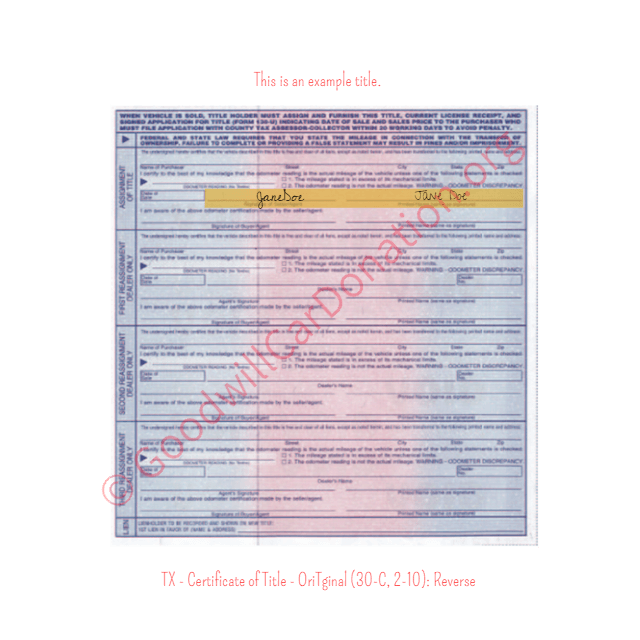
- The vehicle’s existing title, properly signed by the seller(s)
- A completed Application for Texas Title and/or Registration (Form 130-U)
- A Vehicle Inspection Report (if applicable, depending on the vehicle and county)
- Proof of sales tax payment or exemption (e.g., bill of sale, affidavit of inheritance)
Online and Mail-In Options
While most title changes require an in-person visit to the county tax office, some limited online or mail-in services might be available for certain transactions, such as renewals. However, for a new title transfer, especially for a newly purchased vehicle, an in-person visit is generally mandatory.

Conclusion
The cost of changing a vehicle title in Texas is not a single, fixed fee but rather a sum of several charges, primarily the title application fee, sales tax, and registration fees. While the state-mandated title fee is modest ($25), the sales tax (6.25%) on the vehicle’s value and the annual registration fees can significantly increase the total expense. Understanding these components, along with potential exemptions for inheritance or gifts, is key to accurately budgeting for vehicle ownership in Texas. By being prepared with the necessary documentation and an understanding of the fees involved, you can ensure a smooth and compliant process when updating your vehicle’s title, allowing you to enjoy your travels across the diverse landscapes of Texas.
LifeOutOfTheBox is a participant in the Amazon Services LLC Associates Program, an affiliate advertising program designed to provide a means for sites to earn advertising fees by advertising and linking to Amazon.com. Amazon, the Amazon logo, AmazonSupply, and the AmazonSupply logo are trademarks of Amazon.com, Inc. or its affiliates. As an Amazon Associate we earn affiliate commissions from qualifying purchases.