
Navigating the legal landscape of divorce in any state can feel like charting an unknown territory, and Texas is no exception. While the emotional toll of separating a union is significant, understanding the financial implications is crucial for planning and peace of mind. This guide delves into the various costs associated with filing for divorce in the Lone Star State, offering insights into where your money will go and how you might manage expenses.
The expense of a divorce is not a monolithic figure; it’s a complex interplay of filing fees, attorney retainers, potential court costs, and other miscellaneous expenses. These costs can fluctuate dramatically based on the specifics of each case, particularly the level of agreement between the parties involved.

Understanding the Core Costs of Divorce in Texas
At its most basic level, initiating a divorce involves paying a court filing fee to the county clerk’s office where the petition is filed. This fee is relatively modest but represents the initial financial hurdle. Beyond this, the bulk of divorce expenses typically stems from legal representation.
Court Filing Fees
The primary administrative cost is the fee to file the Original Petition for Divorce. In Texas, these fees vary slightly by county but generally range from $250 to $400. This fee grants you access to the court system to begin the legal process of dissolving your marriage. If you are unable to afford this fee, you may be eligible to file a Statement of Inability to Afford Payment of Court Costs, which, if approved by the court, can waive these initial fees.
Attorney’s Fees
This is often the most substantial component of divorce costs. Attorney’s fees are typically charged on an hourly basis. The hourly rate can vary significantly depending on the attorney’s experience, reputation, and the complexity of the case.
Retainers and Hourly Rates
When you hire an attorney, you will usually be asked to pay a retainer fee. This is an upfront payment that the attorney draws from as they work on your case. Retainers can range from $2,500 to $10,000 or more, depending on the firm and the anticipated scope of work. Once the retainer is depleted, you will be billed for ongoing work at the agreed-upon hourly rate, which can range from $150 to $500+ per hour.
Factors Influencing Attorney’s Fees
Several factors influence how much you will ultimately spend on legal representation:
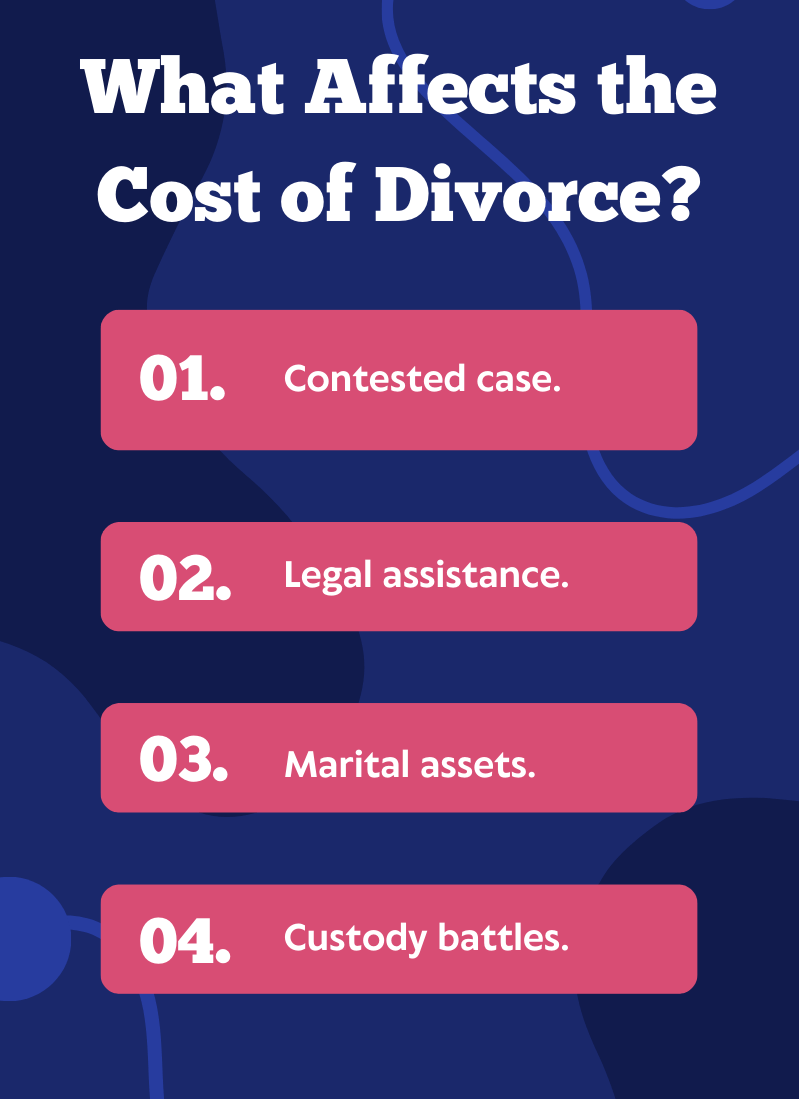
- Contested vs. Uncontested Divorce: The most significant factor is whether your divorce is contested or uncontested.
- Uncontested Divorce: In an uncontested divorce, both parties agree on all terms, including property division, child custody, and support. This type of divorce is generally less expensive because it requires minimal court intervention and fewer attorney hours. You might be able to resolve your divorce with a few hours of legal consultation to draft the necessary paperwork.
- Contested Divorce: A contested divorce occurs when parties cannot agree on one or more issues. This often leads to extensive negotiations, mediations, and potentially court hearings or a trial. Each of these steps requires significant attorney time, driving up costs. The more contentious the disagreements, the higher the legal fees will be.
- Complexity of Assets and Debts: Divorces involving significant assets (real estate, businesses, investments, retirement accounts) and debts require more time and expertise to divide equitably. Valuing and dividing complex assets can involve forensic accountants or business valuators, adding to the overall cost.
- Child Custody and Support: Cases involving minor children often require more legal attention due to the complexities of custody arrangements, visitation schedules, and child support calculations, which are governed by specific state guidelines. Parental alienation issues or allegations of abuse can further escalate legal fees.
- Location: The cost of living and the prevalence of divorce attorneys in a particular metropolitan area, such as Dallas or Houston, can influence hourly rates. Attorneys in major cities may charge higher fees than those in smaller towns.
Other Potential Costs
Beyond filing fees and attorney’s fees, several other expenses can arise during the divorce process.
Mediation Costs
Mediation is a process where a neutral third party helps divorcing couples reach an agreement. It is often mandatory in Texas before a trial can occur. The mediator’s fees are typically split between the parties, and costs can range from $200 to $500 per hour, depending on the mediator’s experience and the duration of the session.
Court Costs and Expert Fees
If your case proceeds to trial, there will be additional court costs, including fees for subpoenas, deposition transcripts, and potential expert witness fees. Experts might include financial analysts, appraisers, or custody evaluators, whose services can be costly.
- Discovery Costs: This phase involves gathering information from the opposing party. It can include obtaining financial records, conducting depositions, and hiring private investigators if necessary. These expenses can add up quickly, especially in complex cases.
- Appraisal Fees: If you own property, such as a home or business, that needs to be appraised for division, you will incur appraisal fees. These can range from a few hundred to several thousand dollars, depending on the asset’s complexity.
- Process Server Fees: Legal documents must be formally served on the other party. A process server charges a fee for this service, typically between $50 and $150 per service.
Miscellaneous Expenses
Other smaller, yet significant, costs can include:
- Copying and Document Fees: Obtaining certified copies of documents, extensive copying, and postage can accrue minor expenses.
- Psychological Evaluations or Counseling: If child custody is a major dispute, the court may order psychological evaluations for parents or children, which come with associated costs.
- Temporary Orders: In some cases, one party might seek temporary orders for issues like spousal support, child custody, or exclusive use of the marital home while the divorce is pending. The legal work to prepare and argue these motions adds to the cost.
Strategies for Managing Divorce Costs in Texas
While divorce is rarely an inexpensive undertaking, there are strategies to help manage the financial burden.
Communication and Cooperation
The most effective way to reduce divorce costs is to foster open communication and a willingness to cooperate with your spouse. If you can both agree on major issues, you can significantly cut down on attorney hours and court involvement.
Explore Uncontested Divorce Options
If agreement is possible, pursuing an uncontested divorce can dramatically lower expenses. This may involve using a mediator to facilitate discussions or hiring a single attorney to draft the final divorce decree, provided both parties agree on its terms.
Understand Your Attorney’s Fee Structure
Before hiring an attorney, have a clear discussion about their fee structure, retainer policy, and billing practices. Ask for an estimate of the total cost based on the perceived complexity of your case.
Consider Limited Scope Representation
In some situations, you may not need full representation for the entire divorce process. Limited scope representation, also known as “unbundled legal services,” allows you to hire an attorney for specific tasks, such as drafting documents or providing legal advice, while handling other aspects yourself.
Be Organized and Prepared
When meeting with your attorney, be organized and have all relevant financial documents and information readily available. This saves your attorney time and, consequently, saves you money.

Conclusion
The cost of filing for divorce in Texas is highly variable, influenced by factors such as the level of conflict, the complexity of assets, and the need for extensive legal services. While an uncontested divorce might range from a few thousand dollars, a highly contested case with substantial assets and custody disputes could easily run into tens of thousands of dollars. Understanding these potential expenses upfront allows for better financial planning during what is often an emotionally challenging period. By prioritizing cooperation, seeking clarity on legal fees, and exploring cost-saving strategies, individuals can navigate the financial realities of divorce in Texas more effectively.
LifeOutOfTheBox is a participant in the Amazon Services LLC Associates Program, an affiliate advertising program designed to provide a means for sites to earn advertising fees by advertising and linking to Amazon.com. Amazon, the Amazon logo, AmazonSupply, and the AmazonSupply logo are trademarks of Amazon.com, Inc. or its affiliates. As an Amazon Associate we earn affiliate commissions from qualifying purchases.