
Texas Hold ‘Em, the most popular variant of poker, is a game of skill, strategy, and calculated risk. While the basic rules are straightforward, mastering the nuances of this dynamic game requires a deep understanding of hand rankings, betting structures, player psychology, and strategic decision-making. Whether you’re a curious beginner or looking to elevate your play, this guide will delve into the core elements of how to effectively “deal” with Texas Hold ‘Em, focusing on playing the game rather than the physical act of dealing cards.
Understanding the Fundamentals
Before diving into advanced strategies, a firm grasp of the game’s foundation is paramount. This includes knowing the hand rankings, the flow of a hand, and the different betting rounds.
Hand Rankings
The hierarchy of winning hands in Texas Hold ‘Em is universal and critical for determining the victor of any given pot. From highest to lowest, they are:
- Royal Flush: A, K, Q, J, 10, all of the same suit. The rarest and most powerful hand.
- Straight Flush: Five consecutive cards of the same suit (e.g., 7, 8, 9, 10, J of hearts).
- Four of a Kind: Four cards of the same rank (e.g., four Aces).
- Full House: Three cards of one rank and two cards of another rank (e.g., three Kings and two 7s).
- Flush: Five cards of the same suit, not in sequential order.
- Straight: Five cards in sequential rank, but not all of the same suit (e.g., 4, 5, 6, 7, 8 of mixed suits).
- Three of a Kind: Three cards of the same rank.
- Two Pair: Two cards of one rank and two cards of another rank.
- One Pair: Two cards of the same rank.
- High Card: If no player has any of the above hands, the player with the highest-ranking card wins.
The Flow of a Hand
A typical Texas Hold ‘Em hand unfolds in a series of stages:
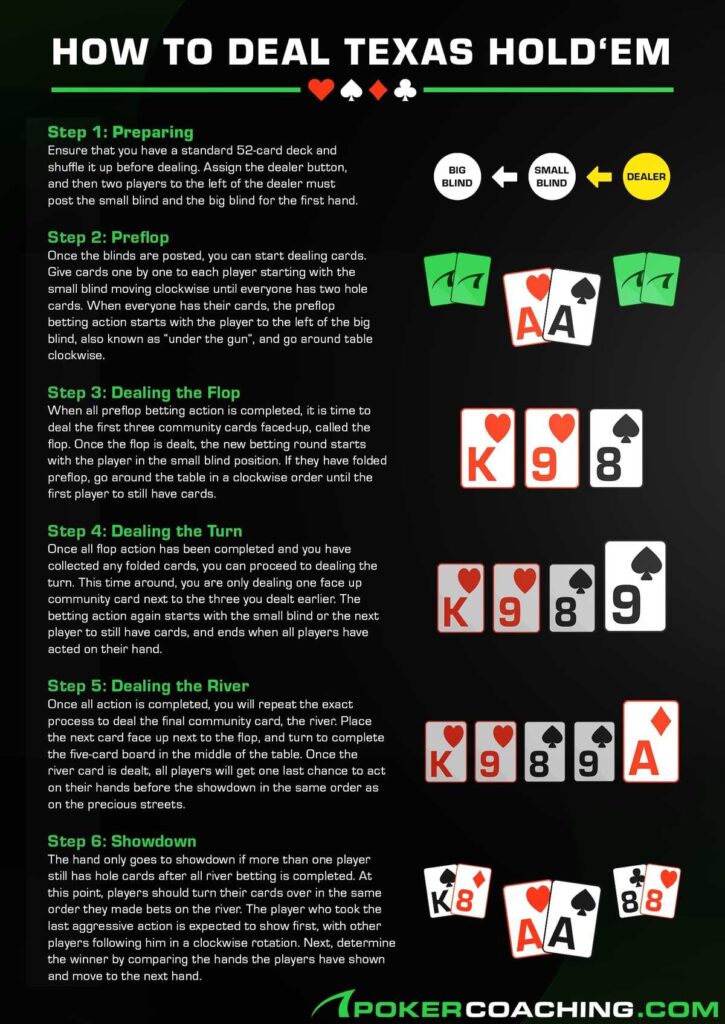
- The Blinds: Before any cards are dealt, two players are obligated to post “blinds” – mandatory bets that help build the initial pot. The player to the left of the dealer button posts the “small blind,” and the player to the left of the small blind posts the “big blind” (usually twice the size of the small blind).
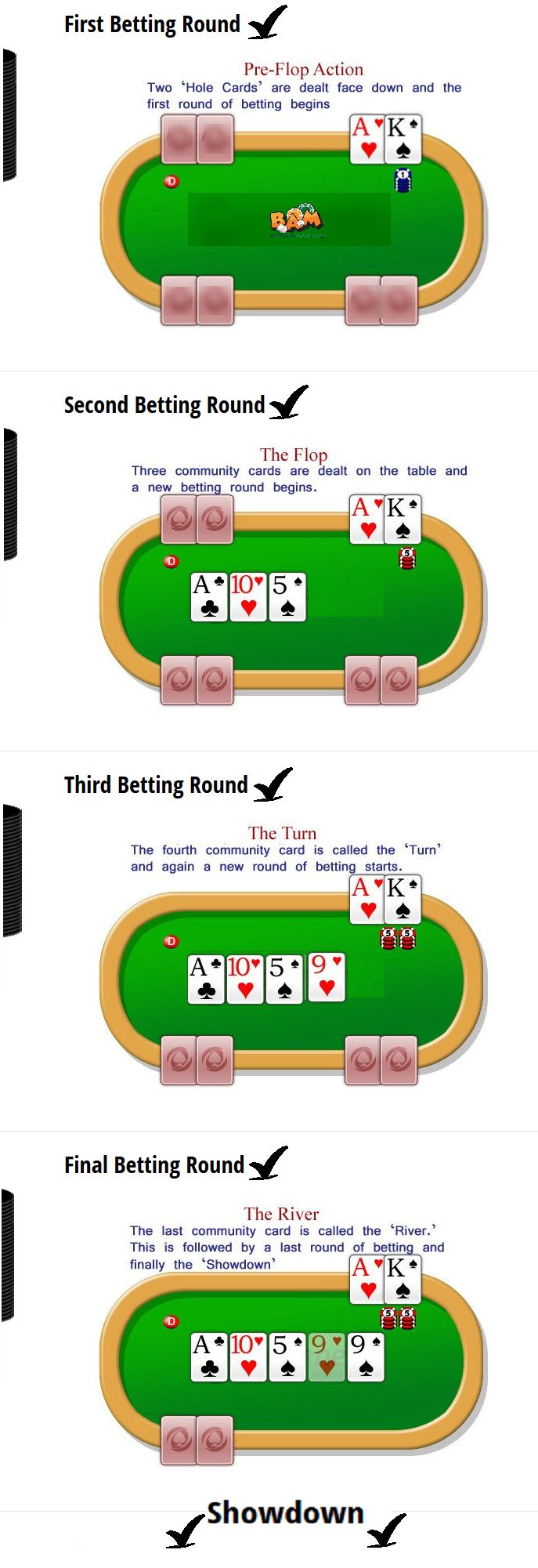
- Pre-Flop: Each player receives two private cards, known as “hole cards.” The first betting round begins with the player to the left of the big blind. Players can “call” (match the bet), “raise” (increase the bet), or “fold” (discard their hand).
- The Flop: After the first betting round concludes, three community cards are dealt face-up in the center of the table. These are called the “flop.”
- Flop Betting Round: Another round of betting ensues, starting with the first active player to the left of the dealer button.
- The Turn: A fourth community card is dealt face-up, known as the “turn.”
- Turn Betting Round: A third betting round takes place.
- The River: A fifth and final community card is dealt face-up, called the “river.”
- River Betting Round: The final betting round occurs.
- The Showdown: If more than one player remains after the final betting round, a showdown occurs. Players reveal their hole cards, and the player who can make the best five-card poker hand using any combination of their two hole cards and the five community cards wins the pot.
Strategic Decision-Making on the Felt
Effective play in Texas Hold ‘Em transcends simply knowing the rules; it involves making informed decisions based on a multitude of factors.
Positional Awareness
Position is arguably one of the most crucial elements in Texas Hold ‘Em. Your position at the table relative to the dealer button dictates when you act in each betting round. Acting later (“in position”) gives you the advantage of seeing how your opponents have behaved before you must make your own decision.
- Early Position: Players acting first or soon after the blinds have limited information and should generally play a tighter range of hands. Strong starting hands are essential here.
- Middle Position: With more players yet to act, middle position offers a balance. You have some information but still face potential action from players behind you.
- Late Position (Button/Cutoff): Being on the button or cutoff provides a significant advantage. You act last in most betting rounds, allowing you to gather the maximum amount of information before deciding whether to bet, raise, or fold. This position allows for wider hand ranges and more aggressive play.
Hand Selection
Not all starting hands are created equal. Understanding which hands have the best potential to become winning hands is fundamental.
- Premium Hands: Hands like Pocket Aces (AA), Pocket Kings (KK), Pocket Queens (QQ), Ace-King suited (AKs) are considered premium and should often be played aggressively, especially from early positions.
- Strong Suited Connectors: Hands like J10 suited or 98 suited can make straights and flushes and are valuable, particularly in multi-way pots or from later positions where you can see what the flop brings.
- Speculative Hands: Hands like small pocket pairs (22-66) or suited unsuited Aces (e.g., A5 offsuit) are more speculative. Their value often depends on the flop and the ability to hit a strong hand at a good price. Playing these hands requires careful consideration of stack sizes and pot odds.
Pot Odds and Equity
Understanding pot odds and your hand’s equity (your probability of winning the pot) is vital for making profitable long-term decisions.
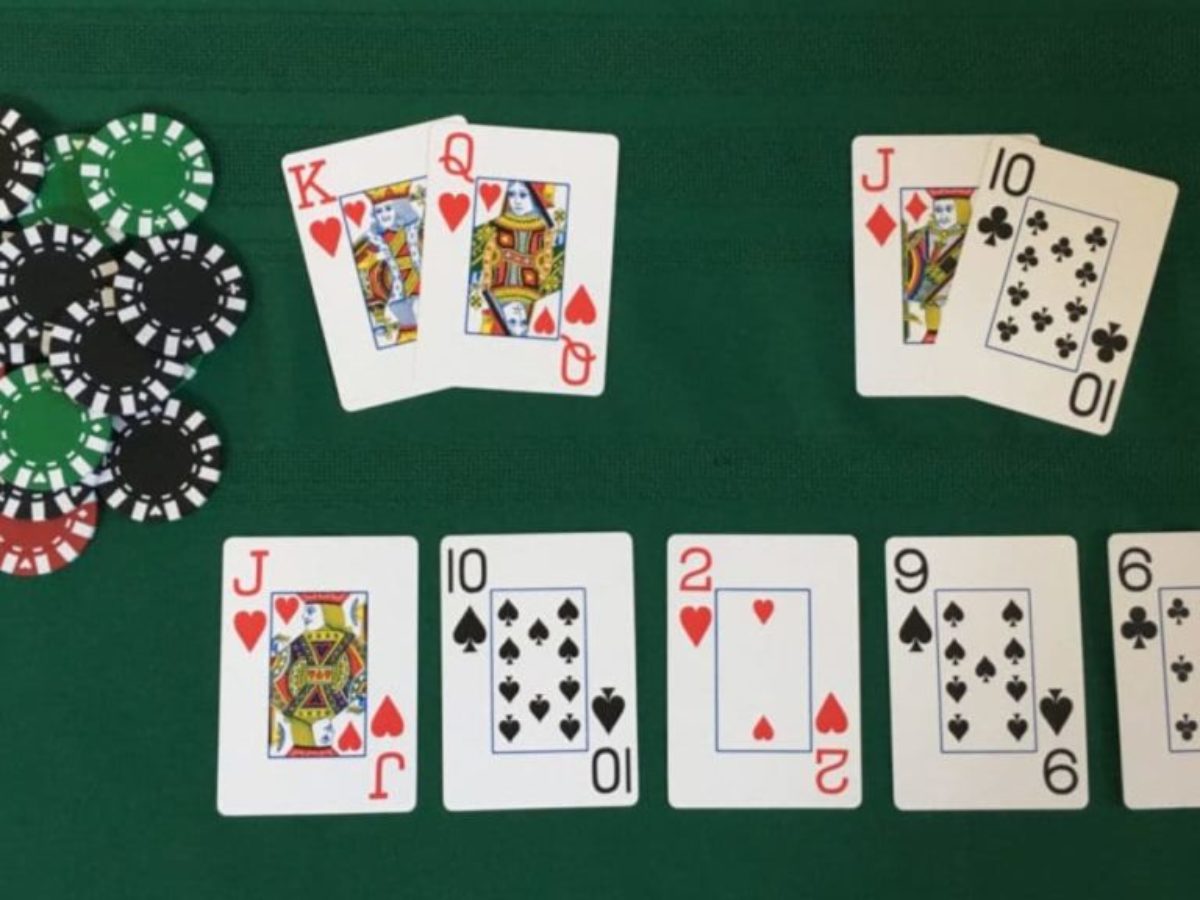
- Pot Odds: This refers to the ratio of the current size of the pot to the cost of a contemplated call. For example, if the pot is $100 and your opponent bets $20, you have to call $20 to win a total of $120 ($100 pot + $20 call). Your pot odds are $120:$20, or 6:1.
- Calculating Equity: You need to estimate your chances of winning the hand. If your pot odds are 6:1, you need your hand to have at least a 14.3% chance of winning (1 / (6+1)). If your hand’s equity is higher than this, calling is mathematically profitable in the long run. Tools and experience help in estimating equity.
Reading Your Opponents and Table Dynamics
Poker is as much a game of psychology as it is of cards. Observing your opponents and adapting to the table’s dynamics can provide significant edges.
Observing Betting Patterns
The way your opponents bet can reveal a great deal about the strength of their hands.
- Aggressive Bettors: Players who bet and raise frequently might be doing so with strong hands, bluffs, or to represent strength.
- Passive Bettors: Players who tend to call or check might have moderate hands or be trapping.
- Bet Sizing: Large bets can indicate very strong hands or confident bluffs, while smaller bets might signal a weaker hand or an attempt to control the pot size.
Player Types
Understanding common player archetypes can help you exploit their tendencies.
- Tight-Aggressive (TAG): Plays few hands but plays them aggressively. They are difficult to play against as they only enter pots with strong holdings and bet strongly when they do.
- Loose-Aggressive (LAG): Plays many hands and plays them aggressively. They can be dangerous but also prone to making mistakes and overplaying weaker hands.
- Tight-Passive (Rock): Plays very few hands and plays them passively (calling and checking). They are easy to spot and can often be bluffed.
- Loose-Passive (Calling Station): Plays many hands and plays them passively. They are often in pots with marginal hands and are difficult to bluff, but they can be exploited by value betting.
Table Image
Your own table image—how your opponents perceive your playing style—is crucial. If you’ve been playing very tightly, your bluffs are more likely to be respected. If you’ve been playing loosely, your strong hands might not get paid off as much. Adjust your play accordingly.
Advanced Strategies and Bankroll Management
As you gain experience, you can explore more sophisticated tactics and ensure you’re playing responsibly.
Bluffing and Semi-Bluffing
Bluffing is the art of making a bet or raise with a hand that is unlikely to be the best, with the goal of forcing your opponents to fold.
- Pure Bluffs: Betting with no realistic chance of improving to a winning hand. These are risky and best employed against tight opponents or when you have a strong table image.
- Semi-Bluffs: Betting with a hand that is not currently the best but has the potential to improve to a strong hand (e.g., a flush draw or a straight draw). This is a more powerful play as you have two ways to win: your opponent folds, or you improve your hand.
Bet Sizing and Exploitation
Varying your bet sizes is a critical skill. It can allow you to extract maximum value from strong hands, semi-bluff effectively, or make it difficult for opponents to call you profitably. Recognizing and exploiting opponent weaknesses—such as a tendency to fold too often to continuation bets or a habit of calling too much—is key to long-term success.
Bankroll Management
Responsible bankroll management is essential for any serious poker player. It involves setting aside a specific amount of money for playing poker and adhering to strict rules about which stakes you play. A common guideline is to have at least 20-50 buy-ins for cash games and 100+ buy-ins for tournaments. This ensures that you can withstand the inevitable downswings without going broke. Never play with money you cannot afford to lose.
Mastering Texas Hold ‘Em is a continuous journey of learning, adaptation, and self-improvement. By understanding the fundamentals, developing strategic thinking, reading your opponents, and managing your bankroll, you’ll be well-equipped to navigate the exciting and challenging world of this beloved poker game.
LifeOutOfTheBox is a participant in the Amazon Services LLC Associates Program, an affiliate advertising program designed to provide a means for sites to earn advertising fees by advertising and linking to Amazon.com. Amazon, the Amazon logo, AmazonSupply, and the AmazonSupply logo are trademarks of Amazon.com, Inc. or its affiliates. As an Amazon Associate we earn affiliate commissions from qualifying purchases.