
Navigating the process of obtaining a driver’s license in Texas as an adult of 18 or older involves a series of steps designed to ensure new drivers are knowledgeable and capable behind the wheel. While the age of 18 bypasses the requirements for a provisional license, there are still essential stages to complete, including obtaining a learner’s permit, completing a driver education course or equivalent, passing written and driving tests, and gathering necessary documentation. This guide provides a comprehensive overview for aspiring drivers in the Lone Star State.
Understanding the Requirements for Adult Drivers
For individuals aged 18 and over, the path to a Texas driver’s license is streamlined compared to minors. However, the core principles of demonstrating readiness for safe driving remain paramount. The Texas Department of Public Safety (DPS) oversees the issuance of all driver licenses in the state. It’s crucial to familiarize yourself with their specific regulations and required documentation.
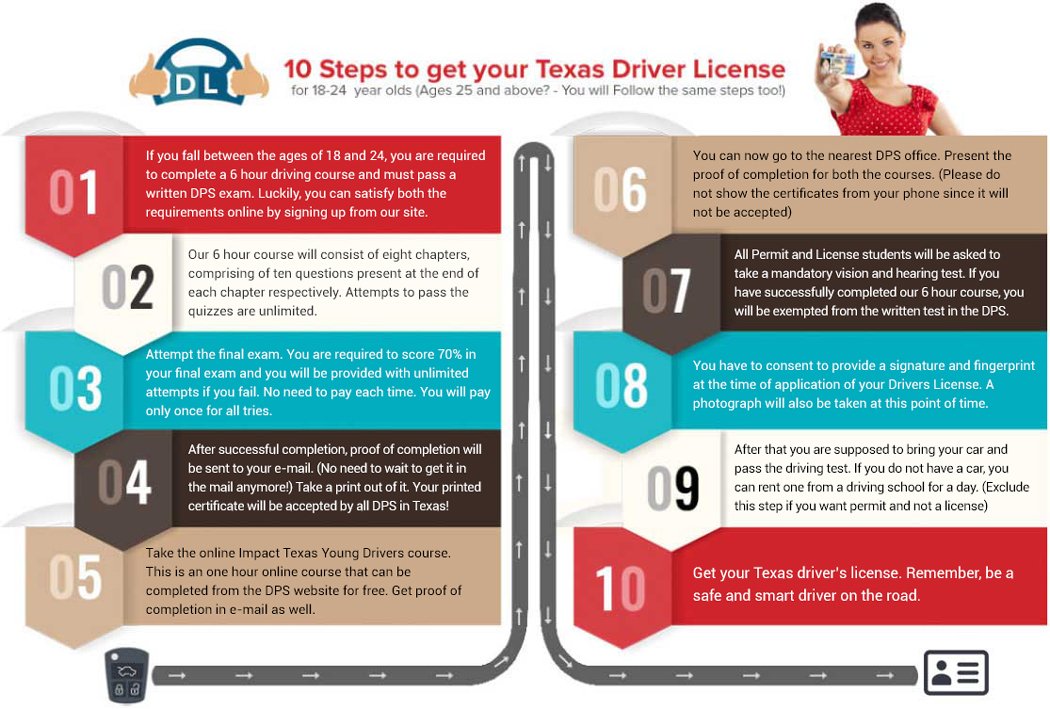
Eligibility Criteria
To be eligible for a standard Texas driver’s license at 18, you must meet the following criteria:
- Age: You must be at least 18 years old.
- Residency: You must be a legal resident of Texas. Proof of residency will be required.
- Lawful Presence: You must prove your lawful presence in the United States.
Required Documentation
Gathering the correct documents is a critical first step. The Texas DPS has a strict list of acceptable documents to verify your identity, social security number, lawful presence, and Texas residency. It is highly recommended to visit the Texas DPS website to confirm the most current list of acceptable documents, as requirements can change. Typically, you will need:
- Proof of Identity: This can include a certified copy of your birth certificate, a U.S. passport, or a Certificate of Citizenship.
- Proof of Social Security: Your Social Security card or a W-2 form with your full Social Security number.
- Proof of Lawful Presence: Documentation such as a U.S. birth certificate, U.S. passport, or permanent resident card.
- Proof of Texas Residency: Utility bills, bank statements, or rental agreements showing your Texas address. Multiple proofs may be needed.
- Proof of Vehicle Registration and Insurance (if applicable): If you own a vehicle, you will need to show proof of registration and liability insurance.
The Learner’s Permit: A Prerequisite
Even at 18, obtaining a learner’s permit is typically the first official step before a full driver’s license. The learner’s permit allows you to practice driving under the supervision of a licensed driver who is at least 21 years old.
Obtaining the Learner’s Permit
To apply for a learner’s permit, you will need to:
- Complete the Impact Texas Teen Drivers (ITTD) Program (if applicable): While primarily for younger drivers, adults who have not completed a formal driver education program may still be required to complete an equivalent or the ITTD program, depending on specific circumstances. It’s best to confirm with the Texas DPS.
- Pass the Vision Exam: You will be required to pass a vision screening at the driver license office.
- Pass the Knowledge Test: This written exam covers traffic laws, road signs, and safe driving practices as outlined in the Texas Driver Handbook. Studying this handbook is crucial for success.
- Submit Documentation and Pay Fees: Present all required documents and pay the applicable fees for the permit.
The learner’s permit is valid for a specific period, during which you are expected to gain driving experience.
Driver Education Options for Adults
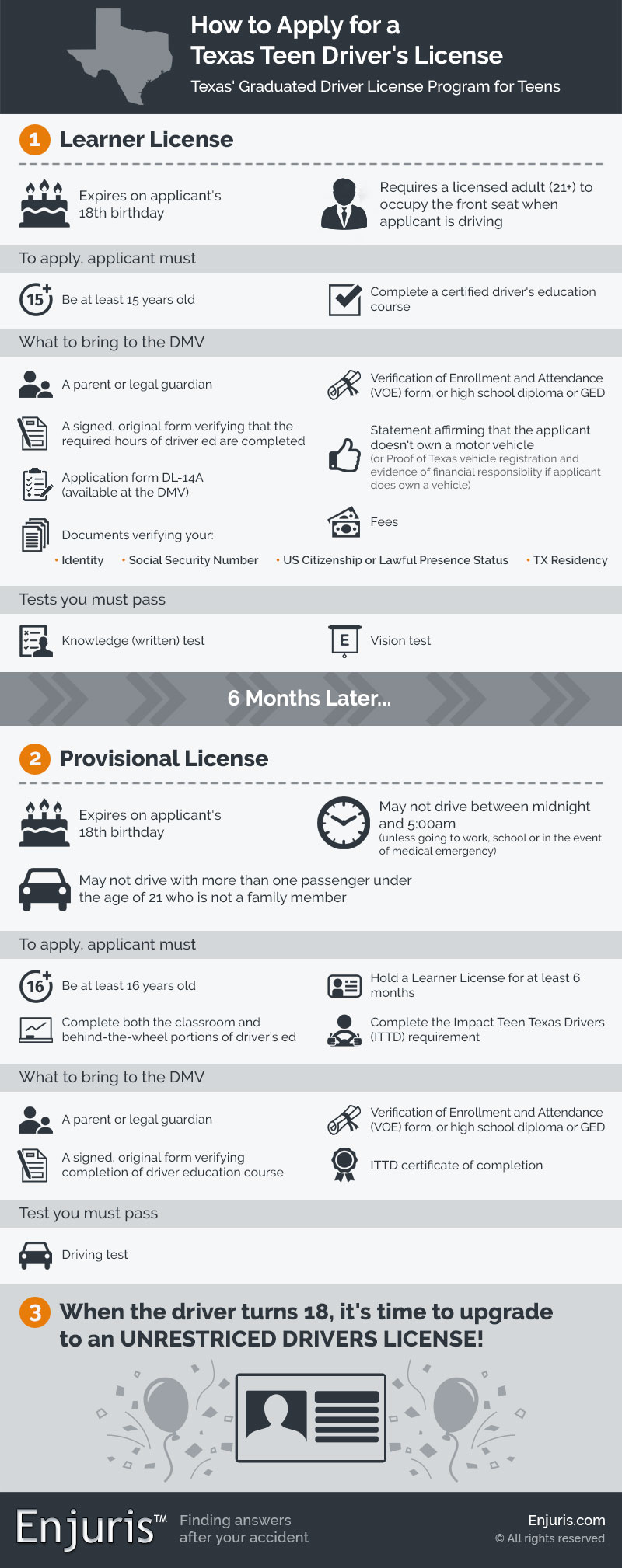
While minors are mandated to complete a specific driver education program, adults in Texas have slightly more flexibility, though some form of education or training is generally beneficial and sometimes required.
Driver Education Courses
Enrolling in a state-approved driver education course is a comprehensive way to learn the rules of the road and develop essential driving skills. These courses typically include classroom instruction and behind-the-wheel training. Many driving schools offer adult-focused programs. Completing such a course can provide a strong foundation and may satisfy certain requirements for licensing.
Other Options
- Adult Driver Education Programs: Some providers offer condensed driver education programs specifically designed for adults who need to fulfill educational requirements.
- Self-Study and Practice: While not a formal course, dedicated study of the Texas Driver Handbook and extensive supervised driving practice are vital. However, be aware that specific educational course completion might still be a prerequisite in certain situations, even for adults.
The Texas DPS website will specify any mandatory driver education components for adults.
Preparing for and Passing the Driving Test
The driving test, or the “road test,” is the final practical evaluation of your driving abilities. It assesses your competency in operating a vehicle safely and adhering to traffic laws in real-world conditions.
Scheduling Your Driving Test
Once you have held your learner’s permit for the required duration (if applicable, though for 18+ it might be different) and feel confident in your driving skills, you can schedule your driving test at a Texas DPS driver license office or an authorized third-party testing provider. It is advisable to schedule this appointment in advance, as available slots can fill up quickly, especially in busier locations like Houston or Dallas.
What to Expect During the Driving Test
The driving test is designed to evaluate a range of skills, including:
- Basic Vehicle Control: Demonstrating proficiency in starting, stopping, accelerating, and braking smoothly.
- Lane Changes and Turning: Executing safe and legal lane changes and turns, signaling appropriately.
- Parking: Performing maneuvers such as parallel parking, backing into a parking space, and forward parking.
- Observation and Awareness: Checking mirrors, blind spots, and surroundings effectively.
- Following Traffic Laws: Obeying speed limits, traffic signals, stop signs, and yielding to pedestrians and other vehicles.
- Defensive Driving Techniques: Showing an understanding of anticipating potential hazards.
Tips for Success
- Practice Extensively: Log as much supervised driving time as possible. Practice in various conditions (day, night, different weather) and on different types of roads.
- Know Your Vehicle: Be familiar with the car you will be using for the test, including how to operate the headlights, wipers, turn signals, and hazard lights.
- Review the Texas Driver Handbook: Thoroughly study the rules of the road and safe driving practices.
- Familiarize Yourself with the Testing Route (if possible): Some driving schools may offer practice drives on common testing routes.
- Stay Calm and Focused: Nerves are natural, but try to remain calm and concentrate on driving safely and deliberately.
- Listen Carefully to the Examiner: Follow all instructions given by the examiner precisely.
- Pre-Drive Check: Before starting, ensure your seatbelt is fastened, mirrors are adjusted, and you understand the vehicle’s controls.
If you do not pass the driving test on your first attempt, you will be given feedback on areas that need improvement, and you can schedule a re-test.
Finalizing Your Application and Receiving Your License
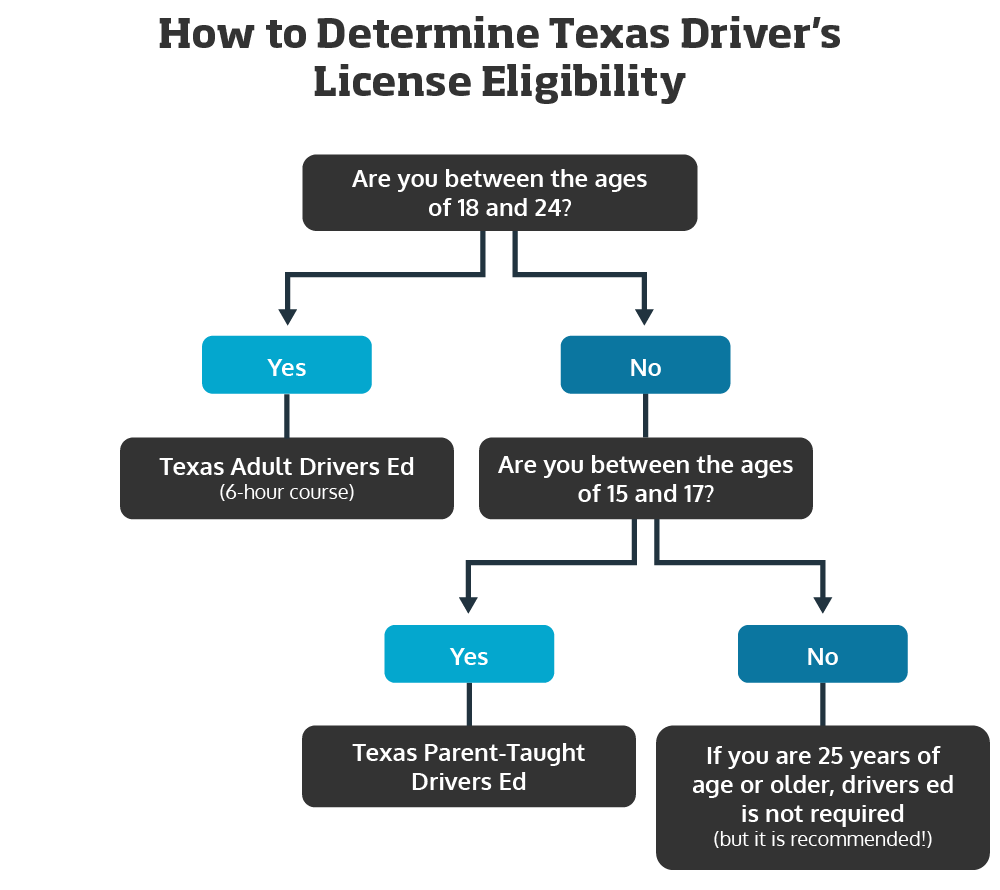
After successfully passing all required tests and submitting all necessary documentation, you will be ready to finalize your application and receive your official Texas driver’s license.
Obtaining Your Driver’s License
Upon passing the driving test, the examiner will provide you with instructions on how to complete the final steps. This typically involves:
- Paying the License Fee: There is a fee associated with the issuance of a driver’s license.
- Receiving a Temporary Driver License: You will usually be issued a temporary paper license that is valid for a specific period.
- Receiving Your Permanent License by Mail: Your permanent, plastic driver’s license will be mailed to your address within a few weeks.
Important Considerations
- License Validity and Renewal: Texas driver’s licenses are typically valid for eight years for adults. You will need to renew your license before it expires.
- Keeping Your Information Updated: It is your responsibility to notify the Texas DPS of any changes to your address or name.
- Understanding Restrictions: While generally not applicable to a standard adult license, be aware of any potential restrictions that might be placed on your license based on specific circumstances or test results.
Obtaining a driver’s license at 18 in Texas is a significant milestone, granting newfound independence and mobility. By understanding the requirements, diligently preparing for each step, and practicing safe driving habits, aspiring drivers can confidently navigate the process and embark on their journey on the road.
LifeOutOfTheBox is a participant in the Amazon Services LLC Associates Program, an affiliate advertising program designed to provide a means for sites to earn advertising fees by advertising and linking to Amazon.com. Amazon, the Amazon logo, AmazonSupply, and the AmazonSupply logo are trademarks of Amazon.com, Inc. or its affiliates. As an Amazon Associate we earn affiliate commissions from qualifying purchases.