
Navigating the process of obtaining a driver’s license in Texas is a rite of passage for many residents, whether they are new to the state or reaching a significant age milestone. The Texas Department of Public Safety (TxDPS) oversees all licensing procedures, ensuring that individuals meet the necessary qualifications for operating a vehicle safely and responsibly. This guide breaks down the essential steps, requirements, and considerations for acquiring a Texas driver’s license, catering to various applicant categories from teenagers to adult newcomers.
Eligibility and General Requirements
Before embarking on the journey to obtain a Texas driver’s license, understanding the fundamental eligibility criteria is paramount. The TxDPS has specific requirements designed to ensure all drivers possess the necessary knowledge and skills to navigate Texas roadways safely.
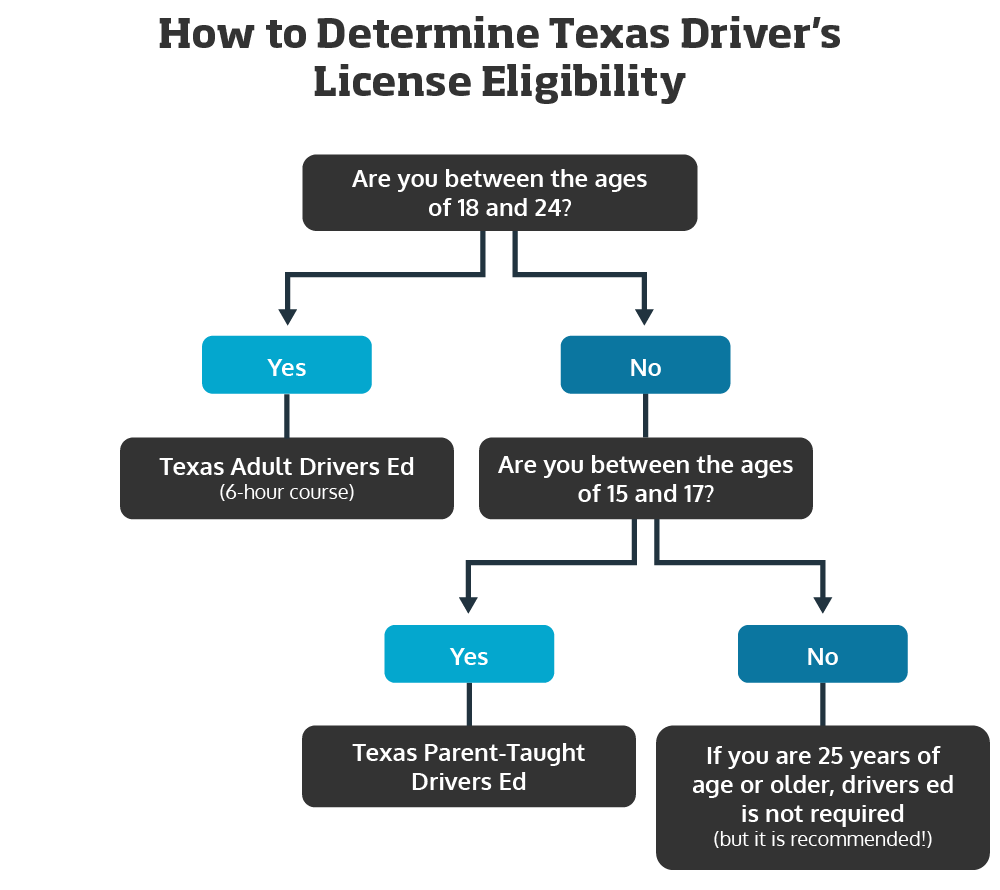
Age Requirements
Texas employs a tiered licensing system, particularly for younger drivers, emphasizing graduated steps towards full driving privileges.
- Learner’s Permit (Instruction Permit): This is the first step for individuals aged 15 to 17. Applicants must be at least 15 years old and have completed an approved driver education program. They must also hold this permit for at least six months before they can apply for a provisional license, and they cannot drive without a licensed adult (21 years or older) in the front seat.
- Provisional License: Available to drivers aged 16 and 17, this license is granted after holding a learner’s permit for the required six months and passing the driving test. Restrictions apply to provisional licenses, including limitations on driving with passengers under 21 (unless accompanied by a licensed adult over 21) and a curfew between midnight and 5:00 a.m., unless driving to or from work, school, or a medical emergency.
- Full Driver’s License: Once a driver turns 18, they are eligible to apply for an unrestricted driver’s license, provided they have met all previous requirements. For those under 18 who are applying for their first license, they must have held their provisional license for at least six months and completed a driver education course or completed driver education and a supplementary in-car training course.
Residency and Identification
To prove your eligibility for a Texas driver’s license, you must establish residency in the state and provide specific forms of identification.
- Proof of Texas Residency: This can be demonstrated through various documents such as utility bills, lease agreements, bank statements, or voter registration cards, all bearing your Texas address. You will typically need two forms of proof.
- Proof of Identity: Applicants must present original documents to verify their identity. Accepted forms include U.S. birth certificates, U.S. passports, or Permanent Resident Cards.
- Social Security Number: A valid Social Security card or proof of a Social Security number, such as a W-2 form or SSA-1099 form, is also mandatory.
- Proof of Lawful Presence: Non-U.S. citizens must provide documentation proving their lawful presence in the United States, such as an unexpired foreign passport with an I-94 form or an Employment Authorization Document.
Vision and Knowledge Tests
Before any driving demonstration, all applicants must pass a vision screening and a written knowledge test.
- Vision Screening: This test assesses your ability to see clearly, ensuring you can safely operate a vehicle. If you need corrective lenses, your license will be issued with a restriction indicating this.
- Written Knowledge Test: This computer-based exam covers traffic laws, road signs, and safe driving practices specific to Texas. The official Texas Driver Handbook is the primary resource for studying and preparing for this test. It’s crucial to thoroughly review the handbook to understand all aspects of Texas traffic laws and regulations.
Obtaining a Learner’s Permit (Under 18)
The process for obtaining a learner’s permit is a critical first step for aspiring young drivers in Texas. It allows supervised practice, building confidence and skill before more independent driving is permitted.
Driver Education Program
Completing an approved driver education program is a prerequisite for obtaining a learner’s permit for individuals under 18.
- Classroom Instruction: This component covers theoretical knowledge of driving, traffic laws, and safe driving techniques. Approved programs can be found through Texas high schools, private driver training schools, or through online providers that are certified by the TxDPS.
- Behind-the-Wheel Training: This practical component involves actual driving instruction under the supervision of a certified instructor. It typically includes a set number of hours of supervised driving practice.
- Impact Texas Teen Drivers (ITTD) Program: Before taking the driving test for a provisional or full license (if under 18), applicants must complete the ITTD program. This free, two-hour informational video program focuses on the dangers of distracted driving and must be completed no more than 90 days before the driving test. A certificate of completion is required.
Application Process for Learner’s Permit
Once the driver education requirements are met, the applicant can proceed to apply for the learner’s permit.
- Visit a Driver License Office: Applicants must visit a Texas Driver License office in person. Appointments are highly recommended to minimize wait times.
- Required Documents: The following documents are typically needed:
- Proof of identity, U.S. citizenship or lawful presence.
- Proof of Texas residency.
- Social Security card.
- Proof of successful completion of the driver education program (often an ADE-1320 form from the provider).
- The completed DL-13, Application for Texas Driver License or Identification Certificate.
- Pass the Knowledge Test: As mentioned earlier, the applicant must pass the written knowledge test.
- Pay the Fee: A non-refundable fee is required for the learner’s permit.
Applying for a Provisional or Full Driver’s License (16-24 Years Old)
For individuals transitioning from a learner’s permit, or those applying for their first license at age 16 and older, the process involves demonstrating driving proficiency.
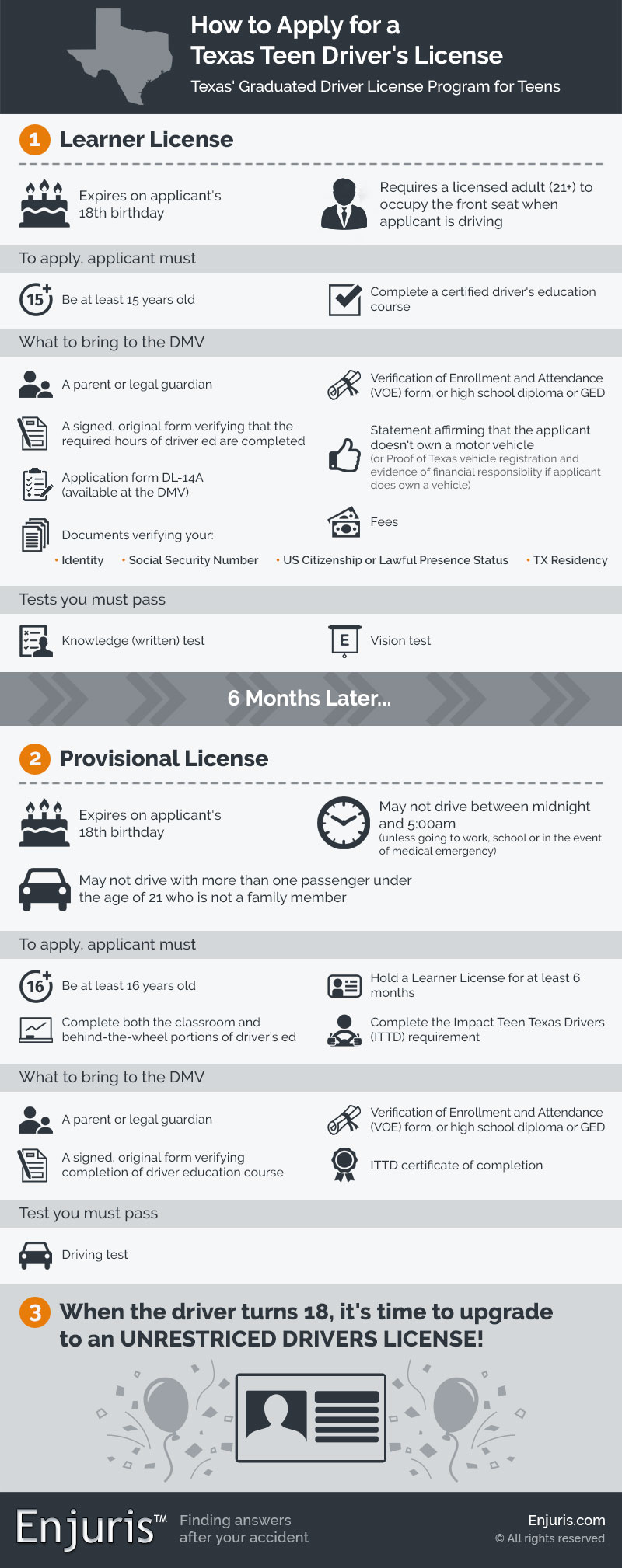
Provisional License Requirements (16-17 Years Old)
To graduate to a provisional license, applicants must meet specific criteria beyond holding the learner’s permit.
- Six Months Holding Period: The learner’s permit must have been held for at least six months.
- Driver Education Completion: Confirmation of completing the driver education program is necessary.
- ITTD Program Completion: The IMPACT Texas Teen Drivers (ITTD) program must be completed, and the certificate of completion presented.
- Driving Test: The most crucial step is passing the driving skills test. This test assesses the applicant’s ability to safely operate a vehicle in various traffic situations. It is typically administered at a TxDPS Driver License office or by an authorized third-party provider. The vehicle used for the test must be in good working order and properly registered and insured.
Full Driver’s License Requirements (18-24 Years Old)
Applicants between 18 and 24 years old seeking their first Texas driver’s license also follow a structured path.
- Driver Education (Optional but Recommended): While not mandatory for those 18 and older, completing a driver education course is highly recommended. It provides a comprehensive understanding of driving principles and can better prepare individuals for the knowledge and driving tests.
- ITTD Program (If Driver Education Completed): If a driver education course was completed, the ITTD program must also be completed, and the certificate presented before the driving test.
- Driving Test: Similar to provisional license applicants, individuals aged 18-24 must pass the driving skills test. This demonstrates their competency and adherence to safe driving practices.
Obtaining a Driver’s License as an Adult (25 Years and Older)
Adults aged 25 and older applying for their first Texas driver’s license have a slightly streamlined process, as the graduated licensing restrictions for minors do not apply.
Requirements for Adult Applicants
The focus for adult applicants is on demonstrating the necessary knowledge and skills to drive safely.
- Knowledge Test: All adult applicants must pass the written knowledge test covering Texas traffic laws and road signs. Studying the official Texas Driver Handbook is essential.
- Vision Screening: A vision screening is also required.
- Driving Test: The driving skills test is mandatory for all first-time adult applicants. This test evaluates the applicant’s ability to operate a vehicle safely and control it in various driving conditions.
- Driver Education Exemption: Unlike younger applicants, adult applicants are not required to complete a formal driver education program. However, taking a defensive driving course can be beneficial and may offer a discount on car insurance.
- ITTD Program Exemption: The IMPACT Texas Teen Drivers (ITTD) program is specifically for drivers under 25 and therefore not required for adult applicants.
Application Process for Adult Applicants
The steps for adult applicants are generally straightforward.
- Visit a Driver License Office: Appear in person at a Texas Driver License office. Appointments are advised.
- Required Documents: Prepare the necessary documentation, including:
- Proof of identity and lawful presence in the U.S.
- Proof of Texas residency.
- Social Security card or proof of SSN.
- The completed DL-13, Application for Texas Driver License or Identification Certificate.
- Pass Tests: Successfully pass the vision screening and the written knowledge test.
- Schedule and Pass Driving Test: Schedule and pass the driving skills test.
- Pay the Fee: A fee is required for the driver’s license.
Additional Considerations and Tips
Obtaining a driver’s license is a significant achievement, and being well-prepared can make the process smoother. Here are some additional tips and considerations for all applicants.
Preparing for the Driving Test
The driving test is often the most nerve-wracking part of the licensing process. Thorough preparation is key to success.
- Practice, Practice, Practice: Consistent practice in various driving conditions is crucial. Focus on maneuvers such as parallel parking, three-point turns, and highway driving if applicable to the test area.
- Know the Test Route (If Possible): Some driving schools and instructors may have knowledge of common test routes. Familiarizing yourself with these areas can boost confidence.
- Vehicle Readiness: Ensure the vehicle you use for the test is in excellent condition, with working lights, turn signals, brakes, and tires. Have the registration and proof of insurance readily available.
- Review the Official Handbook: The Texas Driver Handbook provides detailed information on what the examiner will be looking for during the test. Pay close attention to the scoring criteria.
Renewing Your License
Driver’s licenses in Texas are typically valid for eight years for adults and typically four years for those under 18 at the time of issuance, with renewals generally required before expiration. Renewals can often be completed online, by mail, or in person at a Driver License office. It’s important to note any changes in vision or medical conditions that might affect your ability to drive.
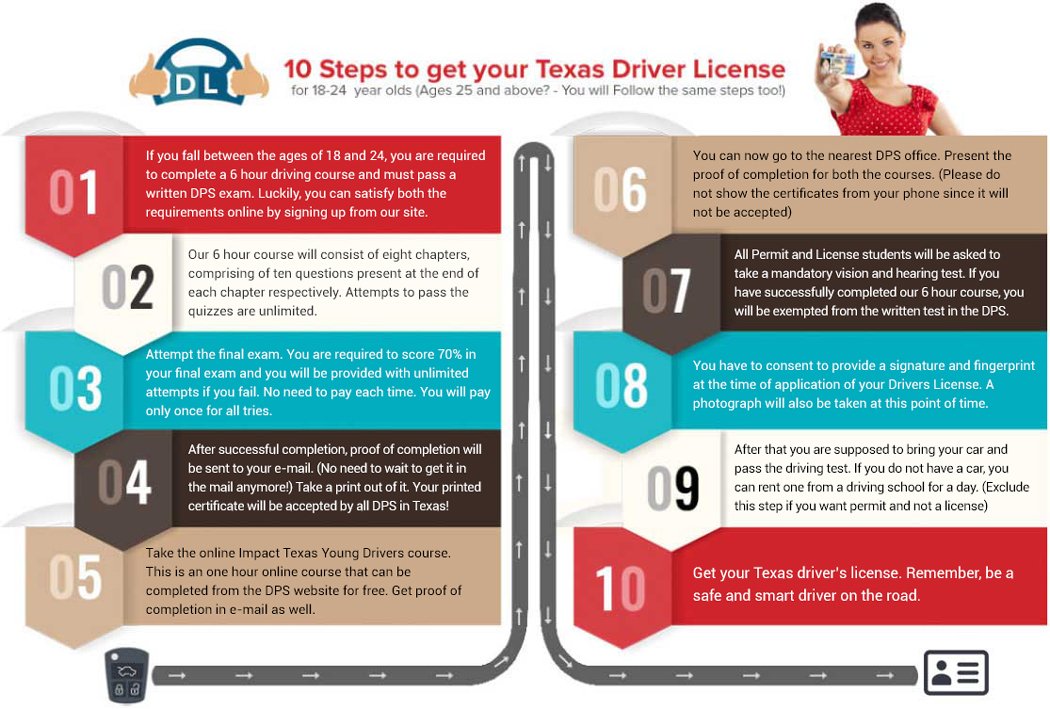
Lost or Stolen Licenses
If your driver’s license is lost or stolen, you must report it to the TxDPS and apply for a duplicate license. This process can usually be done online or in person.
By understanding and diligently following the steps outlined by the Texas Department of Public Safety, obtaining your driver’s license in Texas will be a manageable and rewarding experience, opening up a world of independent travel and opportunities across the Lone Star State.
LifeOutOfTheBox is a participant in the Amazon Services LLC Associates Program, an affiliate advertising program designed to provide a means for sites to earn advertising fees by advertising and linking to Amazon.com. Amazon, the Amazon logo, AmazonSupply, and the AmazonSupply logo are trademarks of Amazon.com, Inc. or its affiliates. As an Amazon Associate we earn affiliate commissions from qualifying purchases.