
Navigating the landscape of business operations in Texas, particularly concerning taxation, often requires understanding specific documentation. For businesses engaged in reselling tangible personal property, acquiring a Texas Resale Certificate is a critical step. This certificate allows businesses to purchase goods for resale without paying Texas sales tax to their suppliers, provided those goods are indeed intended for resale and will be subject to sales tax when ultimately sold to the end consumer. This process is fundamental to the flow of commerce and ensures that sales tax is collected at the final point of sale. Understanding the eligibility, application process, and proper usage of a Texas Resale Certificate is paramount for any business operating within the state, from small boutiques in Austin to larger enterprises in Houston.

Understanding the Texas Resale Certificate
The Texas Resale Certificate, often referred to as a Resale Exemption Certificate, is a document issued by the Texas Comptroller of Public Accounts. Its primary function is to exempt businesses from paying sales and use tax on items they purchase for the purpose of reselling them. It is not a license to operate a business, nor does it exempt a business from collecting and remitting sales tax on its own sales. Instead, it’s a declaration of intent by the purchasing business that the goods acquired are for resale, not for their own use or consumption.
Who Is Eligible for a Resale Certificate?
Eligibility for a Texas Resale Certificate is primarily tied to the nature of a business’s transactions. Any individual or business entity that regularly purchases tangible personal property or taxable services for the purpose of reselling them in the ordinary course of business is generally eligible. This includes a wide array of businesses:
- Retailers: This is the most common group, including brick-and-mortar stores, online e-commerce platforms, and pop-up shops. They purchase goods from wholesalers or manufacturers and sell them to the public.
- Wholesalers and Distributors: Businesses that sell to other businesses for resale.
- Manufacturers: When purchasing raw materials or components to incorporate into products that will be sold.
- Service Providers (with resale components): Some service providers may purchase tangible items that are an integral part of the service provided and are resold to the customer. For example, a mechanic who installs new parts and charges the customer for both the part and the labor.
- Businesses with Event Sales: If a business sets up temporary booths or participates in events like craft fairs in Dallas or conventions, they still need to manage their resale purchases.
It is crucial to understand that the certificate must be used for its intended purpose. Purchasing items for personal use or for use within the business (e.g., office supplies, equipment for a restaurant) using a resale certificate is illegal and can result in penalties, including back taxes, interest, and fines. The Texas Comptroller’s office takes a firm stance against the misuse of resale certificates.
Distinguishing Between Sales Tax Permits and Resale Certificates
It’s a common point of confusion for new business owners to conflate a sales tax permit with a resale certificate. While related, they serve distinct purposes:
- Sales Tax Permit (Sales and Use Tax Permit): This permit, also issued by the Texas Comptroller, is required for any business that sells taxable goods or services in Texas. It allows a business to legally collect sales tax from its customers and is necessary for remitting that tax to the state. Obtaining a sales tax permit is a prerequisite for many businesses before they can even consider applying for resale certificates.
- Resale Certificate: As discussed, this document allows a business to purchase goods for resale without paying sales tax. It is a document presented to the supplier, not directly to the state for collection purposes.
Therefore, a business typically needs a Sales and Use Tax Permit to operate legally in Texas and then uses Resale Certificates when buying inventory or items intended for resale from other Texas businesses.
The Application Process for a Texas Resale Certificate
The process of obtaining and utilizing a Texas Resale Certificate is relatively straightforward, but it requires attention to detail. There isn’t a singular “application” form for a resale certificate itself, as it’s typically a document you issue or receive directly from your supplier. However, the foundation of being able to issue a valid resale certificate lies in having a Sales and Use Tax Permit.
Step 1: Obtain a Texas Sales and Use Tax Permit
Before you can legitimately issue resale certificates to your suppliers, you must first be registered with the Texas Comptroller and hold a valid Sales and Use Tax Permit.
- Determine Your Business Structure: Understand whether you are operating as a sole proprietorship, partnership, corporation, or LLC.
- Register with the Texas Comptroller: You can do this online through the Texas Comptroller’s eSystems portal. You will need your business’s federal employer identification number (FEIN) or your Social Security number (if you are a sole proprietor without employees).
- Information Required: Be prepared to provide information about your business, including its name, address, type of business, and expected sales volume.
Once your registration is complete and approved, you will be issued a Texas Sales and Use Tax Permit number. This number is crucial for all your tax-related activities in the state.
Step 2: Understand the Texas Resale Certificate Form
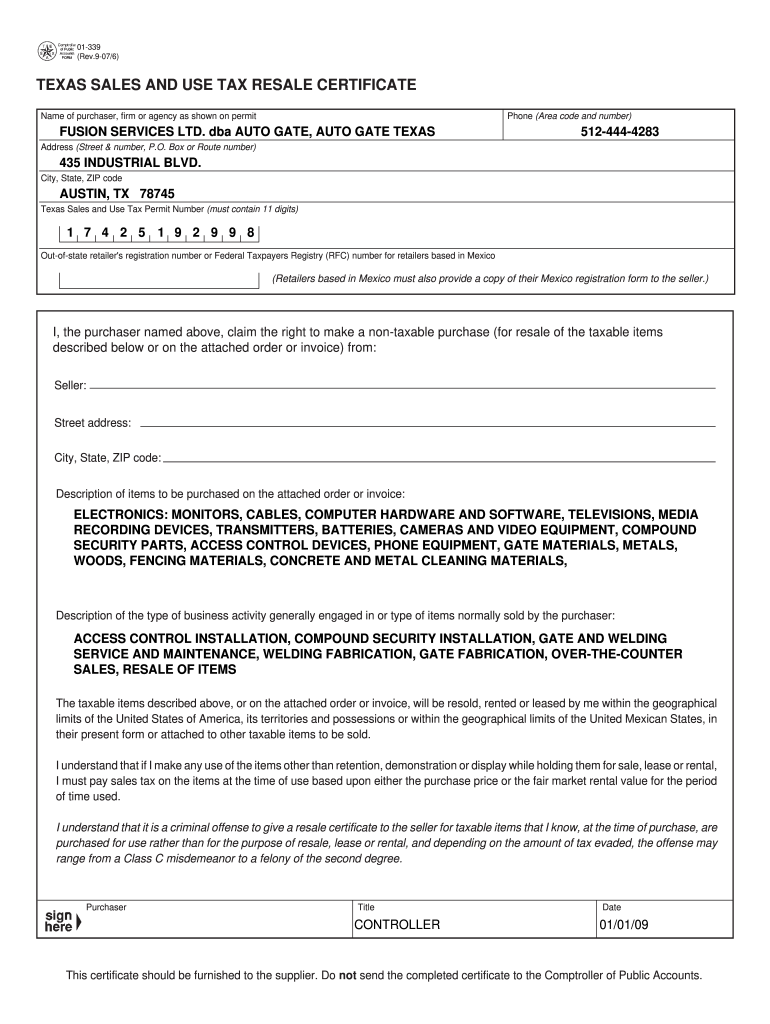
While there isn’t a single “application” to get a resale certificate from the state, the Texas Comptroller provides a standardized form that buyers can use to declare their intent to resell. This form is officially titled “Texas Sales and Use Tax Resale Certificate” (Form 01-339).
- Where to Find the Form: You can download this form directly from the Texas Comptroller’s website. Many suppliers also have copies available.
- Completing the Form: The buyer (your business) completes this form. It requires:
- Your business name and address.
- Your Texas Seller’s Permit number.
- A description of the goods or services you intend to purchase for resale.
- A declaration that you are engaged in the business of selling tangible personal property or taxable services and that the items purchased will be resold in the ordinary course of your business.
- Your signature and the date.
Step 3: Present the Resale Certificate to Your Supplier
Once completed, you present this executed Resale Certificate to your supplier at the time of purchase.
- For In-Person Purchases: Present a physical or digital copy of the completed form to the cashier or sales representative.
- For Online or Mail Orders: Follow your supplier’s instructions for submitting resale certificates. Many have online portals or require you to email a scanned copy.
The supplier will keep a copy of this certificate on file. By accepting a valid resale certificate, the supplier is relieved of the responsibility of collecting sales tax on that particular transaction.
Proper Usage and Compliance for Resale Certificates
The privilege of purchasing goods tax-free for resale comes with significant responsibilities. Misuse of a resale certificate can lead to serious financial and legal consequences. Adhering to the rules ensures smooth operations and avoids penalties.
Key Guidelines for Using Resale Certificates
- Good Faith Belief: You must have a good faith belief that the items purchased will be resold. This means that a significant portion of your business activities involve reselling these types of items.
- For Business Purposes Only: The certificate is strictly for items you intend to resell. Do not use it for:
- Office supplies (pens, paper, computers for internal use).
- Equipment used in your business operations (machinery, furniture, vehicles not for sale).
- Items for personal use by you or your employees.
- Items that become part of a service but are not separately resold to the customer.
- Accurate Information: Ensure all information on the resale certificate is accurate, including your Texas Seller’s Permit number and business details.
- Keep Records: Maintain thorough records of all resale certificates you issue and receive. This includes copies of the certificates themselves and documentation of the purchases made using them. The Texas Comptroller can audit your business, and these records are essential for demonstrating compliance.
- Supplier’s Responsibility: While the buyer is responsible for issuing a valid certificate, the supplier is also expected to exercise due diligence. They should ensure the certificate appears valid and that the buyer is registered to collect sales tax in Texas. If a supplier accepts a fraudulent or improperly used resale certificate, they may be held liable for the uncollected tax.
- Interstate Sales: If you are purchasing from a supplier outside of Texas who is not registered to collect Texas sales tax, you may owe Texas use tax on those purchases if they are not for resale. The resale certificate primarily helps you avoid sales tax from Texas-registered suppliers.

Consequences of Misuse
The Texas Comptroller’s office actively monitors for misuse of resale certificates. Penalties for improper use can be severe and include:
- Liability for Unpaid Taxes: You will be required to pay the sales tax that should have been collected on the improperly purchased items.
- Interest: Interest will be charged on the unpaid tax from the date it was due.
- Penalties: Significant penalties can be imposed, often a percentage of the uncollected tax.
- Revocation of Permit: In cases of egregious or repeated violations, your Sales and Use Tax Permit could be suspended or revoked, effectively halting your ability to conduct business in Texas.
- Criminal Prosecution: In extreme cases of fraud, criminal charges may be filed.
Businesses operating in Texas, whether they are seasonal vendors at the State Fair of Texas or year-round retailers in the vibrant downtowns of cities like San Antonio, must treat the resale certificate with the seriousness it deserves. It is a tool for efficient tax collection, not a loophole for tax evasion. By understanding and adhering to the regulations, businesses can leverage the resale certificate to streamline their purchasing processes and contribute to a fair and efficient tax system in the Lone Star State.
LifeOutOfTheBox is a participant in the Amazon Services LLC Associates Program, an affiliate advertising program designed to provide a means for sites to earn advertising fees by advertising and linking to Amazon.com. Amazon, the Amazon logo, AmazonSupply, and the AmazonSupply logo are trademarks of Amazon.com, Inc. or its affiliates. As an Amazon Associate we earn affiliate commissions from qualifying purchases.