
Navigating the process of replacing a lost vehicle title in Texas can seem daunting, but with a clear understanding of the steps involved, it becomes a manageable task. This guide is designed to equip you with the knowledge needed to efficiently obtain a duplicate title, ensuring you can legally operate and transfer ownership of your vehicle without unnecessary complications. Whether you’re a seasoned vehicle owner or new to the state, understanding the requirements of the Texas Department of Motor Vehicles (TxDMV) is paramount.
Understanding the Texas Vehicle Title
A vehicle title, often referred to as the “pink slip,” is a crucial legal document that serves as proof of ownership for a vehicle. In Texas, this document is issued by the Texas Department of Motor Vehicles (TxDMV). It contains vital information about the vehicle, including its Vehicle Identification Number (VIN), make, model, year, and the owner’s details. The title is essential for several reasons:
- Proof of Ownership: It is the primary document establishing your legal right to the vehicle.
- Selling or Transferring Ownership: Without a title, you cannot legally sell or transfer ownership of a vehicle to another person.
- Financing: If the vehicle is financed, the lender typically holds the title until the loan is fully paid off.
- Registration and Insurance: While not always directly required for day-to-day registration, having the title is fundamental to the entire vehicle ownership ecosystem.
Losing this important document can be stressful, especially if you need to sell your car or if law enforcement requests it. Fortunately, the TxDMV has established a straightforward procedure for obtaining a duplicate title.
Eligibility and Required Documentation
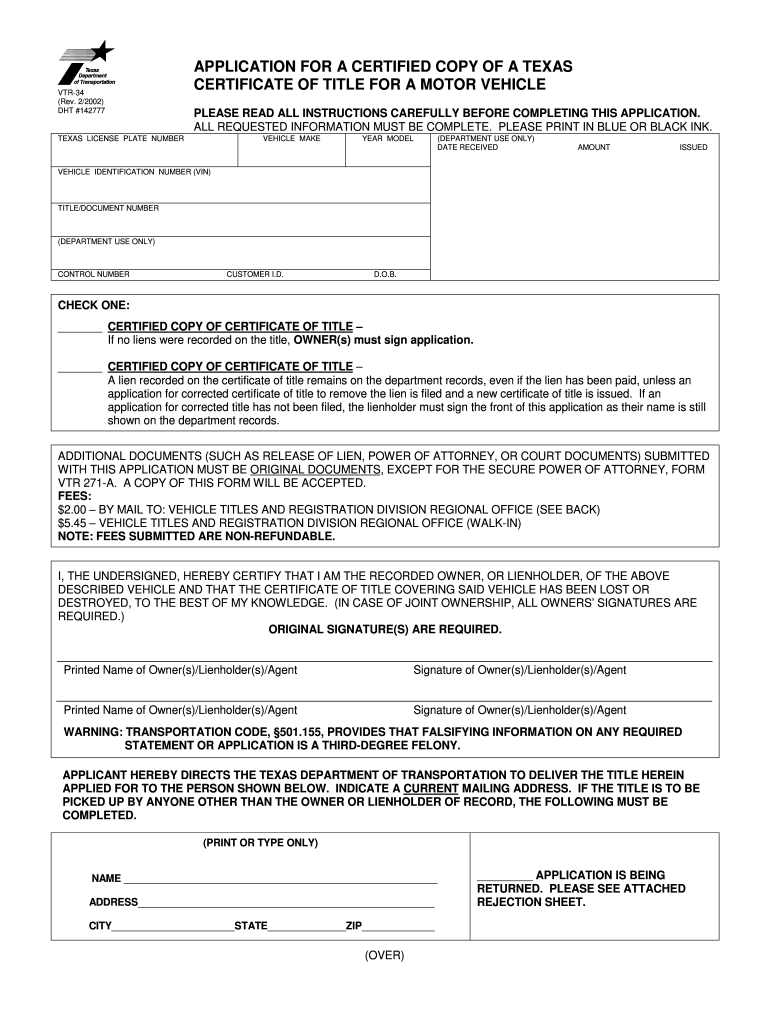
To apply for a duplicate Texas vehicle title, you must be the titled owner of the vehicle or an authorized representative. The primary application form is the Application for a Certified Copy of Texas Title (Form VTR-34). This form can be downloaded from the TxDMV website or obtained from a local county tax assessor-collector’s office.
Beyond the application form, several other pieces of documentation and information are typically required:
Essential Identification and Vehicle Information
- Current Texas Driver’s License or Identification Card: A valid form of identification is crucial to verify your identity. If you are not a Texas resident, you may need to provide proof of residency and a valid out-of-state ID.
- Vehicle Identification Number (VIN): This unique 17-character number is essential for identifying your specific vehicle. You can find the VIN on your vehicle’s dashboard (visible through the windshield), on your insurance card, or on any previous registration documents.
- Vehicle Description: Details such as the year, make, model, and body type of the vehicle will be needed.
- License Plate Number: While not always mandatory, providing the vehicle’s license plate number can help expedite the search process.
- Reason for Replacement: The application form will ask you to state the reason for needing a duplicate title (e.g., lost, stolen, mutilated, or destroyed).
Ownership Verification
If your name has changed since the original title was issued, you may need to provide supporting legal documentation, such as a marriage certificate or a court order for a name change.
Lienholder Information
If there is an outstanding lien on the vehicle, the lienholder’s name and address must be provided. The duplicate title will be mailed to the lienholder. If the lien has been satisfied, ensure you have proof of lien release, which may be necessary for the TxDMV to issue a clear title to you.
Fees
A fee is associated with obtaining a duplicate title. This fee can vary, so it’s advisable to check the current fee schedule on the TxDMV website or inquire at your local county tax assessor-collector’s office. Payment is typically accepted in the form of cash, check, or money order.
The Application Process
Once you have gathered all the necessary documentation and information, you can proceed with submitting your application. There are a few primary methods for doing this:
In-Person Application
The most common and often the quickest method is to apply in person at your local county tax assessor-collector’s office. These offices are county-level government branches that handle various motor vehicle services, including title applications.
- Locate Your Local Office: You can find a list of county tax assessor-collector’s offices on the TxDMV website.
- Complete the Application: Fill out the Application for a Certified Copy of Texas Title (Form VTR-34) accurately and completely. It’s often best to download and print this form beforehand to fill it out at home, but you can also obtain and complete it at the office.
- Gather Documents: Bring all required supporting documents (identification, VIN, etc.) and the applicable fee.
- Submit and Pay: Present your completed application and documents to a representative at the office. They will review your application, verify your identity, and accept your payment.
- Receive Confirmation: You will typically receive a confirmation or receipt at this time. The duplicate title will be mailed to the address on file or to the lienholder if one exists.
Mail-In Application

If visiting an office is inconvenient, you can also submit your application by mail.
- Download and Complete Form: Download the Application for a Certified Copy of Texas Title (Form VTR-34) from the TxDMV website. Fill it out thoroughly.
- Gather Documents: Make copies of your supporting identification and any other required documents.
- Mail Application and Fee: Mail the completed application form, copies of your supporting documents, and a check or money order for the required fee to the address specified on the application form (typically the TxDMV title processing center). It’s recommended to send this via certified mail with return receipt requested to ensure it’s received.
Online Application (Limited Availability)
While the TxDMV offers various online services, the direct application for a duplicate title is typically handled through in-person or mail-in methods to ensure secure verification of identity and ownership. However, some third-party services may offer assistance with this process, though it’s crucial to ensure they are legitimate and authorized. Always prioritize official TxDMV channels for the most secure and reliable experience.
Processing Times and Receiving Your Title
The time it takes to receive your duplicate title can vary depending on the method of application and the current workload of the TxDMV.
- In-Person Applications: Often processed more quickly, with titles typically mailed out within a few weeks.
- Mail-In Applications: May take longer due to mail delivery times and the processing backlog at the TxDMV. It could take anywhere from 3 to 6 weeks, or sometimes longer.
It’s important to note that the duplicate title will be mailed to the address listed on your application, which should match the address on file with the TxDMV. If you have recently moved, ensure you update your address with the TxDMV or through your county tax assessor-collector’s office before or during your application process.
If the lien on your vehicle has been satisfied, but the lien release has not yet been processed by the TxDMV, you may initially receive a title with the lienholder listed. In such cases, you would need to submit proof of lien release to the TxDMV to have a clear title issued in your name.
Special Circumstances and Considerations
There are a few specific situations that might require additional steps or considerations when applying for a duplicate title:
Inherited Vehicles
If you have inherited a vehicle and lost its title, the process will involve proving your right to inherit the vehicle. This typically requires a death certificate of the previous owner and documentation that establishes you as the legal heir, such as a will or a court order. You will likely need to complete additional forms specific to inherited property transfers.
Salvaged or Rebuilt Vehicles
Vehicles that have been declared a total loss by an insurance company and subsequently rebuilt often have specific branding on their titles. If you are dealing with a salvaged or rebuilt title and need a duplicate, the process might involve additional inspections and documentation to ensure the vehicle meets Texas safety standards.
Out-of-State Titles
If you have brought a vehicle into Texas from another state and lost its title before it was officially registered and titled in Texas, you will need to go through the process of titling and registering the vehicle in Texas first. This typically involves obtaining a VIN inspection and providing proof of ownership from the previous state. Once the vehicle is titled in Texas, you can then apply for a duplicate title if it is subsequently lost.
Lost, Stolen, or Mutilated Titles
The Application for a Certified Copy of Texas Title (Form VTR-34) covers all these scenarios. If your title was stolen, it is advisable to file a police report. While not always mandatory for a duplicate title application, it can provide an extra layer of documentation and security. If the title is mutilated (damaged), you will need to submit the damaged title along with your application.

Preventing Future Title Loss
To avoid the hassle of replacing a lost title in the future, consider these preventative measures:
- Secure Storage: Keep your vehicle title in a safe and secure location at home, such as a fireproof safe or a secure filing cabinet. Avoid keeping it in your vehicle, especially if it’s not locked securely.
- Digital Copies: While not a replacement for the official document, consider taking clear, high-resolution photos or scans of your title and storing them securely on a password-protected cloud service or a personal encrypted hard drive. This can be helpful for reference and quickly gathering information if the original is lost.
- Lien Satisfaction: If you have paid off a vehicle loan, ensure the lienholder promptly releases the lien and that you receive notification from the TxDMV that the lien has been removed from your title. If you don’t receive this, follow up with both the lienholder and the TxDMV.
- Accurate Record Keeping: Maintain a dedicated file for all your vehicle-related documents, including old titles, registration, insurance, and maintenance records.
By understanding the straightforward procedures outlined by the TxDMV and taking proactive steps to safeguard your important documents, you can ensure a smooth ownership experience for your vehicle in Texas.
LifeOutOfTheBox is a participant in the Amazon Services LLC Associates Program, an affiliate advertising program designed to provide a means for sites to earn advertising fees by advertising and linking to Amazon.com. Amazon, the Amazon logo, AmazonSupply, and the AmazonSupply logo are trademarks of Amazon.com, Inc. or its affiliates. As an Amazon Associate we earn affiliate commissions from qualifying purchases.