
Power of Attorney (POA) is a crucial legal document that grants one person (the agent or attorney-in-fact) the authority to act on behalf of another person (the principal) in specific matters. In Texas, understanding the process of obtaining a Power of Attorney is vital for ensuring your financial affairs, medical decisions, and overall well-being are managed according to your wishes, especially when you might be unable to do so yourself. This guide aims to demystify the creation and execution of POAs in the Lone Star State, covering the different types, requirements, and practical considerations.
Understanding the Different Types of Power of Attorney in Texas
Texas law recognizes several types of Power of Attorney, each serving a distinct purpose. The choice of POA depends on the principal’s needs, the scope of authority granted, and the duration of its effectiveness.
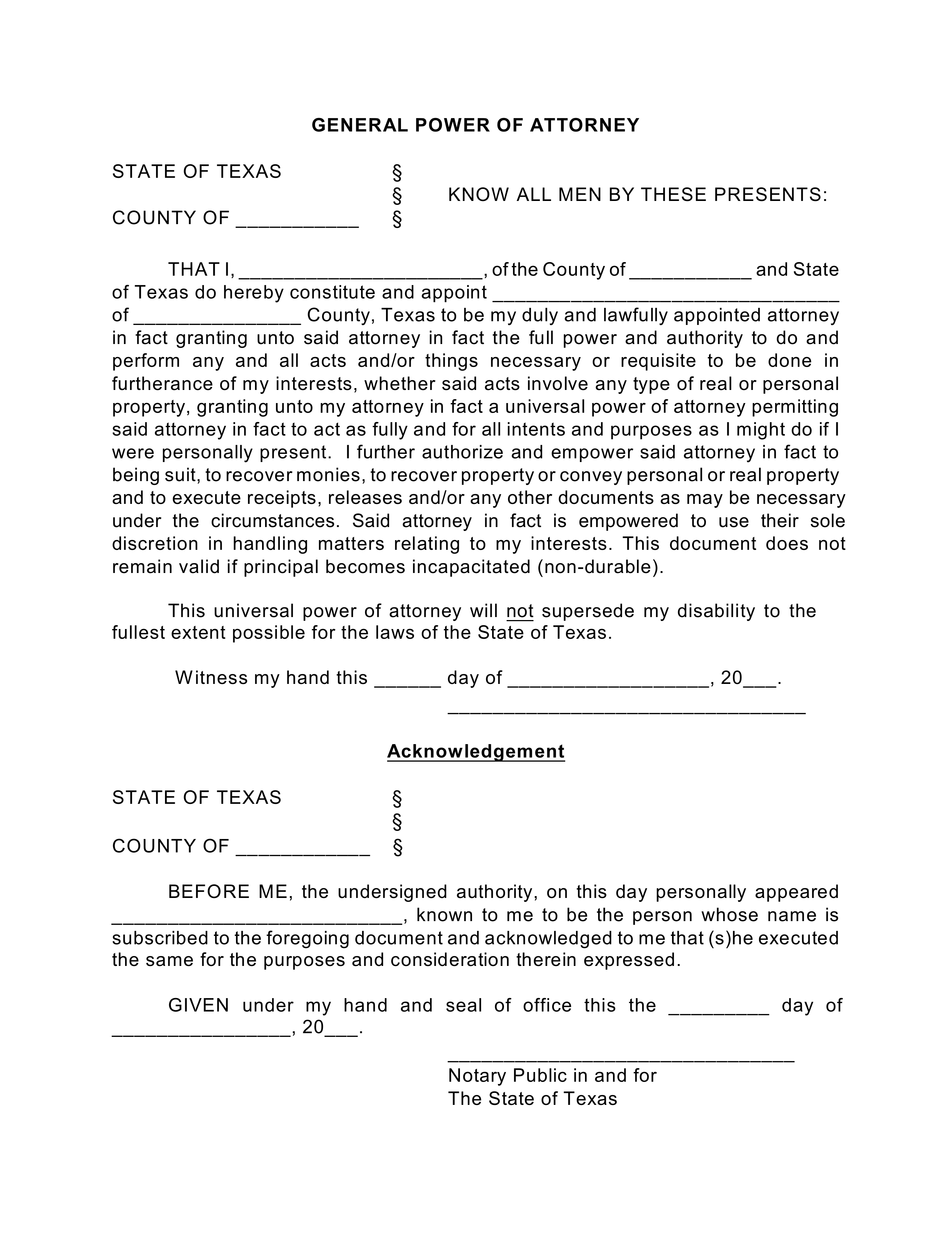
General Power of Attorney
A General Power of Attorney (General POA) grants broad authority to the agent. The agent can conduct almost any legal or financial act that the principal could perform. This typically includes managing bank accounts, buying or selling property, filing taxes, and handling investments. However, a General POA automatically terminates if the principal becomes incapacitated. This makes it unsuitable for situations where ongoing management is needed during periods of disability.
Durable Power of Attorney
The most common and often most recommended type of POA in Texas is the Durable Power of Attorney (Durable POA). The key feature of a Durable POA is that it remains effective even if the principal becomes incapacitated, disabled, or mentally incompetent. This is a critical distinction, as it ensures that the agent can continue to manage the principal’s affairs without interruption. Without the “durable” provision, a standard POA would become void upon the principal’s incapacitation, potentially leaving their affairs in disarray and requiring court intervention through a guardianship proceeding.
Within Durable POAs, there are further distinctions:
Springing Durable Power of Attorney
A Springing Durable Power of Attorney becomes effective only upon the occurrence of a specific event, most commonly the principal’s incapacitation. The document will define what constitutes incapacitation, often requiring a certification from one or more physicians. The advantage of a springing POA is that the agent’s powers are not active until needed. However, the process of determining incapacitation can sometimes lead to delays.
Immediate Durable Power of Attorney
An Immediate Durable Power of Attorney is effective immediately upon signing, provided the principal is of sound mind at the time of execution. This type is preferred by many who want to ensure their affairs are managed seamlessly from the outset and want to avoid any potential delays associated with the “springing” mechanism.
Specific or Limited Power of Attorney
Unlike general POAs, a Specific or Limited Power of Attorney grants the agent authority to act only in specific situations or for a defined period. Examples include authorizing someone to sell a particular piece of real estate, manage a specific bank account, or handle a transaction while the principal is traveling. These POAs are useful when you only need assistance with a particular task.
Medical Power of Attorney (Medical Directive)
A Medical Power of Attorney (also known as a Medical Directive or Durable Power of Attorney for Healthcare) specifically grants an agent the authority to make healthcare decisions on behalf of the principal if the principal is unable to do so. This document is separate from financial POAs and is crucial for ensuring your medical wishes are followed. It typically covers decisions regarding treatments, surgeries, medications, and end-of-life care. This document often works in conjunction with a Living Will, which outlines specific preferences for end-of-life medical care.
Key Requirements for Creating a Valid Power of Attorney in Texas
To ensure your Power of Attorney in Texas is legally sound and enforceable, several requirements must be met. These are established by the Texas Estates Code.
Legal Capacity of the Principal
The principal must have the legal capacity to execute a Power of Attorney. This means they must be of sound mind and at least 18 years of age, or married, or have been married, or be a member of the armed services. “Sound mind” generally means the principal understands the nature and effect of the document they are signing, including the powers they are granting to the agent.
Written Document
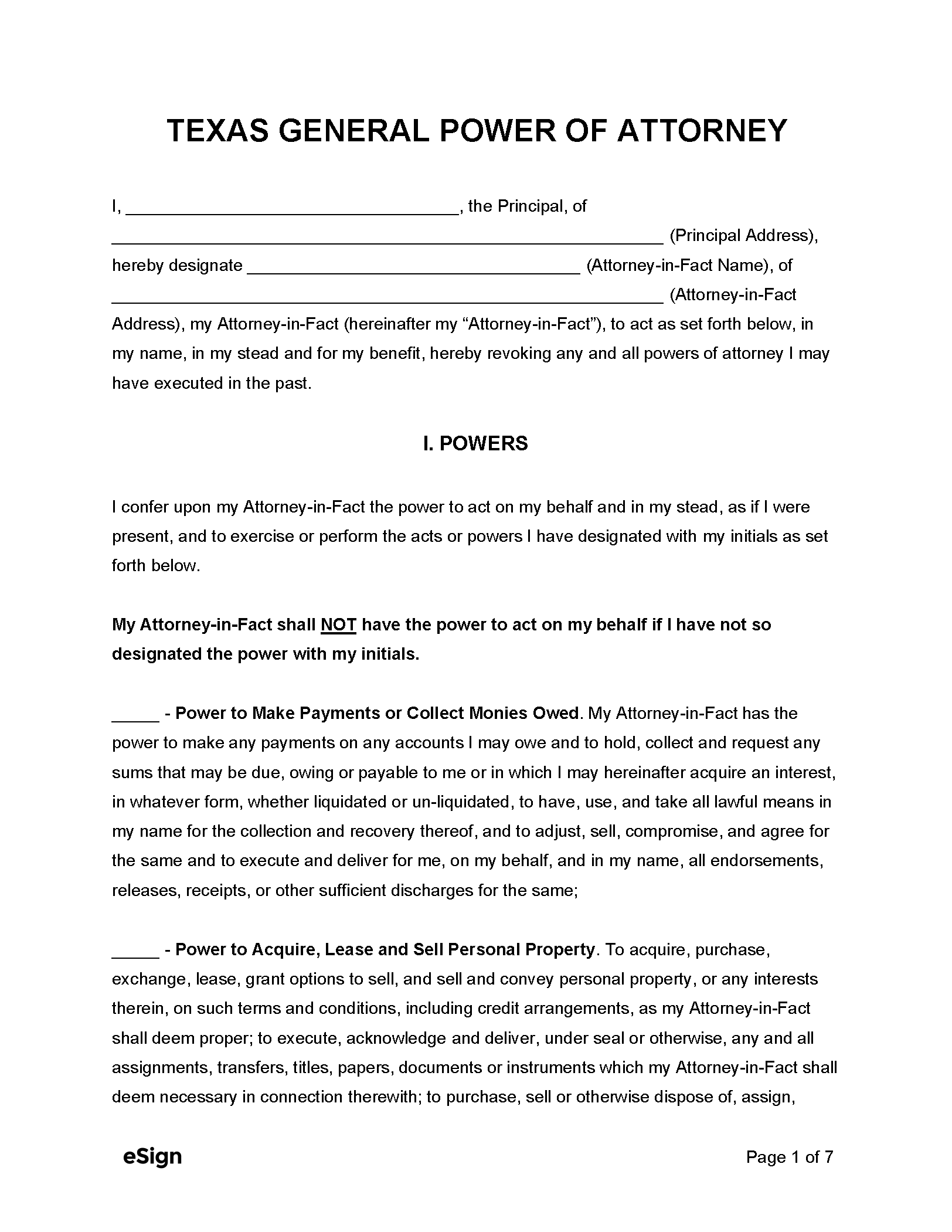
A Power of Attorney in Texas must be in writing. Oral agreements to grant such authority are not legally recognized. The document should clearly state the powers being granted, the duration of the POA, and the designation of the agent.
Signature of the Principal
The principal must sign the Power of Attorney. If the principal is unable to physically sign, they may direct another person to sign on their behalf in the principal’s presence.
Notarization
In Texas, a Power of Attorney must be acknowledged before a notary public. The notary verifies the identity of the principal and witnesses their signature. This step adds a layer of authenticity to the document and helps prevent fraud.
Witnesses (for certain POAs)
While not always required for financial POAs, witnesses are often recommended and may be required for specific types of documents, particularly those related to healthcare decisions. For a Medical Power of Attorney, Texas law generally requires two witnesses, neither of whom can be the agent named in the document, nor the principal’s physician or healthcare provider.
Agent Designation
The document must clearly identify the agent (attorney-in-fact) who will be acting on behalf of the principal. It is also wise to name a successor agent in case the primary agent is unable or unwilling to serve. The successor agent should be clearly identified and their order of succession defined.
Choosing and Appointing Your Agent (Attorney-in-Fact)
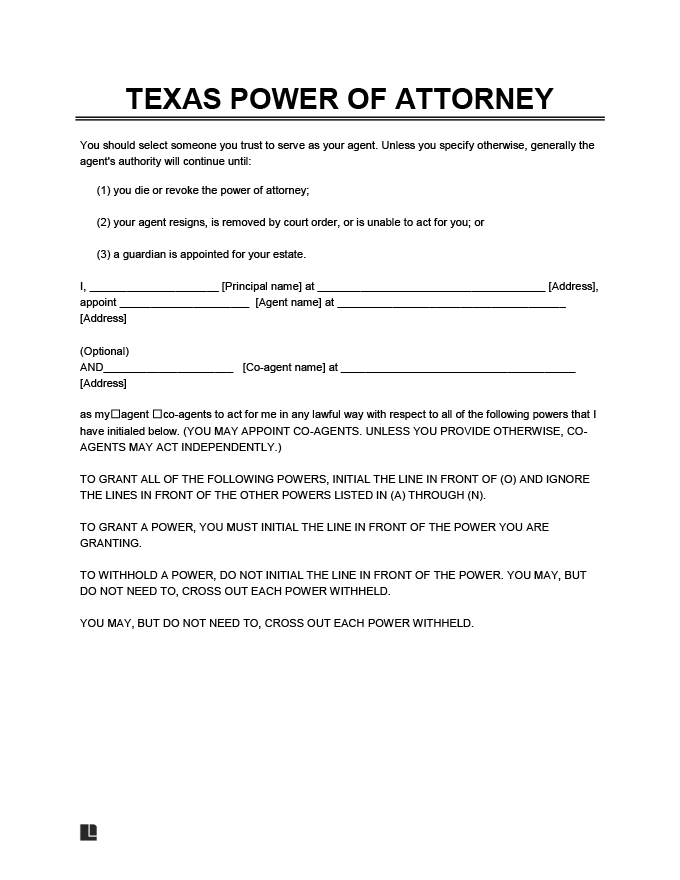
The selection of an agent is one of the most critical aspects of creating a Power of Attorney. This individual will have significant power and responsibility, so careful consideration is paramount.
Qualities of an Ideal Agent
When choosing an agent, consider someone who:
- Is trustworthy and responsible: This individual will handle your finances, make decisions about your healthcare, or both.
- Is willing and able to serve: Ensure the person you select is comfortable with the responsibilities and has the capacity and time to fulfill them.
- Understands your wishes: Ideally, your agent will have a good understanding of your values and preferences, especially concerning financial and medical matters.
- Is geographically accessible: If your agent lives far away, consider the practical implications for managing your affairs.
Naming a Successor Agent
It is highly recommended to name a successor agent. Life circumstances can change, and your primary agent may become unable to serve due to illness, relocation, or other reasons. A successor agent ensures that your affairs can continue to be managed without interruption and the need for court intervention. You can name multiple successor agents in order of preference.
Communication and Understanding
Before signing the Power of Attorney, have an open and honest conversation with your chosen agent. Discuss your expectations, the powers you are granting, and any specific instructions or desires you have. Ensure they understand the importance of their role and are prepared to act in your best interest.
Practical Steps to Obtain and Execute a Power of Attorney in Texas
The process of obtaining a Power of Attorney in Texas involves several practical steps to ensure validity and effectiveness.
1. Determine Your Needs and the Type of POA Required
The first step is to assess your personal and financial situation. Do you need broad financial authority, or is it for a specific transaction? Are you concerned about future incapacitation? Do you need to designate someone for healthcare decisions? Understanding these needs will guide you in selecting the appropriate type of POA.
2. Consult with an Attorney
While some forms are available online, it is strongly recommended to consult with an experienced attorney specializing in estate planning or elder law in Texas. An attorney can:
- Advise you on the best type of POA for your specific circumstances.
- Ensure the document complies with all current Texas laws.
- Draft a document tailored to your unique needs and wishes, avoiding generic language that might lead to unintended consequences.
- Explain the scope of the powers granted and the agent’s fiduciary duties.
- Help you navigate any complex situations or specific provisions you wish to include.
3. Draft the Power of Attorney Document
Once you and your attorney have determined the type of POA and the powers to be granted, the document will be drafted. This document should be clear, unambiguous, and comprehensive. It will include:
- The full legal names of the principal and the agent(s).
- A detailed description of the powers granted to the agent.
- The effective date and any conditions for its effectiveness (e.g., springing provisions).
- The duration of the POA.
- Provisions for successor agents.
4. Execute the Document
After the document is drafted and reviewed, it must be properly executed. This involves:
- The principal signing the document in the presence of a notary public.
- Having the document notarized by the notary public.
- If required, having the document signed by the necessary witnesses. Ensure witnesses meet Texas legal requirements (e.g., not being the agent, not being a healthcare provider for medical POAs).
5. Provide Copies to Your Agent and Relevant Institutions
Once executed, it is crucial to provide a copy of the Power of Attorney to your agent. Your agent may need to present the original or a certified copy to financial institutions, healthcare providers, or other third parties to act on your behalf. It is also wise to provide copies to your attorney and perhaps a trusted family member. Keep the original document in a safe and accessible place.
6. Understand the Agent’s Responsibilities and Limitations
The agent has a fiduciary duty to act in the principal’s best interest, avoid self-dealing, and keep accurate records of all transactions. The agent must exercise reasonable care and diligence. The powers granted by the POA are extensive, and the agent must act with integrity and transparency.
Special Considerations for Texas POAs
When dealing with Powers of Attorney in Texas, several specific points warrant attention to ensure the document serves its intended purpose effectively and avoids common pitfalls.
Third-Party Acceptance
While Texas law mandates that third parties accept a valid POA, practical challenges can arise. Financial institutions or healthcare providers may sometimes request additional assurances or have internal policies that can cause delays. Having a well-drafted document from a reputable attorney can often streamline this process. If a third party refuses to honor a valid POA, legal action may be necessary.
Revocation and Termination
A Power of Attorney can be revoked by the principal as long as they have legal capacity. Revocation should be done in writing and communicated to the agent and any third parties who have been provided with the POA. A POA also terminates automatically upon the principal’s death. Certain events, like the agent’s death or incapacitation, can also lead to termination if no successor agent is named.
POA for Minors
Parents or legal guardians can act for a minor. However, a specific POA can be useful if parents are temporarily unavailable and wish to grant authority to a trusted individual to make decisions for their child, such as consenting to medical treatment or managing educational matters. This is distinct from guardianship.
Digital Assets
With the increasing prevalence of digital assets (online accounts, social media, cryptocurrency), it is essential to consider how your agent will access and manage these. Some POAs may need specific clauses to address digital access, and some online platforms have their own procedures for granting access to representatives.
Guardianship as an Alternative
If a person becomes incapacitated without a valid Durable Power of Attorney in place, a guardianship proceeding may be necessary. This involves a court appointing a guardian to manage the person’s affairs. Guardianship is a public and often costly process, making a well-executed POA a proactive and preferable alternative for most individuals.
Conclusion
Obtaining a Power of Attorney in Texas is a fundamental step in estate planning and ensuring your personal and financial affairs are managed according to your wishes, especially during times of need. By understanding the various types of POAs, adhering to the legal requirements for their creation, and carefully selecting your agent, you can establish a robust legal framework that provides peace of mind for yourself and your loved ones. Consulting with a qualified Texas attorney is the most effective way to ensure your Power of Attorney is valid, comprehensive, and tailored to your unique circumstances, safeguarding your future and autonomy.
LifeOutOfTheBox is a participant in the Amazon Services LLC Associates Program, an affiliate advertising program designed to provide a means for sites to earn advertising fees by advertising and linking to Amazon.com. Amazon, the Amazon logo, AmazonSupply, and the AmazonSupply logo are trademarks of Amazon.com, Inc. or its affiliates. As an Amazon Associate we earn affiliate commissions from qualifying purchases.