
Texas Hold’em, often hailed as the “Cadillac of Poker,” is a globally celebrated variant of the card game poker. Its blend of simplicity in fundamental rules and profound strategic depth makes it an enduring favorite among casual players and seasoned professionals alike. Whether you’re looking to impress at a friendly game night, understand the buzz around major tournaments, or even test your mettle at a Las Vegas casino, grasping the core mechanics of Texas Hold’em is your essential first step. This guide will demystify the game, taking you from the initial deal to the final showdown.

The Fundamentals of the Game
At its heart, Texas Hold’em is a game of skill, psychology, and a touch of luck. The objective is to win chips by forming the best possible five-card poker hand using a combination of your two private “hole” cards and five community “board” cards.
The Deck and Players
A standard 52-card deck is used, with no jokers. Texas Hold’em can be played with anywhere from two to ten players. While more players can make for a livelier game, the optimal number for strategic depth is typically considered to be six to eight.
The Blinds
Before any cards are dealt, two players are designated to post “blinds,” which are forced bets that help to seed the pot. The player immediately to the left of the dealer button posts the “small blind,” and the player to the left of the small blind posts the “big blind.” The big blind is typically double the amount of the small blind. These blinds rotate clockwise around the table with each new hand, ensuring that every player eventually contributes to the pot and has a turn at being the dealer.
Card Ranks and Hand Rankings
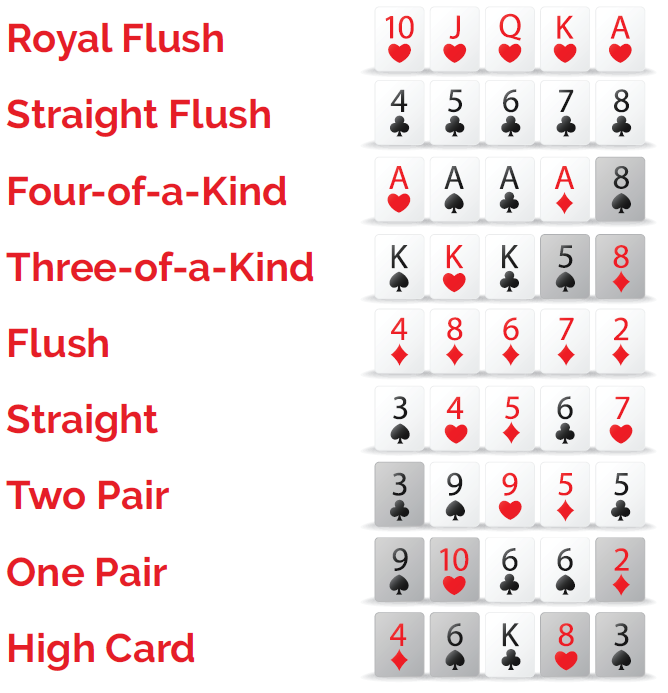
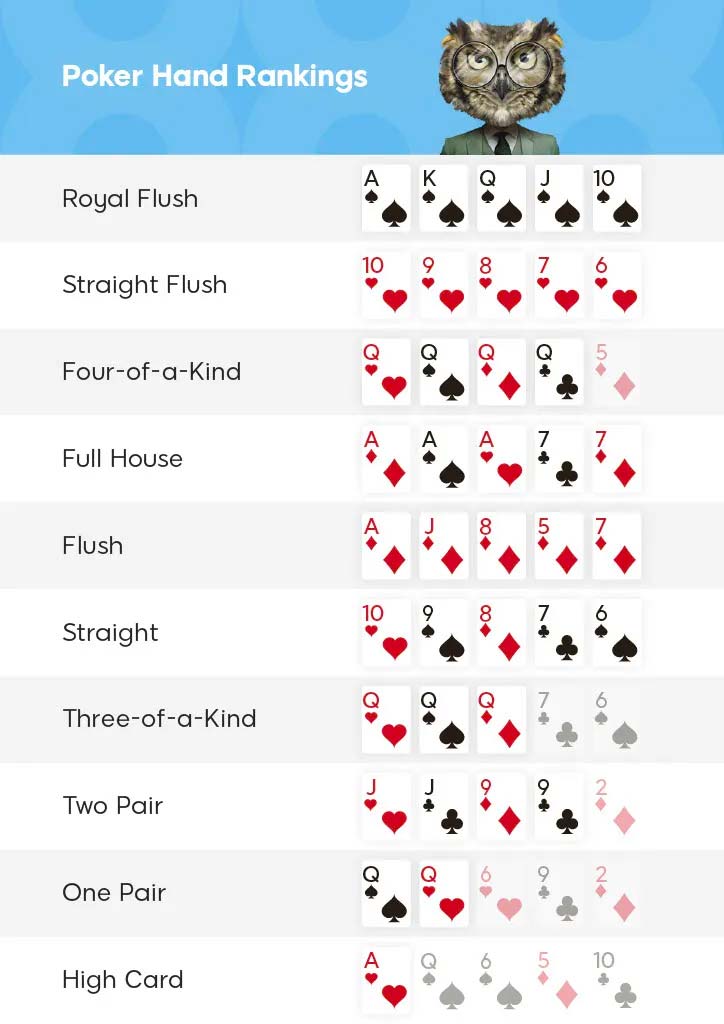
Understanding poker hand rankings is paramount. The strongest hand is a Royal Flush, followed by a Straight Flush, Four of a Kind, Full House, Flush, Straight, Three of a Kind, Two Pair, One Pair, and finally, the High Card.
- Royal Flush: Ace, King, Queen, Jack, Ten of the same suit.
- Straight Flush: Five consecutive cards of the same suit (e.g., 9, 8, 7, 6, 5 of hearts).
- Four of a Kind: Four cards of the same rank (e.g., four Kings).
- Full House: Three cards of one rank and two cards of another rank (e.g., three Queens and two 7s).
- Flush: Five cards of the same suit, not in sequence.
- Straight: Five consecutive cards of mixed suits (e.g., 7, 6, 5, 4, 3).
- Three of a Kind: Three cards of the same rank.
- Two Pair: Two cards of one rank and two cards of another rank.
- One Pair: Two cards of the same rank.
- High Card: If no player has any of the above hands, the player with the highest-ranking card wins.
The Flow of a Hand
A typical Texas Hold’em hand unfolds through a series of betting rounds, punctuated by the revelation of community cards.
Pre-Flop
The hand begins with each player receiving two private cards, known as “hole cards,” dealt face down. These are exclusively visible to the player holding them. The first betting round, the “pre-flop” round, commences with the player to the left of the big blind. Players can choose to:
- Fold: Discard their hand and forfeit any chips already in the pot.
- Call: Match the current highest bet (which is at least the big blind).
- Raise: Increase the current bet.
This betting continues clockwise until all active players have contributed an equal amount to the pot or have folded.
The Flop
Once the pre-flop betting round concludes, the dealer burns one card (discards the top card face down) and then deals three community cards face up in the center of the table. These are known as “the flop.” These cards can be used by any player to form their best five-card hand.
A second betting round follows, beginning with the first active player to the left of the dealer button. The options remain fold, call, or raise.
The Turn
After the flop betting round, the dealer burns another card and deals a fourth community card face up. This is called “the turn” or “fourth street.”
A third betting round ensues, identical in structure to the previous betting rounds.
The River
The dealer burns a final card and deals the fifth and final community card face up. This is known as “the river” or “fifth street.” This card completes the set of community cards available to all players.
The final betting round commences, with players again having the option to fold, call, or raise.
The Showdown
If more than one player remains in the hand after the river betting round, a “showdown” occurs. Players reveal their hole cards, and the player with the best five-card poker hand, using any combination of their two hole cards and the five community cards, wins the pot. If two or more players have identical hands, the pot is split evenly among them.
Key Concepts and Strategy
Beyond the mechanical steps of the game, mastering Texas Hold’em involves understanding strategic principles.
Positional Awareness
Your position at the table relative to the dealer button is a critical factor. Players acting later in a betting round have an advantage because they can see how their opponents have bet before making their own decision. This allows for more informed play and the ability to bluff more effectively. Playing aggressively from late positions is often a successful strategy.
Hand Selection
Not all starting hands are created equal. While any two cards can win, certain hands have a statistically higher probability of success. Premium starting hands include pairs of Aces, Kings, Queens, Jacks, and Tens, as well as Ace-King suited. Learning to identify strong starting hands and knowing when to fold weak ones is fundamental to long-term profitability.
Pot Odds and Implied Odds
Understanding pot odds is crucial for making profitable decisions. Pot odds refer to the ratio of the current size of the pot to the cost of a contemplated call. If the odds of improving your hand to the winning hand are better than the pot odds, calling is generally a good bet. Implied odds consider the potential winnings from future betting rounds if you hit your hand, which can justify calling even when direct pot odds aren’t favorable.
Bluffing and Reading Opponents
Poker is as much a game of psychology as it is of cards. Bluffing, betting with a hand that is unlikely to win in hopes of forcing opponents to fold, is an integral part of the game. However, successful bluffing requires careful consideration of your opponents, their betting patterns, and the overall table image you project. Learning to read your opponents’ “tells” – subtle physical or behavioral cues – can provide valuable insights into the strength of their hands.
Bankroll Management
For those who wish to play for stakes, proper bankroll management is non-negotiable. This involves setting aside a specific amount of money for playing poker and adhering to strict rules about how much of that bankroll you will risk in any single session or hand. This prevents you from losing all your funds in a short period due to variance or a few unfortunate hands.
Variations and Common Terminology
While the core rules of Texas Hold’em are consistent, minor variations exist, particularly in home games. Understanding common poker terminology will enhance your experience and comprehension.
Common Terms
- All-in: Betting all your remaining chips.
- Bet: The first wager in a betting round.
- Check: To pass the action to the next player without betting (only possible if no bet has been made before you in that round).
- Community Cards: Cards dealt face up that all players can use.
- Dealer Button: A marker indicating the player who would deal in a live game; it rotates clockwise.
- Hole Cards: The two private cards dealt to each player.
- Pocket Pair: Two hole cards of the same rank.
- Suited: Two hole cards of the same suit.
- Unsuited: Two hole cards of different suits.
- Up Cards: Cards dealt face up.
By understanding these fundamental rules, the flow of the game, and some basic strategic concepts, you are well on your way to enjoying the thrill of Texas Hold’em. Whether playing for fun with friends or venturing into the competitive arena, a solid grasp of these principles is your foundation for success. Remember, practice and observation are key to truly mastering this captivating game.
LifeOutOfTheBox is a participant in the Amazon Services LLC Associates Program, an affiliate advertising program designed to provide a means for sites to earn advertising fees by advertising and linking to Amazon.com. Amazon, the Amazon logo, AmazonSupply, and the AmazonSupply logo are trademarks of Amazon.com, Inc. or its affiliates. As an Amazon Associate we earn affiliate commissions from qualifying purchases.