
Navigating the process of transferring vehicle ownership in the Lone Star State can seem daunting, but understanding the essential steps involved in signing over a car title in Texas simplifies the procedure significantly. Whether you are selling your vehicle, gifting it to a family member, or handling an estate, accurately completing the title transfer is paramount to ensuring a smooth transaction and avoiding future legal complications. This guide breaks down the requirements and procedures for both the seller and the buyer, emphasizing accuracy and adherence to Texas Department of Motor Vehicles (TxDMV) regulations.
Understanding the Texas Title Transfer Process
The Texas Certificate of Title serves as the official proof of ownership for a vehicle. When a vehicle changes hands, this document must be properly endorsed by both the seller and the buyer. The seller’s role is to accurately complete the assignment of title section, while the buyer must ensure all information is correct before submitting the paperwork for registration and a new title.
Key Information Required on the Title
Before you begin signing, ensure you have the original Texas Certificate of Title. Both parties will need to provide specific information on the title document itself.
For the Seller:
- Vehicle Information: Verify that the vehicle’s Make, Model, Year, and Vehicle Identification Number (VIN) on the title match the actual vehicle precisely. Any discrepancies can halt the transfer process.
- Odometer Reading: The seller must accurately record the vehicle’s odometer reading at the time of sale. This is a critical piece of information that helps prevent odometer fraud. Note that some older vehicles may be exempt from this requirement, but it is best to record it if possible.
- Buyer’s Information: The seller will need the buyer’s full legal name and address. Ensure this is written clearly and matches the buyer’s identification.
- Purchase Price: The agreed-upon sale price of the vehicle must be entered. This figure is used by the Texas Department of Motor Vehicles (TxDMV) to calculate sales tax.
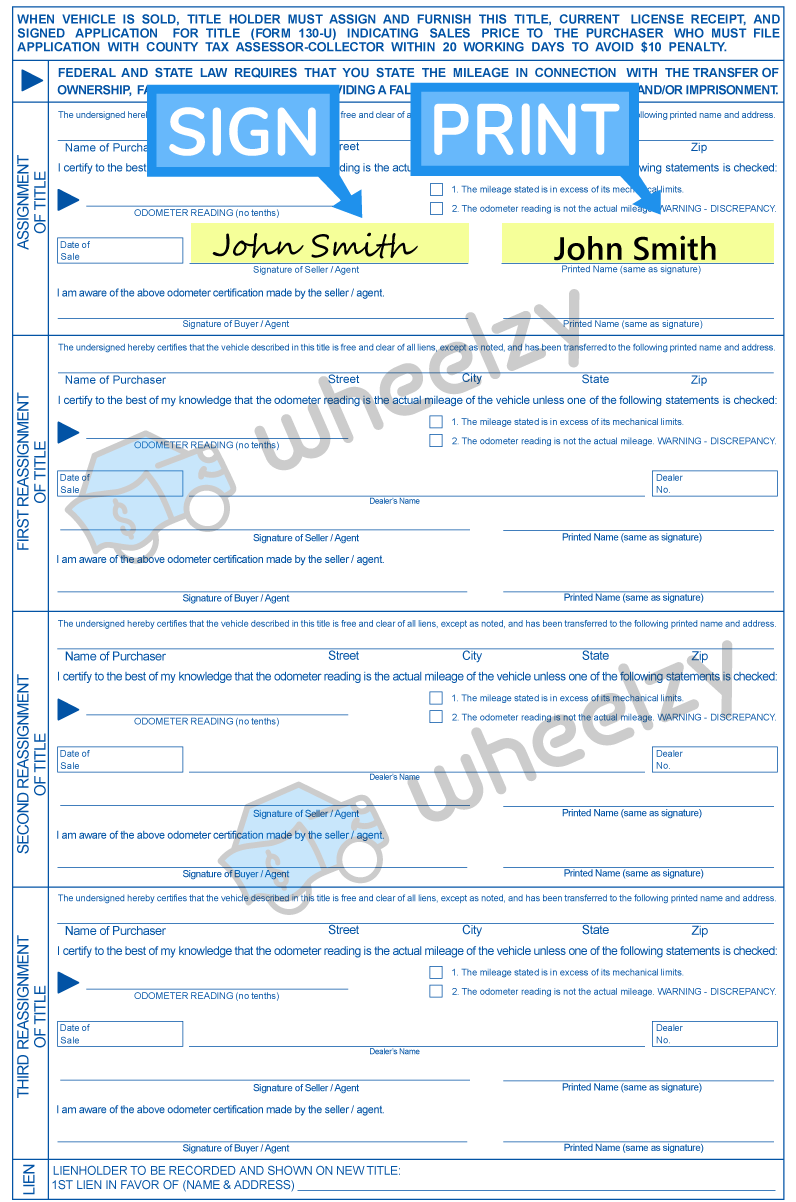
- Seller’s Signature and Printed Name: The seller must sign and print their name exactly as it appears on the front of the title. If there are multiple owners listed on the title, all individuals must sign, unless the title indicates ownership “OR,” in which case only one signature is required.
- Date of Sale: The date on which the ownership transfer occurs is essential.
For the Buyer:
- Buyer’s Information: The buyer must provide their full legal name and address. This should match the information provided by the seller and their identification.
- Buyer’s Signature and Printed Name: The buyer signs and prints their name, signifying their acceptance of the vehicle under the terms specified.
- Lienholder Information (if applicable): If the buyer is financing the purchase, the name and address of the lienholder (the bank or financial institution providing the loan) must be clearly indicated.
The Importance of Accuracy
Accuracy is paramount throughout this process. Any errors, such as misspelled names, incorrect VINs, or illegible handwriting, can cause significant delays. It’s advisable to use a blue or black pen and to write legibly. If a mistake is made, do not attempt to erase or use correction fluid. This can invalidate the title. In such cases, you will need to apply for a replacement title from the Texas Department of Motor Vehicles (TxDMV) and start the process over.
Steps for the Seller to Sign Over the Title
As the seller, your primary responsibility is to accurately complete the assignment of title section on the vehicle’s Certificate of Title. This section is typically found on the back of the title.
The Assignment of Title Section
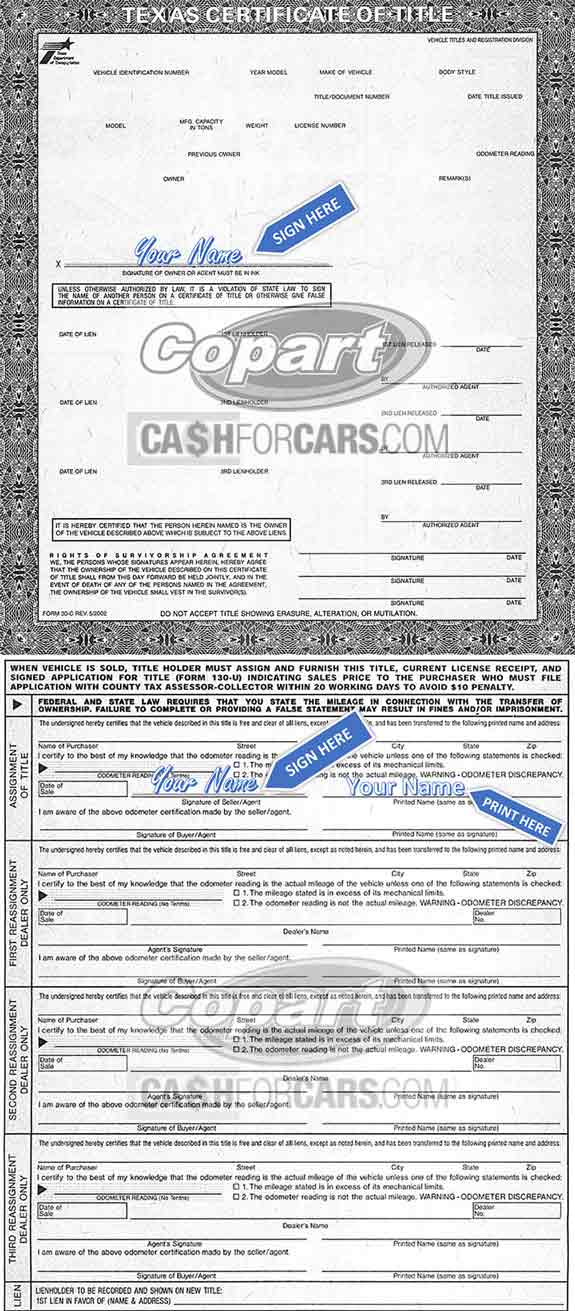
- Locate the Assignment Section: On the reverse side of the Texas Certificate of Title, you will find a section dedicated to the “Assignment of Title by Owner.”
- Fill in Vehicle Details: Confirm the vehicle’s make, model, year, and VIN are correctly listed.
- Record Odometer Reading: Enter the current mileage of the vehicle.
- Complete Buyer Information: Write the full legal name and address of the buyer. Ensure this is accurate as it will appear on the new title.
- State the Purchase Price: Enter the agreed-upon selling price. If the vehicle is a gift or being transferred without monetary exchange, you may need to indicate this appropriately, often by entering “$0” or “Gift.” Consult the TxDMV for specific guidance on non-sale transfers.
- Sign and Print Your Name: Sign your name as it appears on the front of the title and print your full name clearly. If your name is listed as “John A. Smith,” you must sign and print it exactly that way.
- Date the Transaction: Record the date of sale.
- Seller’s Disclosure of Odometer Information: You will also be required to sign a statement certifying that the odometer reading is accurate to the best of your knowledge, or that you know the actual mileage is different.
What to Do After Signing
- Provide the Signed Title to the Buyer: Once you have completed your part, hand the signed title over to the buyer.
- Bill of Sale: While not always mandatory for title transfer itself, it is highly recommended for both parties to complete a Bill of Sale. This document serves as a receipt and provides a record of the transaction, including the vehicle’s details, sale price, and date. The TxDMV often provides a standard form for this purpose.
- Remove License Plates: In Texas, license plates generally belong to the seller, not the vehicle. You should remove your license plates from the vehicle before the buyer takes possession.
- Notify the TxDMV (Optional but Recommended): While the buyer is responsible for titling and registration, you can optionally notify the Texas Department of Motor Vehicles (TxDMV) of the sale by submitting a Notice of Change of Ownership. This can help protect you from liability for any parking tickets or toll violations incurred by the new owner after the sale date.
Steps for the Buyer to Complete the Title Transfer
As the buyer, your responsibilities are to ensure the title is correctly signed over to you and to then complete the necessary steps with the Texas Department of Motor Vehicles (TxDMV) to register the vehicle and obtain a new title in your name.
Verifying the Signed Title
- Inspect the Title: Before handing over payment, carefully review the title provided by the seller. Ensure all the information you provided to the seller is accurately reflected.
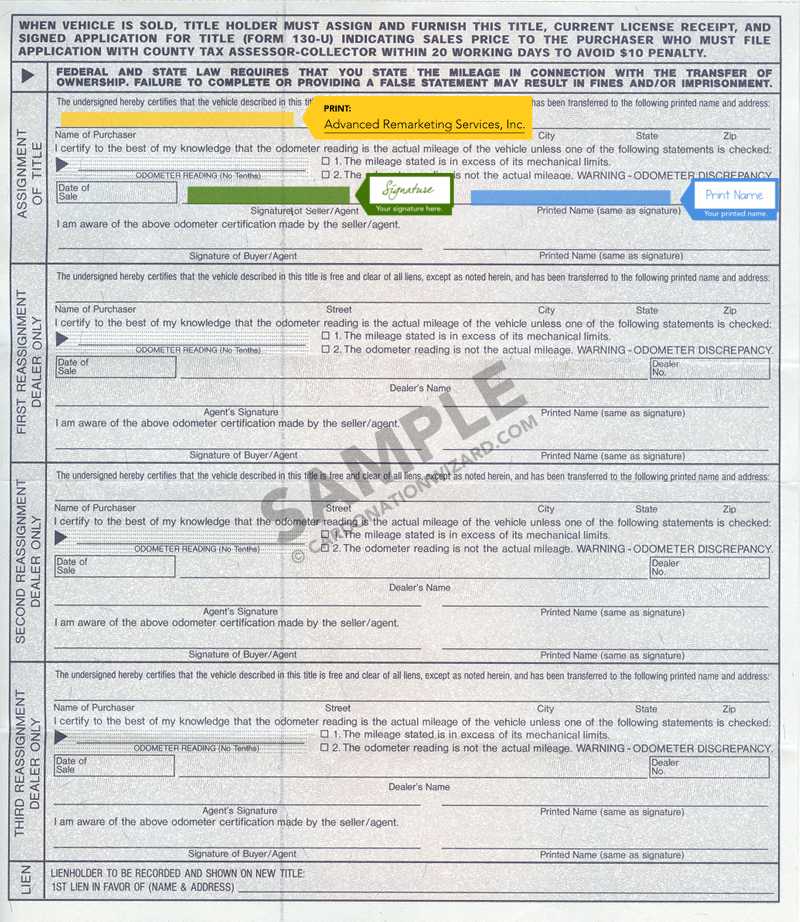
- Check Seller’s Signature: Verify that the seller has signed and printed their name correctly. If there are multiple owners listed, confirm all necessary signatures are present.
- Confirm VIN Match: Double-check that the VIN on the title matches the VIN on the vehicle.
- Review Odometer Reading: Ensure the odometer reading is present and appears accurate.
Submitting Paperwork to the TxDMV
After receiving the properly signed title from the seller, you have a limited time frame (typically 30 days) to transfer the title and register the vehicle in your name at a local county tax assessor-collector’s office. Missing this deadline can result in penalties.
Required Documents for the Buyer:
- The Signed Texas Certificate of Title: This is the primary document.
- Proof of Insurance: You must provide proof of current liability insurance for the vehicle.
- Valid Identification: A driver’s license or other acceptable form of identification.
- Bill of Sale: If provided by the seller, this document is crucial.
- Application for Texas Title and/or Registration (Form 130-U): This form needs to be completed with your information. You can often download this from the TxDMV website or obtain it at the county office.
- Smog Inspection Certificate (if applicable): Depending on the vehicle’s age and your location, a current smog inspection may be required.
- County and State Sales Tax: You will need to pay the applicable sales tax on the purchase price of the vehicle. If the vehicle was a gift or transferred between family members, specific exemptions may apply, but you will still need to document this.
- Title Transfer Fee: There will be a fee associated with transferring the title.
Completing Form 130-U
The Application for Texas Title and/or Registration (Form 130-U) is a comprehensive form that gathers all the necessary information for the TxDMV. Ensure you fill it out completely and accurately, including:
- Your full legal name and address.
- Vehicle details (Make, Model, Year, VIN).
- Odometer reading.
- Lienholder information, if applicable.
What Happens Next
Once you submit all the required documents and fees to the county tax assessor-collector’s office, they will process your application. You will receive new license plates (if applicable), a registration receipt, and a new Texas Certificate of Title will be mailed to you in the name of the buyer, or to the lienholder if one exists. This process confirms your legal ownership of the vehicle.
Special Circumstances and Considerations
While the general process applies to most vehicle sales, certain situations require specific attention.
Transferring a Title as a Gift
When a vehicle is gifted, the seller still needs to complete the assignment of title section. However, the purchase price field should reflect “$0” or “Gift.” The buyer will need to provide documentation, such as a notarized affidavit, to support the gift transfer and potentially avoid sales tax. Consult the TxDMV or the county tax office for specific requirements regarding gift transfers.
Transferring a Title After a Death
If you are transferring a title from a deceased owner’s estate, the process involves additional legal steps. You will likely need to present a death certificate and potentially a court order or affidavit of heirship to prove your legal right to transfer the title. The specific requirements can vary, so it is best to consult with the county tax assessor-collector’s office or an estate attorney.
Out-of-State Titles
If you are purchasing a vehicle from out of state and bringing it to Texas, the process involves transferring the out-of-state title into a Texas title. You will need to present the out-of-state title, proof of Texas insurance, a valid Texas VIN inspection, and complete the Texas application for title and registration. You will also likely need to pay Texas sales tax if you have not paid equivalent tax in another state.
Dealing with Lost or Damaged Titles
If the seller has lost or damaged the original title, they must apply for a replacement title from the TxDMV before they can sign it over. This can add time to the transaction, so it’s essential to address this issue early on.
By carefully following these steps and ensuring all documentation is accurate and complete, both buyers and sellers in Texas can navigate the process of signing over a car title with confidence, ensuring a legal and hassle-free transfer of vehicle ownership.
LifeOutOfTheBox is a participant in the Amazon Services LLC Associates Program, an affiliate advertising program designed to provide a means for sites to earn advertising fees by advertising and linking to Amazon.com. Amazon, the Amazon logo, AmazonSupply, and the AmazonSupply logo are trademarks of Amazon.com, Inc. or its affiliates. As an Amazon Associate we earn affiliate commissions from qualifying purchases.