
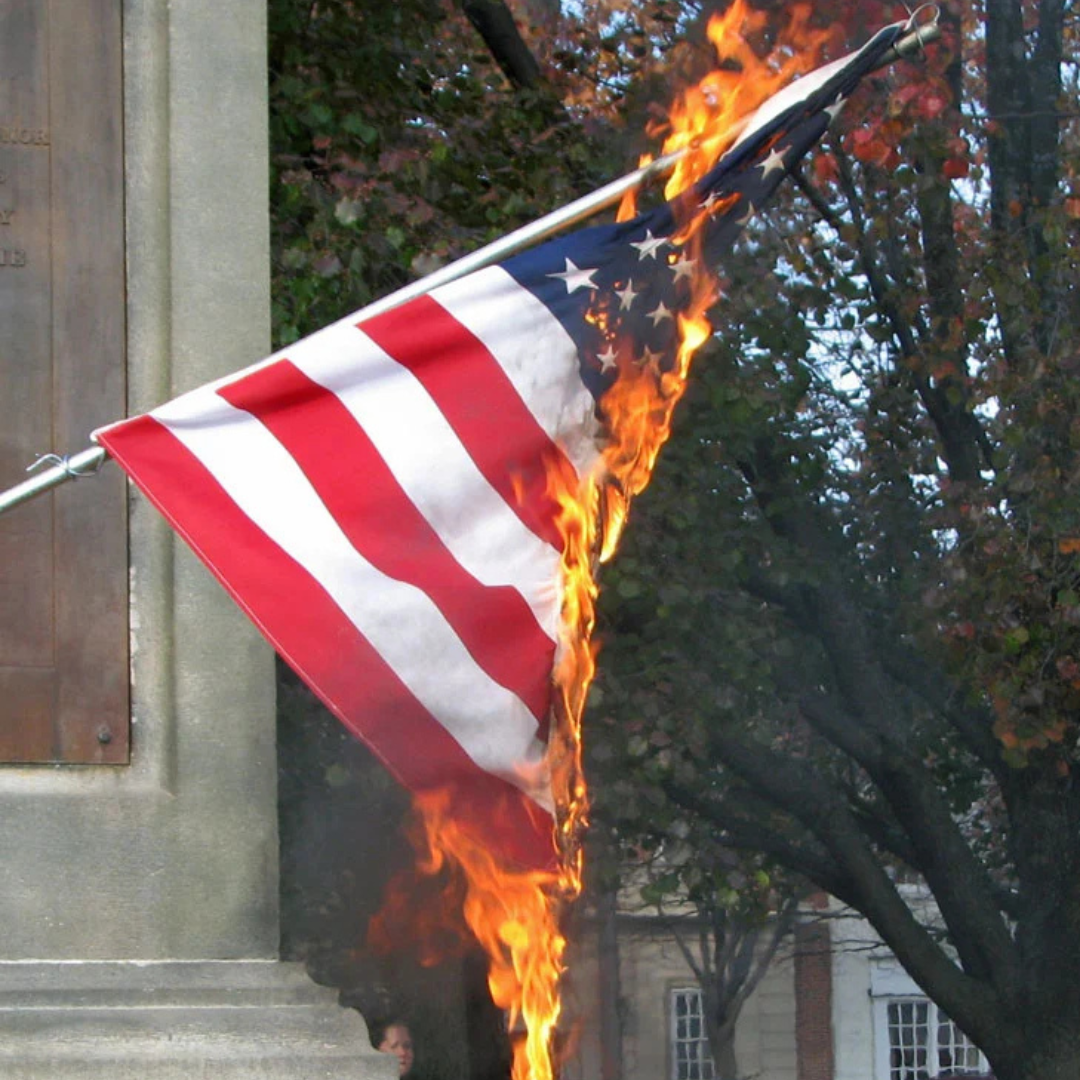
The American flag is a potent symbol, evoking deep emotions and strong opinions across the nation. In Texas, like elsewhere, the act of flag desecration, particularly burning, often sparks debate and raises legal questions. This article delves into the legality of burning the American flag in Texas, examining the constitutional protections afforded to such acts and the relevant legal frameworks that govern them. Understanding these nuances is crucial for appreciating the complexities of free speech and symbolic expression within the state and the broader United States.
Constitutional Protections and Symbolic Speech
The question of whether burning the American flag is illegal in Texas is intrinsically tied to the broader legal landscape of free speech in the United States, as protected by the First Amendment of the U.S. Constitution. This amendment guarantees the right to freedom of speech, which has been interpreted by the Supreme Court to encompass not only spoken or written words but also symbolic acts.

The Supreme Court’s Stance on Flag Desecration
The Supreme Court has addressed the issue of flag burning on multiple occasions, establishing a significant precedent that directly impacts how such acts are viewed legally. The landmark case of Texas v. Johnson (1989) is paramount. In this case, Gregory Lee Johnson was convicted in Texas for burning an American flag during a protest at the 1984 Republican National Convention in Dallas. The Court, in a 5-4 decision, ruled that Johnson’s conviction was unconstitutional, holding that the act of flag burning constituted expressive conduct protected by the First Amendment. The Court reasoned that the flag’s special place in society and the emotions it elicits are the very reasons why political expression by means of such conduct must be protected against government prohibition.
Following Texas v. Johnson, Congress passed the Flag Protection Act of 1989 in an attempt to ban flag burning. However, this law was also struck down by the Supreme Court in United States v. Eichman (1990), reinforcing the principle that flag burning is a form of protected symbolic speech. These rulings established that while the flag is a revered symbol, the government cannot prohibit expressions simply because society finds them offensive.
Expressive Conduct vs. Incendiary Acts
It is important to distinguish between flag burning as a form of political protest and flag burning that poses a direct threat or is conducted in a manner that violates other laws. The First Amendment protection applies to expressive conduct intended to convey a particular message. However, if the act of burning a flag is done in a manner that creates a public hazard, such as setting a large fire in a populated area, or if it violates other state or local ordinances related to public safety, such as arson or fire code violations, then those specific actions could be subject to legal penalties. These penalties would stem from the violation of public safety laws, not from the symbolic act of burning the flag itself.
Texas State Laws and Flag Protection
While the U.S. Constitution provides the overarching framework for free speech protections, states can enact laws that, in some instances, might appear to address flag desecration. However, any state law that directly prohibits the burning of the American flag as a form of protest would likely be deemed unconstitutional in light of the Supreme Court‘s rulings.
The Texas Flag Code
Texas does have a Texas Flag Code, which outlines proper respect and etiquette for the state flag and the U.S. flag. This code emphasizes respect for the flag and suggests appropriate methods for its disposal, such as burning in a dignified manner by veterans’ organizations. However, the code does not criminalize the act of burning the flag for expressive purposes. Its intent is more about guiding conduct in a respectful way, rather than imposing legal sanctions for political dissent.
The Texas Flag Code addresses matters like the display of the flag, its condition, and how it should be retired. For instance, it specifies that a flag that is “torn, ragged, or worn beyond repair” should be destroyed in a “dignified manner.” While it doesn’t explicitly mandate that only veterans’ groups can do this, it implies a ceremonious act. Crucially, it does not create criminal penalties for individuals who burn the flag as a political statement. This aligns with the federal interpretation that such acts are protected speech.
Misconceptions and Local Ordinances
There can be confusion regarding the legality of flag burning due to a general perception that it is inherently wrong or illegal. This perception might lead individuals to believe that local ordinances or state laws prohibit it outright. While local authorities can enforce laws related to public safety, they cannot enact ordinances that contradict First Amendment protections established by the Supreme Court. Therefore, any local ordinance attempting to ban flag burning as a protest would likely be challenged and struck down.
It is vital to differentiate between respecting the flag and having the legal right to express dissent, even through acts that many find offensive. The legal framework prioritizes the right to free expression, even when that expression involves symbols as cherished as the American flag.
The Nuances of Symbolic Speech in Texas
The legal protections for flag burning in Texas are a testament to the broad interpretation of First Amendment rights. These protections highlight a fundamental principle in American jurisprudence: the government cannot suppress speech simply because it is unpopular or offensive.
Freedom of Expression and Its Limits
While the First Amendment provides robust protection for symbolic speech, it is not absolute. There are established categories of speech that receive less protection or no protection, such as incitement to violence, defamation, or obscenity. However, flag burning has been consistently categorized by the Supreme Court as political expression that falls squarely within protected speech.
The rationale behind protecting flag burning as speech is that it can serve as a powerful form of protest against government policies or actions. Denying this form of expression would silence a segment of the population and limit the full spectrum of public discourse. In Texas, as in all states, the right to protest, even in ways that are provocative, is safeguarded.
Respect vs. Legality: A Distinction
It is crucial for Texans and visitors to understand the distinction between what is legally permissible and what is considered respectful by the majority of the population. While burning the American flag as a form of political protest is legal in Texas, many citizens find the act deeply disrespectful and unpatriotic. This is a societal sentiment, not a legal prohibition.
Travelers visiting Texas who are interested in understanding the state’s cultural and legal landscape should be aware of these distinctions. While the freedom to express oneself is a core tenet, it coexists with the understanding that such expressions can evoke strong reactions. This interplay between legal rights and societal norms is a fascinating aspect of American life and culture. For instance, understanding local customs and viewpoints can enrich one’s travel experience in places like Austin or Houston, where diverse perspectives often converge.

Conclusion: Legality and Respect in Texas
In conclusion, based on U.S. Supreme Court rulings, it is not illegal to burn the American flag in Texas when done as a form of political protest or expressive conduct protected by the First Amendment. The Supreme Court has consistently held that such acts, while potentially offensive to many, are a protected form of symbolic speech.
While Texas has a Flag Code that promotes respect for the flag and outlines dignified methods for its disposal, this code does not criminalize flag burning as a protest. The legal framework in Texas aligns with federal law, prioritizing the right to freedom of expression.
Travelers and residents alike should appreciate that the legality of an action does not always equate to societal acceptance. The act of flag burning in Texas remains a contentious issue, highlighting the enduring tension between protected speech and deeply held national symbols. Understanding these legal and social dynamics is key to navigating the complex landscape of American civil liberties within the great state of Texas.
LifeOutOfTheBox is a participant in the Amazon Services LLC Associates Program, an affiliate advertising program designed to provide a means for sites to earn advertising fees by advertising and linking to Amazon.com. Amazon, the Amazon logo, AmazonSupply, and the AmazonSupply logo are trademarks of Amazon.com, Inc. or its affiliates. As an Amazon Associate we earn affiliate commissions from qualifying purchases.