
Navigating the intricacies of identification is paramount for travelers, especially when crossing state lines or embarking on international journeys. In the United States, the REAL ID Act has introduced a new standard for driver’s licenses and identification cards, aiming to enhance security and streamline access to federal facilities and commercial air travel. For residents and visitors alike in the Lone Star State, understanding whether their Texas driver’s license meets these federal requirements is a crucial piece of information for seamless travel experiences. This article delves into the specifics of the Texas REAL ID and its implications for various travel scenarios.

Understanding the REAL ID Act
The REAL ID Act of 2005 was enacted by Congress in response to the September 11, 2001, terrorist attacks. Its primary objective is to establish minimum security standards for the issuance and production of state driver’s licenses and identification cards. These standards are designed to make identification documents more secure and harder to counterfeit, thus improving national security.
Key Provisions of the REAL ID Act:
- Minimum Security Standards: States must implement enhanced security features on their identification cards, such as embedded holograms, microprinting, and security threads.
- Identity Verification: Issuing agencies must verify the identity, date of birth, and Social Security number of applicants through rigorous checks of original source documents.
- Serialization: Each identification card must have a unique, reproducible number.
- Federal Facility Access: Beginning May 7, 2025, a REAL ID-compliant card will be required to access certain federal facilities, including military bases and most federal government offices.
- Domestic Air Travel: Starting on the same date, travelers will need a REAL ID-compliant driver’s license or identification card, or another acceptable form of identification, to board federally regulated commercial aircraft.
The implementation of the REAL ID Act has been a phased process, with states gradually adopting the new standards. The Department of Homeland Security (DHS) has provided extensions and guidance throughout this transition, emphasizing that eventually, a compliant card will be necessary for specific federal purposes.
Texas Driver’s Licenses and REAL ID Compliance
The question of whether a Texas driver’s license is a REAL ID is best answered by understanding the types of licenses issued by the Texas Department of Public Safety (DPS). Texas has been working towards REAL ID compliance, offering residents the option to obtain a card that meets federal standards.
Types of Texas Driver’s Licenses:
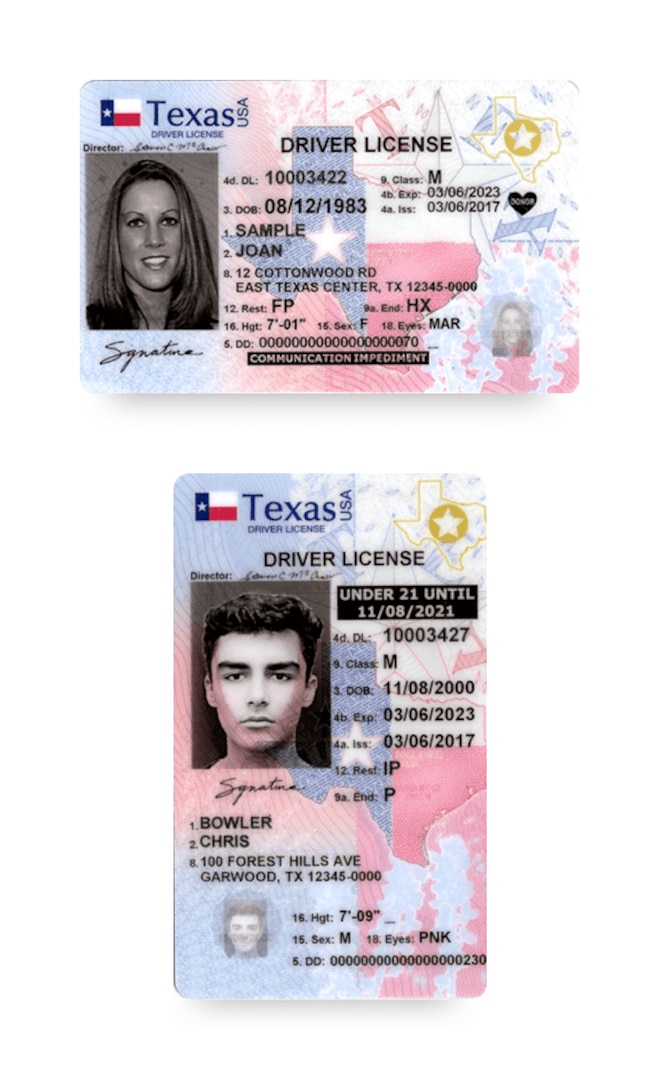
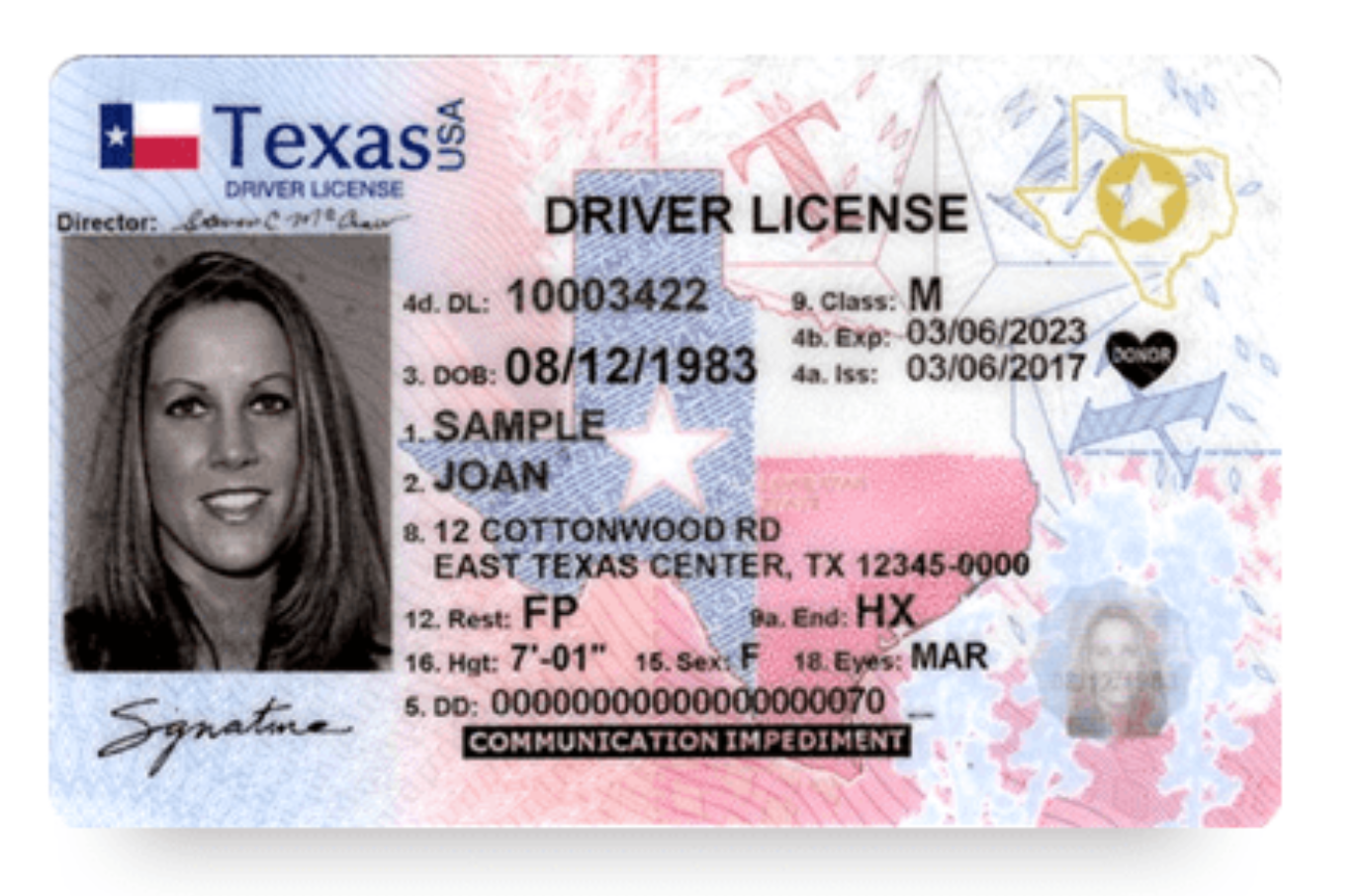
Texas driver’s licenses and identification cards are distinguished by a star icon in the upper right corner.
-
Standard Driver’s License (No Star): This is a standard Texas driver’s license. While it is a valid form of identification for driving purposes within Texas and for many other uses, it does not meet the federal REAL ID requirements. This means it cannot be used to board commercial aircraft or enter certain federal facilities after the enforcement date.
-
REAL ID-Compliant Driver’s License (with Star): This license features a small star in the upper right corner, signifying that it meets the federal REAL ID standards. To obtain a REAL ID-compliant license in Texas, residents must apply in person at a Texas DPS driver license office and present specific documentation proving their identity, Social Security number, and lawful presence in the United States. The documentation requirements are stringent and designed to comply with federal mandates.
Obtaining a REAL ID-Compliant License in Texas:
The process of obtaining a REAL ID-compliant license in Texas involves a detailed application and verification procedure.
Documentation Requirements:
Applicants must provide original or certified copies of several documents. The exact requirements can vary, so it is always advisable to check the official Texas DPS website for the most up-to-date list. Generally, these include:
- Proof of Identity: Such as a certified copy of a birth certificate or a U.S. passport.
- Proof of Social Security Number: A Social Security card, W-2 form, or pay stub with the applicant’s full Social Security number.
- Proof of U.S. Citizenship or Lawful Presence: Such as a U.S. birth certificate, U.S. passport, or immigration documents.
- Proof of Texas Residency: Two different documents showing a physical address in Texas, such as utility bills, rental agreements, or bank statements.
Application Process:
- Gather Documents: Collect all required original documents.
- Schedule an Appointment: It is highly recommended to schedule an appointment at a Texas DPS driver license office, as walk-in availability can be limited.
- Visit the Office: Present the gathered documents to the DPS representative.
- Pass Vision and Driving Tests (if applicable): If applying for a new license or renewing an existing one, vision and driving tests may be required.
- Pay Fees: There will be a fee associated with obtaining the REAL ID-compliant license.
It is crucial for Texans to ensure they have a REAL ID-compliant license if they plan to travel by air domestically or visit federal facilities after the enforcement deadline.
Implications for Travel and Federal Access
The distinction between a standard Texas driver’s license and a REAL ID-compliant license has significant implications for travel and access to certain federal facilities.
Domestic Air Travel:
As of May 7, 2025, a REAL ID-compliant driver’s license or identification card will be required for all individuals boarding federally regulated commercial aircraft within the United States. This means that if your Texas driver’s license does not have the star icon, you will need to present an alternative acceptable form of identification to fly.
Alternative Acceptable IDs:
If you do not have a REAL ID-compliant license, other forms of identification that are acceptable for boarding commercial aircraft include:
- A U.S. passport or passport card.
- A Department of Homeland Security-issued photo identification, such as a Permanent Resident Card.
- A U.S. Citizenship and Immigration Services-issued Employment Authorization Card (I-766).
- A foreign government-issued passport.
For frequent travelers, obtaining a REAL ID-compliant Texas license can simplify the airport security process, eliminating the need to carry multiple forms of identification.
Access to Federal Facilities:
Beyond air travel, REAL ID-compliant cards are also necessary for entering certain federal facilities. This includes:
- Military bases.
- Most federal courthouses.
- Federal prisons.
- Other federal government buildings that require identification for entry.
If your Texas driver’s license is not REAL ID-compliant, you will need to present an alternative acceptable form of identification to gain access to these locations. This can be particularly important for individuals who work in or frequently visit such facilities.
Planning Your REAL ID Application
Given the upcoming enforcement date, it is prudent for Texas residents to assess their current identification and plan accordingly if they require a REAL ID-compliant driver’s license or identification card.
When to Apply:
- If you plan to fly domestically or visit federal facilities after May 7, 2025, and do not have a U.S. passport or other acceptable alternative ID: You should apply for a REAL ID-compliant license as soon as possible.
- If your current driver’s license is nearing its expiration date: Consider applying for a REAL ID-compliant license during your renewal process.
- If you have recently moved to Texas: You will need to obtain a Texas driver’s license, and you can choose to apply for a REAL ID-compliant version at that time, provided you meet the residency requirements.
Tips for a Smooth Application Process:
- Visit the Texas DPS Website: The official Texas DPS website (www.dps.texas.gov) is the most reliable source of information regarding documentation requirements, office locations, and appointment scheduling.
- Verify Your Documents: Before your appointment, carefully review the list of required documents and ensure you have the correct, unexpired originals or certified copies. Misplaced or incorrect documents are the most common reason for application delays.
- Schedule an Appointment: As mentioned earlier, appointments significantly reduce wait times. Plan ahead, especially during busy periods.
- Allow Ample Time: The in-person application process for a REAL ID can take longer than a standard renewal due to the verification steps involved.
- Keep Your Texas REAL ID Safe: Once you obtain your REAL ID-compliant license, treat it as you would any other important identification document.
By understanding the REAL ID Act and the specific requirements for obtaining a REAL ID-compliant driver’s license in Texas, residents can ensure they are prepared for future travel and access needs. This proactive approach will allow for smoother journeys and easier entry into federal facilities, making travel in and around the United States a less complicated affair.
LifeOutOfTheBox is a participant in the Amazon Services LLC Associates Program, an affiliate advertising program designed to provide a means for sites to earn advertising fees by advertising and linking to Amazon.com. Amazon, the Amazon logo, AmazonSupply, and the AmazonSupply logo are trademarks of Amazon.com, Inc. or its affiliates. As an Amazon Associate we earn affiliate commissions from qualifying purchases.