
The question of whether Texas State University competes at the highest level of collegiate athletics often arises, especially among fans and prospective students interested in the vibrancy of college sports. Understanding the nuances of collegiate athletic divisions is key to answering this question accurately. The National Collegiate Athletic Association (NCAA) governs college sports in the United States, categorizing its member institutions into different divisions based on factors like the number of sports sponsored, the level of competition, and the allocation of athletic scholarships. This framework ensures a structured and competitive environment for student-athletes across various universities.

Understanding NCAA Divisions
The NCAA is broadly divided into three main divisions: Division I, Division II, and Division III. Each division has specific rules and standards that institutions must meet.
Division I: The Pinnacle of Collegiate Athletics
Division I is the largest and most prominent division within the NCAA. It is characterized by its high level of competition, significant athletic scholarship opportunities, and extensive media coverage. Institutions in Division I often sponsor a wide array of sports for both men and women, with football and men’s basketball programs frequently being the most visible and financially impactful.
Key Characteristics of Division I:
- Scholarship Opportunities: Division I schools are permitted to offer the most athletic scholarships, providing significant financial aid to student-athletes.
- Championships: Division I hosts numerous national championships across various sports, attracting national attention and showcasing elite talent.
- Revenue Generation: Many Division I programs, particularly in football and men’s basketball, generate substantial revenue through ticket sales, television contracts, and sponsorships, which can be reinvested into athletic programs.
- Competitiveness: The level of competition in Division I is exceptionally high, with athletes often aspiring to professional careers.
Division II: Balancing Athletics and Academics
Division II represents a middle ground, offering a competitive athletic environment while emphasizing the balance between academics and athletics. While scholarships are available, they are generally not as numerous or as comprehensive as those offered in Division I.
Key Characteristics of Division II:
- Scholarship Limitations: Division II schools can offer athletic scholarships, but the total number and amount are capped.
- Broad Participation: This division often sees a higher proportion of student-athletes participating in a wider range of sports.
- Emphasis on Academics: While athletics are important, Division II institutions generally place a stronger emphasis on the academic success and overall well-being of their student-athletes.
Division III: Athletics as an Extracurricular Pursuit
Division III is the largest division by the number of member institutions. The fundamental philosophy of Division III is that athletics are an integral part of the educational experience, not a primary focus that overshadows academics.
Key Characteristics of Division III:
- No Athletic Scholarships: The defining characteristic of Division III is the prohibition of athletic scholarships. Student-athletes receive financial aid based solely on academic merit, financial need, or other non-athletic criteria.
- Academic Focus: The primary emphasis is on academics, with athletics viewed as an enriching extracurricular activity.
- Broader Participation: Division III encourages widespread participation in athletics, with a focus on sportsmanship and personal development.
Texas State University’s Athletic Classification

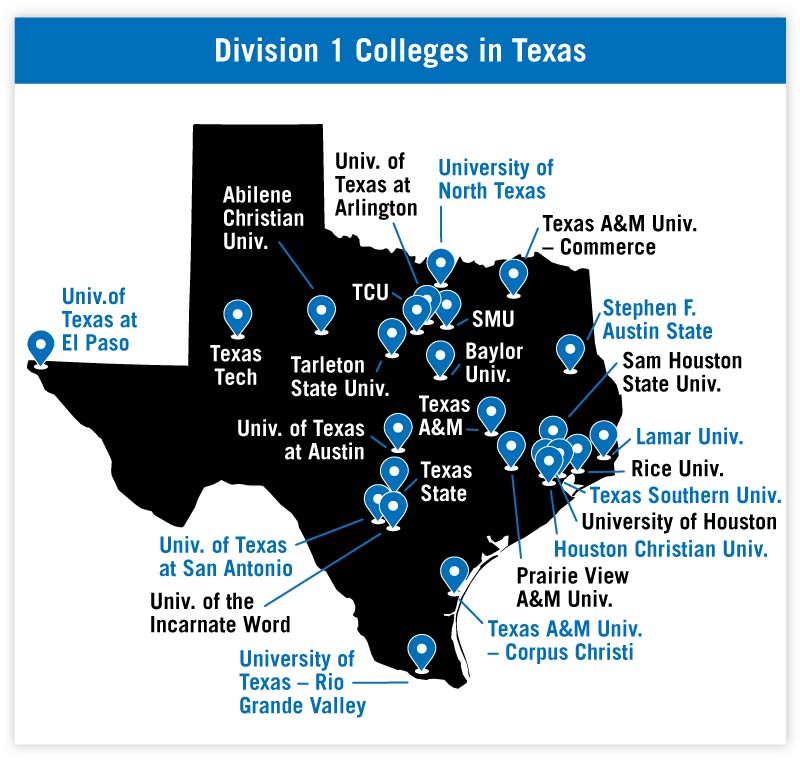
Now, let’s turn our attention to Texas State University. Historically, Texas State has been a prominent member of NCAA Division I. The university’s athletic department, known as Texas State Athletics, competes within the Sun Belt Conference.
Texas State in the Sun Belt Conference
The Sun Belt Conference is a competitive NCAA Division I athletic conference. Institutions within the Sun Belt vie for championships in a variety of sports, including football, men’s and women’s basketball, baseball, softball, track and field, and more. Texas State has been an active and successful participant in this conference, contributing to its reputation for competitive athletics.
The “Division 1” Distinction
Therefore, to directly answer the question, yes, Texas State University is a Division I institution within the NCAA structure. This classification signifies that its athletic programs operate at the highest level of collegiate competition, offering athletic scholarships and participating in the NCAA’s most prominent championships. The university’s commitment to its athletic programs is evident in its participation in the Sun Belt Conference and the ongoing development of its athletic facilities and support systems.
Implications of Division I Status for Visitors and Fans
For visitors, fans, and prospective students interested in Texas State University, understanding its Division I status has several implications:
Experiencing Game Day and Athletic Events
As a Division I program, Texas State hosts a variety of exciting athletic events throughout the academic year. The most prominent among these are football games played at Bobcat Stadium, which often feature vibrant tailgating traditions and passionate fan bases. Basketball games at Strahan Arena also draw significant crowds, offering an energetic atmosphere. Attending these events provides a fantastic opportunity to immerse oneself in the university’s spirit and experience the competitive excitement of Division I athletics.
Athletic Facilities and Infrastructure
Division I status often correlates with significant investment in athletic facilities. Texas State University boasts modern venues that support its numerous sports programs. These facilities not only enhance the experience for student-athletes but also provide impressive settings for fans and visitors attending games or events. Exploring these venues can be a highlight of any visit to the campus, showcasing the university’s commitment to athletic excellence.
Student-Athlete Experience and Opportunities
For prospective student-athletes, Texas State’s Division I classification is crucial. It means access to a high level of coaching, training facilities, and the opportunity to compete against some of the best collegiate talent in the nation. The university’s ability to offer athletic scholarships is also a significant factor for many students considering their higher education and athletic pursuits.
The Broader Impact on University Culture
The presence of a Division I athletic program often influences the broader culture of a university. It fosters a sense of community and pride among students, alumni, and the surrounding San Marcos area. Sporting events become focal points for social gatherings and shared experiences, contributing to a dynamic and engaging campus life. The energy generated by Texas State Athletics can be palpable, enhancing the overall appeal of the university as a destination for both education and entertainment.
Conclusion: A Clear Division I Identity
In conclusion, Texas State University unequivocally competes in NCAA Division I as a proud member of the Sun Belt Conference. This designation is not merely a label but a reflection of the university’s commitment to high-level collegiate sports, the robust opportunities it provides to its student-athletes, and the vibrant athletic culture it cultivates. For anyone interested in the dynamic world of college sports, understanding Texas State’s position within the NCAA hierarchy provides essential context for appreciating its athletic achievements and the exciting experiences it offers to fans and the university community alike.
LifeOutOfTheBox is a participant in the Amazon Services LLC Associates Program, an affiliate advertising program designed to provide a means for sites to earn advertising fees by advertising and linking to Amazon.com. Amazon, the Amazon logo, AmazonSupply, and the AmazonSupply logo are trademarks of Amazon.com, Inc. or its affiliates. As an Amazon Associate we earn affiliate commissions from qualifying purchases.