
Understanding Texas’s Capital Punishment Landscape
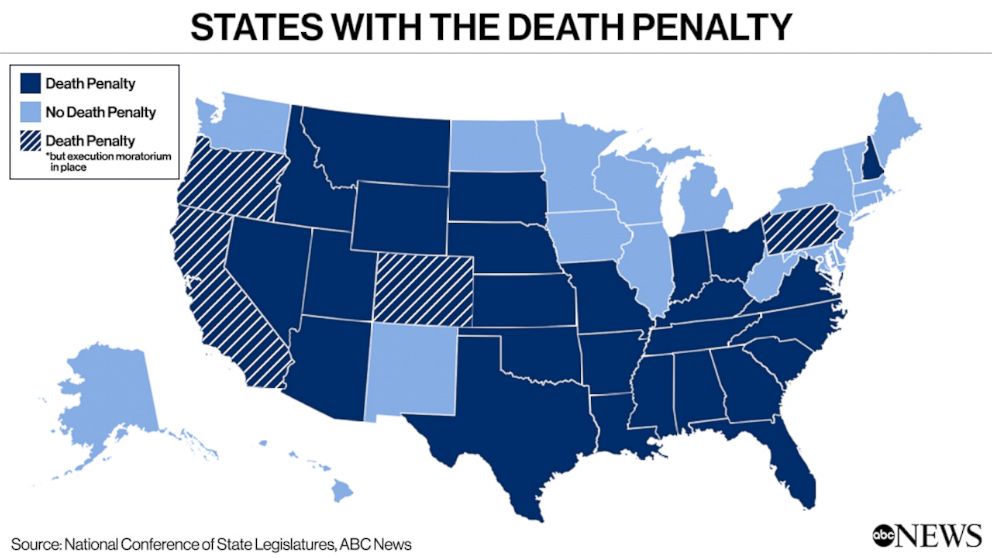
The question of whether the death penalty exists in Texas is a definitive yes. The Lone Star State holds a prominent, and often controversial, position in the United States regarding capital punishment. For decades, Texas has led the nation in the number of executions carried out, making it a focal point for discussions surrounding justice, crime, and human rights. This article delves into the history, legal framework, and ongoing debates surrounding the death penalty in Texas, offering an insightful look into a complex and deeply debated aspect of the state’s justice system.

Historical Context and Legal Evolution
The practice of capital punishment in Texas has a long and multifaceted history, evolving significantly over time. From early forms of execution to the modern legal procedures, the state’s approach to the death penalty reflects broader societal attitudes and legal developments.
Early Capital Offenses and Methods
In its early years, Texas, like many jurisdictions, had a broader range of offenses punishable by death. Methods of execution were often public and varied, including hanging. As the legal system matured, the scope of capital crimes narrowed, and the methods of execution became more standardized and less public.
The Death Penalty in the Modern Era
Following the United States Supreme Court’s landmark decision in Furman v. Georgia (1972), which temporarily halted capital punishment nationwide due to its perceived arbitrary and discriminatory application, Texas, like other states, revised its capital punishment statutes. The subsequent Supreme Court ruling in Gregg v. Georgia (1976) reinstated the death penalty, provided that it was applied under carefully crafted laws designed to ensure fairness and reduce arbitrariness. Texas was quick to implement new legislation that met these constitutional requirements, paving the way for its re-emergence as a state that actively carries out executions.
The state’s penal code defines capital offenses, which are typically crimes involving murder under specific aggravating circumstances, such as the murder of a peace officer, multiple murders, or murders committed during the commission of another felony. The legal process for a capital case in Texas is intricate, involving specialized prosecutors and defense attorneys, and extensive appeals that can span many years, often decades.
The Process of Capital Punishment in Texas
The journey from a capital offense conviction to execution in Texas is a protracted and legally rigorous process. It involves multiple stages of trial, sentencing, and appeals, designed, in theory, to ensure due process and the accurate application of justice.
Trial and Sentencing
In Texas, a capital murder trial culminates in two phases if the defendant is found guilty of the capital offense. The first phase determines guilt or innocence. If found guilty, the second phase, known as the “punishment phase” or “sentencing phase,” determines the sentence. In this phase, the jury must consider two “special issues”:
- Whether the conduct of the defendant that caused the death of the victim was committed deliberately and with the reasonable expectation that the death of the victim or another person would result.
- Whether there is a probability that the defendant would commit criminal acts of violence in the future that would constitute a continuing threat to society.
If the jury unanimously answers “yes” to both of these questions, the sentence is death. If the jury answers “no” to either question, the sentence is life imprisonment without parole. This bifurcated trial system is a cornerstone of Texas’s capital punishment scheme, aiming to balance retribution with the potential for future dangerousness.
Appeals and Gubernatorial Clemency
Following a death sentence, the appeals process begins automatically. This multi-layered system involves review by state appellate courts, including the Texas Court of Criminal Appeals, and potentially federal courts. These appeals examine legal errors, constitutional issues, and the sufficiency of the evidence presented at trial. This process is lengthy, and many inmates spend years, often decades, on death row awaiting the resolution of their appeals.
In addition to judicial appeals, the governor of Texas has the power to grant clemency, which can include a full pardon, a commutation of sentence to life imprisonment, or a reprieve of execution. However, the governor’s power in this regard is limited, especially in capital cases. The Texas Board of Pardons and Paroles plays a significant role in clemency recommendations.
Methods of Execution in Texas
Texas primarily utilizes lethal injection as its method of execution. This method has been the standard since the late 1970s, though the specific drug protocols have evolved over time.
Lethal Injection: The Primary Method
Lethal injection involves the administration of a series of drugs intravenously. The typical protocol in Texas has historically involved a three-drug sequence: a sedative to induce unconsciousness, a paralytic agent to stop breathing, and a potassium chloride solution to stop the heart. However, due to drug availability issues and legal challenges, the protocol has been modified. Many states, including Texas, have moved towards using a single, high-dose barbiturate to achieve both unconsciousness and death.
The execution process takes place at the Polunsky Unit (formerly the Walla Walla Unit) of the Texas Department of Criminal Justice in Livingston, Texas. The procedure is carried out by trained medical personnel, though the ethical and practical implications of medical professionals participating in executions remain a subject of debate.
Alternative Methods and Historical Changes
While lethal injection is the current primary method, Texas law does allow for alternative methods if lethal injection is deemed unconstitutional or otherwise unavailable. Historically, hanging was the method of execution. In the early 2000s, there was a brief period where the electric chair was considered as a backup. However, lethal injection has remained the consistent and predominant method for decades.
Debates and Controversies Surrounding the Death Penalty in Texas
The death penalty in Texas is a subject of intense and persistent debate, touching upon ethical, moral, legal, and practical considerations. Proponents argue it serves as a just retribution for heinous crimes and a deterrent to future offenses, while opponents raise concerns about its morality, potential for error, and discriminatory application.
Arguments for Capital Punishment
Advocates for the death penalty often emphasize its retributive function, arguing that for certain crimes, death is the only punishment that truly fits the offense. The concept of “an eye for an eye” resonates with many who believe in proportionate justice. Another frequently cited argument is deterrence; the idea that the fear of execution dissuades potential criminals from committing capital offenses. While empirical evidence on the deterrent effect of the death penalty is widely debated and inconclusive, proponents maintain that it acts as a significant deterrent.
Furthermore, supporters point to the incapacitation of dangerous offenders. Once executed, a convicted murderer can never harm another person, either within prison or if they were to somehow escape or be released. The cost of long-term incarceration for individuals serving life sentences without parole is also sometimes raised as a consideration, though studies on the relative costs of death penalty cases versus life imprisonment are complex and often contested.
Arguments Against Capital Punishment
Opponents of the death penalty highlight several critical concerns. Foremost among these is the irreversible nature of execution and the risk of executing an innocent person. Texas, like other states with capital punishment, has seen cases where individuals sentenced to death were later exonerated, sometimes after years on death row. These instances raise profound questions about the infallibility of the justice system.
Concerns about the discriminatory application of the death penalty are also prominent. Studies have suggested racial disparities in sentencing, with defendants accused of killing white victims more likely to receive a death sentence than those accused of killing Black victims. Socioeconomic status and the quality of legal representation are also cited as potential factors influencing death penalty outcomes, raising questions about fairness and equal justice under the law.
The morality and ethics of state-sanctioned killing are central to the abolitionist movement. Many argue that the death penalty is a cruel and unusual punishment, violating fundamental human rights. The potential for botched executions and the suffering involved are also significant ethical considerations. The Catholic Church, for instance, has increasingly called for the abolition of the death penalty, viewing it as an attack on the dignity of human life.
Impact on Tourism and Public Perception
While the question of the death penalty itself is rooted in the justice system, its existence and the high number of executions in Texas can indirectly influence perceptions and, in some niche ways, affect considerations for visitors interested in the state’s penal system or legal history. However, it’s crucial to distinguish this from mainstream tourism. Travelers visiting Texas are generally drawn to its vibrant cities, rich history, diverse landscapes, and unique culture. Attractions like the Alamo in San Antonio, the Space Center Houston, and the Austin music scene are the primary draws.
For those interested in the justice system, visits to museums or historical sites might offer context on the evolution of law and order, but direct engagement with the death penalty apparatus is not a typical tourist activity. The focus for most visitors to Texas remains on its renowned food, music, and cultural experiences. The state’s penal history, while a significant aspect of its societal narrative, is not a primary driver for leisure travel.
The Future of Capital Punishment in Texas
The trajectory of the death penalty in Texas remains a subject of ongoing legal and societal deliberation. While Texas continues to be a leading state in executions, trends and challenges suggest a complex future for capital punishment.
Shifting Legal and Political Landscapes
Nationwide, there has been a gradual decline in the number of death sentences and executions in recent decades. This trend, while more pronounced in some states than others, reflects evolving public opinion, increased awareness of wrongful convictions, and legal challenges to the death penalty. In Texas, the number of death sentences handed down and executions carried out has also seen fluctuations. Legal challenges to lethal injection protocols, the availability of certain drugs, and the persistent concerns about fairness and due process continue to shape the application of capital punishment.

Abolitionist Efforts and Public Opinion
Abolitionist movements within Texas and across the country actively work to end capital punishment through legislative advocacy, public awareness campaigns, and legal challenges. While public opinion polls in Texas have historically shown strong support for the death penalty, these opinions can be influenced by various factors, including the presentation of information regarding wrongful convictions and racial disparities. The political climate and the stances of elected officials also play a crucial role in shaping the future of the death penalty in the state.
Ultimately, the question of whether the death penalty will continue to be a fixture in Texas hinges on a complex interplay of legal rulings, societal values, and the ongoing pursuit of justice and its equitable application.
LifeOutOfTheBox is a participant in the Amazon Services LLC Associates Program, an affiliate advertising program designed to provide a means for sites to earn advertising fees by advertising and linking to Amazon.com. Amazon, the Amazon logo, AmazonSupply, and the AmazonSupply logo are trademarks of Amazon.com, Inc. or its affiliates. As an Amazon Associate we earn affiliate commissions from qualifying purchases.