
Engaging with your local community and participating in the democratic process are fundamental aspects of a well-rounded lifestyle, especially when you call a vibrant state like Alabama home. Registering to vote is the crucial first step in making your voice heard on issues that directly impact your daily life, from local ordinances to state-wide policies. Whether you’re a new resident eager to integrate or a long-time Alabamian ensuring your status is current, understanding the registration process is key. This comprehensive guide simplifies the steps, ensuring you are empowered to exercise your civic duty.
Eligibility and Requirements for Voting in Alabama
Before delving into the methods of registration, it’s essential to confirm you meet the basic eligibility criteria set forth by Alabama state law. These requirements are straightforward and designed to ensure broad participation while maintaining electoral integrity.
Who Can Vote in Alabama?
To register to vote in Alabama, you must satisfy the following conditions:
- Citizenship: You must be a citizen of the United States.
- Age: You must be at least 18 years of age on or before the date of the next election.
- Residency: You must reside in Alabama and in the county where you plan to register. There is no minimum period of residency required; simply intending to make Alabama your permanent home qualifies you.
- Disqualification: You must not have been convicted of a disqualifying felony, or, if you have, your civil rights must have been restored. Disqualifying felonies generally involve crimes of moral turpitude. If you are unsure about your felony status, it’s advisable to check with the Alabama Secretary of State’s Office or a legal professional.
- Mental Competency: You must not be declared mentally incapacitated in a court of law.
Meeting these criteria is the first step toward becoming an active participant in Alabama’s democratic landscape. It underscores the state’s commitment to inclusive civic engagement, inviting all eligible residents to contribute to the collective future.
Necessary Documentation
While the registration process itself doesn’t always demand immediate proof of all eligibility criteria, having certain information readily available will streamline your application. When you register, you will typically need to provide:
- Full Legal Name: As it appears on official documents.
- Date of Birth: To verify age eligibility.
- Residential Address: This determines your precinct and the races you are eligible to vote in. A physical address is required; P.O. boxes are not sufficient for registration, though they may be used for mail.
- Mailing Address: If different from your residential address.
- County of Residence: Essential for proper assignment.
- Alabama Driver’s License or Non-Driver ID Card Number: This is crucial for online registration. If you do not have an Alabama Driver’s License or Non-Driver ID Card, you will need to provide the last four digits of your Social Security Number.
- Signature: Required to affirm the truthfulness of your statements.
It’s important to note that when you actually go to vote, Alabama requires voters to present a valid photo ID. Acceptable forms include an Alabama Driver’s License, Alabama Non-Driver ID Card, U.S. Passport, or military ID, among others. While not needed for registration, it’s a good practice to ensure you have one of these prepared for election day.
Methods of Registration
Alabama offers several convenient methods to register to vote, catering to different preferences and situations. Each method is designed to be accessible and straightforward, ensuring that every eligible citizen has the opportunity to participate.
Online Registration
For many, the easiest and most immediate way to register is online. The Alabama Secretary of State’s Office provides a user-friendly portal that allows you to complete your registration in minutes.
- Access the Portal: Navigate to the official voter registration section of the Alabama Secretary of State’s website.
- Provide Information: You will be prompted to enter your personal details, including your full name, date of birth, residential address, and either your Alabama Driver’s License or Non-Driver ID Card number. If you don’t have an Alabama ID, the last four digits of your Social Security Number will suffice.
- Review and Submit: Carefully review all information for accuracy before submitting. Once submitted, your application will be processed by your local county board of registrars.
Online registration is a testament to the state’s commitment to modern convenience, making civic participation as simple as a few clicks. It’s an excellent option for those with internet access and the required identification.
Mail-In Registration
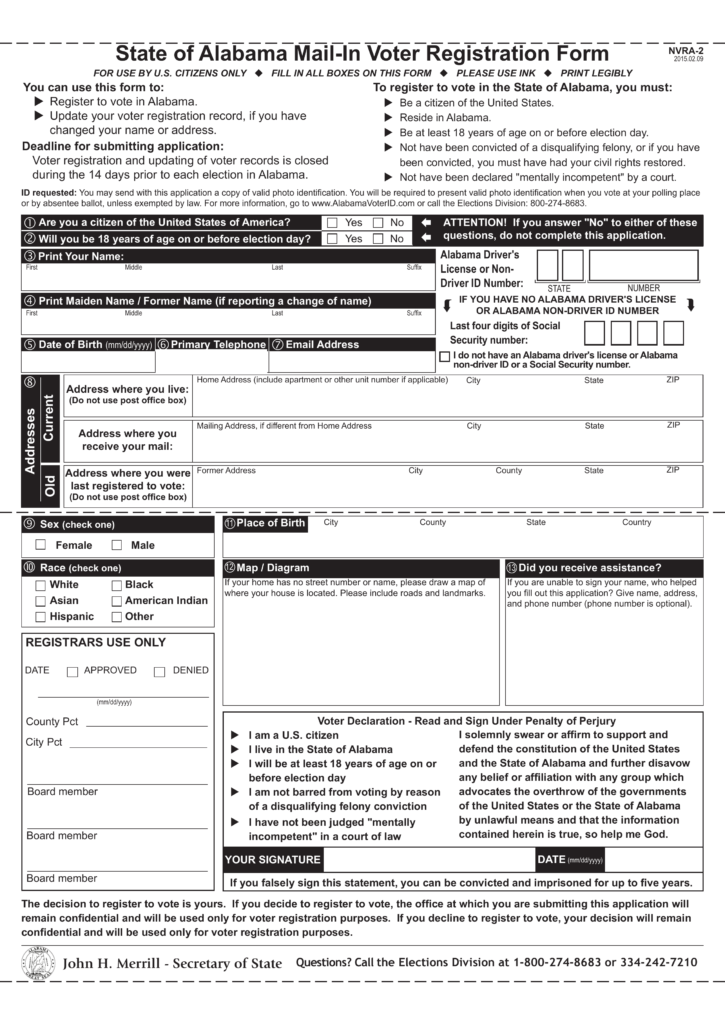
For those who prefer a paper application or do not have the necessary Alabama ID for online registration, mail-in registration remains a reliable option. This method utilizes the National Voter Registration Act (NVRA) form.
- Obtain the Form: You can download the Alabama Voter Registration Form directly from the Alabama Secretary of State’s website or pick one up at various locations, including public libraries, county board of registrars’ offices, or Alabama Law Enforcement Agency (ALEA) driver’s license offices.
- Complete the Form: Fill out all required fields neatly and accurately. Be sure to provide a physical residential address and your signature.
- Mail the Form: Once completed, mail the form to the board of registrars in your county of residence. The address for your specific county’s registrar can typically be found on the form itself or on the Secretary of State’s website.
Mail-in registration offers flexibility and accessibility, ensuring that even without immediate internet access, residents can still easily register to vote. Remember to allow ample time for mail delivery and processing, especially as election deadlines approach.
In-Person Registration

If you prefer personal interaction or need assistance with your application, registering in person is an excellent choice. This method ensures that any questions or concerns can be addressed directly.
- Visit a Registration Location: You can register in person at your county’s board of registrars’ office. These offices are typically located in the county courthouse in cities such as Montgomery, Birmingham, or Huntsville, but exact locations should be verified.
- Other Locations: Additionally, you can register in person at any ALEA driver’s license office while conducting other business, or at various state and federal agencies providing public assistance, as mandated by the NVRA.
- Assistance: Staff at these locations can provide forms, answer questions, and ensure your application is filled out correctly before submission.
Registering in person offers the benefit of immediate submission and often, immediate clarification of any ambiguities, making it a reliable option for many Alabamians.
Important Dates and Deadlines
Timeliness is crucial in voter registration. Missing a deadline means you won’t be able to cast your ballot in that particular election, highlighting the importance of staying informed. Alabama law establishes specific cut-off dates for registration before any election.
General Election Deadlines
For General Elections, which determine federal, state, and local officeholders, the deadline to register is typically 15 days before the election. This applies to online, mail-in (postmarked by this date), and in-person registrations. For example, if a General Election is scheduled for November 5th, the registration deadline would likely be October 21st. It’s always best practice to check the official Alabama Secretary of State’s website or contact your local board of registrars for precise dates for upcoming elections, as dates can sometimes shift due to legislative or unforeseen circumstances.
Primary Election Deadlines
Primary Elections are held to select candidates for a particular political party, who will then run in the General Election. The registration deadline for Primary Elections also falls 15 days before the election date. This ensures that voters are properly registered within their party affiliation (if applicable, as Alabama has open primaries, but party selection for primary ballots is made at the polls).
Special elections, such as those for constitutional amendments or vacant offices, will also adhere to a 15-day pre-election registration deadline. Staying aware of these dates through official state channels will empower you to participate in every electoral opportunity.
Maintaining Your Voter Status
Registering to vote is the initial step, but maintaining an active and accurate voter registration is equally important to ensure your continued ability to cast a ballot. Life changes, such as moving or changing your name, require updates to your voter record.
Updating Your Registration
If you move, change your name due to marriage or other reasons, or wish to update your political party affiliation (though Alabama does not register by party, you might update it for other purposes if such options arise), you must update your voter registration.
- Change of Address: If you move within the same county, you can often update your address online, by mail, or in person. If you move to a new county in Alabama, you will need to re-register in your new county of residence.
- Name Change: A name change requires an update to your registration. This can typically be done by mail using a new voter registration form, or in person at your county board of registrars’ office. Be sure to sign your new name on the form.
- Verification: After updating your information, it’s always a good idea to verify your voter registration status online through the Alabama Secretary of State’s voter portal to confirm that the changes have been processed correctly.
Keeping your voter registration current prevents potential issues on election day and ensures you receive accurate election information for your specific precinct and district.
Provisional Ballots and Troubleshooting
Despite careful planning, sometimes issues arise at the polls. If there’s a question about your eligibility, identity, or registration status when you arrive to vote, you may be offered a provisional ballot.
- What is a Provisional Ballot? A provisional ballot allows you to cast your vote even if your eligibility is in question. After election day, election officials will investigate your registration status and eligibility. If they confirm you were eligible to vote, your provisional ballot will be counted.
- Troubleshooting: If you encounter problems, first verify your registration status online before election day. If your name is not on the voter roll at your precinct, election workers can guide you on the next steps, which may include reviewing your eligibility or casting a provisional ballot. It’s wise to bring any documentation you have, such as your voter registration card or ID, just in case.
Understanding the provisional ballot process provides a crucial safety net, ensuring that even with minor administrative hiccups, your right to vote is protected.

The Significance of Your Vote in Alabama
Registering and voting in Alabama is more than just a legal requirement; it’s a vital component of fostering a thriving lifestyle and community. Each ballot cast contributes to the collective decision-making that shapes public education, healthcare access, infrastructure development, economic policies, and the preservation of Alabama’s unique cultural heritage. Your participation reinforces the democratic principles that underpin our society and directly influences the quality of life for you and your neighbors. By exercising this fundamental right, you not only uphold your civic duty but also actively invest in the future of the Yellowhammer State, helping to cultivate a community that truly reflects the aspirations of its residents. Embrace the opportunity to make your voice count.
LifeOutOfTheBox is a participant in the Amazon Services LLC Associates Program, an affiliate advertising program designed to provide a means for sites to earn advertising fees by advertising and linking to Amazon.com. Amazon, the Amazon logo, AmazonSupply, and the AmazonSupply logo are trademarks of Amazon.com, Inc. or its affiliates. As an Amazon Associate we earn affiliate commissions from qualifying purchases.