
Understanding “Right to Work” Legislation and Its Implications
The phrase “Right to Work” often sparks considerable debate, reflecting its profound impact on labor relations, economic development, and individual career trajectories across the United States. At its core, “Right to Work” legislation prohibits agreements between employers and labor unions that require all employees in a unionized workplace to join the union or pay union dues or fees as a condition of employment. Essentially, it ensures that an individual’s employment cannot be contingent upon their affiliation with a labor organization. This stands in contrast to “union shop” or “agency shop” agreements, where such membership or fee payment might be mandatory.
Defining the Core Principle
The fundamental principle behind “Right to Work” laws is individual freedom of association – or non-association – in the workplace. Proponents argue that these laws protect workers from being forced to financially support an organization they may not agree with, upholding their constitutional rights. They also suggest that by reducing the power of unions to mandate membership or fees, these laws foster a more competitive labor market, potentially leading to increased job creation and economic flexibility. For businesses, this often translates into more control over labor costs and operational decisions, as collective bargaining agreements might have less restrictive clauses concerning hiring and firing practices.
Historical Context of the Movement
The “Right to Work” movement gained significant traction in the mid-20th century, particularly following the passage of the Taft-Hartley Act in 1947. This federal law amended the National Labor Relations Act, allowing individual states to enact their own “Right to Work” statutes. The movement was largely driven by conservative political forces and business interests seeking to curb the growing influence of labor unions, especially in the industrializing sectors of the Deep South and Sun Belt regions. These states often framed the laws as crucial for attracting investment and diversifying their economies away from traditional agriculture by promising a more business-friendly environment with lower labor costs and fewer union-related disruptions. Over the decades, the number of “Right to Work” states has steadily grown, with these laws becoming a significant factor in regional economic competition and a perennial point of contention in national labor policy discussions.
Alabama’s Stance on Labor: A Clear “Right to Work” State
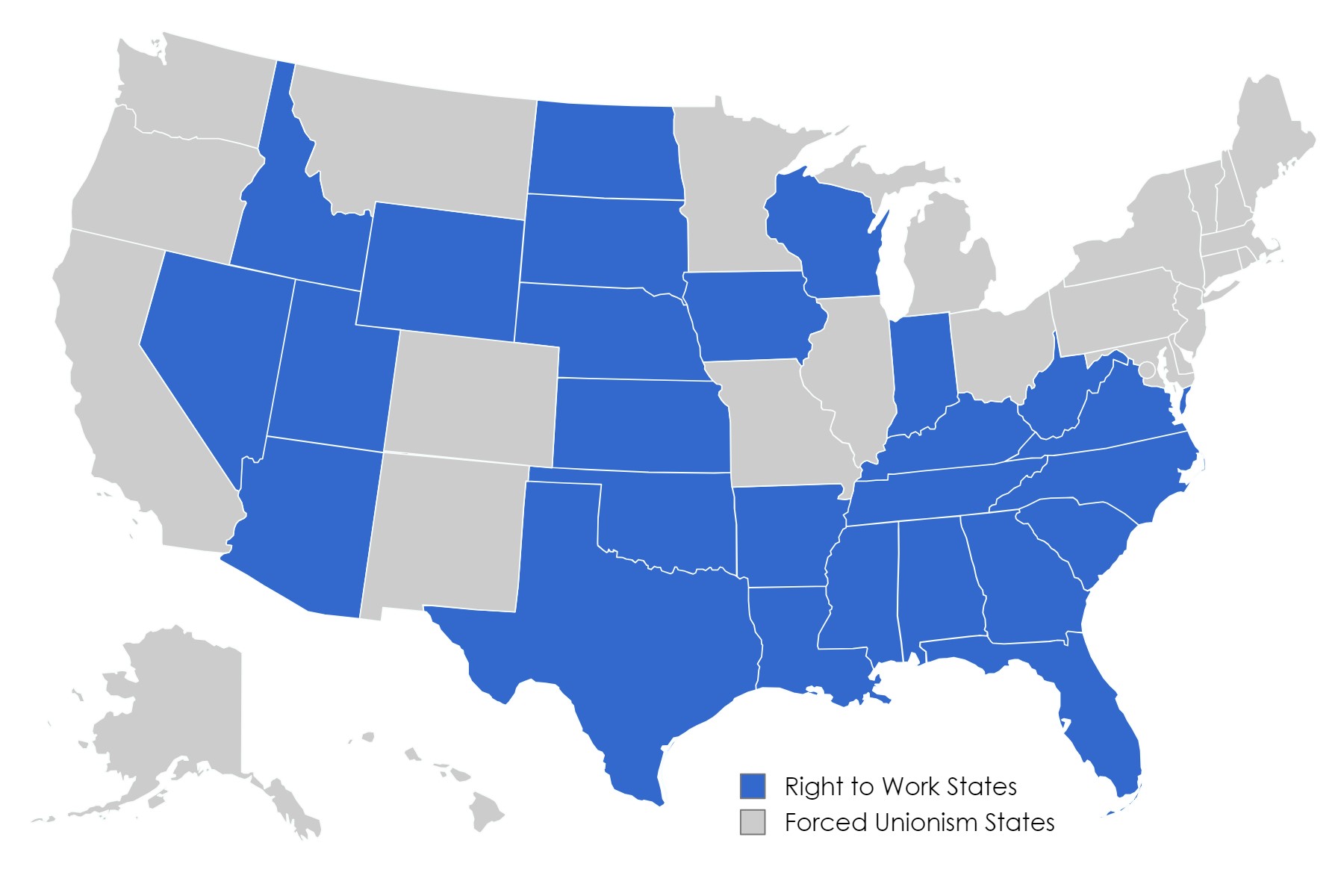
Alabama is unequivocally a “Right to Work” state, a status it has held for many decades. This legal framework significantly shapes the state’s economic landscape, labor relations, and overall business climate, making it a crucial consideration for professionals, entrepreneurs, and businesses contemplating a presence in the region. Understanding the specifics of Alabama’s legislative approach is vital for anyone planning long-term business stays, relocation, or simply assessing career opportunities within the state.
Legislative Framework in Alabama
Alabama’s “Right to Work” law is codified under Section 25-7-30 of the Code of Alabama, which explicitly states that no person shall be denied employment because of membership in, or resignation from, a labor union, or because of refusal to join or affiliate with a labor union. Conversely, it also prohibits employers from requiring an individual to refrain from joining a union as a condition of employment. This dual protection ensures that union membership, or lack thereof, cannot be a prerequisite for hiring, firing, or any other aspect of employment within the state. The law is designed to create an environment where individual choice regarding union affiliation is paramount, without fear of discrimination from either employers or unions. This strong legal stance reflects a long-standing commitment within Alabama to foster an environment perceived as attractive to businesses seeking flexibility and reduced labor overheads.
Impact on Union Membership and Collective Bargaining
The “Right to Work” status in Alabama has had a discernible impact on the landscape of union membership and collective bargaining power. By eliminating mandatory union fees for non-members, unions often face challenges in maintaining robust membership and financial resources. While unions can still organize and bargain collectively for all employees in a certified bargaining unit, non-members are not compelled to contribute financially, even though they benefit from the negotiated wages, benefits, and working conditions (this is often referred to as the “free rider” problem). Consequently, union density in Alabama is generally lower compared to states without “Right to Work” laws. This environment typically leads to fewer union-led strikes and industrial actions, which can be viewed positively by businesses seeking stable and predictable labor relations. For employees, this means greater individual autonomy regarding union participation, but potentially a lesser collective voice in workplace negotiations.
Economic and Business Implications for Alabama
Alabama’s “Right to Work” status is a cornerstone of its economic development strategy, playing a significant role in attracting investment, shaping workforce dynamics, and influencing the operational strategies of businesses within the state. For those considering business stays or long-term relocation to Alabama, understanding these implications is crucial.
Attracting Investment and Industry
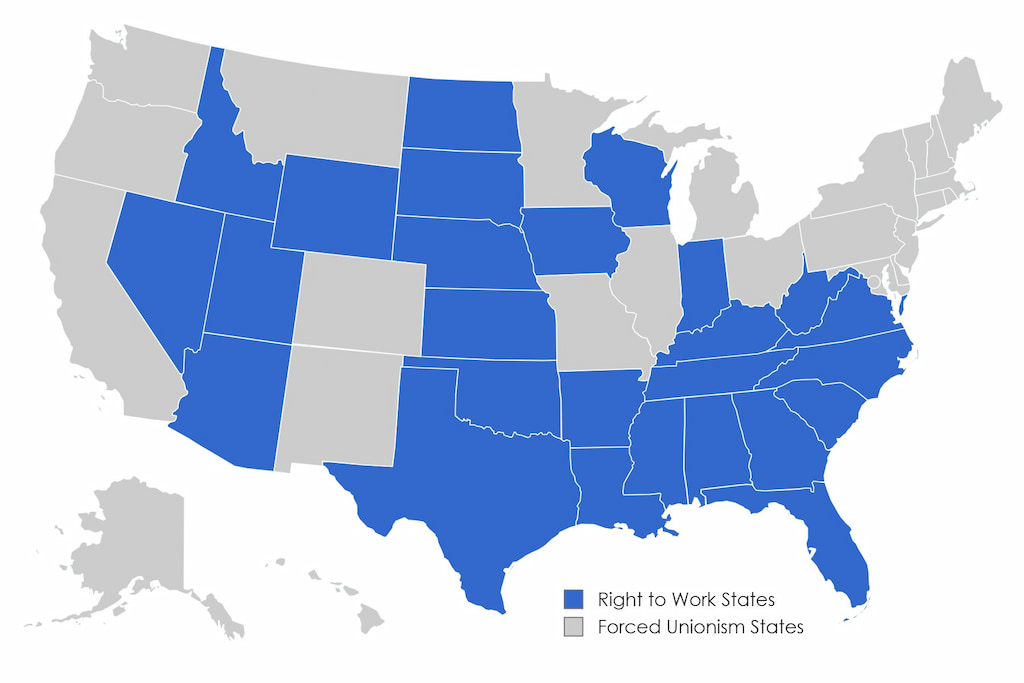
One of the primary arguments for “Right to Work” laws is their perceived ability to attract new businesses and industries. States with these laws are often marketed as having lower labor costs, a more flexible workforce, and a reduced risk of labor disputes, all of which are appealing to corporations looking to establish or expand operations. Alabama has successfully leveraged this image to draw substantial foreign direct investment, particularly in sectors like automotive manufacturing. Major automakers such as Mercedes-Benz in Vance, Hyundai in Montgomery, and Honda in Lincoln have established significant production facilities in the state, bringing thousands of jobs and substantial economic output. This influx of high-profile manufacturers and their extensive supply chains has transformed parts of Alabama’s economy, creating a vibrant industrial ecosystem.
Workforce Dynamics and Operational Flexibility
The “Right to Work” environment in Alabama grants businesses greater flexibility in managing their workforce. Employers can typically implement changes more rapidly without extensive union negotiation processes, allowing for quicker adaptation to market demands or technological advancements. This flexibility can be attractive to companies in fast-paced industries or those requiring frequent adjustments to their production models. From a workforce perspective, while individual workers retain the right to unionize, the absence of mandatory union membership or fees generally results in a less unionized workforce. This impacts wage negotiations, benefit structures, and grievance procedures, which are often handled directly between employees and management or through company-specific policies rather than collective bargaining agreements. For professionals on business stays, this means understanding the direct employer-employee relationship as the primary framework for their terms of employment.
Key Industries Benefiting from the Climate
Alabama’s “Right to Work” status has been particularly beneficial for several key industries that value predictable labor costs and operational stability.
- Automotive Manufacturing: As mentioned, the automotive sector has thrived, with a strong presence of international manufacturers and their suppliers contributing significantly to the state’s economy. The relatively lower labor costs and reduced threat of strikes are key factors in their decision to locate here.
- Aerospace and Defense: Cities like Huntsville, known as “Rocket City,” host a substantial aerospace and defense industry cluster, including NASA’s Marshall Space Flight Center and major defense contractors. While these sectors often involve highly specialized labor, the broader “Right to Work” framework contributes to an overall pro-business environment.
- Advanced Manufacturing: Beyond automotive, various advanced manufacturing operations have found a conducive environment in Alabama, benefiting from the state’s efforts to cultivate a skilled workforce and business-friendly policies.
- Logistics and Distribution: With strategic geographical advantages and improving infrastructure, Alabama is also growing as a hub for logistics and distribution, where efficient labor management is critical.
Lifestyle Considerations for Professionals and Businesses
For individuals and organizations contemplating a move or extended business stay in Alabama, the state’s “Right to Work” status carries significant lifestyle implications. These range from career trajectory and compensation expectations to the overall ease of doing business and navigating the local economic environment. Understanding these nuances is key to a successful transition and integration.
Navigating Employment for Business Stays and Relocation
For professionals seeking employment or those on long-term assignments in Alabama, the “Right to Work” environment means that union membership will not be a condition for securing or maintaining a job. This offers individual flexibility, allowing workers to choose whether or not to join or financially support a union without affecting their employment status. This can be appealing to individuals who prefer direct negotiations with employers or who do not see value in union representation. However, it also means that, in unionized workplaces, non-union members will still benefit from collective bargaining agreements without contributing financially, which can sometimes lead to tension within the workforce. For those relocating, this translates into a labor market where individual merit and direct negotiation often play a more prominent role in career advancement and compensation discussions, as opposed to relying on union-negotiated contracts. It fosters an environment where an individual’s career path is largely shaped by their direct relationship with their employer.
The Entrepreneurial Landscape
Alabama’s “Right to Work” status contributes to a generally favorable climate for entrepreneurs and small business owners. The reduced likelihood of costly labor disputes and the flexibility in managing workforces can lower operational risks and overheads, making it potentially easier to start and scale a business. For those establishing new ventures or bringing existing businesses to Alabama, the legislative framework supports a more agile approach to staffing and labor management. This flexibility can be a significant draw for innovators and startups looking to minimize initial costs and quickly adapt to market changes. Cities like Birmingham, Huntsville, and Montgomery are actively cultivating entrepreneurial ecosystems, with “Right to Work” laws often cited as part of the broader package of business incentives.
Balancing Economic Growth with Worker Protections
While “Right to Work” laws are often lauded for their role in stimulating economic growth and attracting investment, particularly in manufacturing and technology, the discussion about worker protections remains ongoing. Proponents argue that a competitive job market naturally incentivizes employers to offer good wages and benefits to attract talent. Critics, however, contend that these laws can weaken worker bargaining power, potentially leading to lower wages and fewer benefits in some sectors compared to non-“Right to Work” states. For individuals considering their long-term lifestyle and financial well-being in Alabama, it’s important to research specific industry standards and company practices. Many large employers in Alabama, especially those from foreign countries, offer competitive packages to attract and retain a skilled workforce, demonstrating that a “Right to Work” environment does not automatically equate to diminished worker protections, but rather shifts the dynamics of how those protections are achieved and maintained.
The Future of Labor in the Deep South
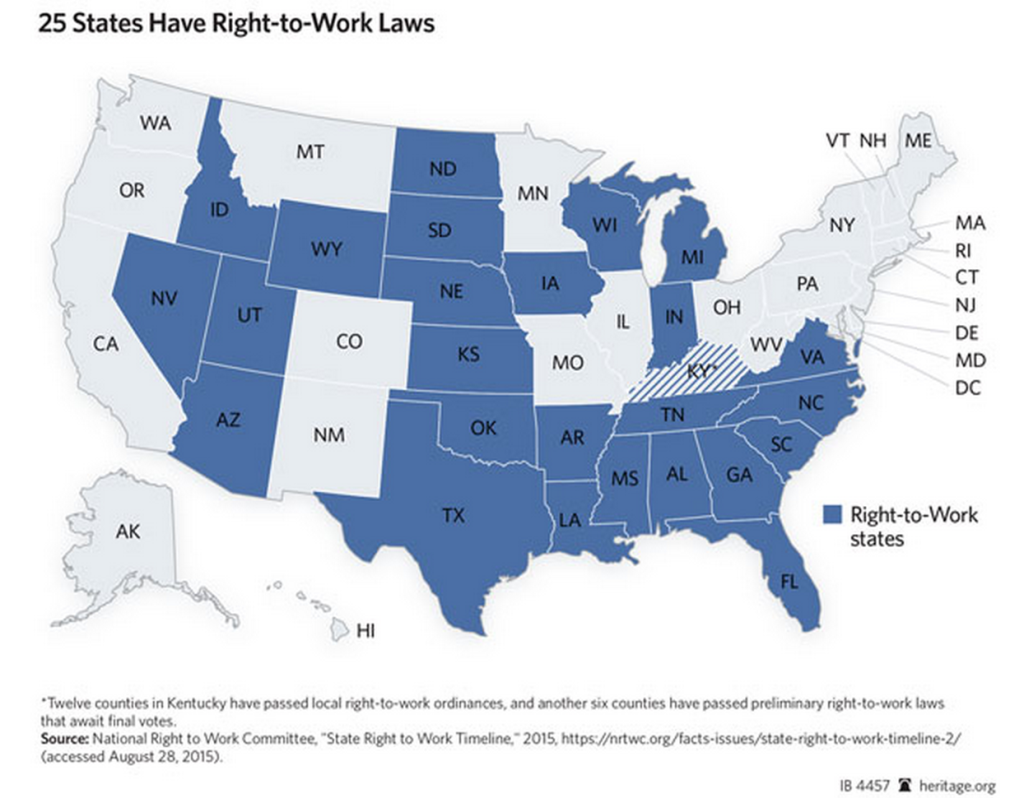
Alabama’s unwavering commitment to its “Right to Work” status positions it firmly within a regional trend seen across the Deep South and other southern states. This collective stance on labor policy continues to shape the economic identity and competitive advantages of the region, especially in the context of global manufacturing and technological advancements.
Evolving Debates and Regional Trends
The debate surrounding “Right to Work” laws is far from settled. Nationally, there are ongoing discussions about the impact of these laws on wages, income inequality, and worker power. Despite these debates, the trend in the Deep South and many southern states has been to maintain, and in some cases, strengthen, “Right to Work” protections. This regional consistency creates a significant block of states that market themselves as attractive destinations for business, emphasizing lower operating costs and a less unionized workforce. For businesses considering multi-state operations or expansion in the southern United States, Alabama’s “Right to Work” status offers a predictable and established labor environment, consistent with many of its neighbors. This regional alignment can simplify strategic planning for companies and influence the flow of talent and capital within the southern economic corridor. As industries evolve and automation increases, the specific implications of “Right to Work” for future job growth, skill development, and workforce adaptation will continue to be a critical area of focus for policymakers and businesses in Alabama and beyond.
LifeOutOfTheBox is a participant in the Amazon Services LLC Associates Program, an affiliate advertising program designed to provide a means for sites to earn advertising fees by advertising and linking to Amazon.com. Amazon, the Amazon logo, AmazonSupply, and the AmazonSupply logo are trademarks of Amazon.com, Inc. or its affiliates. As an Amazon Associate we earn affiliate commissions from qualifying purchases.