
For individuals contemplating a significant lifestyle change, particularly retirement, the financial implications of relocating or settling down in a new state are paramount. Among the myriad factors to consider, the taxation of retirement income, specifically Social Security benefits, often takes center stage. For those eyeing the scenic beauty, warm climate, and inviting communities of Alabama, understanding the state’s tax policies is crucial to crafting a comfortable and secure post-career lifestyle. The question, “Is Social Security taxable in Alabama?” is one that often arises, and the answer plays a significant role in the financial planning of many retirees.
Understanding Alabama’s Tax Landscape for Retirees
Alabama, often referred to as the Yellowhammer State, has steadily gained recognition as a desirable destination for retirement. Its relatively low cost of living, diverse geography ranging from the Appalachian foothills to the Gulf Coast, and a rich cultural tapestry contribute to its appeal. However, the true financial advantage for retirees often lies hidden in the state’s tax codes. A comfortable retirement lifestyle isn’t just about scenic views; it’s about financial security, and tax burdens can significantly impact one’s disposable income.
The Allure of the Yellowhammer State for Retirement
The charm of Alabama for retirees extends beyond its favorable tax environment. Communities like Fairhope offer picturesque waterfronts and vibrant arts scenes, while cities such as Huntsville and Birmingham provide access to top-tier healthcare, educational institutions, and cultural amenities. The state’s mild winters allow for year-round outdoor activities, from golfing and fishing to exploring national parks and state preserves. For many, these elements combine to create an attractive canvas for their desired retirement lifestyle, but the fiscal framework underpins the feasibility of such dreams.
A General Overview of Alabama’s Tax System
Alabama’s tax system is designed in a way that often benefits retirees. While it does levy an income tax, sales tax, and property tax, the nuances within these categories are what make the state financially appealing for older adults. The state government often seeks to strike a balance between funding public services and attracting new residents, including a robust retired population that contributes to local economies without increasing demand on the workforce. This balance has created a tax environment that is generally favorable when compared to many other states across the nation.
Social Security Benefits and State Taxation
When planning for retirement, one of the primary concerns for most individuals is how their hard-earned Social Security benefits will be treated by state tax authorities. This income is often a cornerstone of retirement budgets, making its taxability a make-or-break factor for some relocation decisions.
The Straightforward Answer
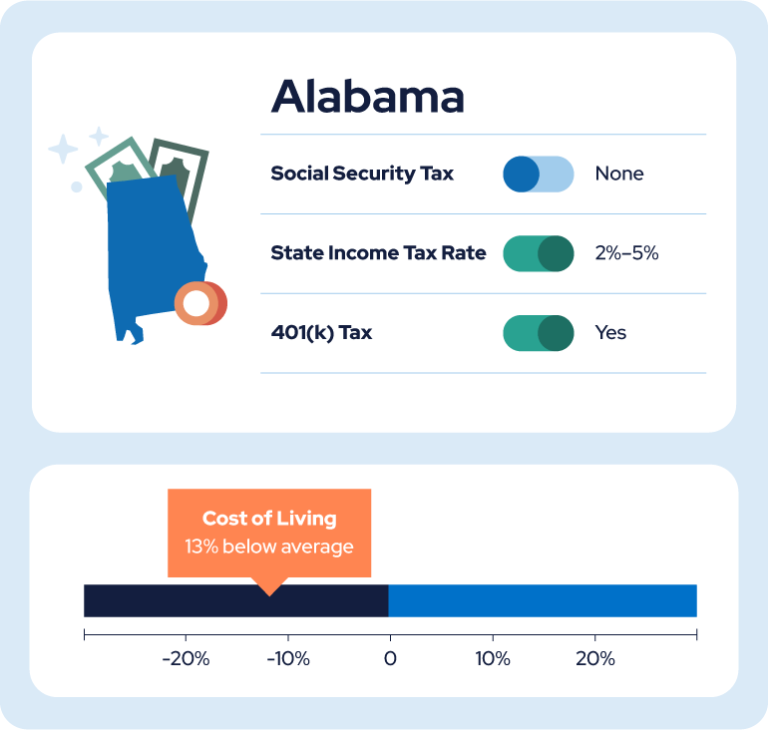
The answer to whether Social Security benefits are taxable in Alabama is unequivocal and highly favorable for retirees: No, Social Security benefits are not taxed at the state level in Alabama. This means that retirees residing in Alabama get to keep 100% of their Social Security income, free from state income tax deductions. This policy stands in stark contrast to many other states that tax a portion of these benefits, making Alabama a highly attractive option for those whose retirement lifestyle heavily relies on this federal income stream.
Why Alabama Stands Out for Retirees
This non-taxation policy is a significant advantage for retirees in Alabama. It effectively boosts their purchasing power and contributes to a more secure and comfortable financial lifestyle. For someone on a fixed income, every dollar saved on taxes translates directly into more funds for daily expenses, hobbies, travel, or unexpected costs. This certainty in budgeting helps retirees maintain their desired quality of life without the constant worry of state tax liabilities on their Social Security income. The financial relief provided by this policy often allows retirees to enjoy more of what Alabama has to offer, from its vibrant culinary scenes in Mobile to the tranquil beaches of Gulf Shores and Orange Beach.
Federal Taxation of Social Security (Brief mention for context)
It’s important to note that while Alabama does not tax Social Security benefits, these benefits may be subject to federal income tax, depending on an individual’s “combined income.” Combined income is defined as your adjusted gross income (AGI) plus non-taxable interest plus one-half of your Social Security benefits. If this combined income exceeds certain thresholds ($25,000 for individuals, $32,000 for married couples filing jointly), a portion of your Social Security benefits could be federally taxable. This is a federal rule and applies regardless of which state you reside in. However, the absence of state-level taxation in Alabama means that retirees only have to contend with potential federal taxes, simplifying their overall tax planning significantly.
Other Key Tax Considerations for an Alabama Lifestyle
While the non-taxation of Social Security benefits is a significant draw, a holistic view of Alabama’s tax structure is essential for anyone planning their retirement lifestyle. Other taxes, such as income tax, property tax, and sales tax, will still impact your daily finances.
Income Tax in Alabama
Alabama has a progressive income tax system with rates ranging from 2% to 5%. However, a critical advantage for retirees is that many forms of retirement income are exempt from state income tax. This includes pension income from public plans (federal, state, and local government), military retirement pay, and private defined-benefit pension plans. Furthermore, up to $6,000 of private defined contribution plans (like 401(k)s and IRAs) can be exempt for individuals over a certain age. This comprehensive exemption for various retirement income streams significantly reduces the overall tax burden for many retirees, further enhancing the financial viability of an Alabama lifestyle. This means more of your hard-earned savings go towards your desired activities and experiences, rather than state coffers.
Property Taxes: A Major Lifestyle Factor
Property taxes are a substantial consideration for homeowners and can vary widely by state and even within different counties of the same state. Alabama boasts some of the lowest property tax rates in the nation. The average effective property tax rate is around 0.40%, significantly below the national average. This low rate can translate into considerable savings over the years, leaving more money available for other aspects of your retirement lifestyle.
Moreover, Alabama offers a generous homestead exemption for residents aged 65 and older. This exemption can significantly reduce or even eliminate property taxes on their primary residence, further solidifying the state’s appeal for senior citizens. For instance, in Montgomery County, the homestead exemption for seniors aged 65 and over can exempt the first $4,000 of assessed value, and those with a net taxable income of $12,000 or less may be exempt from property tax on their primary residence. This policy provides substantial financial relief, allowing retirees to live comfortably in their homes without the pressure of high property tax bills. This contributes directly to a stable and predictable financial outlook, a cornerstone of a relaxed retirement lifestyle.
Sales Tax: Everyday Spending Impact
Alabama has a statewide sales tax rate of 4%, but local sales taxes can add significantly to this. In some areas, the combined state and local sales tax can reach up to 10% or more. This means that everyday purchases, from groceries (though food items are often taxed at a lower rate or exempt in some jurisdictions) to clothing and other goods, will incur a sales tax. While this might seem high, it’s a trade-off for lower property and income taxes for many retirees. For those planning a budget, understanding the local sales tax rates in their chosen Alabama community, such as Dothan or Auburn, is important for managing discretionary spending within their overall lifestyle framework.
Estate and Inheritance Taxes
Another favorable aspect for retirees and their families is that Alabama does not impose a state estate tax or inheritance tax. This means that assets passed down to heirs will not be subject to additional state taxation upon the owner’s death, offering peace of mind for those concerned about leaving a legacy without unnecessary tax burdens for their loved ones. This factor significantly streamlines estate planning and ensures that the wealth accumulated over a lifetime can be transferred more efficiently, aligning with a lifestyle that prioritizes family and generational well-being.
Crafting Your Retirement Lifestyle in Alabama: Beyond Taxes
While taxes are a crucial component of financial planning, the decision to retire in Alabama encompasses much more than just the numbers. The overall lifestyle offered by the state is a significant draw.
Cost of Living Advantages
Beyond the favorable tax structure, Alabama generally boasts a lower cost of living compared to the national average. Housing costs, in particular, are notably more affordable, allowing retirees to potentially purchase a larger home or live in a more desirable area than they might in other states. Utility costs, transportation, and groceries also tend to be more budget-friendly, further stretching retirement savings and contributing to a higher quality of life. This economic advantage enables retirees to pursue a more enriching lifestyle, whether it involves more travel, dining out, or engaging in community activities.
Climate and Outdoor Lifestyle
The pleasant, mild climate of Alabama is a significant draw for many seeking an active retirement. With warm summers and short, relatively mild winters, the state offers ample opportunities for outdoor recreation year-round. From the pristine beaches of the Gulf Coast to the scenic trails of Cheaha State Park, retirees can enjoy activities like hiking, fishing, boating, and golf almost every day. This vibrant outdoor lifestyle contributes to physical health and mental well-being, essential components of a fulfilling retirement.
Community and Culture
Alabama is rich in history, culture, and Southern hospitality. From the historic landmarks of the Civil Rights Movement in Selma and Montgomery to the vibrant music scene of Muscle Shoals, there’s a deep sense of place and heritage. Many towns and cities offer active senior centers, volunteer opportunities, and community events that foster connection and engagement. This strong sense of community can significantly enhance a retiree’s social life, providing opportunities for new friendships and meaningful contributions, aligning perfectly with a lifestyle focused on connection and purpose.
Healthcare Access
Access to quality healthcare is a non-negotiable factor for retirees. Alabama is home to several highly-rated medical centers and hospitals, particularly in major cities like Birmingham, which boasts the University of Alabama at Birmingham Hospital, a nationally recognized medical institution. The presence of comprehensive healthcare networks provides peace of mind, ensuring that medical needs can be met efficiently and effectively, allowing retirees to focus on enjoying their lifestyle without undue health worries.
Making an Informed Decision for Your Alabama Retirement
Choosing where to spend your retirement years is a deeply personal decision, influenced by a unique blend of financial considerations, lifestyle preferences, and personal connections. While Alabama offers a compelling case for retirees, especially concerning the taxation of Social Security benefits and other retirement income, it’s imperative to conduct thorough due diligence.
Consulting Financial Professionals
Before making any major relocation or financial decisions, it is always advisable to consult with a qualified financial advisor and tax professional. They can provide personalized insights into how Alabama’s tax laws will specifically impact your unique financial situation, taking into account all sources of income, assets, and estate planning goals. They can also help navigate any potential federal tax implications for your Social Security benefits, ensuring a holistic understanding of your tax liabilities.

Personalizing Your Retirement Plan
Ultimately, the decision to embrace an Alabama lifestyle for retirement should be based on a comprehensive assessment of all factors relevant to your personal preferences and financial goals. The state’s favorable tax environment for Social Security and other retirement income is undoubtedly a significant advantage, freeing up resources to pursue a fulfilling and enjoyable post-career life. Combined with its affordability, natural beauty, and warm communities, Alabama presents a strong argument for those seeking a vibrant and financially secure retirement lifestyle.
LifeOutOfTheBox is a participant in the Amazon Services LLC Associates Program, an affiliate advertising program designed to provide a means for sites to earn advertising fees by advertising and linking to Amazon.com. Amazon, the Amazon logo, AmazonSupply, and the AmazonSupply logo are trademarks of Amazon.com, Inc. or its affiliates. As an Amazon Associate we earn affiliate commissions from qualifying purchases.