
Understanding time zones is a foundational element for any traveler, and when planning a visit to the Heart of Dixie, knowing “Alabama“‘s time zone is paramount. Far from a mere technicality, this information impacts everything from flight schedules and hotel check-ins to coordinating business meetings and optimizing your sightseeing agenda. Alabama operates predominantly within the Central Time Zone, which has a distinct relationship with Coordinated Universal Time (UTC) that changes with the observance of Daylight Saving Time. This guide will illuminate the specifics of Alabama’s time, its implications for travelers, and broader considerations for navigating temporal differences.

Understanding Time Zones in Travel
For the modern traveler, time zones are an invisible yet constant companion. They dictate arrival and departure times, influence booking confirmations, and shape the rhythm of a trip. Disregarding them can lead to missed connections, late arrivals, or simply unnecessary confusion. The global standard for timekeeping, Coordinated Universal Time (UTC), serves as the benchmark against which all local times are measured.
The Significance of Coordinated Universal Time (UTC)
UTC is the primary time standard by which the world regulates clocks and time. It is essentially the successor to Greenwich Mean Time (GMT), though the two are often confused and are, for most practical purposes, the same. UTC is determined by a network of atomic clocks around the world, maintained by organizations like the National Institute of Standards and Technology (NIST) and the International Earth Rotation and Reference Systems Service (IERS). Its importance in travel cannot be overstated, as it provides a universal reference point, enabling precise coordination regardless of local time variations. Pilots, air traffic controllers, shipping companies, and international businesses rely on UTC to ensure seamless global operations. For travelers, understanding a destination’s offset from UTC is the first step in aligning their internal clock with the local rhythm.
Alabama’s Position in the Global Time Grid
Geographically, Alabama is situated in the southeastern United States, a region that falls within the domain of the Central Time Zone. This position means that Alabama’s time is consistently behind UTC by a fixed number of hours, with a slight adjustment made during Daylight Saving Time. This consistent offset simplifies planning for those arriving from other parts of the world, as the relationship to UTC provides a universal constant.
Alabama’s Time Zone: Central Standard Time (CST) and Central Daylight Time (CDT)
The Central Time Zone (CT) is the standard for Alabama, encompassing the vast majority of the state. However, the exact offset from UTC depends on the time of year.
CST: UTC-6
During the fall and winter months, when Daylight Saving Time is not observed, Alabama adheres to Central Standard Time (CST). This means that local time in Alabama is six hours behind Coordinated Universal Time (UTC). For example, if it is 12:00 UTC (noon), it would be 6:00 AM CST in Alabama. This period typically runs from early November to mid-March.
CDT: UTC-5 and Daylight Saving Time
From mid-March to early November, Alabama observes Daylight Saving Time, shifting its clocks forward by one hour. During this period, the state operates on Central Daylight Time (CDT), which is five hours behind Coordinated Universal Time (UTC). So, if it is 12:00 UTC, it would be 7:00 AM CDT in Alabama. This adjustment is designed to make better use of daylight hours during the warmer seasons, pushing sunsets later in the evening.
It is crucial for travelers to be aware of these transitions. Arrival dates near the beginning or end of Daylight Saving Time could mean unexpected shifts in flight schedules, appointment times, or even simply when the sun rises and sets relative to your body clock. Checking the specific dates for the start and end of Daylight Saving Time each year is a prudent step for any traveler.
Historical Context of Time Zones in Alabama
The implementation of standardized time zones across the United States was a significant development, particularly for the burgeoning railroad industry in the late 19th century. Before this, towns and cities often kept their own local “solar time,” leading to chaotic scheduling. The Standard Time Act of 1918 established the current system of four primary time zones in the continental United States, including the Central Time Zone, into which Alabama falls. The subsequent Uniform Time Act of 1966 provided federal oversight for Daylight Saving Time, ensuring consistency across participating states, although states retain the option to opt out. Alabama has consistently adhered to the Central Time Zone and observes Daylight Saving Time, making its temporal framework predictable for travelers.
Practical Implications for Travelers to Alabama
Understanding Alabama’s time zone is more than an academic exercise; it has concrete implications for the practicalities of travel.
Flight Schedules and Connections
Air travel is meticulously timed, and all flight schedules are based on local time. When booking flights to Birmingham, Mobile, or Huntsville, ensure you convert your departure and arrival times correctly, especially if traveling from a different time zone. A miscalculation of even an hour could lead to a missed flight or a prolonged wait at the airport. Pay close attention to time zone changes if your itinerary involves connections in different United States time zones, such as the Eastern Time Zone or Mountain Time Zone.
Business Meetings and Appointments
For business travelers heading to Montgomery or any other commercial hub in Alabama, precision in scheduling is paramount. Always confirm meeting times in local Alabama time to avoid any misunderstandings. When scheduling calls or virtual meetings with individuals outside Alabama, it’s courteous and professional to specify the time zone, for example, “2:00 PM CDT.”
Planning Activities and Attractions
Whether you’re exploring the historic sites of the Civil Rights Trail, enjoying the beaches along the Gulf Coast, or hiking in the foothills of the Appalachian Mountains, opening hours for attractions, restaurants, and tours will all operate on Alabama local time. Factor in the time difference when making reservations or planning your day, particularly if you are accustomed to a vastly different schedule. An early start in Alabama might feel like the middle of the night if you’ve just arrived from the Pacific Time Zone.
Overcoming Jet Lag
For international travelers or those coming from significantly different time zones within the United States, jet lag can be a real concern. Alabama’s CST/CDT offset from UTC means that your body clock will need to adjust. Strategies like gradually shifting your sleep schedule a few days before departure, staying hydrated on the flight, exposing yourself to natural light upon arrival, and avoiding excessive caffeine or alcohol can help mitigate the effects and allow you to fully enjoy your Alabama experience from the moment you land.
Navigating Time Zone Differences Across the United States
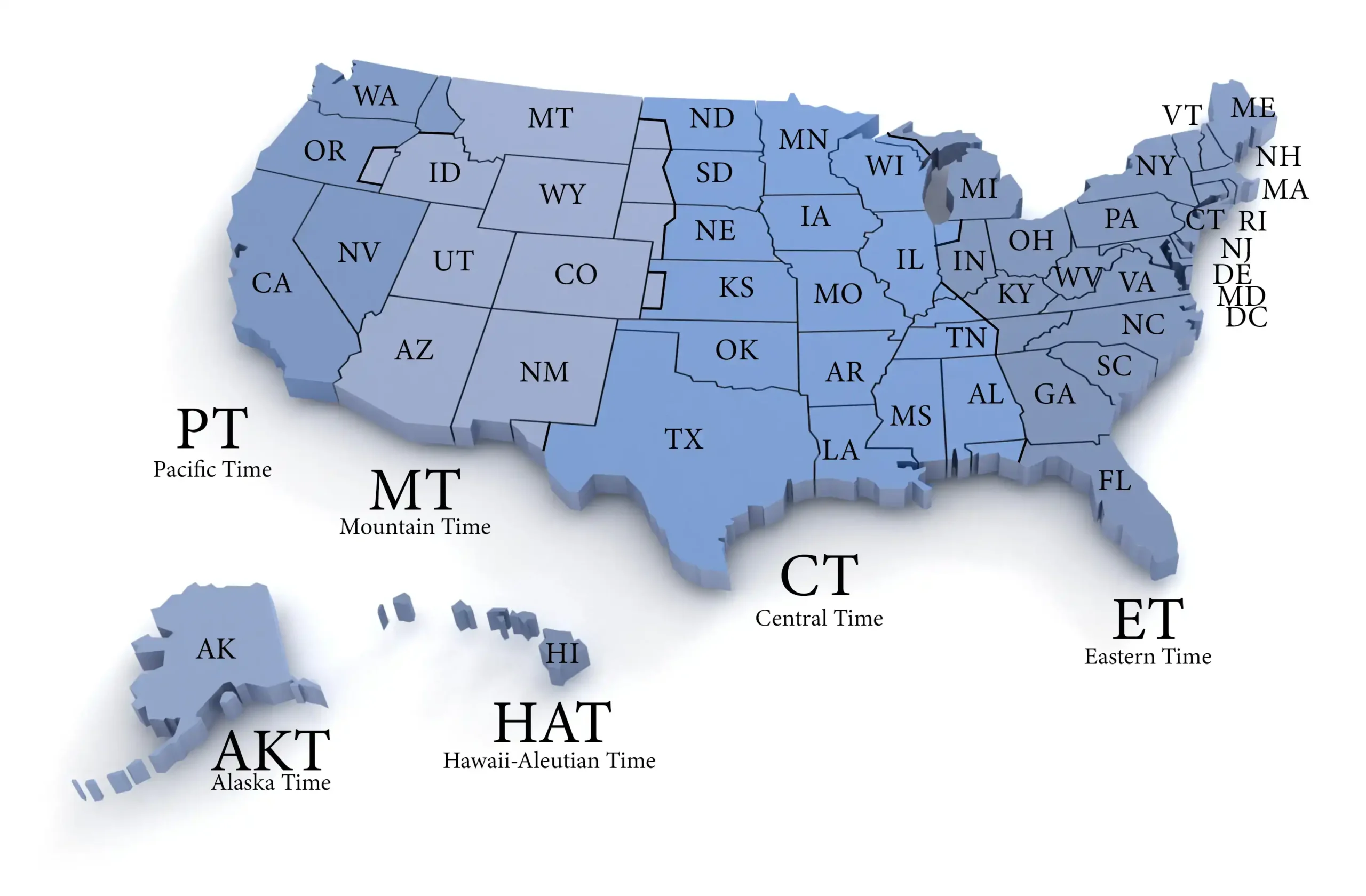
For travelers whose journey involves multiple states, understanding the broad strokes of United States time zones is essential. Alabama’s neighbors illustrate this point well: to its east lies Georgia and parts of Florida (which mostly observe the Eastern Time Zone), while to its west is Mississippi (also in Central Time). To the north is Tennessee, which is split between Central Time and Eastern Time Zone.
Eastern, Mountain, and Pacific Time Zones
The continental United States spans four primary time zones:
- Eastern Time Zone (ET): UTC-5 (Standard) / UTC-4 (Daylight) – One hour ahead of Alabama.
- Central Time Zone (CT): UTC-6 (Standard) / UTC-5 (Daylight) – Where Alabama resides.
- Mountain Time Zone (MT): UTC-7 (Standard) / UTC-6 (Daylight) – One hour behind Alabama.
- Pacific Time Zone (PT): UTC-8 (Standard) / UTC-7 (Daylight) – Two hours behind Alabama.
Awareness of these differences is critical for road trips crossing state lines, virtual meetings with remote teams, or even just calling friends and family across the country.
Tools and Tips for Time Zone Management
Several tools can help travelers manage time zones effectively:
- Smartphone World Clocks: Most smartphones have built-in world clock features that allow you to track multiple time zones simultaneously.
- Online Converters: Websites and apps dedicated to time zone conversion can quickly calculate differences for specific dates and times, accounting for Daylight Saving Time changes.
- Google Calendar/Outlook: When scheduling events, these platforms often automatically adjust times based on the user’s location and the event’s specified time zone, reducing errors.
- Local Time Verification: Always double-check current local time upon arrival, perhaps by setting your phone to automatically update to the network’s time or by consulting a trusted local source.

Essential Time-Sensitive Tips for Your Alabama Journey
To ensure a smooth and enjoyable trip to Alabama, keep these time-focused tips in mind:
- Verify Daylight Saving Time Dates: If your trip occurs in March or November, confirm the exact start and end dates for Daylight Saving Time to anticipate the one-hour shift.
- Adjust Devices Automatically: Ensure your smartphone, laptop, and other electronic devices are set to automatically update their time zone, which is generally the default setting.
- Confirm All Bookings in Local Time: From restaurant reservations in Mobile to tour departures in Montgomery, always confirm the scheduled time in Alabama’s local CST/CDT.
- Communicate Clearly: When coordinating with others (hosts, tour operators, business contacts), specify “Central Time” or “CDT/CST” to avoid ambiguity.
- Allow for Adjustment: Especially if traveling from afar, build in some buffer time on your first day or two to allow your body clock to synchronize with Alabama’s rhythm.
By acknowledging and planning for Alabama’s position within the Central Time Zone, travelers can eliminate a common source of stress and fully immerse themselves in the diverse experiences that await them.
LifeOutOfTheBox is a participant in the Amazon Services LLC Associates Program, an affiliate advertising program designed to provide a means for sites to earn advertising fees by advertising and linking to Amazon.com. Amazon, the Amazon logo, AmazonSupply, and the AmazonSupply logo are trademarks of Amazon.com, Inc. or its affiliates. As an Amazon Associate we earn affiliate commissions from qualifying purchases.