
The vast expanse separating Alaska from Washington State represents not merely a physical distance, but a gateway to diverse landscapes and unique travel experiences. While a direct linear measurement might suggest a straightforward answer, the reality of traversing this impressive stretch involves navigating complex geography, international borders, and a choice of distinct travel modes, each offering its own journey and perspective. Understanding this distance is the first step in planning an unforgettable adventure to the Last Frontier.
Understanding the Geographic Span
The distance between Alaska and Washington State is not a single, fixed number due to the considerable size of both regions and the varying points of origin and destination. Geographically, Alaska begins where the northern border of British Columbia, Canada, meets the Pacific Ocean, extending hundreds of miles north and west. Washington State forms a critical part of the Pacific Northwest, with its major ports and airports serving as primary departure points for Alaskan bound travelers.

A straight-line distance, often referred to as “as the crow flies,” from Seattle, Washington, to Juneau, Alaska’s capital, is approximately 890 miles (1,430 kilometers). To Anchorage, Alaska’s largest city, this aerial distance stretches to about 1,440 miles (2,320 kilometers). These figures, however, only tell a fraction of the story, as actual travel routes are significantly longer and shaped by the logistics of modern transportation. The intervening landmass of Canada and the vastness of the Pacific Ocean dictate that travel between these two points requires careful planning and an appreciation for the journey itself.
Primary Modes of Travel and Their Distances
Traveling from Washington State to Alaska offers three main modes of transportation: air, road, and sea. Each presents a unique set of distances, durations, and experiences, catering to different preferences and budgets.
Air Travel: The Quickest Route
Air travel is undeniably the fastest way to bridge the gap between Washington State and Alaska. Flights from Seattle-Tacoma International Airport (SEA) in Seattle are the most common departure point, offering direct routes to major Alaskan cities.
- To Juneau: A direct flight typically takes around 2 hours and 15 minutes to 2 hours and 30 minutes.
- To Anchorage: Direct flights usually range from 3 hours to 3 hours and 30 minutes.
- To Fairbanks: Direct flights are slightly longer, averaging 3 hours and 45 minutes to 4 hours.
While the “distance” covered by air is the straight-line measurement, the actual air route accounts for air traffic control paths and jet streams. The efficiency and speed of air travel make it the preferred choice for those with limited time or specific business needs in Alaska.
Road Trip: The Scenic Overland Journey
For adventurers seeking a truly immersive experience, the overland journey to Alaska via Canada is unparalleled. This route typically involves driving north through British Columbia and the Yukon Territory, primarily utilizing the iconic Alaska Highway.
- Distance: From Seattle to Anchorage, the driving distance is approximately 2,200 to 2,500 miles (3,540 to 4,020 kilometers), depending on the specific route taken through Canada and the final destination in Alaska. The journey to Fairbanks is comparable.
- Duration: This trip generally requires 5 to 7 days of dedicated driving, factoring in border crossings, fuel stops, and necessary rest. Many travelers extend this to 10-14 days to fully enjoy the scenic beauty, wildlife viewing opportunities, and charming towns along the way.
- Key Route: The Alaska Highway, also known as the Alcan Highway, begins in Dawson Creek, British Columbia, and stretches over 1,382 miles (2,223 kilometers) to Delta Junction, Alaska. From Seattle, travelers must first drive north to reach Dawson Creek, adding approximately 750 miles (1,200 kilometers) to the total trip.
This option is more than just getting from point A to point B; it’s an expedition through untamed wilderness and breathtaking mountain ranges. Proper vehicle maintenance, international travel documents, and preparedness for remote conditions are crucial.
Sea Voyage: Cruising the Inside Passage
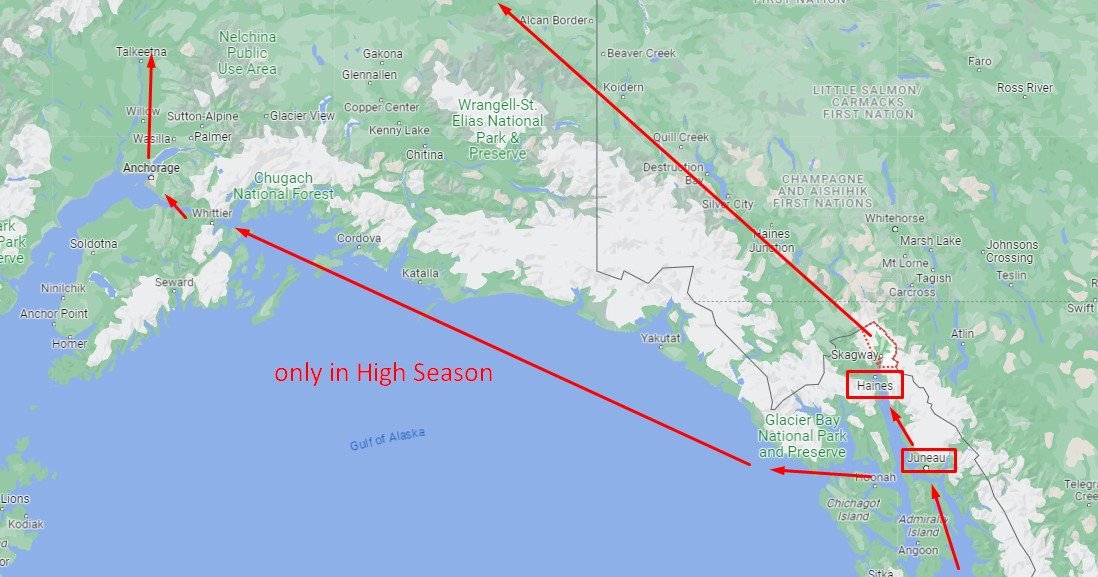
Cruises and ferries offer a magnificent way to experience the coastal beauty between Washington State and Alaska, particularly along the Inside Passage.
- Distance: The sea route through the Inside Passage from Seattle to Juneau covers roughly 900 to 1,000 nautical miles, while a round trip from Seattle to Anchorage (or nearby ports like Whittier or Seward) can span over 1,500 nautical miles.
- Duration: Standard Alaska cruises typically last 7 to 14 days, departing from Seattle or Vancouver, British Columbia. These voyages are designed to be leisurely, with stops at charming port towns such as Ketchikan, Sitka, Skagway, and Juneau.
- Ferry System: The Alaska Marine Highway System (AMHS) offers a more utilitarian and often more affordable option, allowing passengers to bring their vehicles. Ferries depart from Bellingham, Washington, near Seattle, or from Prince Rupert, British Columbia, connecting to various Alaskan communities along the Inside Passage. A trip from Bellingham to Juneau can take 3-4 days, while reaching further destinations like Whittier or Homer takes considerably longer.
The sea journey offers unparalleled opportunities for glacier viewing, wildlife spotting (whales, bears, eagles), and experiencing the serene beauty of Alaska’s rugged coastline.
Key Considerations for Planning Your Journey
Deciding how to travel to Alaska from Washington State involves more than just understanding the distance; it requires a holistic view of the time, cost, and specific experience you desire.
Time Commitment and Pacing
- Air Travel: While the flight itself is short, factor in travel to the airport, security checks, and potential layovers. Door-to-door, it’s typically a half-day to full-day commitment.
- Road Trip: A minimum of 5-7 intense driving days, but ideally 10-14 days or more to truly appreciate the journey and allow for exploration of national parks and attractions in Canada and Alaska.
- Sea Voyage: Cruises are generally 7-14 days, offering a relaxed pace with structured excursions. Ferries offer more flexibility but still require multiple days.
Costs Associated with Each Method
- Air Travel: Prices fluctuate significantly based on season, booking in advance, and airline. Expect anywhere from $200-$600+ for a one-way ticket during peak season. Baggage fees and airport transfers add to the overall cost.
- Road Trip: Costs include fuel (which can be expensive in remote areas of Canada and Alaska), accommodation (camping fees, motels), food, vehicle maintenance, and potential ferry crossings if incorporating coastal Alaska destinations. This can range from budget-friendly camping to several thousand dollars for hotel stays and extensive sightseeing.
- Sea Voyage: Cruise prices vary widely based on cabin type, cruise line, duration, and time of year, from $700-$3,000+ per person for a 7-day cruise, excluding excursions and gratuities. Alaska Marine Highway System fares are based on passenger count, vehicle size, and distance, often costing less than a luxury cruise but more than budget airfare.
Best Time to Travel
The peak travel season for Alaska is generally from May to September, when the weather is milder, daylight hours are long, and all attractions and services are fully operational.
- Air Travel: Possible year-round, though winter travel can be impacted by snow and ice, and some remote destinations have limited flight schedules.
- Road Trip: Late spring (May-June) and early fall (September) offer beautiful scenery with fewer crowds. Summer (July-August) is popular but sees more traffic and higher prices. Winter driving is extremely challenging and not recommended for inexperienced travelers.
- Sea Voyage: Cruises primarily run from late April/early May to late September. The Alaska Marine Highway System operates year-round but with reduced schedules and fewer amenities in the off-season.
Preparing for Your Alaska Adventure
Regardless of your chosen mode of transport, thorough preparation is paramount for an Alaska trip from Washington State. For road trippers, this means a comprehensive vehicle check, spare tire, emergency kit, and up-to-date mapping (both digital and physical). All travelers crossing the U.S.-Canada border must have valid passports. Consider travel insurance, especially for longer trips or those involving outdoor activities. Research specific destinations within Alaska, such as Denali National Park or the Kenai Peninsula, to align your travel method with your ultimate goals. Booking accommodations and tours well in advance, particularly during peak season, is highly recommended.

Conclusion: Embracing the Journey
The journey from Washington State to Alaska is far more than a simple measurement of miles; it is an expedition into diverse landscapes and cultures. Whether soaring above the clouds, navigating the legendary Alaska Highway, or cruising the serene Inside Passage, each path offers a distinct perspective on the immense beauty and raw wilderness that define the North. Understanding the distances and the implications of each travel method empowers you to choose the perfect adventure, transforming a simple geographical question into the first chapter of an unforgettable Alaskan tale.
LifeOutOfTheBox is a participant in the Amazon Services LLC Associates Program, an affiliate advertising program designed to provide a means for sites to earn advertising fees by advertising and linking to Amazon.com. Amazon, the Amazon logo, AmazonSupply, and the AmazonSupply logo are trademarks of Amazon.com, Inc. or its affiliates. As an Amazon Associate we earn affiliate commissions from qualifying purchases.