
Alaska, the United States’ largest state, is a land of unparalleled natural beauty, expansive wilderness, and dramatic landscapes. From its towering peaks to its vast glaciers and rugged coastlines, it offers a distinct travel experience unlike anywhere else on Earth. Its sheer size, however, introduces a fascinating logistical consideration for travelers: time zones. Understanding how time works across this immense territory is crucial for planning your adventure, coordinating activities, and even simply making a phone call. While most people might assume a state operates within a single time zone, or perhaps two given its grandeur, Alaska’s unique geography dictates a more complex answer, which is essential knowledge for any aspiring visitor.

The Unique Geography of Alaska and Its Temporal Divisions
Alaska’s position on the globe makes it an outlier among U.S. states. Stretching across vast longitudes, it encompasses an area that naturally crosses several theoretical time zones. Its proximity to the International Date Line further complicates matters, creating fascinating temporal distinctions that impact everything from flight schedules to sunset times.
Alaska’s Vastness and Longitudinal Reach
To truly grasp Alaska’s time zone situation, one must first appreciate its immense scale. At over 663,000 square miles, Alaska is more than twice the size of Texas and nearly one-fifth the size of the entire contiguous United States. Its westernmost point, located in the Aleutian Islands, extends so far west that it crosses the 180th meridian, putting it closer to Asia than much of North America. This expansive longitudinal spread is the primary reason why a single time zone simply isn’t practical or accurate for the entire state. Imagine if California and Maine shared the same time—it would be a logistical nightmare. Alaska’s vastness necessitates a division to keep sunrise and sunset times reasonably aligned with the local clock.
Proximity to the International Date Line
The westernmost reaches of Alaska, particularly parts of the Aleutian Islands, lie exceptionally close to the International Date Line. This imaginary line, mostly following the 180th meridian of longitude, marks the change from one calendar day to the next. While most of the United States is well to the east of this line, Alaska’s position means that some of its islands are practically in tomorrow, relative to the mainland. This geographical anomaly gives rise to unique time zone challenges and fascinating curiosities for those traveling to or through these remote regions.
Unraveling Alaska’s Time Zones for Travelers
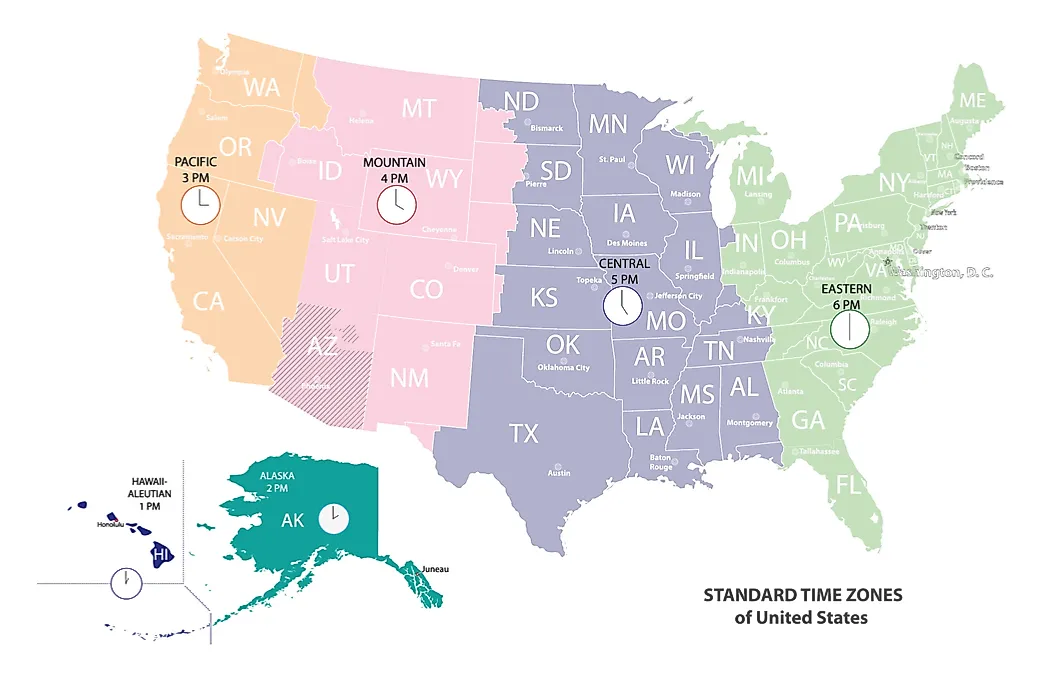
Despite its immense size, the state of Alaska primarily utilizes two standard time zones for the vast majority of its landmass and population centers, with a tiny, isolated exception for a few remote islands. This simplification, implemented for practical reasons, still requires careful consideration for travelers.
Alaska Standard Time (AKST)
The majority of Alaska, including major cities like Anchorage, Fairbanks, and the capital, Juneau, observes Alaska Standard Time (AKST). This time zone is 9 hours behind Coordinated Universal Time (UTC), often written as UTC-9. During Daylight Saving Time (DST), which Alaska observes, it shifts to Alaska Daylight Time (AKDT), which is UTC-8. This means that when it’s noon in New York City (Eastern Time), it’s 8:00 AM in Anchorage. For most visitors, especially those sticking to the well-trodden paths and popular attractions, AKST will be the only time zone they need to manage.
The Exception: Hawaii-Aleutian Standard Time (HST)
The far western sliver of Alaska, specifically the Aleutian Islands west of 169°30′ W longitude, observes Hawaii-Aleutian Standard Time (HST). This time zone is 10 hours behind UTC, or UTC-10. During Daylight Saving Time, it shifts to Hawaii-Aleutian Daylight Time (HADT), becoming UTC-9. This means that these islands are one hour behind the rest of mainland Alaska. While not a common tourist destination, intrepid travelers or those on specialized tours (e.g., birdwatching, historical expeditions) might find themselves navigating this temporal shift. The boundary cuts through the Aleutian chain, meaning travel between certain islands could involve a time change.
The Even Greater Exception: Gambell and Savonga
Here’s where it gets truly fascinating and the answer to “how many time zones does Alaska have?” becomes slightly nuanced. Technically, there’s an even more isolated exception. The communities of Gambell and Savonga on St. Lawrence Island in the Bering Sea, near the Seward Peninsula, historically aligned themselves with the nearby Chukotka Peninsula in Russia rather than mainland Alaska for practical reasons. They used to observe Bering Standard Time (BST), which was UTC-11, making them two hours behind mainland Alaska. However, this distinct time zone for St. Lawrence Island was officially eliminated in 1983, and the island now observes Alaska Standard Time (AKST), just like Nome on the mainland. So, while historically Alaska had three de facto time zones, legally and practically for modern travel, it effectively uses two: AKST and HST.
Navigating Time Zones for Alaska Travelers
For visitors, understanding Alaska’s time zones is more than just an interesting fact; it’s a practical necessity for a smooth and enjoyable trip.

Planning Flights and Itineraries
The most immediate impact of time zones for travelers is on flights. Flights arriving from the Lower 48 will experience significant time shifts. For example, a flight from Seattle (Pacific Time, UTC-8) to Anchorage (AKST, UTC-9) involves a one-hour time difference, meaning you gain an hour upon arrival. Conversely, departing Anchorage for the Lower 48 means losing an hour. Internal flights within Alaska mostly stay within AKST, but if your itinerary includes the westernmost Aleutian Islands, remember that one-hour adjustment. Always double-check flight times, tour start times, and ferry schedules against the local time of your specific location. Apps and smart devices typically adjust automatically, but it’s wise to have a backup analog watch or confirm local time with a reliable source upon arrival.
Managing Jet Lag
Traveling to Alaska from the Eastern United States can involve a five-hour time change (e.g., from New York to Anchorage). This significant shift can lead to jet lag, affecting your energy levels and enjoyment of your trip.
- Pre-adjust: Try to shift your sleep schedule by an hour or two in the days leading up to your departure.
- Stay hydrated: Drink plenty of water and avoid excessive alcohol or caffeine during your flight.
- Embrace local time: As soon as you arrive, try to adapt to Alaska local time for meals and sleep. Maximize exposure to natural light during the day, even if you feel tired, and create a dark, quiet environment for sleep at night.
- Plan light activities: Don’t schedule demanding activities for your first day. Allow your body time to acclimate.
Communication Challenges
Keeping in touch with friends and family back home can be tricky with the time difference. A five-hour gap with the East Coast means that an early morning call for you could be late morning for them, and an evening call for you might be well past their bedtime. Factor in these differences when planning calls or video chats, especially if you’re trying to coordinate across multiple time zones. Knowing the specific time zones of your contacts and your current location will help avoid awkward interruptions.
Key Destinations and Their Time Zones
Most popular Alaska travel destinations fall squarely within Alaska Standard Time.
Anchorage, Fairbanks, and Juneau (AKST)
The major hubs and most frequently visited cities—Anchorage (the largest city), Fairbanks (gateway to the Arctic), and Juneau (the capital)—all observe Alaska Standard Time (AKST). This simplifies travel significantly for those sticking to the core visitor routes, such as cruises through the Inside Passage, trips to Denali National Park, or journeys on the Alaska Railroad. You’ll remain consistent with AKST/AKDT throughout these experiences.
The Aleutian Islands (HST)
If your adventurous spirit takes you to the far reaches of the Aleutian Islands, such as Unalaska or Adak, you will be in the Hawaii-Aleutian Standard Time (HST) zone, an hour behind mainland Alaska. While not typical tourist hotspots, these islands attract specific interest groups, including history buffs exploring World War II sites, birdwatchers seeking rare species, or those on specialized fishing charters. Always confirm local times when making arrangements for these remote destinations.
Daylight Saving Time in Alaska
Like most of the United States, Alaska observes Daylight Saving Time (DST), moving its clocks forward by one hour in the spring and back one hour in the fall.
How DST Impacts Travel
During DST, Alaska Standard Time (AKST) becomes Alaska Daylight Time (AKDT), shifting from UTC-9 to UTC-8. Similarly, Hawaii-Aleutian Standard Time (HST) becomes Hawaii-Aleutian Daylight Time (HADT), shifting from UTC-10 to UTC-9.
For travelers, this means the time difference with other regions of the U.S. remains consistent, but the absolute UTC offset changes. The transition periods in spring and fall are the most critical, as arrivals or departures on these specific days could lead to confusion if not carefully checked. Most travel bookings and smart devices automatically adjust, but it’s always prudent to be aware.
Seasonal Adjustments and the Midnight Sun
Alaska’s high latitude means extreme variations in daylight hours throughout the year. During the summer, much of the state experiences the “midnight sun,” where daylight can last for 19-24 hours. While DST does push sunset later, its practical impact on perceived daylight in summer is less dramatic than in lower latitudes, simply because there’s already so much natural light. Conversely, in winter, days are incredibly short, and DST plays a role in maximizing the available daylight during the active hours of the day. Travelers should be prepared for these stark seasonal differences, regardless of the time zone. Packing an eye mask for summer visits is highly recommended!
In conclusion, for most practical travel purposes, Alaska effectively uses two time zones: Alaska Standard Time (AKST/AKDT) for the vast majority of the state, and Hawaii-Aleutian Standard Time (HST/HADT) for the westernmost Aleutian Islands. Armed with this knowledge, you can confidently plan your journey, coordinate your activities, and fully immerse yourself in the awe-inspiring experience of the Last Frontier without missing a beat—or a ferry!
LifeOutOfTheBox is a participant in the Amazon Services LLC Associates Program, an affiliate advertising program designed to provide a means for sites to earn advertising fees by advertising and linking to Amazon.com. Amazon, the Amazon logo, AmazonSupply, and the AmazonSupply logo are trademarks of Amazon.com, Inc. or its affiliates. As an Amazon Associate we earn affiliate commissions from qualifying purchases.