
Alaska, often dubbed “The Last Frontier,” is not only a land of breathtaking natural beauty and unparalleled wilderness but also a strategically vital cornerstone of national defense. Its unique geographic position, bridging North America with Asia and providing direct access to the Arctic and Pacific Ocean, has necessitated a robust and historically significant military presence. These installations are far more than mere operational hubs; they are integral landmarks, embodying decades of history, architectural adaptation to extreme environments, and a permanent, visible commitment to global security. Their existence profoundly shapes the landscape, economy, and culture of the communities surrounding them, standing as monumental symbols of vigilance in the face of geopolitical complexities.
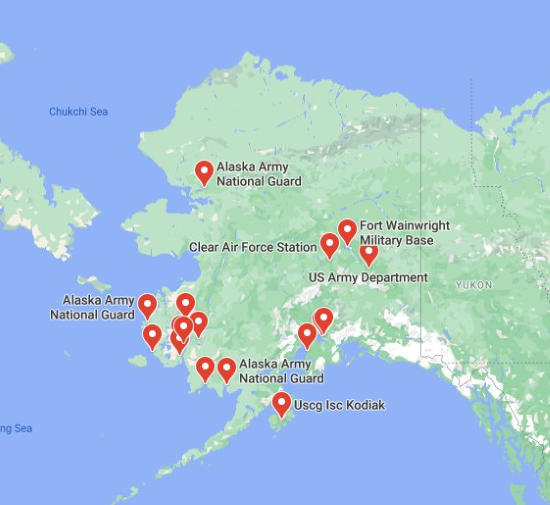
Strategic Importance of Military Presence in Alaska
The strategic imperative behind Alaska’s extensive military infrastructure cannot be overstated. Positioned at the crossroads of global powers, the state serves as a critical bulwark for homeland defense and a forward operating base for projecting influence across the Arctic and Indo-Pacific regions. Historically, Alaska was a frontline during the Cold War, a role that has evolved but not diminished in the modern era. The melting of Arctic ice caps opens new sea lanes and resource exploration opportunities, further intensifying the geopolitical significance of the region.
The forces stationed in Alaska are uniquely trained and equipped to operate in some of the world’s most extreme conditions, providing an unparalleled advantage in developing tactics and technologies for Arctic warfare. These military landmarks are not just defensive installations; they are centers of innovation for cold-weather operations, contributing significantly to military doctrine and preparedness on a global scale. The Alaskan Command (ALCOM), the sub-unified command of U.S. Indo-Pacific Command (USINDOPACOM), integrates the operations of all military branches in the state, ensuring a cohesive and formidable defense posture. Their presence ensures the continuous monitoring of air and sea approaches, vital for detecting potential threats to North America.
Major Air Force Installations: Guardians of the Arctic Skies
Alaska’s vast airspace and strategic location make its air force bases critical components of national defense, serving as the first line of surveillance and response against airborne threats. These installations are highly advanced landmarks, showcasing cutting-edge aerospace technology and architecture designed to withstand the harsh Alaskan climate.
Joint Base Elmendorf-Richardson (JBER)
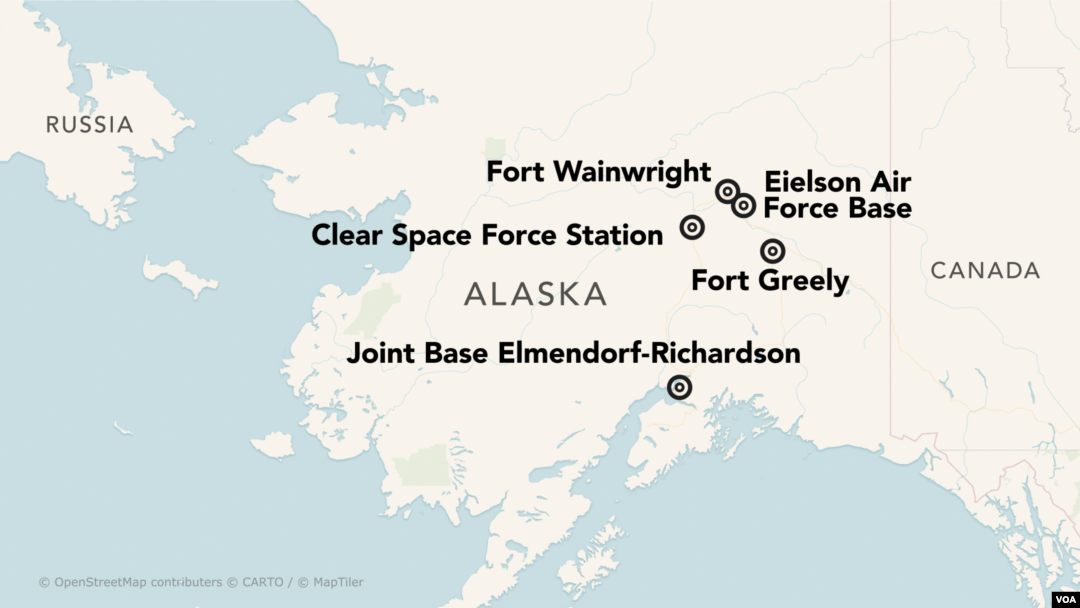
Located adjacent to Anchorage, Joint Base Elmendorf-Richardson (JBER) stands as a colossal landmark, representing the convergence of former Elmendorf Air Force Base and Fort Richardson Army Post. This merger, completed in 2010, created one of the largest and most complex military installations in the world. As the headquarters for ALCOM, the 11th Air Force (PACAF), and the U.S. Army Alaska (USARAK), JBER is a bustling hub of activity. Its runways frequently host a diverse array of aircraft, including the C-17 Globemaster III for strategic airlift, F-22 Raptor stealth fighters for air superiority, and E-3 Sentry Airborne Warning and Control System aircraft, all critical for maintaining air dominance and surveillance.
The base also hosts elements of the Alaska Air National Guard and the Air Force Reserve, making it a true joint force landmark. Its impressive infrastructure, designed for rapid deployment and sustained operations in extreme cold, underscores its vital role in both homeland defense and projecting power across the Indo-Pacific region. The architectural resilience of its hangars, barracks, and operational centers stands as a testament to human ingenuity in challenging environments.
Eielson Air Force Base
Located approximately 26 miles southeast of Fairbanks, Eielson Air Force Base is another critical Alaskan landmark. Its primary mission revolves around supporting Pacific Air Forces (PACAF) combat operations and maintaining air superiority in the Arctic. Eielson is globally recognized for hosting large-scale readiness exercises like RED FLAG-Alaska, which trains pilots and support personnel from the U.S. and allied nations in realistic combat scenarios within the vast, unrestricted airspace of the Joint Pacific Alaska Range Complex.
The recent arrival of F-35A Lightning II fighters has further cemented Eielson’s position as a premier fifth-generation combat aircraft base, making it a state-of-the-art landmark in military aviation. The base is also home to the 18th Aggressor Squadron, which flies F-16 Fighting Falcons to simulate enemy aircraft, providing invaluable training for U.S. and coalition forces. Its expansive facilities and specialized infrastructure are built to withstand temperatures often plummeting to -50°F (-45°C), demonstrating unique architectural and engineering adaptations to the extreme Alaskan climate.
Army Strongholds: Protecting the Frontier
The U.S. Army’s presence in Alaska is characterized by its focus on Arctic warfare and missile defense, establishing critical ground force landmarks across the state. These posts are renowned for their rigorous cold-weather training and innovative approaches to operating in some of the most challenging terrestrial environments on Earth.
Fort Wainwright
Situated in Fairbanks, Fort Wainwright serves as the heart of U.S. Army Alaska’s Arctic operations, an enduring landmark dedicated to ground forces. Home to the 11th Airborne Division, the post focuses on rapid deployment and sustained operations in extreme cold weather and mountainous terrain. Soldiers here undergo specialized training at the Northern Warfare Training Center, mastering skills essential for survival and combat in Arctic conditions, including mountaineering, cold-weather survival, and river crossing.

The architectural design of Fort Wainwright’s facilities reflects a deep understanding of Arctic engineering, with buildings engineered for energy efficiency and resilience against extreme temperatures and heavy snowfall. The base also hosts the Cold Regions Test Center, a facility that tests military equipment and tactics in frigid conditions, making it a unique landmark for scientific and military innovation.
Fort Greely
Deep in the interior of Alaska, near Delta Junction, lies Fort Greely, a remote yet globally significant landmark in missile defense. This installation is home to the Ground-based Midcourse Defense (GMD) system, operated by the U.S. Army Space and Missile Defense Command for the Missile Defense Agency. Its primary mission is to protect the U.S. from long-range ballistic missile attacks, a role that places it at the forefront of national security.
The site houses numerous Ground-Based Interceptor (GBI) missiles, strategically positioned to provide intercept capability over the North Pole. The stark, isolated landscape surrounding Fort Greely underscores the critical nature of its mission, making it a landmark of quiet vigilance and advanced defensive technology, a bulwark against potential intercontinental threats.
Naval and Coast Guard Presence: Safeguarding Maritime Frontiers
While Alaska does not host a large deep-water Navy base, the U.S. Coast Guard plays an indispensable role in safeguarding the state’s vast maritime boundaries, a critical network of operational landmarks. With the longest coastline in the nation, stretching from the Gulf of Alaska to the Bering Sea and beyond, the Coast Guard is vital for search and rescue, law enforcement, environmental protection, and national security in the region.
Coast Guard Air Station Kodiak
Coast Guard Air Station Kodiak, located on Kodiak Island, is the largest Coast Guard unit in Alaska and a prominent maritime landmark. It serves as a central hub for air and sea operations across a vast and unforgiving operational area. The air station operates a fleet of helicopters and fixed-wing aircraft, including HC-130 Hercules maritime patrol aircraft and MH-60 Jayhawk and MH-65 Dolphin helicopters, essential for long-range search and rescue missions, fisheries enforcement, and environmental response. The island’s rugged terrain and volatile weather conditions make Kodiak an ideal, if challenging, location for training and operations, cementing its status as a vital strategic landmark.
Other Coast Guard Installations
Smaller but equally important Coast Guard facilities are scattered across the Alaskan coastline, functioning as critical nodes in the maritime defense network. Coast Guard Sector Juneau oversees operations throughout Southeast Alaska, coordinating responses in complex fjords and island chains. Stations in Valdez, Sitka, and along the Aleutian Islands house fast response Coast Guard Cutters and other assets, providing continuous presence and rapid response capabilities. These facilities, though less expansive than the larger bases, are integral landmarks for ensuring safety and security across the immense Alaskan maritime domain, each embodying a crucial role in safeguarding the region’s waters.
Remote Sites and Early Warning Systems
Beyond the major military bases, Alaska is home to a network of remote sites that serve highly specialized functions, primarily in early warning and missile defense. These isolated landmarks are often marvels of engineering, designed to operate autonomously in some of the most desolate corners of the state.
Clear Space Force Station
Clear Space Force Station, formerly Clear Air Force Station, is a key strategic landmark located in the Alaskan interior. Its primary mission is ballistic missile early warning and space surveillance. The site operates advanced radar systems, including the Solid State Phased Array Radar System (SSPARS) and the Upgraded Early Warning Radar (UEWR), which are designed to detect and track incoming intercontinental ballistic missiles and sea-launched ballistic missiles. These radars provide critical data to North American Aerospace Defense Command (NORAD) and U.S. Strategic Command, serving as an indispensable component of the nation’s strategic defense infrastructure. The station’s imposing radar structures stand as distinctive architectural landmarks against the vast Alaskan wilderness, silent sentinels watching the skies.
DEW Line Sites (Historical Context)
Historically, Alaska was peppered with sites that formed part of the Distant Early Warning Line (DEW Line) during the Cold War. While many of these sites have been decommissioned and undergo environmental remediation, their remnants serve as historical landmarks, testaments to a bygone era of intense geopolitical tension. These remote radar stations stretched across the Arctic, designed to detect Soviet bombers approaching North America over the North Pole. Their construction and operation in such extreme isolation represented remarkable feats of engineering and human endurance, leaving behind a legacy of abandoned structures that tell a story of strategic foresight and the harsh realities of Arctic defense. Sites like those near Point Barrow or along the Yukon River are now historical footnotes, but their physical remains and the stories they represent continue to mark the Alaskan landscape.
The military bases and installations in Alaska are more than just functional sites; they are profound landmarks. They represent a dynamic interplay of strategic necessity, human ingenuity, architectural resilience, and a deep historical narrative. From the sprawling joint bases near bustling cities to the solitary radar stations standing guard in the immense wilderness, each facility contributes to a layered defense strategy that is critical to both national and global security, making them indelible features of the Alaskan landscape.
LifeOutOfTheBox is a participant in the Amazon Services LLC Associates Program, an affiliate advertising program designed to provide a means for sites to earn advertising fees by advertising and linking to Amazon.com. Amazon, the Amazon logo, AmazonSupply, and the AmazonSupply logo are trademarks of Amazon.com, Inc. or its affiliates. As an Amazon Associate we earn affiliate commissions from qualifying purchases.