
The vast, wild expanse of Alaska captivates with its unparalleled natural beauty, rich cultural tapestry, and a history as rugged as its mountains. For many, its identity is synonymous with the quintessential American wilderness, a final frontier. Yet, the question of when this immense territory officially joined the United States as a state often sparks curiosity. The answer is January 3, 1959, a date that marks a pivotal moment in both Alaska’s narrative and the broader history of the United States. Understanding the journey to statehood is crucial for appreciating Alaska’s unique place among American landmarks and its ongoing legacy.

The Path to Statehood: A Pivotal Moment in American History
Alaska’s story as part of the United States is relatively young, but its history stretches back millennia, shaped by indigenous peoples and later by European colonial powers. The path to statehood was long and complex, reflecting the territory’s remote location, diverse population, and strategic importance.
Early Inhabitants and Russian Influence
Before American acquisition, Alaska was home to numerous thriving indigenous groups, including the Inupiat, Yup’ik, Aleut, Athabascan, Tlingit, Haida, and Tsimshian peoples, who had cultivated intricate societies adapted to the challenging Arctic and sub-Arctic environments. Their deep knowledge of the land and sea sustained them for thousands of years. European contact began in the 18th century, primarily with Russian explorers and fur traders. By the late 18th century, Russian settlements began to dot the coastline, primarily driven by the lucrative sea otter fur trade. The Russian presence, though impactful, remained largely concentrated in coastal areas, never fully colonizing the vast interior. This era left an indelible mark, with Russian Orthodox churches and cultural influences still visible in communities like Sitka and Kodiak today, standing as unique historical landmarks.
The Alaska Purchase: Seward’s Folly
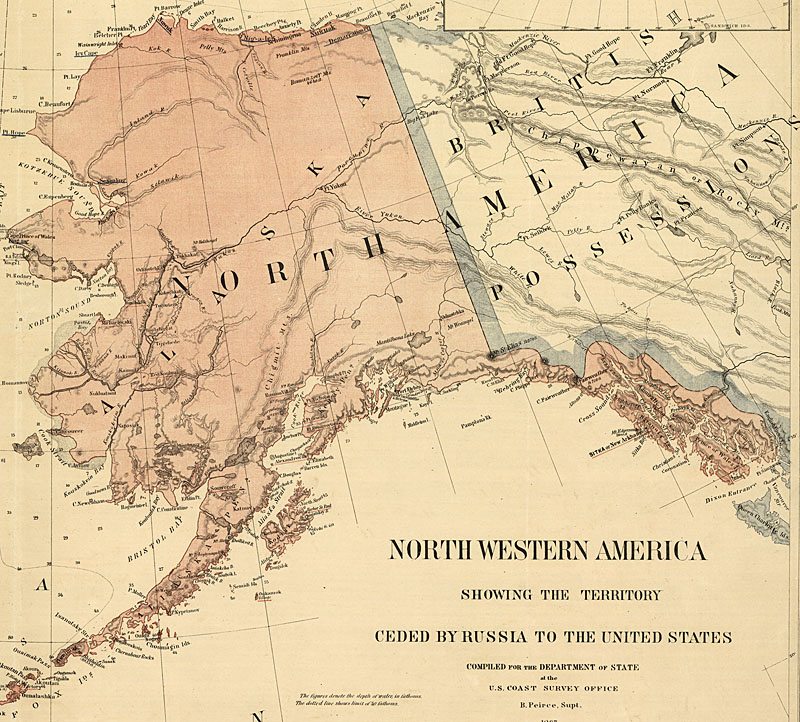
The turning point came in 1867 when the United States Secretary of State, William H. Seward, negotiated the purchase of Alaska from Russia for $7.2 million. At the time, many Americans scoffed at the acquisition, dubbing it “Seward’s Folly” or “Seward’s Icebox,” believing the land to be barren and worthless. They could not have been more wrong. The purchase added an immense 586,412 square miles to the United States, a territory more than twice the size of Texas. This strategic move solidified American presence in the North Pacific and paved the way for future economic and geopolitical advantages. The formal transfer ceremony took place in Sitka, then the capital of Russian America, signifying the birth of American Alaska.
A Territory in Waiting
For decades after the purchase, Alaska remained a neglected district, often governed by a series of military and civil administrators. The discovery of gold in the late 19th century, particularly the Klondike Gold Rush of 1896, sparked a massive influx of prospectors and settlers, transforming small outposts into booming towns like Skagway and Fairbanks. This population surge highlighted the need for more structured governance and local control. In 1912, Congress established the Territory of Alaska, granting it a territorial legislature and increasing local autonomy, but still falling short of full statehood. During this period, industries like fishing, canning, and mining grew, laying the economic groundwork for a self-sufficient state. The vastness of Alaska and its unique challenges, such as extreme weather and limited infrastructure, meant that its development differed significantly from other American territories.
January 3, 1959: Alaska Joins the Union
The mid-20th century marked the climax of Alaska’s decades-long quest for statehood, culminating in its official admission as the 49th state.
The Drive for Self-Governance
Following World War II, the movement for Alaska statehood gained considerable momentum. Alaskans felt increasingly disenfranchised by their territorial status. They lacked full voting representation in Congress, and federal control over their vast natural resources was a constant source of frustration. The strategic importance of Alaska during the war, particularly its role as a staging ground for operations in the Pacific Theater and its proximity to the Soviet Union during the burgeoning Cold War, brought it into the national spotlight. Alaskans argued that statehood would allow them greater self-determination, better management of their economy, and a stronger voice in national affairs. Leaders like Ernest Gruening, Alaska’s territorial governor, championed the cause tirelessly, advocating for the rights and potential of the Alaskan people.
The Congressional Deliberations
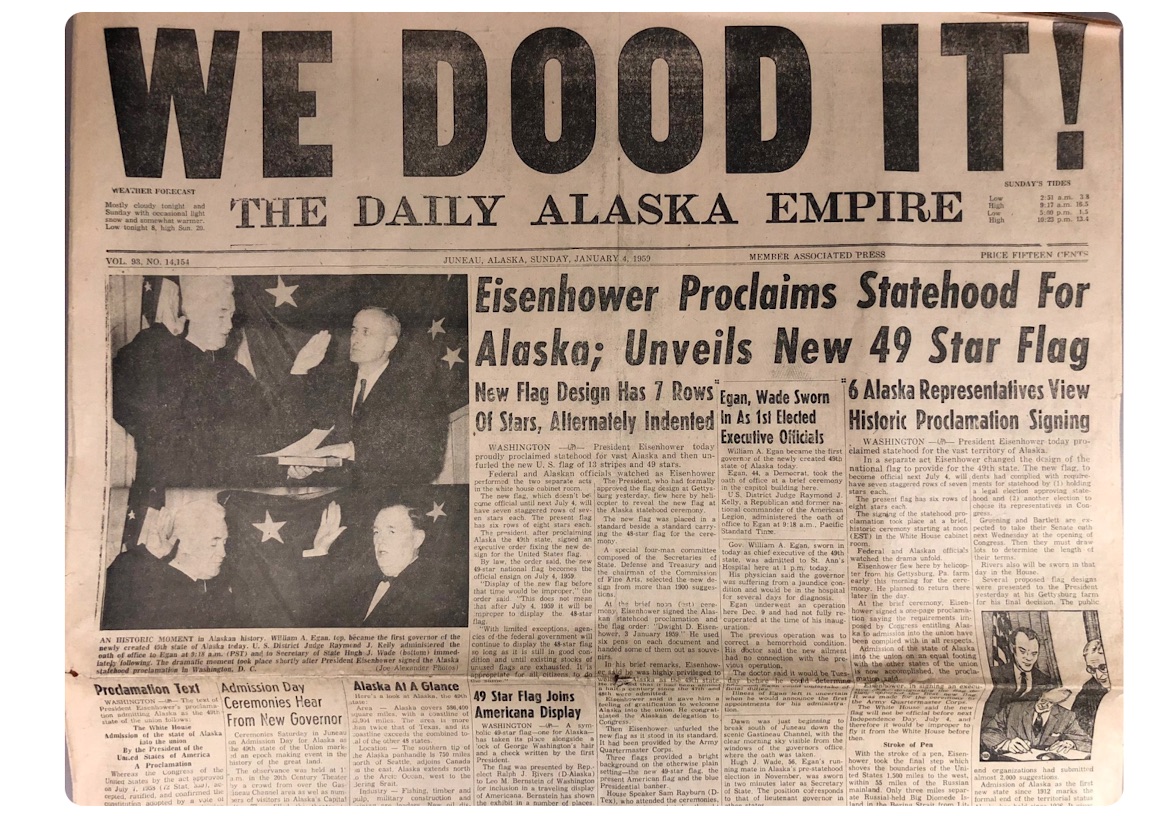
The statehood movement faced considerable opposition in Washington D.C.. Concerns included Alaska’s sparse population, its perceived economic instability, and the logistical challenges of governing such a remote and enormous state. Some politicians feared the potential shift in political power that two new senators and a representative from such a unique region might bring. However, proponents highlighted Alaska’s immense natural resources, its strategic military importance, and the democratic principle that citizens of a territory should have equal rights. After years of debate, lobbying, and a strong grassroots movement within Alaska, Congress finally passed the Alaska Statehood Act in 1958. President Dwight D. Eisenhower signed the proclamation admitting Alaska to the Union on January 3, 1959. This monumental event transformed the vast territory into a full-fledged state, granting its residents the same rights and responsibilities as those in the contiguous United States.
Celebrating a New Era
The admission of Alaska to the Union was met with widespread celebration across the new state. Festivities included parades, fireworks, and community gatherings, marking the end of a long struggle and the beginning of a new chapter. The psychological impact of statehood was profound, instilling a sense of pride and ownership among Alaskans. It meant that Alaska would now be able to elect its own governor and legislators with full powers, control its vast public lands, and participate fully in the American democratic process. This day solidified Alaska’s identity not just as a remote outpost, but as a vibrant and integral part of the nation.
The Impact of Statehood: Shaping Modern Alaska
Statehood dramatically accelerated Alaska’s development, influencing its economy, politics, and conservation efforts in profound ways.
Economic Boom: Oil, Fisheries, and Tourism
One of the most significant impacts of statehood was the transfer of millions of acres of federal land to the state, granting Alaska control over its rich natural resources. This proved prescient, as major oil discoveries soon followed, most notably the Prudhoe Bay field in 1968, the largest oil field in North America. The construction of the Trans-Alaska Pipeline System in the 1970s ushered in an era of unprecedented prosperity, providing billions in revenue that fueled public services, infrastructure development, and a unique state dividend program for residents. Beyond oil, Alaska’s statehood allowed for better management of its world-class fisheries in the Bering Sea and Pacific Ocean, ensuring sustainable practices for a vital industry. Tourism also blossomed, as greater accessibility and awareness of Alaska’s natural wonders attracted visitors eager to explore its national parks and wild frontiers.
Political Representation and Indigenous Rights
Statehood empowered Alaskans with full political representation in Congress, allowing them to advocate for their unique needs and concerns on the national stage. This was particularly significant for Alaska Native communities. In 1971, the Alaska Native Claims Settlement Act (ANCASA) was passed, transferring 44 million acres of land and nearly $1 billion to 12 newly formed regional and over 200 village corporations. This landmark legislation, a direct consequence of statehood and the need to settle land claims before pipeline construction, significantly impacted land ownership, economic development, and cultural preservation for indigenous Alaskans, establishing a unique model for aboriginal land claims in the United States.
Preserving Natural Wonders
While statehood brought economic development, it also underscored the importance of preserving Alaska’s pristine wilderness. The environmental movement gained traction, leading to the creation of vast national parks, wildlife refuges, and wilderness areas. The Alaska National Interest Lands Conservation Act (ANILCA) of 1980, another monumental piece of legislation, protected over 100 million acres of federal land in Alaska, doubling the size of the national park and wildlife refuge systems. This act ensured that much of Alaska’s iconic landscapes, from the towering peaks of the Alaska Range to the vast Arctic plains, would remain protected for future generations, securing its status as a global landmark of biodiversity and wilderness.
Iconic Alaskan Landmarks Shaped by Its History
Alaska’s statehood history is inextricably linked to many of its most famous landmarks, showcasing its natural grandeur and human resilience.
Denali National Park: A Symbol of Wilderness
One of Alaska’s most recognizable landmarks, Denali National Park and Preserve, encapsulates the state’s wild spirit. Home to Denali (formerly Mount McKinley), North America’s highest peak, the park was first established as Mount McKinley National Park in 1917, well before statehood. However, its expansion to its current 6 million acres under ANILCA in 1980 was a direct consequence of Alaska’s statehood and the increased focus on federal land management. The park stands as a testament to the state’s commitment to preserving its ecological treasures, offering breathtaking landscapes, diverse wildlife, and unparalleled opportunities for wilderness exploration.
The Iditarod Trail: A Legacy of Resilience
The famous Iditarod Trail Sled Dog Race traces historic routes used by dog teams to transport mail and supplies to remote Alaskan communities, including those affected by the gold rushes, and famously to deliver diphtheria serum to Nome in 1925. While the race began in 1973, its existence and the recognition of its historical route are deeply tied to the narrative of Alaska’s development and the spirit of its early inhabitants and pioneers, a spirit that statehood sought to preserve and celebrate. The Iditarod Trail is not just a race path; it’s a living historical landmark, symbolizing the ruggedness and ingenuity that defined pre-statehood Alaska and continues to inspire today.
Historic Sites in Anchorage and Juneau
The urban centers of Alaska also reflect its statehood journey. Anchorage, the state’s largest city, grew significantly during the post-statehood oil boom. Its historic downtown offers glimpses into its past as a railroad town and a strategic military hub. Juneau, the state capital, with its dramatic mountainous backdrop and coastal setting, houses the Alaska State Capitol building, where the state’s legislative decisions are made. These cities, alongside others like Sitka with its Russian Bishop’s House and National Historical Park, are living landmarks that tell the story of Alaska’s evolution from a distant territory to a proud state.
Experiencing Alaska’s Legacy Today
Visiting Alaska today offers an immersive experience into a land deeply shaped by its history and the momentous occasion of its statehood. From exploring the vast wilderness protected by federal and state agencies, a direct legacy of statehood-era legislation, to understanding the rich cultural heritage of its indigenous peoples, every corner of Alaska tells a story. The resilience of its communities, the stunning scale of its natural landmarks, and the pioneering spirit of its people are all facets that underscore the significance of January 3, 1959. This date didn’t just add a new star to the American flag; it formally recognized a distinct and vital part of the United States, forever cementing Alaska’s place as a land of epic proportions and enduring historical importance.
LifeOutOfTheBox is a participant in the Amazon Services LLC Associates Program, an affiliate advertising program designed to provide a means for sites to earn advertising fees by advertising and linking to Amazon.com. Amazon, the Amazon logo, AmazonSupply, and the AmazonSupply logo are trademarks of Amazon.com, Inc. or its affiliates. As an Amazon Associate we earn affiliate commissions from qualifying purchases.