
A Symbol of Sacrifice: The USS Arizona Memorial
The USS Arizona Memorial stands as a poignant and powerful landmark, commemorating one of the most significant and tragic moments in modern American history. It is not merely a monument built on dry land, but a sacred structure floating directly above the sunken hull of the battleship USS Arizona, which was destroyed during the surprise attack on Pearl Harbor on December 7, 1941. This landmark serves as a solemn tomb for over 1,177 crewmen who perished in the attack, and its existence ensures that their sacrifice and the pivotal event that thrust the United States into World War II are never forgotten. As a beacon of remembrance, it represents not only a specific historical event but also the enduring cost of conflict and the profound human impact of war. Its primary identity is that of a national shrine, drawing millions of visitors annually who seek to pay their respects and understand the magnitude of the events that unfolded there. The memorial’s very presence above the wreckage transforms it into a living testament, where the past can be directly confronted and honored. It is a landmark less about its physical construction and more about the hallowed ground it covers and the collective memory it preserves, making it an indispensable part of America’s historical and emotional landscape.
Pinpointing the Location: A Place of Remembrance in Hawaii
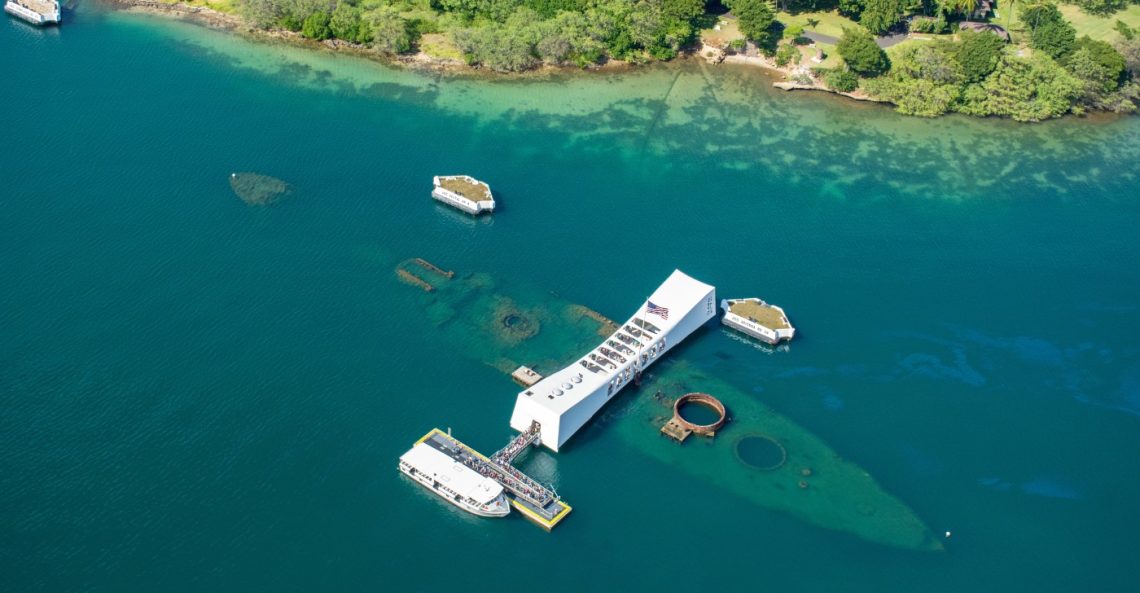
The USS Arizona Memorial is located in Pearl Harbor, on the island of Oahu in Hawaii, United States. This specific geographic setting is crucial to its identity, as the memorial exists precisely where the historical event occurred. It is accessible via boat from the visitor center situated on the shore of Pearl Harbor. The memorial itself is a white, open-air structure that spans the mid-section of the sunken battleship without touching it, leaving the ship undisturbed below the waterline. This deliberate placement ensures that the ship remains a hallowed grave site while allowing visitors a unique perspective on its resting place. The surrounding waters of Pearl Harbor, with the distant views of Ford Island and the tranquil Hawaiian landscape, offer a stark contrast to the violent history it commemorates, further enhancing its powerful atmosphere.
The Waters of Pearl Harbor
The distinctive characteristic of the USS Arizona Memorial is its direct placement over the sunken battleship. Unlike many other landmarks built on solid ground, this memorial literally floats on the waters of Pearl Harbor, acting as a bridge over sacred ground. The clear, calm waters allow glimpses of the ship’s submerged structure, including the barbettes of the main gun turrets and portions of the deck, which lie just beneath the surface. This unique arrangement means that visitors are not just looking at a memorial, but into the very site of the tragedy. The oil that continues to seep from the ship’s fuel bunkers, often referred to as “black tears,” rises to the surface, creating iridescent slicks that serve as a constant, somber reminder of the ship’s enduring presence and the lives lost. This environmental phenomenon transforms the very water into an integral part of the landmark’s expressive power, emphasizing the perpetual nature of the site’s historical significance. The decision to leave the ship undisturbed as a permanent memorial and tomb underscores a profound respect for the fallen, making the water itself an intrinsic element of this landmark’s profound meaning.
Within the National Memorial Complex
The USS Arizona Memorial is a central component of the broader Pearl Harbor National Memorial, which was formerly known as the World War II Valor in the Pacific National Monument. This larger complex encompasses several other significant historical sites related to the Pearl Harbor attack and World War II in the Pacific theater. While each site within the complex holds its own distinct historical importance, they collectively form a cohesive landmark dedicated to preserving the memory of the war. These include the battleship USS Missouri Memorial, where the official surrender of Japan occurred, marking the end of World War II; the Pacific Aviation Museum Pearl Harbor, located on Ford Island, which tells the story of aviation in the Pacific from the attack to the end of the war; and the USS Bowfin Submarine Museum and Park, showcasing a World War II fleet submarine. Together, these sites provide a comprehensive experience of one of history’s most impactful conflicts, with the USS Arizona Memorial serving as the solemn heart of the entire landmark complex, symbolizing the beginning of America’s involvement and the profound cost of freedom.
The Architecture of Memory: Design and Symbolism
Designed by architect Alfred Preis, the USS Arizona Memorial is a masterpiece of symbolic architecture. Its striking, minimalist design immediately evokes contemplation and respect. The structure is a 184-foot-long white concrete and steel edifice, characterized by a sagging center that rises dramatically at both ends. Preis himself explained the design as representing “initial defeat and ultimate victory.” The two peaks symbolize the beginning and end of World War II for the United States, with the sunken center embodying the profound grief and loss experienced at Pearl Harbor.
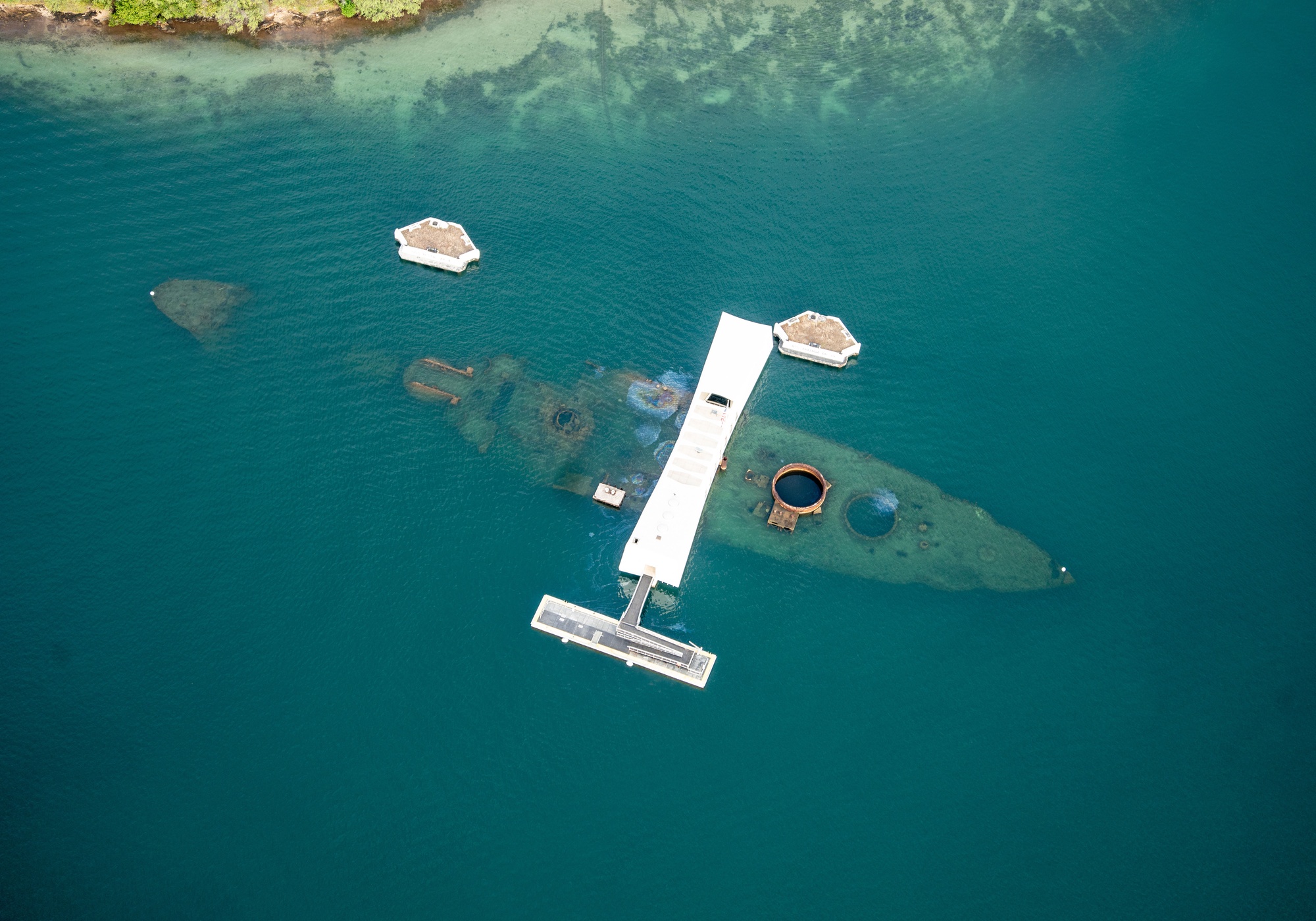
The memorial is divided into three main sections: the entry, the assembly room, and the shrine room. The entry section prepares visitors for the solemn experience ahead, offering panoramic views of Pearl Harbor and the surrounding historical sites. The central assembly room provides an open, quiet space for reflection, with seven large openings on the ceiling and walls, representing the date of the attack, December 7, 1941. This area allows visitors to look down upon the submerged deck of the USS Arizona, where remnants of the ship are still visible, including rusted gun turrets and the ship’s mast, often adorned with leis placed by visitors. The serene atmosphere is punctuated by the occasional drop of oil rising from the battleship below, forming what are known as “black tears,” a continuous, poignant reminder of the lives lost and the ship’s ongoing presence.
A Bridge Over Sacred Ground
The most impactful aspect of the memorial’s design is its function as a bridge, a graceful span that floats above the USS Arizona without ever touching it. This deliberate non-contact preserves the ship as a military grave, a final resting place for its crew. The design allows visitors to hover reverently over the battleship, feeling a profound connection to the historical event unfolding beneath them. The open sides of the memorial invite natural light and air, creating an ethereal experience that encourages visitors to consider the vastness of the sacrifice. This architectural choice underscores the sacred nature of the site, ensuring that the ship remains undisturbed while offering a uniquely intimate perspective on its hallowed status. The contrast between the peaceful, elevated structure and the tragic, submerged vessel below is a powerful testament to the thoughtful planning that went into creating this iconic landmark.
The Wall of Remembrance
The final section of the memorial is the shrine room, which houses the landmark’s most sacred feature: a large marble wall inscribed with the names of the 1,177 crewmen who lost their lives on the USS Arizona during the attack. This wall serves as the focal point for personal and collective grief, a tangible list of lives cut short. Visitors often spend significant time in this room, tracing names, reflecting, and offering quiet prayers. The names are not merely text; they represent individuals, families, and communities forever altered by the events of December 7, 1941. The stark simplicity of the names against the white marble wall ensures that the focus remains entirely on the human cost of the attack, making it an incredibly moving and central component of the landmark’s commemorative purpose. It is a powerful reminder that behind the statistics of war lie countless personal stories of loss, courage, and enduring memory.
Historical Significance: An Unforgettable Moment in Time
The USS Arizona Memorial is intrinsically linked to one of the most transformative days in United States history: the attack on Pearl Harbor on [December 7, 1941](https://lifeoutofthebox.com/december-7, 1941). This surprise assault by the Imperial Japanese Navy instantly propelled America into World War II. The USS Arizona bore the brunt of the attack, enduring multiple bomb hits, one of which detonated its forward ammunition magazine. The catastrophic explosion caused the ship to sink rapidly, taking with it 1,177 of its crew members—more than half of the total casualties suffered at Pearl Harbor. The sunken battleship, with its crew entombed within, was left largely undisturbed as a perpetual memorial, earning its designation as a National Historic Landmark in 1989.
The memorial serves as a potent educational tool, preserving the unfiltered reality of this pivotal moment for future generations. It stands as a physical manifestation of a national tragedy, a stark reminder of the fragility of peace and the immense sacrifices made to secure freedom. Millions of people, from veterans and their families to students and international tourists, undertake a pilgrimage to this site annually, seeking to connect with history in a tangible way. The solemn atmosphere encourages reflection on the choices and consequences of war, reinforcing the lessons learned from the past. The USS Arizona Memorial is more than just a historical marker; it is a profound testament to American resilience and a global symbol of peace achieved through great struggle.
The Genesis of a Landmark
The concept of a permanent memorial for the USS Arizona began to gain traction in the years following World War II. Initial efforts were modest, but a significant fundraising campaign spearheaded by figures like Elvis Presley in the late 1950s helped garner public support and funds. The memorial was eventually dedicated on May 30, 1962, by President John F. Kennedy. The decision to build the memorial directly over the sunken ship, rather than on land, was crucial. It ensured that the actual site of the tragedy became the memorial itself, embedding the history within its very foundation. This profound genesis, driven by a national desire to honor the fallen and remember the attack, highlights the landmark’s deep connection to the collective American consciousness and its role in processing a defining historical event.

Preserving the Legacy
Preserving the legacy of the USS Arizona Memorial is an ongoing, vital mission managed by the National Park Service. The environmental challenges of maintaining a structure over saltwater, along with the need to conserve the archaeological integrity of the sunken battleship, require continuous effort and expertise. Regular monitoring of the ship’s condition, including the ongoing “black tears,” ensures that the site remains stable and accessible while respecting its sacred nature. Beyond physical maintenance, the National Park Service is also responsible for interpreting the history of Pearl Harbor and the USS Arizona for visitors, providing educational programs, and ensuring that the stories of those who served are continually shared. This dedicated stewardship ensures that the memorial continues to serve its purpose as a powerful, living landmark, connecting generations to the sacrifices made and the lessons learned from one of the most impactful events of the 20th century.
LifeOutOfTheBox is a participant in the Amazon Services LLC Associates Program, an affiliate advertising program designed to provide a means for sites to earn advertising fees by advertising and linking to Amazon.com. Amazon, the Amazon logo, AmazonSupply, and the AmazonSupply logo are trademarks of Amazon.com, Inc. or its affiliates. As an Amazon Associate we earn affiliate commissions from qualifying purchases.