
The Direct Distance and Typical Travel Times
The journey between Providence, Rhode Island, and Boston, Massachusetts, is a quintessential New England travel experience, frequently undertaken by commuters, tourists, and business travelers alike. Understanding the distance and typical travel durations is the first step in planning an efficient and enjoyable trip between these two vibrant cities.
Road Distance
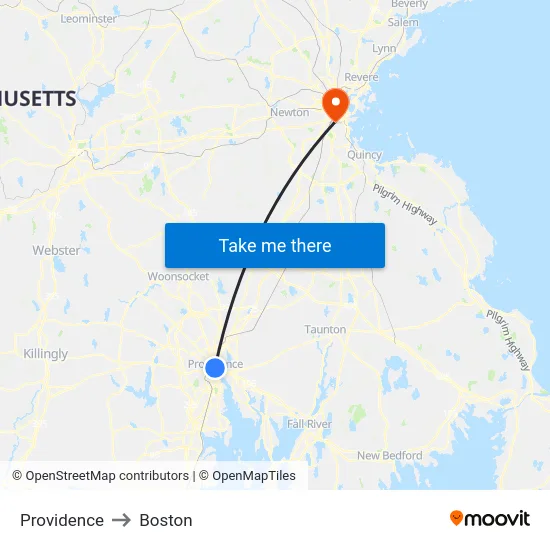
By road, the approximate distance between Providence and Boston is between 45 to 50 miles (72 to 80 kilometers), depending on the exact starting and ending points within each city. The primary route connecting the two is Interstate 95 North, a major artery that offers a direct path. Under ideal driving conditions, without traffic, the drive can be completed in about 1 hour to 1 hour and 15 minutes. However, this ideal scenario is often an aspiration rather than a reality, especially during peak travel times.
Rail Journey
For those opting for rail travel, the distance is similarly direct. The train journey typically covers a comparable distance, often slightly longer due to track alignments through various towns. Train travel times can vary significantly based on the service selected. A high-speed service like Amtrak’s Acela Express can make the trip in as little as 30-40 minutes, while the regional Northeast Regional or the MBTA Commuter Rail typically range from 1 hour to 1 hour and 20 minutes. These times are often more predictable than driving, as trains are less susceptible to road traffic congestion.
Navigating the Journey: Transportation Options
Choosing the right mode of transportation between Providence and Boston hinges on a traveler’s priorities: cost, convenience, speed, and comfort. Each option presents a unique set of advantages and considerations, allowing for tailored travel plans.
Driving: Flexibility and Potential Pitfalls
Driving offers unparalleled flexibility, allowing travelers to set their own schedule, make spontaneous stops, and carry more luggage. The route is straightforward, primarily following Interstate 95 North.
- Pros: Direct door-to-door access, control over departure times, ability to explore areas off the main route, and convenience for those with heavy luggage or traveling with families.
- Cons: Traffic congestion is the most significant drawback, especially during weekday rush hours and weekend afternoons. Parking in Boston can be expensive and challenging to find, particularly in popular areas. Fuel costs, tolls (some sections of Interstate 95 in Massachusetts may have tolls, though the direct route between these two cities typically avoids them, urban tolls in Boston for tunnels and bridges are common), and vehicle wear and tear are also factors. Travelers should factor in potential delays and allocate ample time, especially if they have fixed appointments.
Rail Travel: Comfort and Efficiency
Train travel between Providence and Boston is a popular choice for its comfort, reliability, and the ability to avoid traffic entirely. Both Amtrak and the MBTA Commuter Rail provide services.
- Amtrak: Offers both the Acela Express (faster, premium service with fewer stops) and the Northeast Regional (more frequent stops, generally more affordable). Amtrak trains depart from Providence Station and arrive at Boston’s historic South Station, which is well-connected to the city’s public transportation system.
- MBTA Commuter Rail: The MBTA Commuter Rail (Providence/Stoughton Line) offers a more budget-friendly option, particularly for regular commuters. These trains also depart from Providence Station and terminate at South Station. While slightly slower than Amtrak’s premium services due to more frequent stops, it offers a consistent schedule throughout the day, including peak hours.
- Pros: Stress-free journey, ability to work or relax during travel, typically drops off in central downtown locations (e.g., South Station), and environmentally friendly compared to driving alone.
- Cons: Less flexibility in departure times compared to driving, and tickets can be more expensive than bus travel, especially for Acela Express or last-minute Amtrak bookings.
Bus Services: Budget-Friendly Connections
Bus travel remains one of the most economical options for traversing the distance between Providence and Boston. Several reputable bus companies operate this route.
- Providers: Peter Pan Bus Lines and Greyhound are the primary operators, offering multiple daily departures. Buses typically depart from the Providence Bus Terminal (often co-located with Providence Station) and arrive at Boston’s South Station Bus Terminal.
- Pros: Generally the cheapest mode of transportation, frequent departures, and direct routes between city centers.
- Cons: Travel times can be impacted by road traffic, similar to driving. Less space and comfort compared to train travel. Depending on the service, amenities like Wi-Fi or power outlets may vary.
Alternative Transport: Ride-Shares and Flights
For those prioritizing absolute convenience or traveling in small groups, ride-sharing services like Uber or Lyft are available. While more expensive than other options, they offer door-to-door service on demand. A one-way trip can be costly, often exceeding $70-$100, depending on demand and service level.
Flights are generally not a practical option for this short distance. While Boston has Logan International Airport, and Providence has T.F. Green Airport, the total travel time including airport transfers, check-in, and security would far exceed the time taken by road or rail, making it inefficient and much more expensive.
Planning Your Trip: Key Considerations
Successful travel between Providence and Boston involves more than just knowing the distance; it requires strategic planning based on various factors.
Peak Travel Times and Traffic
Traffic is the most significant variable affecting travel duration, particularly when driving or taking the bus.
- Weekday Rush Hours: Commute times in the morning (roughly 6:30 AM to 9:30 AM) and evening (3:30 PM to 6:30 PM) on Interstate 95 can easily double or triple the usual 1-hour drive time. Travelers should expect heavy congestion and potential slowdowns, especially around major interchanges and approaching Boston proper.
- Weekend Travel: Friday afternoons and Sunday evenings often see increased traffic as people travel for weekend getaways or return home. Public holidays are also notorious for heavy traffic volumes.
- Strategies: If driving, consider departing very early in the morning, late morning after the initial rush, or later in the evening. For train travelers, while trains are less affected by road traffic, popular train times can still mean more crowded carriages. Booking train tickets in advance, especially for Amtrak during peak seasons, is advisable.
Cost Analysis
The cost of travel varies significantly by mode:
- Driving: Involves fuel costs (for a 50-mile journey, this is relatively low but adds up), potential tolls, and most significantly, parking fees in Boston, which can range from $20-$50+ for a day.
- Bus: Typically the most budget-friendly, with one-way tickets often ranging from $10-$25 when booked in advance.
- MBTA Commuter Rail: More expensive than the bus but generally more affordable than Amtrak, with one-way tickets usually in the $10-$15 range.
- Amtrak: Offers a range from the Northeast Regional (starting around $20-$40 one-way) to the Acela Express (which can easily exceed $50-$100 one-way, especially for last-minute bookings). Booking further in advance usually yields better fares for all train services.
Scenic Detours
While the most direct routes focus on efficiency, those with extra time might consider a slight detour for scenic beauty or additional attractions.
- Coastal Route 1A: Instead of solely relying on Interstate 95, a portion of the journey could incorporate coastal Route 1A, especially if heading towards communities south of Boston. This can offer picturesque views of the New England coastline, charming small towns, and opportunities for stops at local eateries. However, this route is significantly slower and should only be chosen for leisure, not speed.
- Historical Towns: For history enthusiasts, venturing slightly off the main route could allow for quick visits to historical towns in southeastern Massachusetts that played a role in the American Revolution or early colonial history. This transforms a simple commute into a mini road trip.
Exploring Both Cities: What Awaits
The short distance between Providence and Boston makes day trips or extended stays in either city highly feasible, offering a rich tapestry of history, culture, and modern attractions.
Providence: A Hub of Culture and Cuisine
Providence, the capital of Rhode Island, is often celebrated for its vibrant arts scene, innovative culinary landscape, and historic charm. The city is home to several prestigious educational institutions, including Brown University and the Rhode Island School of Design (RISD), which contribute to its creative atmosphere.
- Must-See Attractions: Experience the mesmerizing WaterFire Providence installation on the city’s rivers during select evenings. Explore the historic architecture of Benefit Street, known as the “Mile of History.” Indulge in the diverse dining scene, from upscale restaurants to authentic Italian fare in Federal Hill. The RISD Museum offers impressive art collections, while the Roger Williams Park Zoo is a family-friendly destination.
Boston: History, Innovation, and Charm
Boston, the capital of Massachusetts, is a city where colonial history blends seamlessly with modern innovation. It’s a major economic and cultural hub, attracting millions of visitors annually.
- Iconic Experiences: Walk the Freedom Trail, a 2.5-mile red-lined path that leads to 16 historically significant sites, including the Boston Common, Faneuil Hall, and the USS Constitution. Explore the world-class collections at the Museum of Fine Arts or marvel at marine life at the New England Aquarium. Catch a Boston Red Sox game at historic Fenway Park, or delve into the academic atmosphere of nearby Cambridge, home to Harvard University and MIT. The city’s diverse neighborhoods, from the cobbled streets of Beacon Hill to the vibrant North End, each offer unique attractions and culinary delights.
Whether you’re making a quick commute or planning a leisurely exploration, the journey between Providence and Boston is easily manageable, offering various options to suit every traveler’s preference and budget.
LifeOutOfTheBox is a participant in the Amazon Services LLC Associates Program, an affiliate advertising program designed to provide a means for sites to earn advertising fees by advertising and linking to Amazon.com. Amazon, the Amazon logo, AmazonSupply, and the AmazonSupply logo are trademarks of Amazon.com, Inc. or its affiliates. As an Amazon Associate we earn affiliate commissions from qualifying purchases.