
Navigating public transportation is often key to unlocking the full experience of any major city, and Boston is no exception. Its extensive public transit system, affectionately known as “The T,” operated by the Massachusetts Bay Transportation Authority (MBTA), connects visitors and locals alike to iconic landmarks, bustling neighborhoods, and essential services across the greater Boston area. Understanding how to pay for your journey on the subway, bus, trolley, and even the Commuter Rail is paramount for a seamless and stress-free visit. This comprehensive guide will demystify the MBTA fare system, outlining your options from traditional cards to modern contactless payments, ensuring you can traverse Boston with confidence and efficiency.

Understanding The MBTA Fare System
The MBTA operates a multi-modal transit network, each component of which may have slightly different fare structures or payment preferences. Familiarizing yourself with these nuances is the first step toward becoming a savvy Boston traveler.
What is The T?
“The T” is the colloquial name for Boston’s public transit system, encompassing various modes of transport. This includes the subway (often referred to by its colored lines: Red Line, Orange Line, Green Line, and Blue Line), local buses, trolleys (portions of the Green Line), and the Silver Line (a bus rapid transit system). Additionally, the MBTA manages the Commuter Rail and ferry services, which typically have distinct fare structures due to their longer distances and regional reach. For most tourists focusing on central Boston, the subway and bus systems will be your primary modes of travel.
Key Fare Zones and Types
Unlike some sprawling metropolitan systems, the Boston subway and local bus network largely operates on a flat fare system within its core service area. This means a single ride costs the same regardless of the number of stops, as long as you stay within the core subway/bus network. The Commuter Rail and ferry services, however, are zone-based, with fares increasing the further you travel from downtown. This guide will primarily focus on fares for the subway and bus, as these are the most common modes of transport for visitors exploring Boston’s attractions.
Modern Payment Methods for Travelers
The MBTA has significantly modernized its payment infrastructure, offering a variety of options to suit different traveler needs, from long-term visitors to those making just a few trips.
CharlieCard: Your Best Bet for Value and Convenience
For anyone planning to use The T more than a couple of times, the CharlieCard is unequivocally the most recommended payment method. This reloadable, plastic smart card offers the lowest per-ride fare for subway and local bus services compared to paper tickets or cash. When you use a CharlieCard, you also benefit from free transfers between subway lines and local bus routes within a two-hour window, maximizing your travel efficiency and savings.
The CharlieCard can be loaded with either stored value (money) or multi-day passes. While the card itself is free, it must be acquired from specific locations, which can be a minor initial hurdle for new visitors. However, the long-term benefits in terms of cost savings and ease of use far outweigh this initial effort.
CharlieTicket: The Flexible Paper Option
The CharlieTicket is a paper ticket that can be loaded with stored value or passes (like 1-Day or 7-Day passes). It’s primarily purchased from vending machines located in subway stations and is a convenient option for those making a limited number of trips or who don’t want the commitment of acquiring a CharlieCard. Be aware, however, that individual subway rides paid for with a CharlieTicket are slightly more expensive than those paid with a CharlieCard. Free transfers are generally still applicable when using a CharlieTicket with stored value.
Cash Fares (Buses and Trolleys)
While subway stations are equipped with fare gates requiring a card or ticket, local buses and trolleys (specifically those operating on surface streets rather than in subway tunnels) still accept cash fares. You must have exact change, as bus drivers do not carry change. It’s important to note that paying with cash on a bus is the most expensive single-ride option and does not provide free transfers to other buses or the subway. For this reason, cash should generally be considered a last resort, particularly for subway travel where it is not accepted directly at turnstiles.
Contactless Payment: The Future is Now
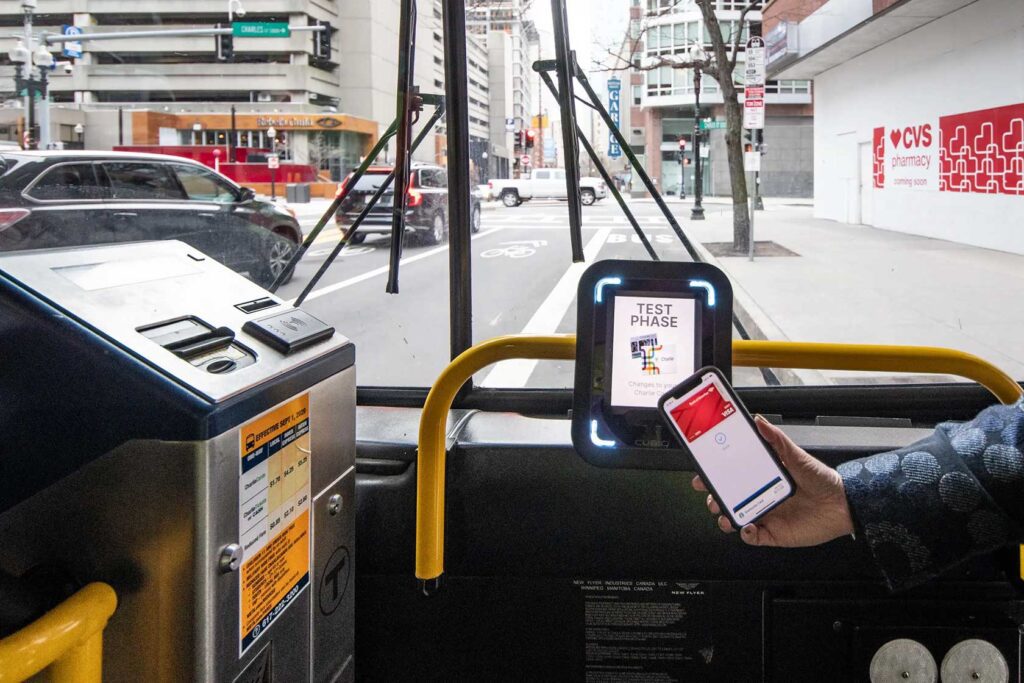
In a significant upgrade, the MBTA has begun rolling out a new fare payment system that allows riders to tap their credit or debit card, or a mobile payment option (like Apple Pay or Google Pay), directly at subway turnstiles and bus fare boxes. This system charges the standard CharlieCard fare for single rides, making it incredibly convenient for visitors who want to avoid purchasing a dedicated card or ticket. Look for card readers displaying the contactless symbol. This is arguably the easiest method for short-term visitors or those who prefer not to manage a separate transit card. Ensure your card is configured for contactless payments.
MBTA mTicket App (for Commuter Rail & Ferry)
For those venturing beyond the core subway and bus network using the Commuter Rail or ferry services, the MBTA mTicket App is the primary digital payment solution. This app allows you to purchase tickets and passes directly on your smartphone, eliminating the need for paper tickets. It’s particularly useful for frequent Commuter Rail users but can also be handy for occasional trips to outer suburbs or ferry excursions to destinations like Charlestown or Hingham.
Choosing The Right Fare Product for Your Trip
The duration and intensity of your travel in Boston will largely dictate the most economical fare product.
Single Rides vs. Passes

If you’re only planning one or two trips on The T during your entire visit, using a CharlieTicket with stored value or opting for contactless payment for individual rides is perfectly adequate. However, if your itinerary involves daily exploration using public transport, a pass will almost certainly save you money.
1-Day, 7-Day, and Monthly Passes
The MBTA offers various passes designed for different travel frequencies:
- 1-Day LinkPass: Ideal for tourists who plan a day of extensive sightseeing using The T. It allows unlimited travel on subway, local bus, and Silver Line for 24 hours from activation.
- 7-Day LinkPass: The most popular choice for visitors staying for several days to a week. This pass offers unlimited travel on subway, local bus, and Silver Line for seven consecutive days. The cost effectiveness of this pass often pays for itself after just a few rides per day.
- Monthly LinkPass: Geared towards residents or long-term visitors, this pass offers unlimited travel for a calendar month.
All these passes can be loaded onto a CharlieCard or a CharlieTicket. Remember that CharlieCard is always preferred for long-term use due to its durability and potential for easier reloading.
Considerations for Frequent Riders vs. Occasional Users
For those staying near major attractions and intending to walk most places, an occasional CharlieTicket or contactless payment for a few specific journeys (e.g., to/from Boston Logan International Airport via the Silver Line) might be sufficient. However, if your itinerary includes visits to multiple neighborhoods, museums, or sports venues across Boston and its surrounding areas, investing in a 7-Day LinkPass on a CharlieCard will likely provide the best value and convenience.
Where to Purchase and Reload Your Fare
Acquiring your payment method is straightforward once you know where to look.
Vending Machines
The most common place to purchase CharlieTickets and reload CharlieCards (with either stored value or passes) is at fare vending machines located in every subway station. These machines accept cash, credit cards, and debit cards. They are user-friendly and offer instructions in multiple languages.
Retail Locations
A limited number of convenience stores and select retailers throughout Boston are authorized to sell and reload CharlieCards. These locations are less common for tourists but can be a convenient option if you are near one. A list of these retail partners can typically be found on the MBTA website. These locations are also often where you can acquire a new, physical CharlieCard itself.
MBTA Customer Service Centers
While not strictly for payment, MBTA Customer Service Centers, such as the one at Downtown Crossing station, can assist with more complex fare issues, provide new CharlieCards, and offer personalized advice. These are usually not necessary for standard purchases but are good to know for specific situations.
Practical Tips for Navigating The T Like a Local
Beyond just paying, a few insider tips can enhance your overall experience on The T.
Fare Etiquette
When entering a subway station, tap your CharlieCard or CharlieTicket at the fare gate, or tap your contactless payment method. Wait for the green light and audible confirmation before passing through. On buses, tap your card/ticket or drop exact cash into the fare box at the front of the bus. Remember to tap out if you’re on a Commuter Rail or ferry, as some systems require both tap-in and tap-out for correct fare calculation.
Transfers and Connections
One of the significant advantages of using a CharlieCard or stored value on a CharlieTicket is the free transfer policy. You can transfer between subway lines (e.g., from the Red Line to the Green Line at Park Street or Downtown Crossing) or from a subway to a local bus (and vice-versa) within a two-hour window without incurring an additional charge. This greatly expands your travel range and saves money, especially on multi-leg journeys.
Accessibility and Reduced Fares
The MBTA strives to make its system accessible. Most subway stations are accessible, and buses are equipped with ramps. Reduced fares are available for eligible seniors, persons with disabilities, and low-income individuals, but these typically require application and specific identification, which might not be practical for short-term visitors. Children under 12 ride free when accompanied by an adult (up to two children per adult).
Planning Your Journey with Apps
To make the most of your paid fare, leverage technology. The official MBTA website and various third-party apps (like Google Maps, Citymapper, or Transit app) provide real-time tracking, schedules, and route planning. These tools are invaluable for navigating The T efficiently, helping you minimize wait times and identify the quickest routes to your destination.
By understanding these payment methods and practical tips, you’re well-equipped to use The T confidently, transforming your Boston visit into an even more enjoyable and smoothly-connected adventure.
LifeOutOfTheBox is a participant in the Amazon Services LLC Associates Program, an affiliate advertising program designed to provide a means for sites to earn advertising fees by advertising and linking to Amazon.com. Amazon, the Amazon logo, AmazonSupply, and the AmazonSupply logo are trademarks of Amazon.com, Inc. or its affiliates. As an Amazon Associate we earn affiliate commissions from qualifying purchases.