
Navigating Boston Without Personal Transit: Key Considerations for Accommodation
Choosing the right accommodation in Boston is paramount for any traveler, but it becomes an even more critical decision when you plan to explore the city without a personal vehicle. Boston is renowned for its historic, winding streets, many of which were not designed for modern traffic, making driving and parking a challenging and often expensive endeavor. This is precisely why many visitors opt for car-free exploration, relying instead on the city’s robust public transportation system, its walkability, and ride-sharing services.

The primary goal when selecting accommodation without a car is connectivity. Your chosen hotel or serviced apartment should offer seamless access to public transit, key attractions, dining, and shopping, minimizing the need for lengthy walks or expensive taxi rides. This focus allows you to maximize your time experiencing Boston’s charm rather than commuting.
Prioritizing Walkability and Public Transportation Access
Boston’s compact urban core is incredibly walkable. Many of its most iconic sights, from the Freedom Trail to Faneuil Hall Marketplace, are within easy reach of each other, especially if you base yourself centrally. For destinations slightly further afield, the city’s public transportation system, operated by the Massachusetts Bay Transportation Authority (MBTA), affectionately known as “The T,” is efficient and extensive.
When evaluating potential accommodations, look for properties that explicitly mention their proximity to T stations (subway and trolley lines). A hotel within a 5-10 minute walk of a subway station can dramatically enhance your mobility. Additionally, consider how many major attractions are within a reasonable walking distance from your chosen lodging. Some neighborhoods offer such high walkability that you might find yourself using The T only for specific trips, like visiting museums or reaching specific dining districts.
Understanding Boston’s T-System and Commuter Rail
The T consists of five subway lines (Red, Orange, Green, Blue, and Silver) that connect various neighborhoods and important landmarks. The Green Line, for example, is particularly useful for reaching areas like Kenmore Square and the Museum of Fine Arts, while the Red Line connects Cambridge (home to MIT and Harvard University) to Downtown Crossing. The Blue Line offers direct access to Logan International Airport, a crucial factor for arriving and departing without a car.
Beyond the subway, the MBTA also operates a comprehensive bus network and a commuter rail system. While the commuter rail primarily serves outer suburbs, knowing its central stations, such as North Station and South Station, can be beneficial if your itinerary includes day trips outside the immediate urban area. When booking, always check the nearest T station and research which lines serve it, ensuring it aligns with your planned activities.
Top Boston Neighborhoods for Car-Free Visitors
Boston’s diverse neighborhoods each offer unique charms and varying levels of accessibility. For those without a car, selecting a neighborhood that minimizes travel time and maximizes convenience is essential.
Downtown and Financial District: The Heart of the City
Staying in Downtown Boston or the adjacent Financial District places you at the epicenter of many historical and cultural attractions. This area boasts unparalleled access to multiple T lines, including the Red, Orange, Green, and Blue lines, often within a few blocks. From here, you can easily walk to Faneuil Hall Marketplace, the New England Aquarium, and parts of the Freedom Trail.
Accommodation here ranges from historic luxury hotels to modern business-oriented properties. The density of transportation options, dining, and shopping makes it an ideal base for first-time visitors or those on a tight schedule.
Back Bay: Elegance and Accessibility
Back Bay is synonymous with elegant brownstones, high-end shopping on Newbury Street, and picturesque strolls along the Charles River Esplanade. It’s also incredibly well-connected by public transport, primarily served by the Green Line (Boylston, Arlington, Copley, Hynes Convention Center stations) and the Orange Line (Back Bay station).
This neighborhood offers a refined atmosphere, proximity to the Boston Public Garden and Boston Common, and a wide array of dining options. Hotels in Back Bay often provide a more luxurious experience, perfect for those seeking comfort and style within easy reach of everything.
Beacon Hill: Historic Charm Steps Away
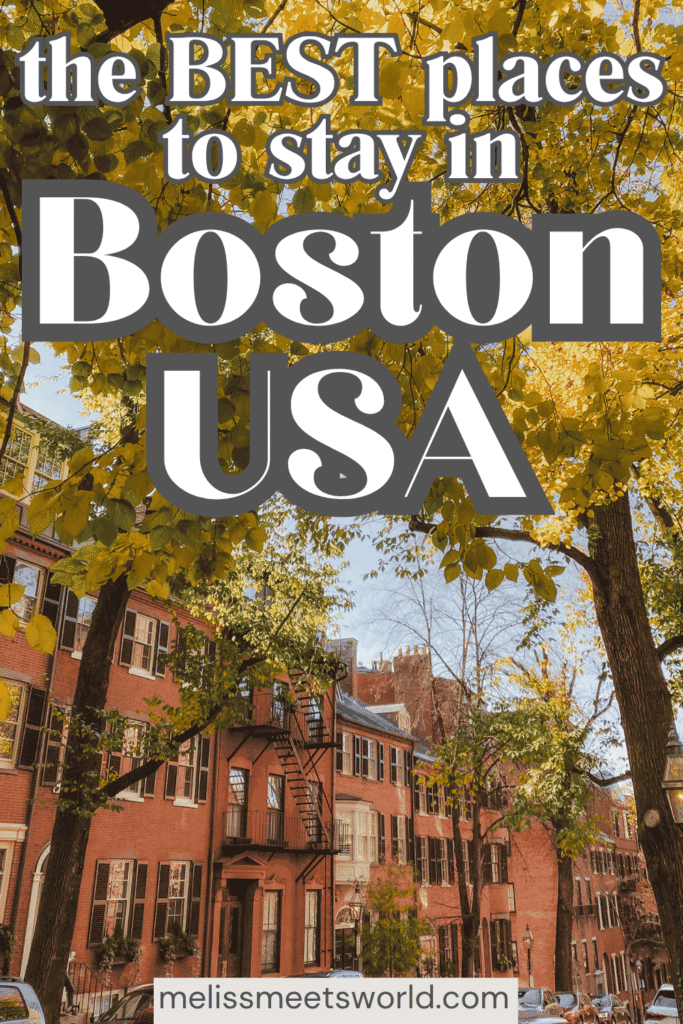
Just a stone’s throw from Boston Common and the Massachusetts State House, Beacon Hill is one of Boston’s most charming and photogenic neighborhoods. Its gas-lit streets and federal-style rowhouses exude historic appeal. While more residential, it offers boutique hotels and guesthouses.
Its central location means easy walking access to Downtown and Back Bay. The Bowdoin and Charles/MGH stations provide Blue and Red Line access, respectively, ensuring good connectivity despite its quaint, secluded feel. Beacon Hill is ideal for travelers who appreciate history and a quieter ambiance, yet still want to be close to the action.
Seaport District: Modernity and Waterfront Views
The Seaport District has transformed into a vibrant, modern hub with sleek architecture, innovative restaurants, and lively waterfront spaces. While slightly further from the very core of historic Boston, it is well-served by the Silver Line bus rapid transit, which connects directly to South Station (Red Line, Commuter Rail) and Logan International Airport.
Hotels in the Seaport District are typically new, offering contemporary amenities and often stunning harbor views. It’s an excellent choice for business travelers, those attending events at the Boston Convention and Exhibition Center, or anyone seeking a lively, upscale dining and nightlife scene with good transit access.
Cambridge (Across the Charles River): Academic Hub with Excellent Connectivity
While technically a separate city, Cambridge is an integral part of the Boston metropolitan experience and an excellent option for car-free visitors. Home to MIT and Harvard University, Cambridge boasts a youthful, intellectual atmosphere, diverse dining, and unique shops.
The Red Line provides swift and direct access from Harvard Square, Central Square, and Kendall Square straight into Downtown Boston. Accommodations here often offer competitive rates compared to central Boston and can provide a different, yet equally rich, urban experience with easy access to all the main attractions.
Accommodation Types and Features for Car-Free Travel

When choosing where to stay without a car, the type of accommodation and its specific features become even more significant.
Hotels with Excellent Transit Scores
Many hotel booking platforms now include a “transit score” or “walk score” for properties. Prioritize hotels with high scores, indicating superior access to public transportation and a high degree of walkability. Look for hotels that explicitly market their proximity to T stations or major bus routes. Concierge services at these hotels are often well-versed in public transit, offering invaluable advice on navigating the city.
Serviced Apartments for Longer Stays or Family Travel
For extended visits, families, or groups, serviced apartments offer more space, kitchen facilities, and a sense of home. Many are located in residential parts of well-connected neighborhoods like Back Bay or Cambridge, offering convenient access to local grocery stores and public transport. This option can be particularly economical as it allows for self-catering, reducing dining-out expenses.
Boutique Stays Near Major Attractions
Boston is home to numerous charming boutique hotels, often situated in historic buildings in desirable neighborhoods like Beacon Hill or the South End. These properties typically offer personalized service and unique character. When considering a boutique stay, verify its exact location relative to a subway station or frequently used bus stop. Their smaller scale can sometimes mean fewer amenities, but their prime locations often compensate by placing you directly amidst attractions or dining scenes.
Essential Tips for Booking Car-Free Accommodation in Boston
Making an informed decision about your accommodation is crucial for a smooth car-free trip.
Utilize Mapping Tools for Proximity to T Stations
Before booking, use online mapping services (like Google Maps) to check the walking distance from your prospective hotel to the nearest MBTA subway or bus station. Also, plot out the walking routes to your primary points of interest. This visual verification can prevent surprises and confirm that the advertised “central location” genuinely translates to car-free convenience.
Read Reviews for Transportation Insights
Guest reviews can offer invaluable, real-world insights into a property’s accessibility. Look for comments specifically mentioning ease of getting around without a car, proximity to public transit, or helpful tips regarding local transport. Reviews often highlight aspects like noisy train lines (less common in Boston due to underground routes, but good to check) or bus stop locations.
Factor in Airport Accessibility (Logan International Airport)
Your arrival and departure logistics are paramount when you don’t have a car. Logan International Airport is easily accessible via the Blue Line T from Downtown, or the Silver Line from the Seaport District and South Station. Consider how directly your chosen accommodation connects to these lines. A property requiring multiple transfers from the airport, especially with luggage, might not be the most practical choice.
Consider Luggage Storage Options
If you arrive early or depart late, having a hotel that offers reliable luggage storage can be a lifesaver. This allows you to explore the city unencumbered on your arrival or departure day, maximizing your time without the hassle of a vehicle. Check this amenity, especially if you anticipate irregular check-in/check-out times.
Featured Accommodation Spotlight
Several Boston hotels consistently rate highly for their location and accessibility for car-free travelers.
The Omni Parker House
Located at 60 School Street in Downtown Boston, The Omni Parker House is a historic landmark providing direct access to the Green Line (Park Street) and Red Line (Park Street) stations. Its prime spot puts guests steps away from Boston Common, the Freedom Trail, and Faneuil Hall Marketplace, making it an ideal choice for exploring the city entirely on foot or by T.
The Lenox Hotel
Situated in the heart of Back Bay at 61 Exeter Street, The Lenox Hotel is famed for its classic elegance and superb location. It’s a short walk from the Copley Green Line station and the Back Bay Orange Line station, providing excellent connectivity to other parts of the city. Guests can easily walk to Copley Square, Newbury Street, and the Boston Public Library.
Hotel Commonwealth
Positioned in Kenmore Square at 500 Commonwealth Avenue, Hotel Commonwealth offers a luxurious experience with a vibrant neighborhood feel. It’s directly opposite the Kenmore Green Line station, providing effortless access to Downtown, the Museum of Fine Arts, and, for baseball fans, Fenway Park is just a short stroll away.
Envoy Hotel, Autograph Collection
In the burgeoning Seaport District at 70 Sleeper Street, the Envoy Hotel, Autograph Collection, offers modern amenities and waterfront views. It’s ideally located for the Silver Line, which provides rapid transit to Logan International Airport and South Station, linking to the Red Line. This location is perfect for those prioritizing new development, dining, and easy airport connections.
Hyatt Regency Cambridge
While technically in Cambridge at 575 Memorial Drive, the Hyatt Regency Cambridge is a fantastic option for car-free visitors. It offers a complimentary shuttle to the Kendall/MIT Red Line station, which is just a few stops from Downtown Boston. Its riverside location provides beautiful views of the Boston skyline, offering a tranquil base with excellent access to both cities.
LifeOutOfTheBox is a participant in the Amazon Services LLC Associates Program, an affiliate advertising program designed to provide a means for sites to earn advertising fees by advertising and linking to Amazon.com. Amazon, the Amazon logo, AmazonSupply, and the AmazonSupply logo are trademarks of Amazon.com, Inc. or its affiliates. As an Amazon Associate we earn affiliate commissions from qualifying purchases.