
Embarking on a journey to [California], with its diverse landscapes stretching from the sun-drenched beaches of [Los Angeles] to the majestic redwoods of the north, promises an unforgettable experience. As you plan your itinerary, considering everything from iconic attractions like the [Golden Gate Bridge] to exploring the wilderness of [Yosemite National Park], it’s crucial to also be aware of the state’s local regulations. Among the many questions visitors might have, one often overlooked but vital aspect concerns the legality of carrying a knife. Understanding [California]’s knife laws is essential for a hassle-free trip, ensuring your focus remains on enjoying the Golden State, not navigating legal complications. These regulations can be nuanced, varying by knife type, carry method, and specific locations, making general knowledge insufficient. For any tourist, prioritizing legal compliance is a key “tip” to a successful and enjoyable visit.

Navigating [California]’s Knife Laws as a Visitor
[California]’s knife laws are among the more complex in the United States, designed to balance individual rights with public safety concerns. For tourists, this means that what might be permissible in your home state could lead to legal issues here. The legal framework differentiates significantly between various types of knives and how they are carried, impacting everything from a simple pocket knife used for utilitarian purposes to a larger blade carried for self-defense or outdoor activities. Before packing any blade, it’s paramount to familiarize yourself with these distinctions.General Principles and Concealed vs. Open Carry
A foundational aspect of [California]’s knife laws revolves around the distinction between concealed and open carry. Generally, it is legal for an adult to openly carry most folding knives when folded and in a sheath, or simply in a pocket, in most public places that are not otherwise restricted. This includes common pocket knives, which are typically designed for everyday utility. However, the legal landscape shifts dramatically for concealed carry. Carrying any knife that is not a “folding knife” in a concealed manner is broadly prohibited. This means fixed-blade knives, daggers, dirks, and even folding knives that are “locked open” and not immediately identifiable as a folding knife might be considered dangerous weapons if concealed.
The definition of “concealed” is broad and can include carrying a knife in a pocket, purse, backpack, or under clothing where it is not readily visible. The law aims to prevent individuals from carrying weapons covertly. While a folding knife carried in a closed position within a pocket is generally acceptable, a fixed-blade knife hidden beneath a jacket would almost certainly be illegal. This distinction is particularly important for tourists exploring urban centers like [San Francisco] or [San Diego], where casual concealment might inadvertently violate the law. The rule of thumb: if it’s not a standard, folded pocket knife, avoid concealing it. Even if you believe your knife is legal, a misunderstanding by law enforcement can lead to detainment and further investigation, disrupting your travel plans.
Specific Prohibitions to Be Aware Of
Beyond the general concealed carry rules, [California] law also specifically prohibits the possession of certain types of knives outright, regardless of whether they are openly or concealed carried. These prohibitions are largely aimed at knives deemed inherently dangerous or designed primarily for combat. For instance, switchblades (automatic knives), ballistic knives, and cane swords are generally illegal to possess, sell, or manufacture in [California]. Even carrying these items in your luggage while passing through the state could lead to charges. This list of prohibited weapons is periodically updated, and it’s always prudent to consult the latest state statutes or a legal professional if you have specific concerns about a unique blade. Tourists should err on the side of caution and assume that any knife with an unusual or clearly combative design is likely prohibited. The goal of your trip is enjoyment and exploration, and having to deal with legal issues is antithetical to that.
Common Types of Knives and [California] Regulations
The specific classification of a knife profoundly impacts its legality in [California]. For a tourist, knowing these distinctions is not just academic; it’s a practical necessity to avoid inadvertently breaking the law. Different types of knives have different rules regarding possession, carry, and length, adding layers to the legal framework.
Folding Knives and Pocket Knives
For most tourists, a standard folding knife or pocket knife is the most common type they might carry, perhaps for utility during outdoor activities or simply as an everyday tool. In [California], folding knives (which are designed to be carried with the blade folded into the handle) are generally legal to own and carry, both openly and, when folded, concealed in a pocket. There is no specific blade length limit for a folding knife carried in this manner, as long as it remains folded and its primary function is not deemed inherently dangerous or for combat. However, a crucial caveat exists: if a folding knife is carried in an open and locked position, it effectively becomes a fixed-blade knife in the eyes of the law, and its concealed carry would then be prohibited. It’s also vital to ensure the knife does not fall into categories like switchblades or gravity knives, which have separate, stricter regulations. When visiting cities like [San Jose] or [Oakland], using a folding knife for simple tasks like opening packages or cutting fruit is typically fine, but brandishing it or carrying it in a manner that causes alarm could still attract unwanted attention.
Fixed-Blade Knives and Daggers
Fixed-blade knives, which include daggers, dirks, and hunting knives, present a different legal scenario. Unlike folding knives, fixed-blade knives are generally not permitted to be carried concealed in [California]. This means if you have a hunting knife for a trip to a wilderness area or a survival knife, it must be carried openly. Open carry typically implies that the knife is sheathed on your belt or openly visible in a bag or vehicle, making it clear to any observer what you are carrying. The law explicitly defines “dirk” or “dagger” as a knife or other instrument with or without a handguard that is capable of ready use as a stabbing weapon. The intent behind the law is to prevent individuals from carrying these types of weapons covertly. For those planning camping or hiking trips in areas like [Big Sur] or [Redwood National Park], an openly carried fixed-blade knife for legitimate outdoor purposes is generally acceptable. However, carrying such a knife openly in urban settings like downtown [Sacramento] or [Fresno] might still raise concerns and attract police attention, even if technically legal, due to public perception and potential for misuse.
Automatic Knives and Switchblades
[California] has very strict laws regarding automatic knives, commonly known as switchblades. It is generally illegal to possess, import, or sell any automatic knife where the blade is two inches or longer. This prohibition applies whether the knife is carried openly or concealed. The definition of an automatic knife includes any knife that has a blade that opens automatically by a spring, gravity, or other mechanism, from the handle. Even owning such a knife, regardless of intent, can lead to serious legal consequences. For tourists, this means that if you own an automatic knife, even if it’s legal in your home state, you should absolutely not bring it into [California]. This is one of the most unambiguous prohibitions and ignoring it can lead to immediate legal trouble.Balisong (Butterfly) Knives and Throwing Stars
Similar to switchblades, certain other specialized knives and weapons are also heavily restricted or outright prohibited. Balisong knives, often referred to as butterfly knives, are generally treated as switchblades under [California] law if they have a blade length of two inches or more, making their possession illegal. These knives are designed for rapid deployment and often associated with martial arts or trickery, prompting strict regulation. Furthermore, throwing stars, also known as shurikens, are explicitly classified as illegal weapons in [California]. Possessing or carrying a throwing star is a misdemeanor offense. As a tourist, it is highly unlikely you would need either of these items for legitimate travel purposes, and their presence can quickly turn a pleasant trip into a legal ordeal. These categories represent items that the state deems inherently dangerous and unsuitable for general public possession.
Where Knives Are Strictly Forbidden
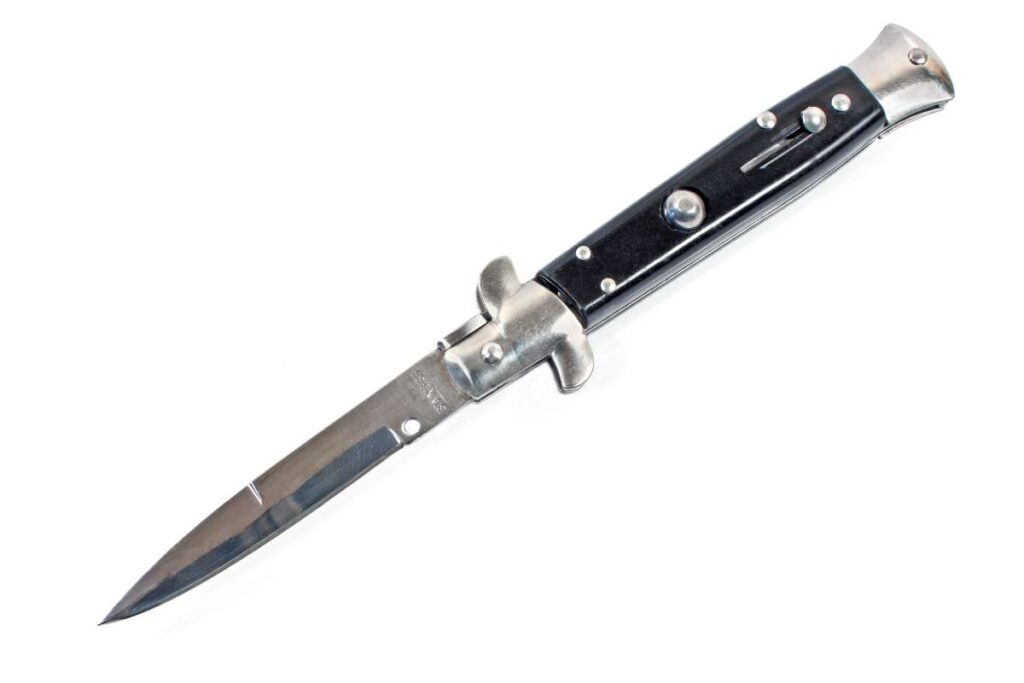
Beyond the type of knife or the method of carry, there are specific locations in [California] where carrying any knife, or certain types of knives, is absolutely prohibited, regardless of its legality elsewhere. These zones are often designated as sensitive areas for public safety and security. Tourists must be particularly vigilant about these restrictions, as ignorance is not a valid defense.
Schools and Government Buildings
One of the most critical restrictions applies to schools. It is generally illegal to possess any knife with a blade longer than 2.5 inches on the grounds of any K-12 public or private school, community college, or university campus. This includes not just students and staff, but also visitors. Even a small utility knife carried for legitimate purposes could lead to legal issues if found on school property. Similarly, government buildings such as courthouses, state capitol buildings (e.g., the [Sacramento] State Capitol), and many administrative offices typically have strict no-weapon policies, which often include knives. Security screenings are common at these locations, and attempting to enter with a prohibited item will result in immediate confiscation and potential legal action. Always assume that government facilities and educational institutions are no-knife zones.
Airports and Federal Facilities
For air travelers, rules governing knives are primarily set by federal regulations, specifically the Transportation Security Administration (TSA). While small knives might be allowed in checked luggage, they are absolutely forbidden in carry-on bags or on your person when passing through airport security. Any knife found during security screening will be confiscated, and you could face fines or other penalties. This applies to all [California] airports, including major hubs like [Los Angeles International Airport] and [San Francisco International Airport]. Beyond airports, various federal facilities such as post offices, federal courthouses, military bases, and national parks (with specific regulations) also have strict prohibitions on weapons. Always check the specific rules of any federal property you plan to visit, as they often supersede state or local laws. When visiting attractions like the [Alcatraz Island] National Park, expect stringent security and leave any knives behind.
Local Ordinances and Restricted Areas
Compounding state and federal laws are local ordinances, which can vary significantly between cities and counties within [California]. While state law provides a baseline, some municipalities might impose stricter rules on blade length, open carry, or specific types of knives within their jurisdiction. For instance, certain cities might have bans on particular knives that are otherwise legal statewide, or they might restrict open carry in specific public spaces. Before visiting a new city like [Long Beach] or [Anaheim], especially if you plan to carry a knife, it is prudent to quickly check their local ordinances. Often, major tourist areas, entertainment districts, and large public gatherings (e.g., street festivals, concerts, or events at [Disneyland]) will have enhanced security measures and stricter rules regarding weapons, including knives. The safest approach for tourists is to avoid carrying any knife in densely populated urban environments or at major public events unless absolutely necessary for a specifically permitted activity.
Practical Tips for Tourists and Responsible Ownership
Navigating [California]’s knife laws can seem daunting, but with a practical and cautious approach, you can avoid legal pitfalls and enjoy your visit. The key is to prioritize legal compliance and understand that the intent of your carry may not always shield you from consequences if the knife itself or the manner of its carry is illegal.
Check Local Laws Before You Go
Before your trip to [California], or even before heading to a specific city or attraction within the state, take a few moments to research the local knife laws. While this article provides a general overview, laws are subject to change, and local ordinances can add layers of complexity. A quick search for “[City Name] knife laws” can often yield valuable information. If you’re planning specific activities like hunting, fishing, or extensive wilderness camping, also research the regulations pertinent to those activities and locations, as they might have specific requirements for knives used in those contexts. Ignorance of the law is generally not considered a valid defense.
When in Doubt, Leave It Behind
This is perhaps the most crucial piece of advice for any tourist. If you are uncertain about the legality of a particular knife, its carry method, or a specific location, the safest and most prudent course of action is to simply leave the knife at home or securely stored in your accommodation. The potential inconvenience of not having a knife pales in comparison to the significant disruption and legal repercussions that can arise from inadvertently violating [California] law. For most tourist activities, a knife is rarely an essential item, and readily available alternatives can often serve the same purpose without the legal risk.
Emergency Preparedness vs. Recreational Use
Many individuals carry knives for emergency preparedness or recreational outdoor activities. While [California] law often makes allowances for these legitimate uses, it’s vital that the knife itself and its manner of carry align with the legal framework. For instance, a fixed-blade knife for camping in [Kings Canyon National Park] must be openly carried. A small folding knife for minor emergencies while exploring [Hollywood] might be permissible if carried folded in a pocket. However, carrying any knife, regardless of intended use, that falls into the prohibited categories (e.g., switchblades) or carrying any knife in a prohibited location (e.g., a school campus) is still illegal. Be honest about your actual need and ensure that your chosen blade and carry method strictly adhere to the law.
Consequences of Non-Compliance
Violating [California]’s knife laws can have serious repercussions that can quickly derail your travel plans and lead to lasting negative impacts. Understanding these potential consequences underscores the importance of strict compliance.
Misdemeanors and Felonies
Depending on the specific violation, carrying an illegal knife or carrying a legal knife illegally can result in charges ranging from a misdemeanor to a felony. Simple possession of a prohibited knife (like a switchblade or throwing star) or concealed carry of a dirk/dagger are often misdemeanors, punishable by fines, jail time (up to one year), or both. However, more severe offenses, such as carrying a knife with intent to assault, or certain repeat offenses, can escalate to felony charges. Felonies carry much harsher penalties, including significant state prison time, substantial fines, and a permanent criminal record. For a tourist, a criminal record can impact future international travel, visa applications, and even employment opportunities long after your trip to [California] concludes.

Impact on Travel and Future Visits
Beyond immediate legal penalties, being charged with a knife-related offense in [California] will undoubtedly disrupt your travel plans. You may face arrest, detainment, legal proceedings, and potentially be barred from leaving the state until your case is resolved. This could mean missing flights, forfeiting bookings, and incurring unexpected legal expenses. Furthermore, if convicted, having a criminal record, even for a misdemeanor, could complicate or prevent future visits to the United States or other countries that inquire about criminal history. The bureaucratic hurdles and emotional stress alone are reason enough to exercise extreme caution and ensure full compliance with [California]’s knife laws. Your priority should be a safe and memorable vacation, free from the entanglements of the legal system.
LifeOutOfTheBox is a participant in the Amazon Services LLC Associates Program, an affiliate advertising program designed to provide a means for sites to earn advertising fees by advertising and linking to Amazon.com. Amazon, the Amazon logo, AmazonSupply, and the AmazonSupply logo are trademarks of Amazon.com, Inc. or its affiliates. As an Amazon Associate we earn affiliate commissions from qualifying purchases.