
Traversing the vast expanse of the Western United States, a journey from California to Colorado presents travelers with a remarkable blend of diverse landscapes, vibrant cities, and endless possibilities for adventure. The distance between these two prominent states varies significantly depending on your specific starting point in California and your intended destination in Colorado, as well as your chosen mode of transportation. Understanding the mileage and estimated travel time is crucial for planning an efficient and enjoyable trip, whether you envision a leisurely road trip, a swift flight, or a scenic train ride.
Understanding the Geographical Divide
California, a state renowned for its sprawling coastline, majestic mountains, and bustling metropolises, lies to the west, bordering the Pacific Ocean. Colorado, conversely, is situated in the Mountain West region, characterized by its dramatic Rocky Mountains, high plains, and vibrant outdoor culture. The significant distance between them means traversing multiple states, including Nevada and Utah, and sometimes even parts of Arizona, depending on the specific route taken. This geographical separation translates into a journey that can range from approximately 800 miles to over 1,200 miles, making meticulous planning essential for any traveler.
Driving: The Classic American Road Trip
For many, the allure of the open road makes driving the preferred method for traveling from California to Colorado. This option offers unparalleled flexibility, allowing travelers to discover hidden gems, picturesque towns, and breathtaking natural wonders along the way. However, the sheer distance means this is typically a multi-day endeavor.
Key Routes and Distances
Several primary interstate highways facilitate the cross-country journey, each offering a unique perspective on the American West:
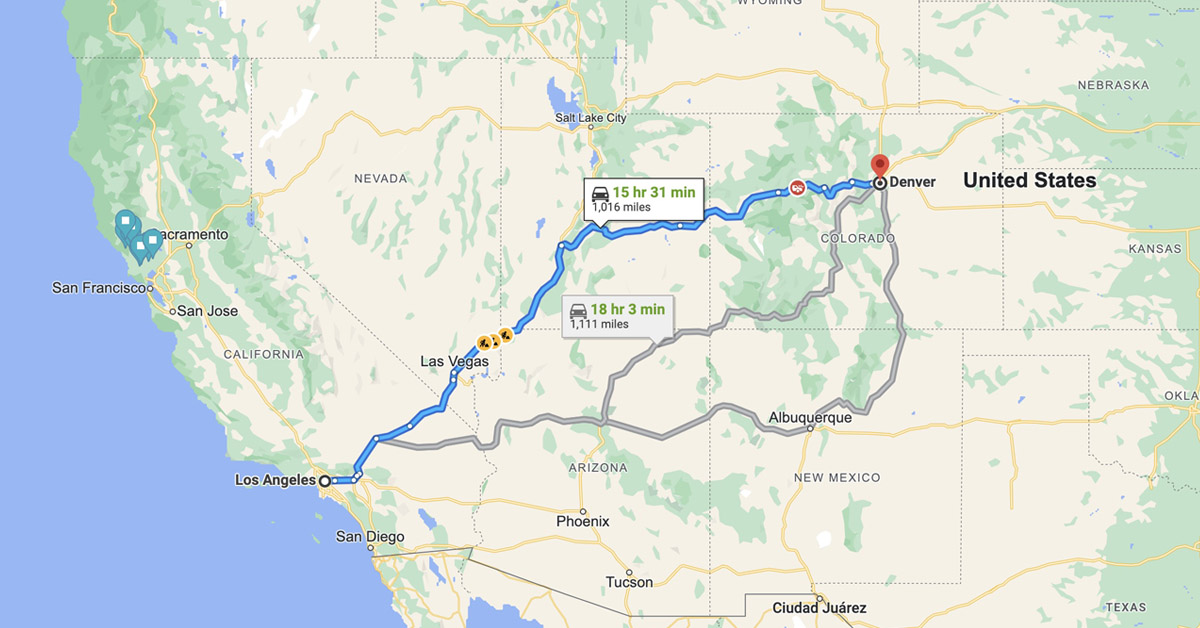
- Los Angeles to Denver (via I-15 and I-70): This is arguably the most common and direct route for those starting in Southern California. Travelers would typically take I-15 northeast through Nevada (passing Las Vegas) and Utah to Salt Lake City. From there, I-70 heads directly east through the majestic Rocky Mountains of Colorado to Denver.
- Distance: Approximately 1,000 to 1,100 miles.
- Driving Time: Roughly 15-18 hours of pure driving, not accounting for stops, traffic, or overnight stays. Most travelers break this into a two-day journey.
- San Francisco to Denver (via I-80 and I-70): For those departing from Northern California, I-80 leads northeast through Nevada into Utah, connecting with I-70 near Salt Lake City.
- Distance: Approximately 1,200 miles.
- Driving Time: Around 18-20 hours of driving, typically requiring two overnight stops for a comfortable pace.
- Southern Route (via I-40): A less direct but scenic option involves taking I-40 through Arizona and New Mexico before heading north into Colorado. This route might add considerable mileage and time but offers opportunities to explore sites like the Grand Canyon.
- Distance: Varies greatly depending on the final destination in Colorado, but often exceeds 1,200-1,300 miles.
- Driving Time: 20+ hours of driving, best suited for a three-day journey.
Planning Your Journey
Driving from California to Colorado is an adventure in itself. Proper planning is essential to ensure safety and enjoyment.
- Pacing and Stops: For a journey of this magnitude, it’s advisable to limit daily driving to 8-10 hours. This allows for ample rest, meal breaks, and opportunities to appreciate the changing scenery. Popular overnight stops include Las Vegas, St. George (Utah), or Salt Lake City on the northern routes.
- Vehicle Preparation: Ensure your vehicle is in excellent condition. Check tires, oil, and fluid levels. It’s particularly important if traveling through mountainous terrain or during winter months when snow and ice can be a factor, especially on I-70 in Colorado.
- Weather Considerations: The weather can vary dramatically across the several states you’ll cross. From the desert heat of Nevada and Utah to the unpredictable mountain conditions of Colorado, staying informed about forecasts is crucial.
- Fuel and Supplies: Distances between services can be considerable in rural areas of Nevada and Utah. Plan fuel stops accordingly and carry essential supplies like water, snacks, and a basic emergency kit.
Flying: The Fastest Option
For those prioritizing speed and efficiency, air travel is by far the quickest way to get from California to Colorado. Several major airports in California offer direct flights to Colorado’s primary hub, Denver International Airport (DEN).
Major Airports and Flight Durations

- Departure Airports in California: Key airports include Los Angeles International Airport (LAX), San Francisco International Airport (SFO), San Diego International Airport (SAN), and Oakland International Airport (OAK).
- Arrival Airport in Colorado: The vast majority of flights land at Denver International Airport (DEN), which serves as a major hub for the Mountain West region. Other smaller airports like Colorado Springs Airport (COS) or Aspen/Pitkin County Airport (ASE) may offer connecting flights or seasonal direct options from California.
- Direct Flight Times: A direct flight from California to Colorado typically ranges from 2 hours to 2 hours and 45 minutes, depending on the specific origin and destination airports. For example, LAX to DEN is often around 2 hours and 20 minutes.
Considerations for Air Travel
While fast, flying comes with its own set of considerations:
- Cost: Airfare can fluctuate widely based on booking time, airline, and season. Generally, it’s more expensive than driving, especially when factoring in baggage fees and ground transportation at your destination.
- Time Savings: Even with airport security, boarding, and deplaning, flying significantly cuts down on travel time, making it ideal for short trips or those with limited time.
- Logistics: You’ll need to arrange transportation to and from the airports. Upon arrival in Colorado, a rental car or rideshare service will likely be necessary to explore the wider region beyond Denver.
Rail and Bus Travel: Scenic and Sustainable Alternatives
For travelers seeking a more relaxed pace, an environmentally conscious option, or a journey steeped in history, train and bus services offer viable alternatives.
Amtrak Routes
Amtrak provides a quintessential American rail experience, offering stunning views and a comfortable journey.
- The California Zephyr: This iconic route is the most direct train service between California and Colorado. Originating from San Francisco (via a bus connection to Emeryville, CA), it traverses the Sierra Nevada mountains, crosses Nevada and Utah, and then journeys through the breathtaking Rocky Mountains of Colorado before arriving in Denver.
- Travel Duration: The full journey typically takes around 30-33 hours from Emeryville to Denver. This is an overnight trip.
- Experience: Travelers can enjoy panoramic views from observation cars, dine in the dining car, and relax in comfortable seats or private sleepers. It’s a journey designed for enjoying the scenery rather than just reaching a destination.
Bus Services
Bus companies like Greyhound offer the most economical way to travel between California and Colorado, though it is also the longest option.
- Routes and Duration: Bus routes generally follow similar paths to the main driving corridors, often involving transfers. A journey from Los Angeles to Denver can take anywhere from 24 to 36 hours or more, depending on connections and layovers.
- Pros and Cons: The primary advantage is cost-effectiveness. However, the extended travel time and potentially less comfortable seating are trade-offs. It’s a practical choice for budget-conscious travelers who are not in a hurry.
Making the Most of Your Journey
Regardless of the chosen mode of transport, the journey from California to Colorado is an experience in itself. The diverse landscapes you’ll encounter—from the deserts of Nevada and Utah to the dramatic canyons and then the gradual ascent into Colorado’s alpine environment—are a testament to the natural beauty of the American West.
For road trippers, consider integrating stops at iconic national parks like Zion National Park or Arches National Park in Utah, which are often along or near the main routes. These detours can transform a mere transit into an unforgettable exploration. Even for those flying, the bird’s-eye view offers a unique perspective on the rugged terrain below.
Ultimately, the “how far” question extends beyond just miles; it encompasses the time, effort, and type of experience you wish to have. Whether you crave the freedom of the road, the swiftness of air travel, or the scenic comfort of a train, a well-planned trip from California to Colorado promises an engaging and memorable adventure across the heart of the Western U.S.
LifeOutOfTheBox is a participant in the Amazon Services LLC Associates Program, an affiliate advertising program designed to provide a means for sites to earn advertising fees by advertising and linking to Amazon.com. Amazon, the Amazon logo, AmazonSupply, and the AmazonSupply logo are trademarks of Amazon.com, Inc. or its affiliates. As an Amazon Associate we earn affiliate commissions from qualifying purchases.