
The Epic Cross-Country Journey: Distance and Time
Traveling from Ohio to California is a quintessential American road trip, spanning diverse landscapes and demanding thorough planning. This cross-country adventure covers thousands of miles from the Midwest to the Pacific Coast.
Measuring the Miles: A Geographic Overview
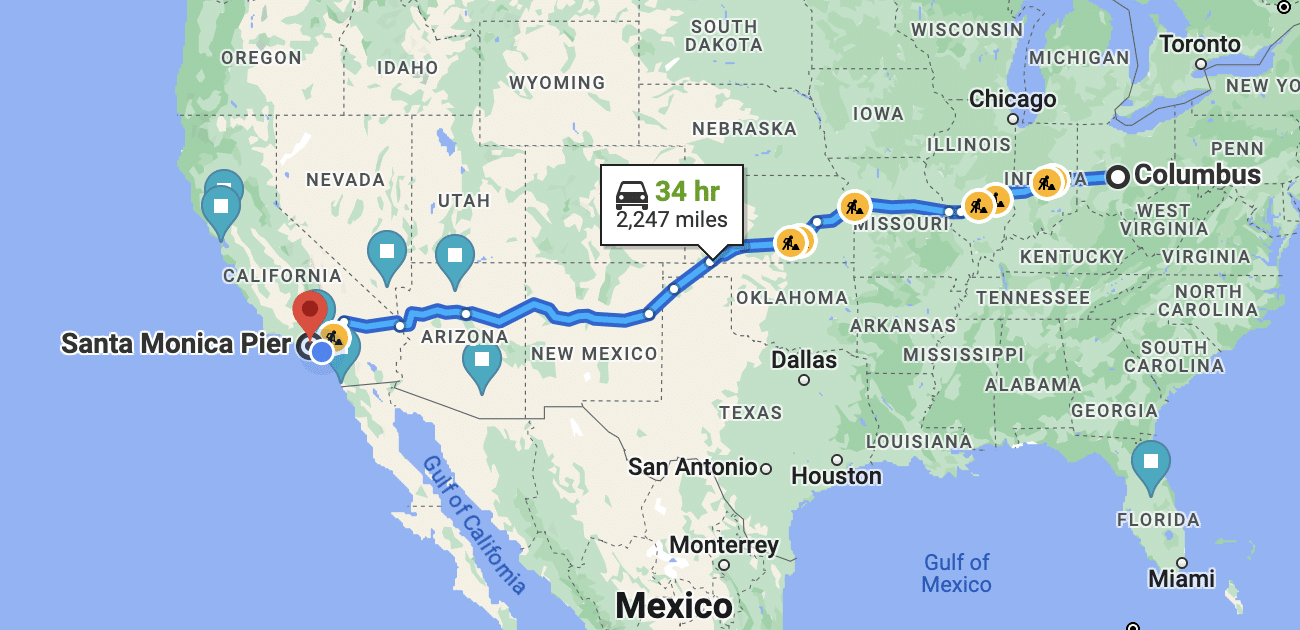
The distance from central Ohio (e.g., Columbus) to major Californian cities (e.g., Los Angeles or San Francisco) typically ranges from 2,200 to 2,500 miles (3,540 to 4,020 kilometers). For instance, Columbus to Los Angeles is about 2,275 miles, while to San Francisco it’s around 2,450 miles. These figures highlight the vastness, crossing multiple time zones and diverse terrains.
Drive Time Estimates: Planning Your Route
Covering 2,200 to 2,500 miles typically requires 35 to 40 hours of pure driving. For safety and enjoyment, this journey demands multiple stops. A realistic Ohio to California road trip spans 4 to 7 days. A faster pace means 8-10 hours of daily driving, requiring 3-4 overnight stays. For a more leisurely and scenic experience, a 5-7 day trip with 6-8 hours of driving allows ample exploration and rest, transforming a long drive into a memorable adventure.
Route Planning and Key Considerations
Choosing the right route is crucial for an efficient and enjoyable journey. Major interstates offer direct paths, each with unique characteristics. Travel season and budget also significantly influence the experience.
Popular Interstate Routes
Three primary interstates facilitate this trek:
-
Interstate 70 (I-70): Best for central/southern Ohio (e.g., Columbus, Cincinnati). I-70 heads west through Indianapolis and St. Louis, Missouri (with Gateway Arch National Park), across the Great Plains to Denver, Colorado in the Rocky Mountains. From Colorado, connect to Interstate 15 (I-15) towards Las Vegas, Nevada and Southern California. This route balances speed and scenery.
-
Interstate 80 (I-80): Ideal for northern Ohio departures (e.g., Cleveland). I-80 goes north through Chicago, Illinois, Iowa, Nebraska, Wyoming, and Utah (near Salt Lake City). It’s fast across the Great Plains and becomes scenic in western states. From Utah, it continues into Northern California, towards Sacramento and San Francisco.
-
Interstate 40 (I-40): Requires heading south from Ohio to connect in states like Tennessee or Arkansas. I-40 parallels historic Route 66, offering a southwestern experience through Oklahoma, Texas, New Mexico, and Arizona before Southern California. Perfect for desert landscapes and classic Americana, including the Grand Canyon National Park.
Seasonal Travel Challenges
- Summer: Popular, but expect high heat in deserts (Death Valley) and potential thunderstorms.
- Spring & Fall: Often ideal with milder temperatures and fewer crowds. Late season snow can occur in Rocky Mountains or California mountain passes.
- Winter: Most challenging due to heavy snow, ice, and road closures across the Midwest, Rocky Mountains, and western passes. Requires careful preparation.

Budgeting for the Long Haul
Key expenses: fuel (largest variable), accommodation (3-6 nights), food, tolls, attraction fees, and a contingency fund.
Essential Stops and Scenic Detours
The journey from Ohio to California is rich with opportunities for memorable stops and scenic detours.
Midwest Marvels
- St. Louis, Missouri: On I-70, see the Gateway Arch National Park.
- Kansas City, Missouri: Also on I-70, known for barbecue and jazz.
- Chicago, Illinois: A worthwhile I-80 detour for architecture and museums.
Rocky Mountain Highs
The transition to the towering Rocky Mountains is a dramatic highlight.
- Denver, Colorado: The “Mile High City” at the foothills, a great base for mountain exploration.
- Rocky Mountain National Park, Colorado: Near Denver, offers alpine scenery and wildlife.
- Salt Lake City, Utah: On the I-80 route, with a mountain backdrop and historic Temple Square.
Southwestern Adventures
The Southwest offers unparalleled natural wonders, especially on I-40 or veering south.
- Grand Canyon National Park: Iconic, must-see natural landmark in Arizona.
- Las Vegas, Nevada: Vibrant urban break before California.
- Utah’s Mighty Five National Parks: Zion National Park, Bryce Canyon National Park, and Arches National Park (near Moab) offer stunning red rock landscapes.
California’s Grand Welcome
Upon reaching California, new natural and urban wonders await.
- Yosemite National Park: For Northern California travelers, Yosemite offers iconic granite cliffs and waterfalls.
- Lake Tahoe: Straddling the California and Nevada border, a pristine alpine lake, often a stop on I-80.
- Pacific Coast Highway (Highway 1): Drive a portion for dramatic ocean views and charming coastal towns.
Preparing for Your Trans-American Adventure
Meticulous preparation ensures safety, comfort, and peace of mind for this significant journey.
Vehicle Maintenance and Safety Checks
Before departing Ohio, ensure your vehicle is in optimal condition:
- Full Service: Oil change, fluid levels checked.
- Tires: Inspect pressure, tread, spare.
- Brakes & Battery: Inspected and tested.
- Lights & Wipers: All functional.
- Emergency Kit: Jumper cables, first-aid, flashlight, basic tools, reflective triangle, blankets.
Packing Essentials for a Road Trip
- Navigation: Offline maps/GPS.
- Entertainment: Playlists, podcasts, audiobooks.
- Comfort: Pillows, blankets, sunglasses.
- Food & Drink: Cooler with water, snacks.
- Personal Items: Sunscreen, toiletries, medications.
- Power Banks: Keep devices charged.

Navigational Tools and Connectivity
Download offline maps for the entire route, as cell service can be unreliable in vast regions. A portable Wi-Fi hotspot can provide consistent internet. Share your itinerary and check in regularly with a trusted contact. Safety is paramount, especially in isolated areas.
The journey from Ohio to California is an iconic American adventure. With careful preparation, you’ll not only cover the thousands of miles but also create a lifetime of cherished memories.
LifeOutOfTheBox is a participant in the Amazon Services LLC Associates Program, an affiliate advertising program designed to provide a means for sites to earn advertising fees by advertising and linking to Amazon.com. Amazon, the Amazon logo, AmazonSupply, and the AmazonSupply logo are trademarks of Amazon.com, Inc. or its affiliates. As an Amazon Associate we earn affiliate commissions from qualifying purchases.