
The continental United States is a vast expanse, and traversing it from coast to coast is an adventure that many dream of undertaking. The journey between California, on the pacific shores, and South Carolina, nestled on the Atlantic Seaboard, represents one of the longest domestic routes one can embark upon. Understanding the precise distance, the time involved, and the various modes of transport is the first step in planning such a significant cross-country travel experience. This guide will illuminate the practicalities and possibilities of traveling between these two distant but distinct states.

The Cross-Continental Divide: Understanding the Distance
Traveling from the West Coast to the East Coast of the United States is not a trivial undertaking. The sheer scale of the country means that distances are measured in thousands of miles, and travel times stretch over multiple days by ground or a full day by air.
Geographical Overview
California and South Carolina are situated on opposite ends of the North American continent. California is the third-largest state by area, spanning a diverse landscape from pristine beaches to towering mountain ranges, vibrant cities like Los Angeles and San Francisco, and deserts. South Carolina, while much smaller, boasts a rich history, charming coastal towns like Charleston and Myrtle Beach, and inland areas characterized by forests and rolling hills. The journey between them crosses approximately 13 to 15 states, depending on the chosen route, offering a kaleidoscope of American landscapes and cultures.
Measuring the Miles: Straight-Line vs. Driving Distances
When discussing distance, it’s crucial to differentiate between “as the crow flies” (straight-line or aerial distance) and actual driving distance.
- Aerial Distance: The straight-line distance between, for example, Los Angeles, California, and Columbia, South Carolina, is approximately 2,150 to 2,200 miles (3,460 to 3,540 kilometers). This is the figure relevant for air travel.
- Driving Distance: The actual road distance is significantly longer due to geographical features, road networks, and the need to navigate through various cities and terrains. A typical driving route from a major California city like Los Angeles or San Francisco to a major South Carolina city such as Charleston or Columbia generally ranges from 2,400 to 2,800 miles (3,860 to 4,500 kilometers). This variation depends heavily on the specific starting and ending points, as well as the chosen highways. For instance, traveling from San Diego, California, to Myrtle Beach, South Carolina, might be closer to the upper end of that spectrum.
Modes of Transport: Navigating the Nation
The choice of transportation for such a long journey heavily influences the travel time, cost, and overall experience. Each mode offers distinct advantages and disadvantages, catering to different travel preferences.
By Air: The Fastest Route
For those prioritizing speed and efficiency, flying is unequivocally the best option.
- Travel Time: A direct flight from a major California airport (e.g., Los Angeles International Airport (LAX), San Francisco International Airport (SFO)) to a major South Carolina airport (e.g., Charleston International Airport (CHS), Greenville-Spartanburg International Airport (GSP)) typically takes between 4.5 to 6 hours. However, direct flights are less common, and most itineraries will involve at least one layover, usually in a major hub like Dallas, Atlanta, or Charlotte. With layovers, the total travel time can extend to 7 to 10 hours or more.
- Cost: Airfare can vary wildly based on the time of year, booking in advance, and airline. Expect prices to range from a few hundred dollars to over a thousand for a round trip.
- Convenience: Flying minimizes travel time but requires navigating airports, security, and potentially multiple connections. It’s ideal for business travelers or those with limited time.
By Road: An Epic American Road Trip
Driving across the country offers an unparalleled opportunity to experience the diverse landscapes and cultures of the United States. It’s a journey, not just a destination.
- Travel Time: Covering 2,400 to 2,800 miles by car typically requires 40 to 45 hours of pure driving time. To complete this safely and enjoyably, it’s recommended to break the journey into 4 to 6 days, driving 8-10 hours per day. This allows for rest, meals, and scenic stops.
- Cost: Driving costs include fuel, accommodation, food, and potential tolls. Fuel prices fluctuate, but a rough estimate could be $400-$700+ for fuel alone for a one-way trip, depending on vehicle efficiency and gas prices. Hotels will add significantly, often $100-$200 per night.
- Experience: A road trip provides flexibility, allowing travelers to stop at national parks, historic sites, and quirky roadside attractions. Popular routes might take you through the Southwest, the Great Plains, and the Deep South.
By Train and Bus: Scenic and Sustainable Options
While less common for a full cross-country journey, trains and buses offer alternative travel experiences.
- By Train (Amtrak): Amtrak offers routes that can connect California to South Carolina, though no single direct line exists. This journey typically involves multiple transfers, often in hubs like Chicago or New Orleans.
- Travel Time: Expect the train journey to take significantly longer than driving, usually 3 to 4 days or more, depending on connections.
- Cost: Train tickets can vary widely, from a few hundred dollars for coach seats to over a thousand for private rooms.
- Experience: Amtrak provides a relaxing way to see the country, often with large windows, dining cars, and comfortable seating. It’s a journey for those who appreciate the slower pace and scenic views without the stress of driving.
- By Bus (Greyhound, etc.): Bus travel is the most economical option but also the longest and potentially least comfortable for such an extended trip.
- Travel Time: A bus journey from California to South Carolina could take 3 to 5 days, including numerous stops and transfers.
- Cost: Bus tickets are typically the cheapest, often under $200-$300 for a one-way trip.
- Experience: While budget-friendly, long-distance bus travel is strenuous, with limited personal space and frequent stops. It’s best suited for very budget-conscious travelers or those without other options.
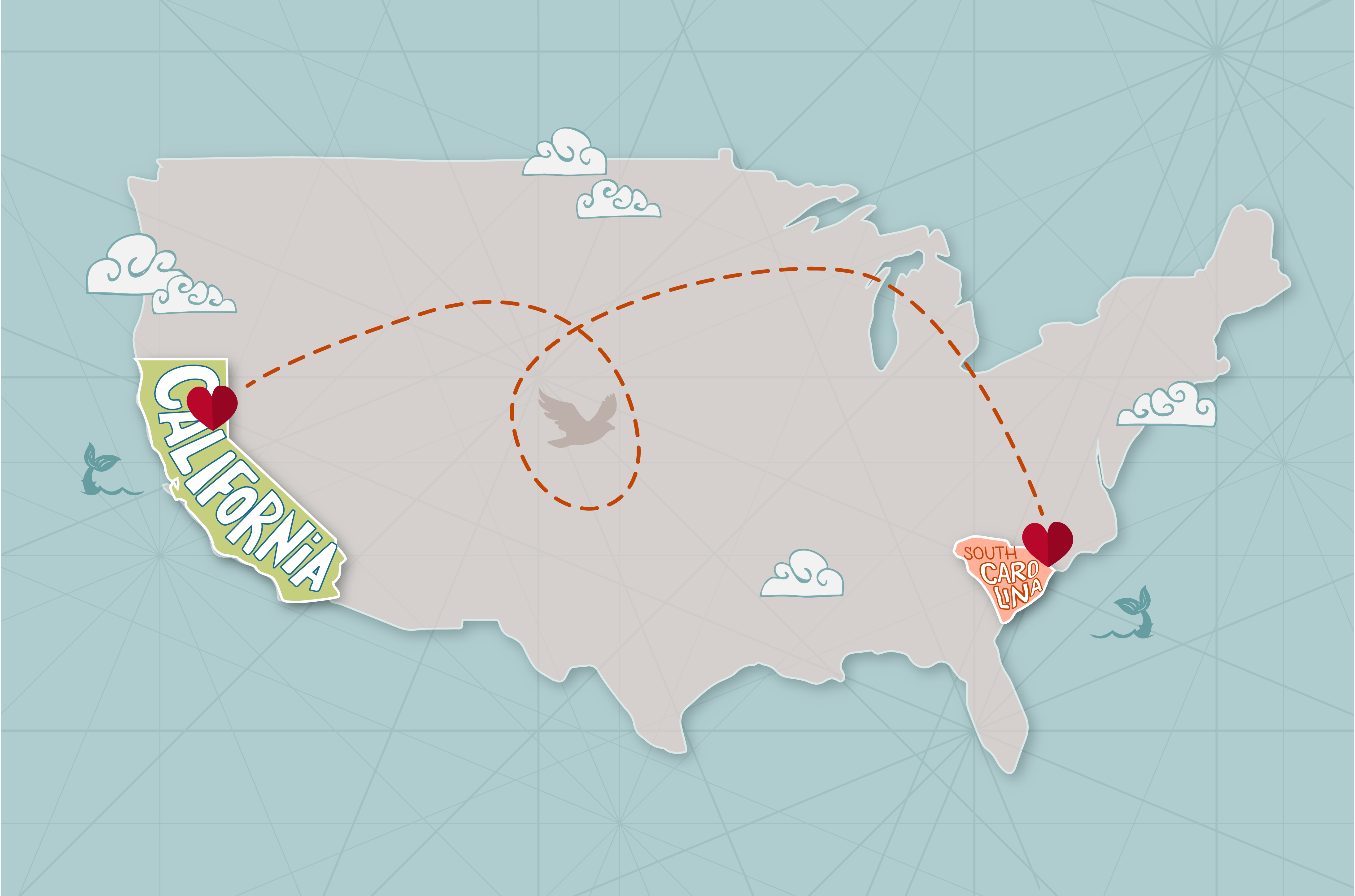
The California to South Carolina Road Trip Experience
For many, the idea of driving across the country is the most alluring way to bridge the gap between California and South Carolina. It’s a chance to see the real America, one mile at a time.
Planning Your Route: Northern vs. Southern Crossings
There are generally two primary corridors for a cross-country drive:
- Northern Route (I-80/I-90/I-70): While starting further north (e.g., San Francisco), these interstates would generally involve heading towards the Midwest (e.g., Denver, St. Louis) before veering southeast to South Carolina. This route might pass through states like Nevada, Utah, Colorado, Kansas, Missouri, Kentucky, and North Carolina. It offers views of the Rocky Mountains and vast plains.
- Southern Route (I-40/I-10): Starting from Southern California (e.g., Los Angeles, San Diego), this route is often preferred for its milder winter weather. It typically involves I-10 or I-40 eastbound, crossing through Arizona, New Mexico, Texas, Louisiana, Mississippi, Alabama, and Georgia before reaching South Carolina. This path offers desert landscapes, vibrant Southern cities, and a taste of Route 66 history.
Key Stops and Iconic Landmarks Along the Way
A cross-country drive is an opportunity to explore some of America’s most iconic attractions.
- Southwestern Wonders: If taking the southern route, consider stopping at the Grand Canyon National Park in Arizona, Petrified Forest National Park also in Arizona, or the unique landscape of White Sands National Park in New Mexico.
- Texas Highlights: The vast state of Texas offers cities like San Antonio (home to The Alamo) and Austin (a live music hub).
- Deep South Charm: Passing through Louisiana, a stop in New Orleans for its vibrant culture and culinary scene is a must. Further east, Birmingham, Alabama, offers significant civil rights history.
- Midwestern Gems: On a northern route, attractions like the Gateway Arch in St. Louis, Missouri, or the country music scene in Nashville, Tennessee, could be appealing.
- Appalachian Foothills: As you approach South Carolina, you might pass through the beautiful Blue Ridge Mountains or the vibrant city of Asheville in North Carolina.
Each stop adds a unique layer to the journey, transforming a long drive into a rich tapestry of travel experiences.
Practical Considerations for a Long Drive
- Vehicle Preparation: Ensure your vehicle is in excellent condition. Check tires, oil, fluids, and brakes. Consider a full service before departure.
- Emergency Kit: Pack a roadside emergency kit including jumper cables, a first-aid kit, a flashlight, blankets, and plenty of water and snacks.
- Navigation: While GPS is essential, a physical map can be a good backup, especially in remote areas with spotty signal.
- Driver Fatigue: This is critical. Share driving responsibilities if possible, take frequent breaks, and never drive when drowsy. Aim for 8-10 hours of driving per day maximum.
- Accommodation: Book hotels in advance, especially during peak seasons or along popular routes, to avoid last-minute stress and higher prices.
- Safety: Be aware of your surroundings, especially when stopping overnight. Keep valuables out of sight.
Preparing for Your Journey: Essential Travel Tips
Regardless of your chosen mode of transportation, a successful cross-country journey requires careful planning and preparation.
Best Time to Travel
- Spring (April-May) and Fall (September-October): These seasons generally offer the most pleasant weather for a road trip, with moderate temperatures and beautiful scenery (spring blooms or fall foliage). They also avoid the intense heat of summer in the Southwest and the potential for severe winter weather across many northern and central states.
- Summer (June-August): Popular for family vacations, but expect higher temperatures, more crowded attractions, and potentially higher prices for flights and accommodations. Humidity can be significant in the Southern United States.
- Winter (November-March): While flying is less affected, a winter road trip can be challenging due to snow, ice, and road closures, particularly on northern routes. The southern route offers milder conditions but can still experience cold fronts and occasional icy patches.
Packing Essentials
Beyond clothing suitable for various climates you’ll encounter, consider these:
- Documentation: Driver’s license, vehicle registration, insurance, and flight/hotel confirmations.
- Entertainment: Books, podcasts, audiobooks, music playlists, and portable chargers for electronic devices.
- Snacks and Drinks: Essential for any long journey to save money and avoid unhealthy fast food.
- Comfort Items: A travel pillow, blanket, and comfortable shoes are a must.
- Navigation Tools: A reliable GPS device or app, plus a car charger.

Budgeting for the Trip
A cross-country journey can range from a budget-conscious adventure to a luxurious expedition.
- Flights: Factor in baggage fees, in-flight meals, and airport transfers.
- Driving: Estimate fuel costs, daily food expenses, and nightly accommodation. Don’t forget potential tolls, which can add up on certain interstates.
- Activities: Allocate funds for entrance fees to national parks, museums, or other attractions along your route.
- Contingency: Always have an emergency fund for unexpected expenses like vehicle repairs, unforeseen overnight stays, or medical emergencies.
The distance between California and South Carolina is substantial, but with careful planning, it transforms from a formidable challenge into an unforgettable travel experience. Whether you choose the speed of air travel or the immersive journey of a road trip, the passage across the United States promises a profound appreciation for the country’s vastness and diversity.
LifeOutOfTheBox is a participant in the Amazon Services LLC Associates Program, an affiliate advertising program designed to provide a means for sites to earn advertising fees by advertising and linking to Amazon.com. Amazon, the Amazon logo, AmazonSupply, and the AmazonSupply logo are trademarks of Amazon.com, Inc. or its affiliates. As an Amazon Associate we earn affiliate commissions from qualifying purchases.