
California, a state renowned for its diverse landscapes, vibrant cities, and extensive road networks, also features a comprehensive system of toll roads, bridges, and express lanes. For travelers planning a journey through the Golden State, understanding these tolls and how to navigate them is crucial for a smooth and cost-effective experience. Unlike some states with traditional toll booths, California has largely transitioned to all-electronic toll collection, meaning cash payments are a rarity or nonexistent at most facilities. This guide details the costs associated with California’s tolls and provides essential advice for payment and budgeting.
Understanding California’s Diverse Toll System
Tolls in California serve various purposes, primarily funding the construction, maintenance, and enhancement of critical transportation infrastructure. They also play a role in managing traffic congestion, particularly in densely populated urban areas, by encouraging carpooling or shifting travel times. The state’s toll system is not monolithic; it comprises several distinct types of facilities, each with its own pricing structure and payment requirements.
The primary categories of toll facilities include:
- Traditional Toll Roads: Dedicated highways where users pay to access the entire route or specific segments. These are predominantly found in Southern California.
- Major Bridges: Iconic crossings, particularly in the San Francisco Bay Area, that collect tolls for their construction and upkeep.
- Express Lanes (Managed Lanes): Designated lanes on existing freeways that offer a faster option for solo drivers willing to pay a variable toll, or for carpoolers who may travel for free or at a reduced rate if properly equipped.
A key characteristic across nearly all California toll facilities is the shift to all-electronic tolling. This means there are no toll booths to stop at for cash payments. Instead, tolls are collected using transponders like FasTrak or by photographing license plates and mailing invoices to vehicle owners.
Navigating Specific Toll Facilities and Their Costs
The cost of tolls in California can vary significantly based on the facility, time of day, day of the week, direction of travel, and payment method.
San Francisco Bay Area Bridges
The San Francisco Bay Area is home to several major toll bridges, each vital arteries for regional travel.
- Golden Gate Bridge: Perhaps the most famous toll bridge, the Golden Gate Bridge collects tolls only when traveling southbound into San Francisco. As of early 2024, the standard toll for a 2-axle vehicle is around $9.75-$10.00 if paying by invoice or one-time payment. Using FasTrak typically offers a slight discount, bringing the cost to approximately $8.75-$9.00. License Plate Accounts offer rates similar to FasTrak.
- State-Owned Toll Bridges: Operated by the Bay Area Toll Authority (BATA), these bridges include the San Francisco-Oakland Bay Bridge, Carquinez Bridge, Benicia-Martinez Bridge, Richmond-San Rafael Bridge, San Mateo-Hayward Bridge, and Dumbarton Bridge. Tolls are typically collected in one direction (usually eastbound or northbound). The standard toll for a 2-axle vehicle is generally uniform across these bridges, often ranging from $7.00 to $8.00, with variable pricing depending on peak and off-peak hours. FasTrak is the most efficient payment method.
Southern California’s Dedicated Toll Roads
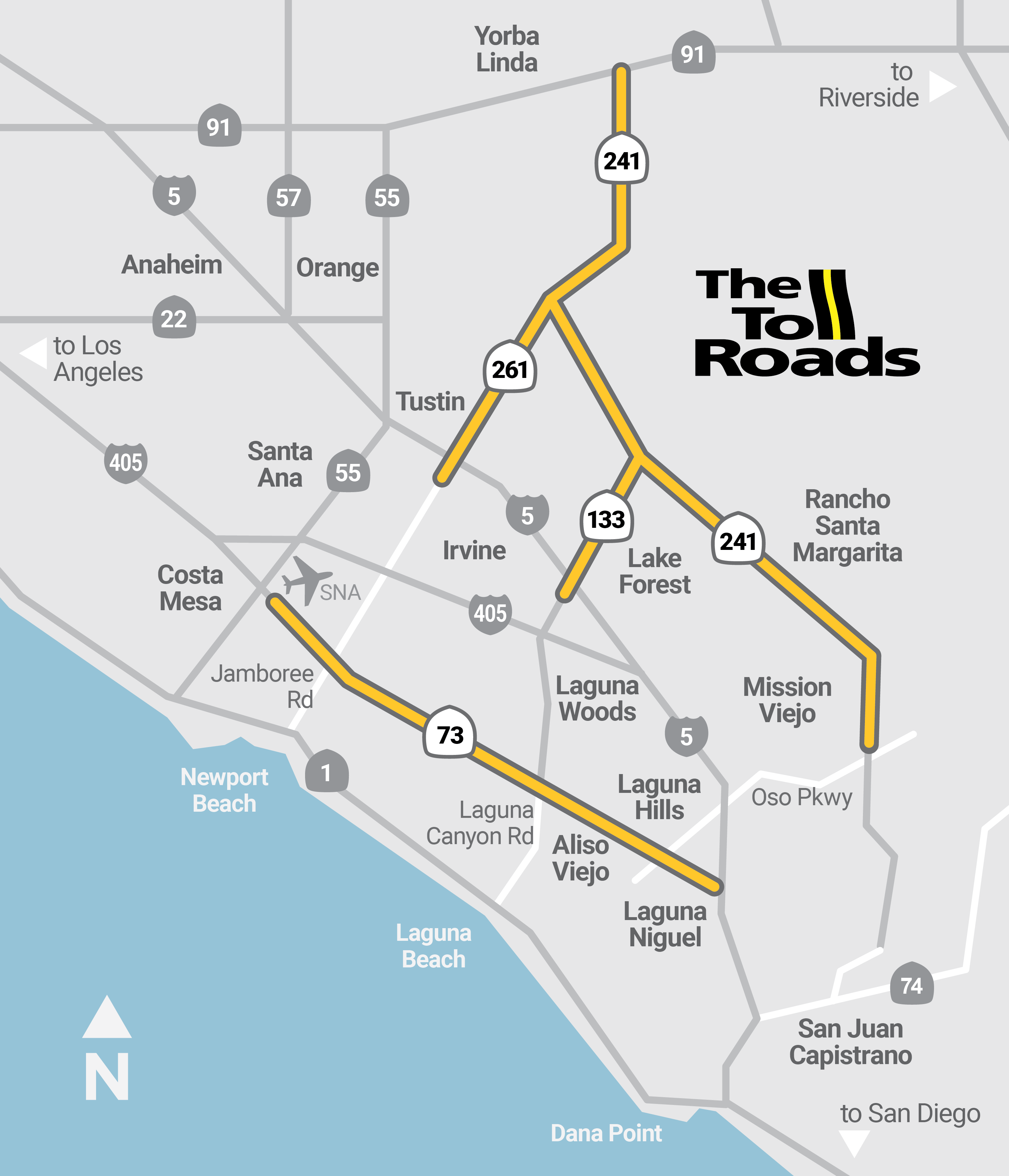
Southern California features a network of dedicated toll roads, primarily within Orange County. These roads were built to provide congestion relief and generally offer faster travel alternatives.
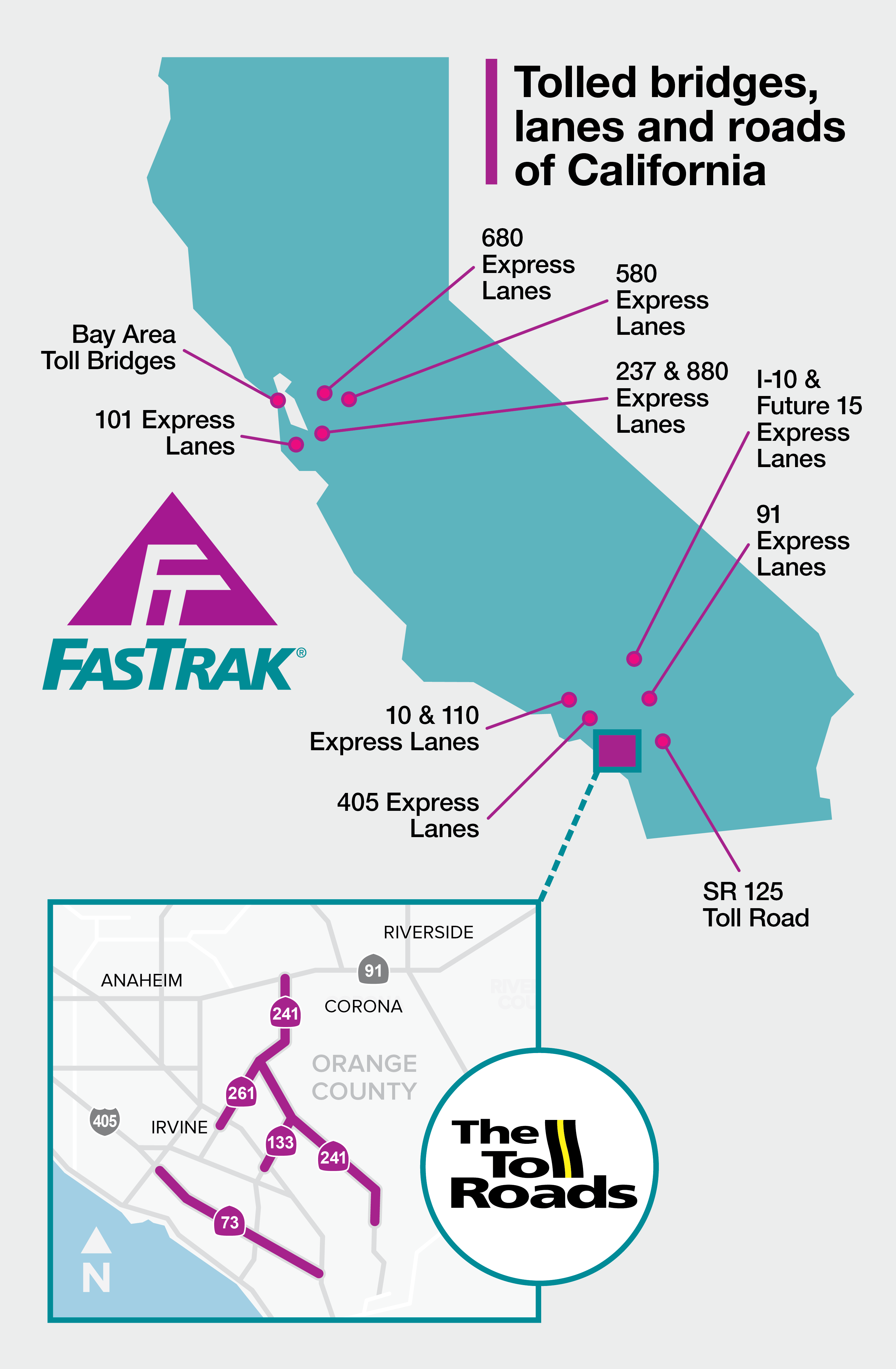
- The Orange County Toll Roads: Operated by The Transportation Corridor Agencies (TCA), this network includes State Routes 73, 133, 241, and 261 (often referred to as the San Joaquin Hills Transportation Corridor and the Eastern Transportation Corridor). These are all-electronic toll roads, and costs vary based on the specific entry and exit points, as well as the time of day. A typical full-length trip on one of these routes for a 2-axle vehicle can range from $4.00 to $10.00 or more during peak hours. Payment is handled through FasTrak, an ExpressAccount, or a one-time pass online.
- South Bay Expressway (SR 125): Located in San Diego County, this is another dedicated toll road. Like the Orange County roads, tolls are variable based on distance and time of day, typically ranging from $1.00 to $5.00 for a 2-axle vehicle. It also uses all-electronic toll collection.
Dynamic Pricing on Express Lanes
Express lanes, also known as High Occupancy Toll (HOT) lanes or Managed Lanes, are increasingly common across California’s major metropolitan freeways. These lanes utilize dynamic pricing, meaning the toll amount changes in real-time based on the level of congestion to maintain a free-flowing traffic speed.
Key express lane systems include:
- Metro ExpressLanes: On the I-10 and I-110 freeways in Los Angeles.
- SR-91 Express Lanes: Spanning parts of Orange County and Riverside County.
- I-15 Express Lanes: In San Diego.
- Bay Area Express Lanes: Found on sections of I-680, I-580, US-101, and SR-237.
Tolls on express lanes can range dramatically, from less than $1.00 during off-peak periods to $15.00-$20.00 or more for a single trip during severe peak congestion, especially for longer segments. A FasTrak transponder is mandatory to use these lanes, and a switchable transponder is required for High Occupancy Vehicle (HOV) users to claim their free or discounted toll status. Without a transponder, vehicles using express lanes are subject to fines and penalties.
Essential Payment Methods for Travelers
Given California’s electronic tolling system, understanding how to pay is just as important as knowing the costs.
FasTrak: Your Best Companion
FasTrak is California’s interoperable electronic toll collection system, offering the most convenient and often the most economical way to pay tolls. A small electronic device (transponder) mounted on your vehicle’s windshield communicates with overhead readers, automatically deducting tolls from a pre-paid account.
- Benefits: Automatic payment, typically lower toll rates, seamless travel without stopping, and eligibility for HOV lane discounts or exemptions on express lanes (with a switchable transponder).
- How to Obtain: FasTrak transponders can be purchased and accounts opened online through various toll agencies (e.g., Bay Area FasTrak, The Toll Roads FasTrak) or at retail locations like Costco and AAA offices. It’s advisable for frequent travelers or those planning extensive driving in California to acquire one.
- Types: Standard transponders are suitable for most toll bridges and roads. For express lanes, a switchable transponder is crucial for carpoolers to declare their occupancy and receive eligible discounts or free passage.
One-Time Payments and Pay-By-Plate
For infrequent visitors or those without a FasTrak account, one-time payment options are available. These rely on license plate recognition.
- How it Works: Toll systems photograph your vehicle’s license plate. You then have a limited window (typically within 48 hours to 5 days, depending on the facility) to pay the toll online or by phone.
- Where to Pay: Payments are made directly through the respective toll authority’s website (e.g., Bay Area FasTrak website for bridges, The Toll Roads website for Orange County toll roads).
- Important Note: Failure to pay within the specified timeframe will result in a toll violation notice, which includes significant penalties in addition to the original toll amount.
Rental Cars and Tolls
Using a rental car in California can complicate toll payments. Rental car companies often enroll their vehicles in third-party toll programs or have their own systems, which typically include administrative fees in addition to the tolls themselves. These fees can quickly accumulate.
- Advice: Before renting, inquire about the rental company’s toll policies.
- Option 1: Opt Out: If possible, decline the rental company’s toll program and commit to paying tolls yourself via one-time payments online. This requires diligence in identifying and paying each toll.
- Option 2: Bring Your Own FasTrak: If you have a personal FasTrak transponder, ensure it’s properly mounted and linked to your account. Some companies allow this, but confirm there won’t be double billing.
- Option 3: Accept Rental Program (with caution): Be aware of the potential for high administrative fees. For very infrequent toll use, this might be simpler, but for extensive toll road travel, it can be costly.
Budgeting and Smart Travel Tips to Minimize Toll Costs
Careful planning can help you manage and even reduce your toll expenses while traveling in California.
Planning Your Route Strategically
- Utilize Navigation Apps: Tools like Google Maps and Waze offer options to “avoid tolls” when calculating routes. This is invaluable for travelers on a tight budget or those unfamiliar with California’s toll roads. Be mindful that avoiding tolls might add significant time to your journey, especially during peak hours.
- Research Specific Toll Facilities: Before embarking, visit the official websites of the toll agencies that operate in your planned travel areas. They provide current toll rates, payment options, and sometimes even toll calculators for specific routes.
Understanding Peak vs. Off-Peak Pricing
Many toll facilities, especially Bay Area bridges and all express lanes, employ variable pricing. Traveling during off-peak hours (e.g., late nights, early mornings, weekends) can significantly reduce your toll costs. For express lanes, watch the electronic signs displaying current toll rates, which update dynamically.
Carpooling and HOV Lane Benefits
If traveling with passengers, carpooling can offer substantial savings on express lanes. With a switchable FasTrak transponder, vehicles meeting the HOV requirements (typically 2 or 3+ occupants) can often use express lanes for free or at a reduced rate. Ensure your transponder is set to the correct occupancy before entering the lane.
Avoiding Penalties
The consequences of unpaid tolls in California are severe. A forgotten or ignored toll can quickly escalate into a substantial fine, potentially leading to vehicle registration holds or other legal issues. Always prioritize paying tolls promptly. If you believe you’ve missed a toll, proactively check the relevant toll authority’s website using your license plate number.
In conclusion, while California’s tolls add to travel costs, they are an integral part of the state’s advanced transportation infrastructure. By understanding the types of toll facilities, their payment methods, and incorporating smart planning, travelers can navigate the Golden State efficiently and without unexpected financial surprises.
LifeOutOfTheBox is a participant in the Amazon Services LLC Associates Program, an affiliate advertising program designed to provide a means for sites to earn advertising fees by advertising and linking to Amazon.com. Amazon, the Amazon logo, AmazonSupply, and the AmazonSupply logo are trademarks of Amazon.com, Inc. or its affiliates. As an Amazon Associate we earn affiliate commissions from qualifying purchases.