
The allure of the Kei truck, those charmingly diminutive workhorses from Japan, has steadily grown in the United States. Their compact size, surprising utility, and undeniably unique aesthetic make them stand out in a landscape dominated by ever-larger vehicles. For enthusiasts and those seeking a practical, efficient, and distinctive alternative, the question often arises: are these pint-sized titans legal on the sprawling roads of California? The answer, like navigating the Golden Gate Bridge during rush hour, is complex and requires a thorough understanding of federal and state regulations.
California, a state renowned for its progressive environmental policies, diverse automotive culture, and sometimes bewildering bureaucracy, presents a particularly challenging environment for the importation and registration of these special vehicles. From the bustling streets of Los Angeles to the agricultural fields of the Central Valley, and the scenic routes of Napa Valley, the desire to see a Kei truck legally cruising alongside traditional pickups is strong, yet often thwarted by a maze of rules concerning safety, emissions, and age. This article delves into the intricacies of Kei truck legality in the Golden State, offering insights into their appeal, the regulatory hurdles, and what potential owners can expect.
The Allure of the Compact Giant: What are Kei Trucks?
Before diving into the legalities, it’s essential to understand what exactly a Kei truck is and why it commands such attention. These vehicles are more than just small trucks; they are a distinct class of automobile born out of Japan’s unique regulatory environment and ingenious engineering.
A Glimpse into Japanese Automotive Ingenuity
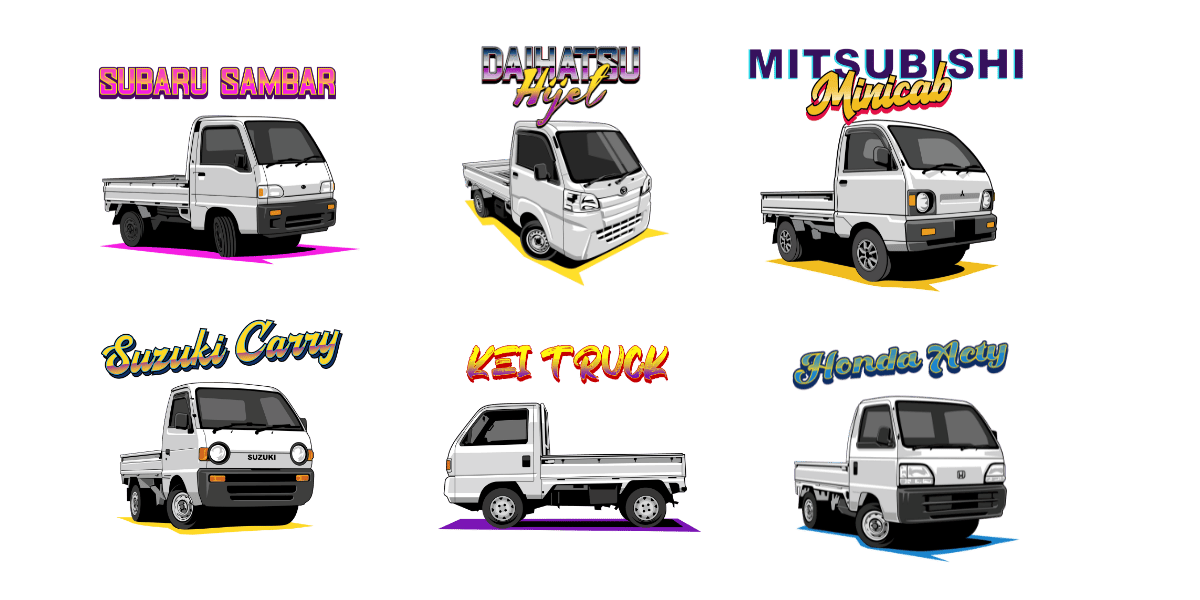
Kei trucks, along with other Kei vehicles like vans and passenger cars, belong to the “Keijidosha” category, meaning “light automobile” in Japanese. This class was established after World War II to promote the growth of the Japanese automotive industry by offering tax and insurance incentives for smaller, more fuel-efficient vehicles. To qualify as a Kei vehicle, manufacturers like Honda, Suzuki, Daihatsu, Subaru, Mazda, and Mitsubishi must adhere to strict regulations regarding engine displacement (currently capped at 660cc) and exterior dimensions.
The result is a vehicle that is incredibly compact, typically under 11 feet in length and 5 feet wide, with a payload capacity often exceeding 750 pounds. Most Kei trucks feature a cab-over design, a flatbed that can often drop on three sides, and are powered by a small, efficient three-cylinder engine. Many are also available with four-wheel drive, making them surprisingly capable in various terrains. Their utilitarian design, fuel efficiency, and low operating costs have made them indispensable in Japan for small businesses, farmers, and urban dwellers needing nimble transportation for goods.
The California Dream and Unique Vehicles
California has always been a hotbed for automotive culture, from classic hot rods in Southern California to the tech-savvy electric vehicles of Silicon Valley. There’s a strong appreciation for unique and distinctive vehicles. The Kei truck fits this niche perfectly, offering a blend of quirky charm and undeniable practicality that appeals to a diverse range of individuals, from farmers seeking an agile utility vehicle for their orchards in the Central Valley to small business owners in San Francisco looking for a compact delivery option, or simply enthusiasts who appreciate their minimalist design and heritage.
However, California’s robust regulatory framework, designed to ensure vehicle safety and protect its environment, stands as a formidable barrier. The state’s commitment to clean air and highway safety means that any vehicle seeking to join its bustling roadways must first pass rigorous scrutiny, a challenge many imported Kei trucks struggle to overcome.
Navigating the Legal Labyrinth: Federal and State Regulations
Understanding the legality of Kei trucks in California requires a dual approach, considering both federal import laws and specific state regulations. These two layers of legislation work in tandem, creating a complex gauntlet for potential owners.
The Federal 25-Year Import Rule
At the federal level, the primary hurdle for importing most foreign-market vehicles, including Kei trucks, is the 25-year import rule. Enforced by the National Highway Traffic Safety Administration (NHTSA), this regulation states that vehicles not originally manufactured to meet United States safety and bumper standards (known as Federal Motor Vehicle Safety Standards or FMVSS) cannot be imported for on-road use unless they are at least 25 years old from their date of manufacture.
The rationale behind this rule is that after 25 years, a vehicle is generally considered a collector’s item, and the safety risks associated with non-compliance are deemed less impactful on public safety. For Kei trucks, this means that only models manufactured in 1999 or earlier are currently eligible for import under this exemption. Newer Kei trucks, even if seemingly safe, fall under this restriction, making them ineligible for street legal registration in any U.S. state, including California, unless imported for “show or display” with highly restricted mileage, or for off-road use only.
It’s crucial to distinguish between importing a vehicle and registering it for street use. While a vehicle might be legally imported under the 25-year rule, it still needs to meet state-specific requirements for registration and operation on public roads.
California’s Specific Hurdles: Emissions and Registration
Even if a Kei truck successfully clears the federal 25-year hurdle, it faces an even more formidable challenge in California: the state’s notoriously strict emissions regulations. The California Air Resources Board (CARB) sets some of the most stringent vehicle emissions standards in the world, often surpassing federal Environmental Protection Agency (EPA) requirements.
For any imported vehicle to be registered for on-road use in California, it must demonstrate compliance with CARB’s emissions standards. This typically involves passing a comprehensive smog check. The problem for most Kei trucks, even those over 25 years old, is that they were never designed to meet California’s specific emission requirements. Their small engines, while efficient for their intended Japanese market, lack the advanced catalytic converters, evaporative emissions systems, and onboard diagnostics (OBD-II) typically required for California compliance.
Attempting to retrofit a Kei truck to meet CARB standards is usually cost-prohibitive, often exceeding the value of the vehicle itself, and technically challenging, as certified parts and procedures for such conversions are rarely available. This makes achieving CARB compliance for full street-legal registration an almost insurmountable obstacle for the vast majority of imported Kei trucks.

The California Department of Motor Vehicles (DMV) is vigilant in enforcing these rules. When attempting to register an imported Kei truck, the DMV will require extensive documentation, including proof of federal admissibility (e.g., customs forms confirming it met the 25-year rule), and crucially, proof of California emissions compliance. Without a valid BAR (Bureau of Automotive Repair) label or certification indicating compliance, or specific exemptions (which are rare for these vehicles), the DMV will generally deny on-road registration.
Some importers or owners have explored registering Kei trucks as “mini-trucks” or “off-highway vehicles” (OHVs). While OHV registration allows for operation on private property or designated off-road trails, it explicitly prohibits use on public roads. There have been instances of older Kei trucks being registered for restricted use (e.g., only on roads with speed limits below a certain threshold), but these are exceptions rather than the norm and depend heavily on the specific vehicle’s age, modifications, and the interpretation of local DMV officials. The general consensus remains that achieving unrestricted street-legal status for an imported Kei truck in California, especially one under 25 years old, is exceedingly difficult, if not impossible, due to CARB requirements.
Owning a Kei Truck in California: Challenges and Rewards
Despite the significant regulatory hurdles, the desire to own a Kei truck in California persists. For many, the unique benefits outweigh the complexities, leading to specific usage patterns that align with the vehicle’s legal status.
The Realities of Registration and Usage
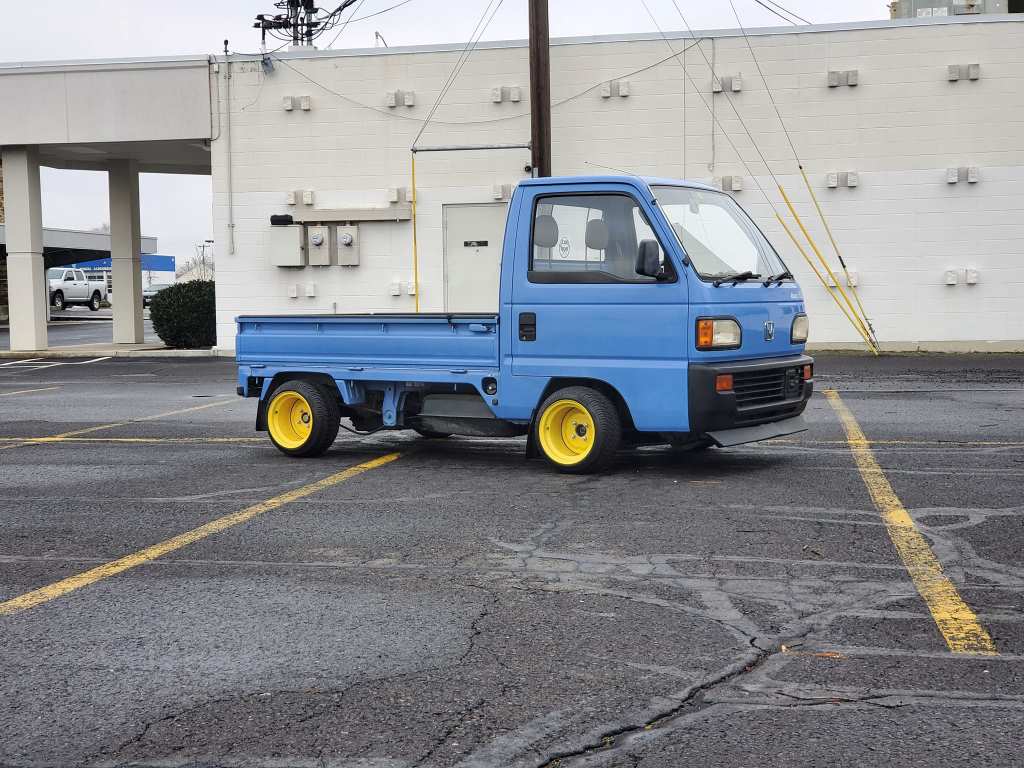
Given the stringent federal 25-year rule and California’s demanding CARB emissions standards, the reality for most Kei truck owners in the state is that their vehicle will be restricted to off-highway use. This means operating them exclusively on private property, within designated off-road parks, or on specialized sites. Attempts to register them for full street legality often end in frustration, with the California DMV denying applications due to non-compliance with emissions requirements.
For those who manage to import a Kei truck that is over 25 years old, there might be a glimmer of hope for some form of street legality, but it still hinges on meeting California emission standards. Some individuals have explored pathways involving significant engine modifications or even engine swaps to compliant powertrains, but these are costly, time-consuming, and require expert knowledge to navigate both mechanical and legal requirements. For the average enthusiast, the dream of a fully street-legal Kei truck in California often remains just that—a dream—unless they acquire a vehicle that somehow already meets the rare confluence of age, federal compliance, and California emissions certification, which is an uncommon find.
Beyond the Highway: Lifestyle and Niche Applications
Despite the on-road restrictions, Kei trucks have found a thriving niche in California within specific lifestyle and professional applications. Their compact size and robust utility make them ideal for tasks where larger vehicles are impractical or unnecessary.
- Agricultural and Horticultural Use: In the vast farmlands of the Central Valley or the vineyards of Napa Valley, Kei trucks excel as utility vehicles. They can navigate tight rows of crops, carry tools and harvest goods, and traverse uneven terrain with their optional four-wheel drive. They are often seen as more agile and fuel-efficient alternatives to traditional ATVs or larger utility vehicles for farm-specific tasks.
- Private Estates and Resorts: For large properties, resorts, golf courses, or private communities, Kei trucks serve as invaluable maintenance vehicles. They can transport equipment, staff, and supplies efficiently across sprawling grounds without the bulk of a standard pickup. Many luxury resorts might even feature these unique vehicles as part of their behind-the-scenes operations, linking them to aspects of specialized accommodation services.
- Industrial and Campus Settings: Factories, warehouses, college campuses, and large corporate parks often utilize Kei trucks for internal logistics, security patrols, and groundskeeping. Their maneuverability in confined spaces and ability to carry moderate loads make them perfect for such environments.
- Hobbyists and Collectors: A significant portion of Kei truck owners are enthusiasts who appreciate their unique design, engineering, and history. They might use them for off-road recreational activities on private land, display them at car shows, or simply enjoy tinkering with these charming machines. This ties into the lifestyle aspect of automotive passion.
- Unique Travel and Glamping Experiences: While not street legal for public roads, some campgrounds or glamping sites might offer Kei trucks as part of an on-site experience, allowing guests to explore the private grounds in a unique way. Imagine a rustic glamping setup where a Kei truck acts as a mobile base for exploring private trails, embodying a quirky take on travel and accommodation.
These applications highlight that while the public road dream might be distant, the Kei truck still offers considerable value and enjoyment within the confines of private property. Their integration into these niches underscores their inherent practicality and charm, making them a unique sight even if mostly hidden from plain view.
Acquiring Your Kei Truck: Importation and Future Outlook
For those still determined to bring a Kei truck to California, understanding the importation process and future prospects is key.
The Importation Process: What You Need to Know
Acquiring a Kei truck typically involves importing it directly from Japan. This process usually entails:
- Finding a Reputable Importer: Many companies specialize in sourcing and importing Japanese domestic market (JDM) vehicles. They handle the logistics from auctions in cities like Tokyo or Osaka to shipping ports in the United States.
- Purchase and Export from Japan: This includes the vehicle’s cost, local Japanese taxes, and fees for transport to the port and export documentation.
- Shipping: Ocean freight is the standard method, which can take several weeks.
- Customs and Port Fees: Upon arrival in the United States, the vehicle must clear U.S. Customs and Border Protection. This involves paying duties (typically 2.5% for trucks), customs processing fees, and port charges. It’s crucial to have all necessary documentation, especially proving the vehicle’s age to qualify for the 25-year import exemption.
- Inland Transport: Once cleared through customs, the vehicle needs to be transported from the U.S. port to its final destination in California.
The total cost can vary significantly based on the vehicle’s condition, age, rarity, and the chosen importer, but generally ranges from a few thousand dollars up to $10,000 or more, not including the potential costs of attempted California compliance.
A Niche Market with Enduring Appeal
The outlook for Kei trucks gaining widespread street legality in California remains challenging, especially for models under 25 years old. The state’s unwavering commitment to emissions reduction and highway safety means that regulatory barriers are unlikely to soften in the foreseeable future. However, the niche market for these vehicles is robust and sustained by specific demands.
As more Kei trucks cross the 25-year threshold, the federal barrier becomes less of an issue, but the California Air Resources Board (CARB) compliance will always be the most significant hurdle for on-road use in the state. One potential future avenue could be the emergence of electric Kei trucks. If these vehicles are manufactured to meet U.S. safety standards and can be certified by CARB as zero-emission vehicles, they might bypass some of the traditional emissions challenges. However, the 25-year rule for general imports would still apply unless they were explicitly manufactured for the U.S. market or imported under specific low-volume manufacturer exemptions, which are typically for new vehicles.
Ultimately, Kei trucks will likely continue to thrive in California as specialized utility vehicles for private lands and enthusiasts. Their charm and practicality ensure they will always find a home, even if that home isn’t the open road. The decision to acquire one in the Golden State should be made with a clear understanding of these limitations, focusing on their utility for off-highway tasks or as cherished collector’s items rather than daily drivers on public streets. For those seeking unique experiences and alternative lifestyles, the Kei truck remains an intriguing, albeit regulated, option.
LifeOutOfTheBox is a participant in the Amazon Services LLC Associates Program, an affiliate advertising program designed to provide a means for sites to earn advertising fees by advertising and linking to Amazon.com. Amazon, the Amazon logo, AmazonSupply, and the AmazonSupply logo are trademarks of Amazon.com, Inc. or its affiliates. As an Amazon Associate we earn affiliate commissions from qualifying purchases.