
Navigating the complexities of employment law can often feel like charting an unfamiliar course, especially when it comes to restrictive covenants like non-compete agreements. For businesses operating in or considering expanding to California, and for individuals employed within the state, understanding the enforceability of these agreements is paramount. The Golden State has a particularly strong stance against non-compete clauses, a position that stems from a deep-rooted commitment to employee freedom and economic opportunity. This article will delve into the specifics of non-compete agreements in California, exploring their general unenforceability, the nuances of certain exceptions, and what this means for both employers and employees.

The General Rule: California’s Ban on Non-Competes
At its core, California law champions the right of individuals to pursue their chosen profession and to earn a living. This fundamental principle is enshrined in California Business and Professions Code Section 16600, which broadly states that “every contract by which anyone is restrained from engaging in a lawful profession, trade, or business of any kind is to that extent void.” This sweeping legislation makes most non-compete agreements, which aim to prevent former employees from working for competitors or starting similar businesses after leaving a company, unenforceable in California.
This stance is a significant departure from many other states, where non-compete agreements are often upheld if they are deemed reasonable in scope, duration, and geographic area. In California, the rationale is that such agreements stifle competition, hinder innovation, and limit employee mobility, ultimately harming the broader economy and individual workers. The California Supreme Court has consistently reinforced this interpretation, emphasizing that the state’s public policy favors open competition and the free exercise of one’s occupation.
Why the Strict Stance?
The reasons behind California‘s stringent prohibition on non-compete agreements are multifaceted. Firstly, it aligns with the state’s progressive approach to labor laws and its commitment to protecting workers. Proponents of this policy argue that non-competes disproportionately affect lower-wage workers, trapping them in undesirable jobs and preventing them from advancing their careers. For those seeking new opportunities, whether it’s exploring a new career path or leveraging their skills in a burgeoning industry like technology or tourism, California‘s environment is designed to be as open as possible. Imagine a seasoned chef who has honed their culinary skills at a renowned San Francisco restaurant; a non-compete could prevent them from opening their own bistro or working at another esteemed establishment in the city. Similarly, a software developer who gained expertise at a tech startup might be barred from joining a competitor, slowing their professional growth and potentially impacting the very innovation the state seeks to foster.
Secondly, California‘s economy thrives on dynamism and innovation. The free flow of talent and ideas is considered essential for maintaining its competitive edge. By preventing employers from restricting their former employees’ ability to work elsewhere, the state encourages a more agile and adaptable workforce. This is particularly relevant in sectors like the tech industry, where rapid advancements and the constant emergence of new companies are hallmarks of the landscape. For example, a travel blogger who develops unique content strategies for a Los Angeles-based travel agency could, without a non-compete, take those skills and apply them to a new venture, potentially enhancing the overall tourism sector.
The state has also taken legislative action to further solidify this position. In 2019, California passed Assembly Bill 762, which explicitly clarified and strengthened existing laws against non-compete agreements. This bill not only reinforced the unenforceability of such agreements but also imposed penalties on employers who attempt to enforce them or include them in employment contracts. This legislative action underscores California‘s unwavering commitment to ensuring that individuals are not unduly restricted in their ability to pursue their livelihoods.
Limited Exceptions and Nuances
While the general rule in California is that non-compete agreements are void, there are a few narrow exceptions where such agreements might be permissible. These exceptions are primarily tied to the sale or dissolution of a business, or in specific circumstances involving the sale of goodwill.
Sale of Business and Goodwill
The most significant exceptions to the general rule are found in California Business and Professions Code Sections 16601 and 16602. These sections allow for non-compete agreements in the context of the sale of a business or its assets, or upon the dissolution of a partnership.
Sale of a Business or Substantial Part of Its Assets
When a business is sold, including its goodwill, the buyer may enter into an agreement with the seller that restricts the seller from competing with the acquired business. This is permissible under Section 16601, provided the agreement is reasonable in geographic scope and duration. The rationale here is to protect the value of the goodwill that the buyer has purchased. For instance, if a well-established luxury resort in Palm Springs is sold, the new owner might include a clause preventing the former owner from opening a competing resort within a certain radius for a specified period. This ensures that the buyer can capitalize on the established reputation and customer base they have invested in.

Dissolution of a Partnership or Limited Liability Company
Similarly, when a partnership or limited liability company dissolves, the partners or members may agree not to compete with the business that has been sold or with the remaining partners. This is governed by Section 16602. This exception aims to facilitate the orderly transfer of business interests and to protect the interests of those who are continuing the business. For example, if a boutique travel agency in San Diego that operates as a partnership dissolves, the departing partners might agree not to start a directly competing agency in the same city for a set timeframe to allow the remaining partners to secure new clients and maintain the business’s stability.
What About Independent Contractors and “Gig” Workers?
The enforceability of non-compete agreements becomes even more complicated when considering independent contractors and gig economy workers. California has increasingly scrutinized the classification of workers, and recent legislation like Assembly Bill 5 (AB5) has significantly impacted how businesses classify their workers. AB5 generally presumes that a worker is an employee unless the hiring entity can demonstrate that the worker meets specific independent contractor tests. This has implications for non-competes, as agreements that are void when applied to employees will likely also be considered void when imposed on independent contractors, especially if they are misclassified. For example, a freelance travel photographer contracted by a hotel chain might find that any non-compete clause in their contract is invalid if they are indeed an independent contractor and the clause restricts their ability to work for other hospitality businesses.
Employer and Employee Implications
The strict prohibition on non-compete agreements in California has significant implications for both employers and employees.
For Employers
Employers in California must be acutely aware that standard non-compete clauses in employment contracts are generally unenforceable and can lead to legal penalties. Instead of relying on non-competes, businesses should focus on alternative strategies to protect their legitimate business interests, such as:
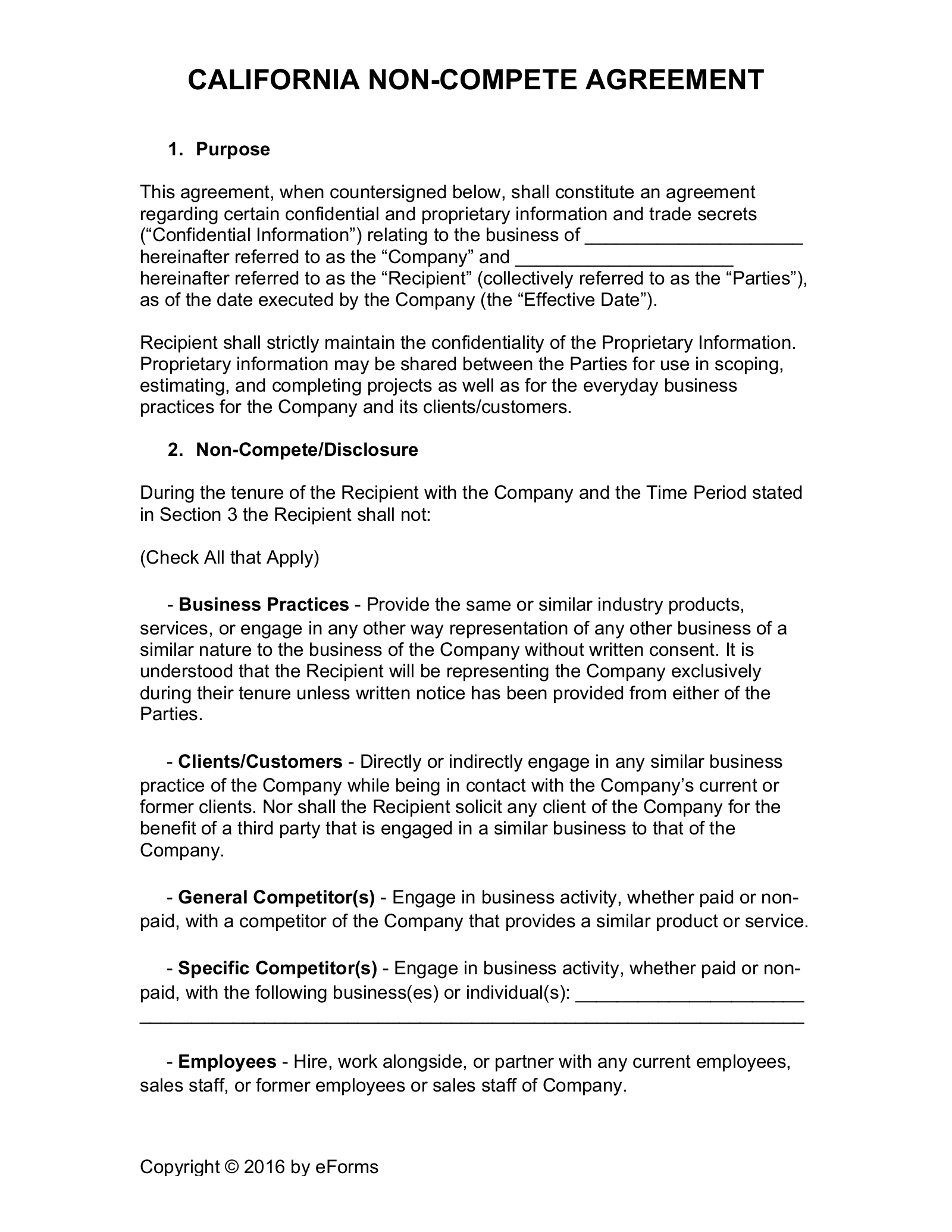
- Confidentiality Agreements: These agreements can protect trade secrets, proprietary information, and client lists, preventing former employees from using such sensitive data to the detriment of the company.
- Non-Solicitation Agreements: These agreements can prohibit former employees from soliciting the company’s clients or employees for a specified period. These are often viewed more favorably by California courts than broad non-compete clauses, as they are narrowly tailored to protect specific business relationships. For example, a travel booking platform could have a non-solicitation clause preventing a former sales executive from contacting their existing client base.
- Trade Secret Protection: Implementing robust internal policies and procedures to safeguard trade secrets is crucial. This includes limiting access to sensitive information and educating employees on their obligations.
Including a void non-compete clause in an employment agreement can not only be ineffective but can also create legal risks. California law allows for the recovery of attorneys’ fees and costs by the employee if they successfully challenge an unenforceable non-compete. Therefore, employers are well-advised to consult with legal counsel to ensure their contracts comply with California law and to develop alternative methods for protecting their business.
For Employees
For employees in California, the state’s stance on non-competes offers considerable freedom and opportunity. It means that:
- Career Mobility: Employees are generally free to leave their current employment and pursue new opportunities with competitors or to start their own businesses without fear of legal reprisal based on a non-compete clause. This is particularly beneficial in rapidly evolving industries like technology, entertainment, and tourism, where skills can quickly become in-demand. A tour guide who has developed in-depth knowledge of Yosemite National Park‘s trails can seek employment with another tour operator or even launch their own guided adventure service.
- Skill Development: Employees can freely leverage their acquired skills and knowledge in new roles, contributing to their personal growth and the broader economy. This fosters a more dynamic job market where talent is not artificially constrained.
- Legal Protection: Employees can be confident that any non-compete clause included in their employment contract is likely invalid. If an employer attempts to enforce such a clause, the employee has strong legal recourse.
It is still advisable for employees to review their employment agreements carefully and to seek legal counsel if they have concerns about any restrictive covenants. While non-competes are generally unenforceable, understanding the specifics of any agreement is always prudent, especially when considering roles in industries that might have other types of restrictive covenants, such as non-solicitation or confidentiality clauses.
In conclusion, California‘s legal landscape provides a robust shield against the enforcement of non-compete agreements for most employees. The state’s commitment to free competition and employee freedom means that businesses must seek alternative strategies to protect their interests, while employees can largely pursue their career aspirations with confidence.
LifeOutOfTheBox is a participant in the Amazon Services LLC Associates Program, an affiliate advertising program designed to provide a means for sites to earn advertising fees by advertising and linking to Amazon.com. Amazon, the Amazon logo, AmazonSupply, and the AmazonSupply logo are trademarks of Amazon.com, Inc. or its affiliates. As an Amazon Associate we earn affiliate commissions from qualifying purchases.