
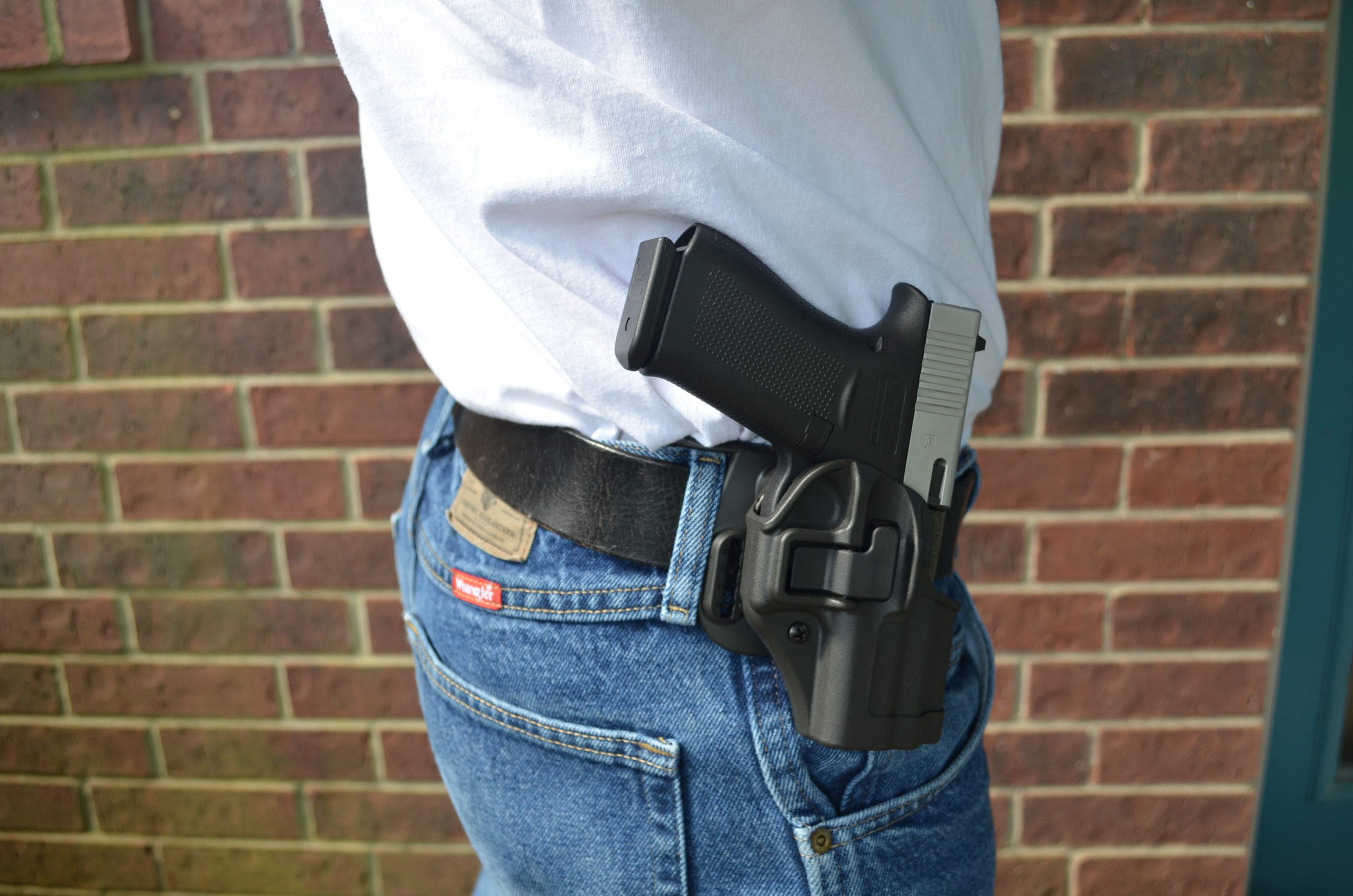
Texas, a state synonymous with wide-open spaces, rich history, and a fiercely independent spirit, also holds a unique place in the ongoing national conversation about firearm rights. For many visitors and residents alike, a crucial question arises when planning a trip or navigating daily life in the Lone Star State: “Can I Conceal Carry In Texas?” The answer is nuanced, involving a complex interplay of state laws, federal regulations, and specific venue restrictions. This guide aims to demystify the ins and outs of concealed carry in Texas, providing a comprehensive overview for travelers and those seeking to understand their rights and responsibilities within the state’s legal framework.

The foundation of Texas’s gun laws lies in its recognition of the right to bear arms, a principle deeply ingrained in the state’s culture. However, this right is not absolute and is subject to various regulations designed to ensure public safety. Understanding these regulations is paramount for anyone wishing to carry a concealed handgun legally.
Understanding Texas Concealed Carry Laws
At its core, the ability to conceal carry in Texas is governed by state legislation, primarily Chapter 46 of the Texas Penal Code. The state operates under a “shall-issue” system for License to Carry (LTC) permits. This means that if an applicant meets the statutory requirements, the Texas Department of Public Safety (DPS) is generally obligated to issue a license. This contrasts with “may-issue” states, where the issuance of a permit is discretionary.
Eligibility Requirements for a Texas License to Carry
To be eligible for a Texas LTC, an individual must meet several criteria:
- Age: Applicants must be at least 21 years old, though there are exceptions for active-duty military personnel and honorably discharged veterans who may apply at 18.
- Residency: Applicants must be a legal resident of Texas for at least six months preceding the application date, or meet specific requirements if active duty military stationed in Texas.
- Criminal History: A clean criminal record is essential. This includes not having been convicted of a felony or certain misdemeanor offenses, particularly those involving violence, controlled substances, or moral turpitude, within a specified timeframe. The law outlines specific disqualifying offenses.
- Mental Health: Individuals adjudicated as mentally defective or who have been committed to a mental institution are disqualified.
- Substance Abuse: Those who have been diagnosed with specific chemical dependency issues and are no longer suffering from them are generally eligible, but current chemical dependency is a disqualifier.
- Financial Obligations: Applicants must be current on their taxes, including Texas state income tax and child support obligations.
- Legal Status: Applicants must be legally eligible to possess a firearm under both state and federal law.
The process of obtaining an LTC involves several steps. Applicants must complete a state-approved handgun safety course, which covers firearm safety, laws relating to the use of deadly force, and handgun use and proficiency. Following the course, individuals must submit an application to the Texas Department of Public Safety, which includes a fee, fingerprints, and supporting documentation. The DPS conducts a thorough background check.
It’s crucial to note that possessing an LTC is not the only way to legally carry a handgun in Texas. As of September 1, 2021, Texas enacted Constitutional Carry, also known as permitless carry. This law allows eligible individuals, who are legally allowed to possess a firearm under federal and state law, to carry a handgun, openly or concealed, without obtaining an LTC. However, there are still significant restrictions on where and how one can carry, even under Constitutional Carry. An LTC still offers certain advantages, such as reciprocity with other states and potentially easier passage through security checkpoints.
Where You Can and Cannot Conceal Carry
Even with an LTC or under Constitutional Carry, Texas law designates specific locations where carrying a handgun, whether openly or concealed, is prohibited. These “prohibited places” are critical to understand to avoid legal trouble.
Locations with Restrictions
- Schools and Educational Institutions: Carrying firearms on the grounds of public or private elementary, secondary schools, or institutions of higher education (like the University of Texas at Austin) is generally prohibited, with some exceptions for licensed individuals who have completed specific training or for individuals with permission on private property. This also extends to school-sponsored events.
- Polling Places: On the day of an election or during early voting, carrying a handgun within 100 feet of a polling place is forbidden.
- Courts and Legal Proceedings: Firearms are prohibited in any building housing a courtroom.
- Correctional Facilities: Prisons, jails, and other correctional facilities are strictly no-gun zones.
- Federal Property: This includes federal buildings, courthouses, and post offices.
- Areas Where Federal Law Prohibits Firearms: This can include airports beyond security checkpoints and national parks, although specific regulations can vary.
- Sporting Events: Carrying firearms at professional sporting events is prohibited.
- Hospitals and Nursing Homes: While generally permissible with an LTC on private property within these facilities, carrying in patient care areas or restricted zones may be prohibited.
- Amusement Parks: Carrying firearms in amusement parks is generally not allowed.
- Bars and Establishments Primarily Dispensing Alcohol: While Constitutional Carry allows handguns in bars, if an establishment derives 51% or more of its income from the sale of alcoholic beverages for on-premises consumption, and prominently displays a specific sign (710-P), carrying a handgun is prohibited. This is a crucial distinction for those who don’t have an LTC.
- Places of Worship: Churches, synagogues, mosques, and other places of worship can prohibit firearms on their premises, even for LTC holders, by posting the appropriate signage.
- Private Property with Notice: Property owners have the right to prohibit firearms on their private property. This prohibition must be clearly communicated through signage (typically the official Penal Code Section 30.06 and 30.07 signs for LTC holders, and a more general 30.05 sign for others). If you are on private property and are asked to leave due to carrying a firearm, you must do so immediately.
Understanding the signage is key. A 30.06 sign specifically prohibits carrying a handgun, openly or concealed, by a license holder. A 30.07 sign prohibits carrying a rifle, shotgun, or other long gun. A 30.05 sign is a more general notice that prohibits any person who carries a firearm on the property from entering or remaining on the property. These signs must be specific in their wording and placement to be legally effective.
Traveling to or Through Texas with Firearms
For those traveling to Texas, whether by car, RV, or plane, understanding how to legally transport firearms is essential. Federal law, specifically the Firearm Owners Protection Act (FOPA), provides some protection for interstate transport of firearms. Generally, if you are legally allowed to possess a firearm in both your state of origin and your destination state, and you are transporting the firearm unloaded and in a locked container separate from ammunition, you may be protected from state and local prohibitions along your route.
However, this protection has limitations. It does not shield individuals from being prohibited from carrying firearms in specific locations along their journey, as outlined in the previous section. Furthermore, if you are staying in Texas, you must abide by Texas’s laws regarding concealed carry and prohibited places.
For air travel, Transportation Security Administration (TSA) regulations are paramount. Firearms must be declared and unloaded, locked in a hard-sided case, and placed in checked baggage. Ammunition must also be securely packaged and placed in the checked baggage, separate from the firearm. It is crucial to check the specific airline’s policies in addition to TSA regulations.
Reciprocity and Out-of-State Licenses
Texas recognizes License to Carry permits issued by other states under a system of reciprocity. This means that if you hold a valid concealed carry permit from another state with which Texas has a reciprocity agreement, you can generally carry a concealed handgun in Texas according to the terms of your home state’s license and Texas law. A list of states with which Texas has reciprocity is maintained by the Texas Department of Public Safety.
Conversely, if you are a Texas LTC holder traveling to another state, you must consult that state’s laws regarding concealed carry and reciprocity. Texas honors permits from many states, but the reverse is not always true. It is the responsibility of the permit holder to know and abide by the laws of the state they are visiting.

Responsible Firearm Ownership and Safety
Beyond understanding the legal framework, responsible firearm ownership and safe handling practices are paramount. This includes:
- Secure Storage: Ensuring firearms are stored safely and securely, particularly in households with children, is a non-negotiable aspect of responsible ownership.
- Training: Continual training and practice are vital to maintaining proficiency and safe handling skills.
- Situational Awareness: Being aware of your surroundings and the potential risks is a fundamental aspect of personal safety, whether or not you are carrying a firearm.
- Legal Compliance: Always err on the side of caution and ensure you are fully compliant with all local, state, and federal laws. Ignorance of the law is not a defense.
Navigating the landscape of concealed carry laws in Texas requires attention to detail and a commitment to responsible conduct. While the state offers robust rights to law-abiding citizens, these rights come with significant responsibilities and limitations. Whether you are a resident or a visitor, understanding these regulations is key to enjoying your time in Texas safely and legally. For specific legal advice, it is always recommended to consult with a qualified attorney in Texas.