
Understanding California’s Firearm Landscape: A Traveler’s Guide
[California] maintains some of the strictest gun control laws in the [United States], a stark contrast to many other states. These regulations are designed to enhance public safety and significantly restrict the circumstances under which firearms can be carried, possessed, and even stored. For a traveler, this means that the rules you are accustomed to in your home state may not apply here, and ignorance of the law is no excuse. The [California Department of Justice] oversees many of these regulations, and their interpretations can be quite detailed.The fundamental principle for carrying a firearm in [California], particularly a handgun, is that it is generally prohibited in public, whether openly or concealed, unless specific conditions are met. Unlike “constitutional carry” states, [California] is a “may issue” state for concealed carry permits, meaning that local law enforcement agencies have significant discretion in approving applications, and often require applicants to demonstrate “good cause” beyond general self-defense. This strict approach impacts not only [California] residents but also, and perhaps more significantly, visitors from other states.
When planning your journey, whether it’s a road trip along [Highway 1], a business conference in [San Francisco], or a family vacation to [Disneyland Park] in [Anaheim], it’s crucial to understand that [California]’s laws take precedence. Even if you hold a valid concealed carry permit from your home state, it is almost certainly not recognized in [California]. This lack of reciprocity is a cornerstone of [California]’s firearm policy and is one of the most common pitfalls for out-of-state travelers. Therefore, if you intend to travel through or within [California] with a firearm, you must understand the state’s specific laws regarding transportation, storage, and, in very limited circumstances, carrying.
This section serves as a foundational overview, setting the stage for more detailed discussions on permits, prohibited locations, and responsible storage practices that are particularly relevant to travelers. Our goal is to equip you with the knowledge to make informed decisions and enjoy your [California] experience without legal complications.
Key Distinctions for Non-Residents
For non-residents, the legal landscape surrounding firearm possession in [California] is especially challenging. As mentioned, concealed carry permits from other states are not recognized. This means that if you are visiting from, say, [Arizona] or [Texas] where your permit is valid, it loses all legal standing the moment you cross the [California] border. The concept of “good cause” for a [California] permit is generally reserved for residents, making it practically impossible for a tourist to obtain a concealed carry permit for the duration of their visit.
This significantly limits a non-resident’s ability to carry a loaded firearm in public. Any firearm brought into the state must comply with [California]’s stringent firearm identification, registration, and “assault weapon” laws. Even if a firearm is legal in your home state, it might be classified as an “assault weapon” or be otherwise prohibited in [California]. This could lead to serious legal repercussions, including felony charges. Before bringing any firearm into [California], it is imperative to verify its compliance with [California] law. This due diligence can prevent unexpected legal issues that could derail your travel plans and incur substantial legal fees.
Navigating Permit Requirements: What Every Visitor Should Know
Given the “may issue” nature and the lack of reciprocity for out-of-state permits, the reality for most visitors to [California] is that carrying a loaded, concealed firearm in public is not an option. This is a critical point that cannot be overstated. Even for open carry, [California] law is highly restrictive. Open carry of loaded or unloaded handguns and long guns is generally prohibited in most incorporated and unincorporated areas. There are very limited exceptions, such as while hunting in designated areas or on private property with permission, but these are typically not applicable to general tourism.
For residents, obtaining a [California] Concealed Carry Weapon (CCW) permit is a rigorous process involving background checks, training, and demonstrating “good cause” to the issuing sheriff or police chief. For non-residents, this path is essentially closed. Therefore, if your primary reason for bringing a firearm to [California] is for personal protection while exploring cities or attractions, you will need to re-evaluate your plans and adjust to [California]’s legal framework.
Transporting Firearms Legally
While carrying a firearm openly or concealed in public is largely off-limits for visitors, transporting a firearm through [California] is permissible under specific, strictly defined conditions. This is crucial for anyone traveling cross-country or merely passing through the state.
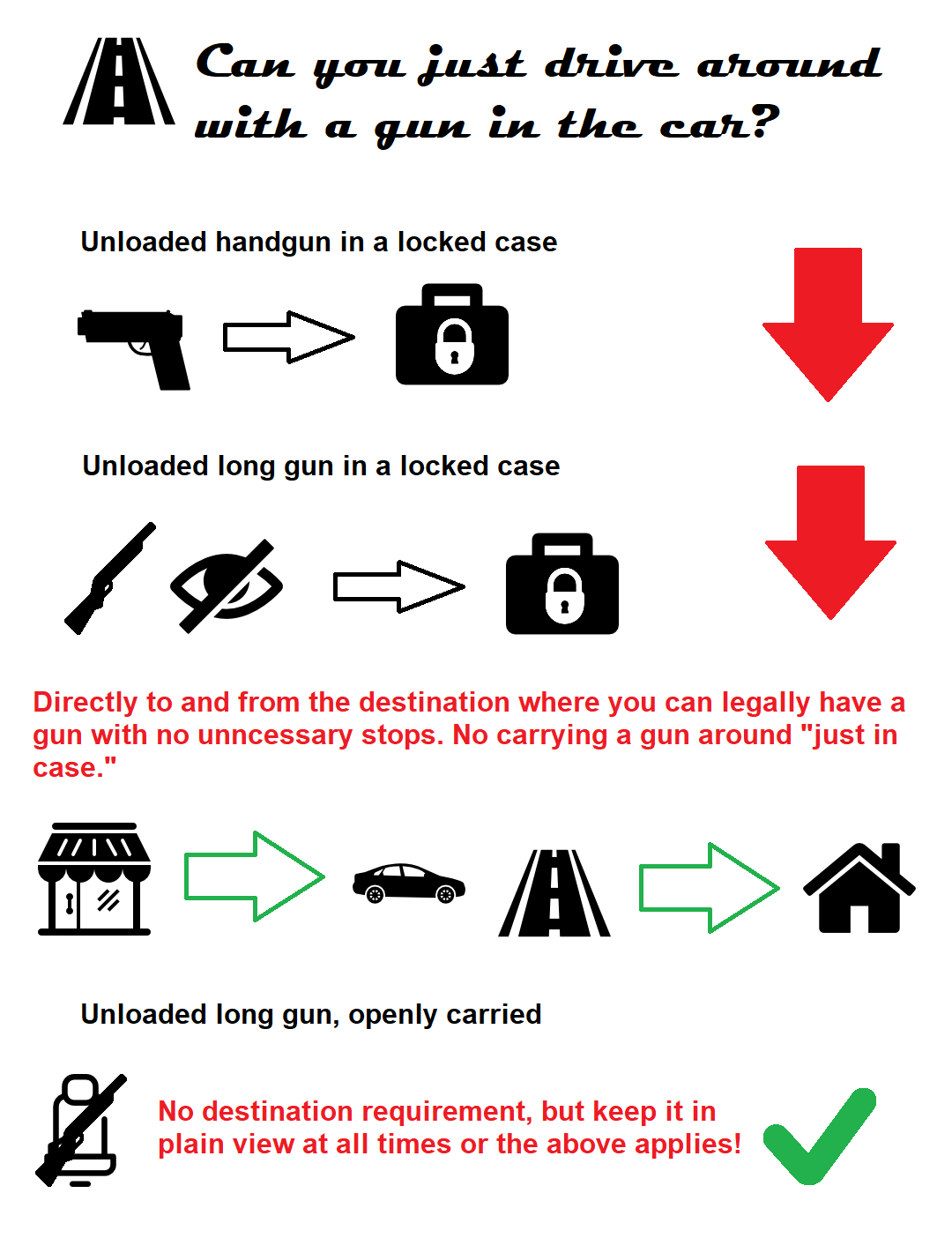
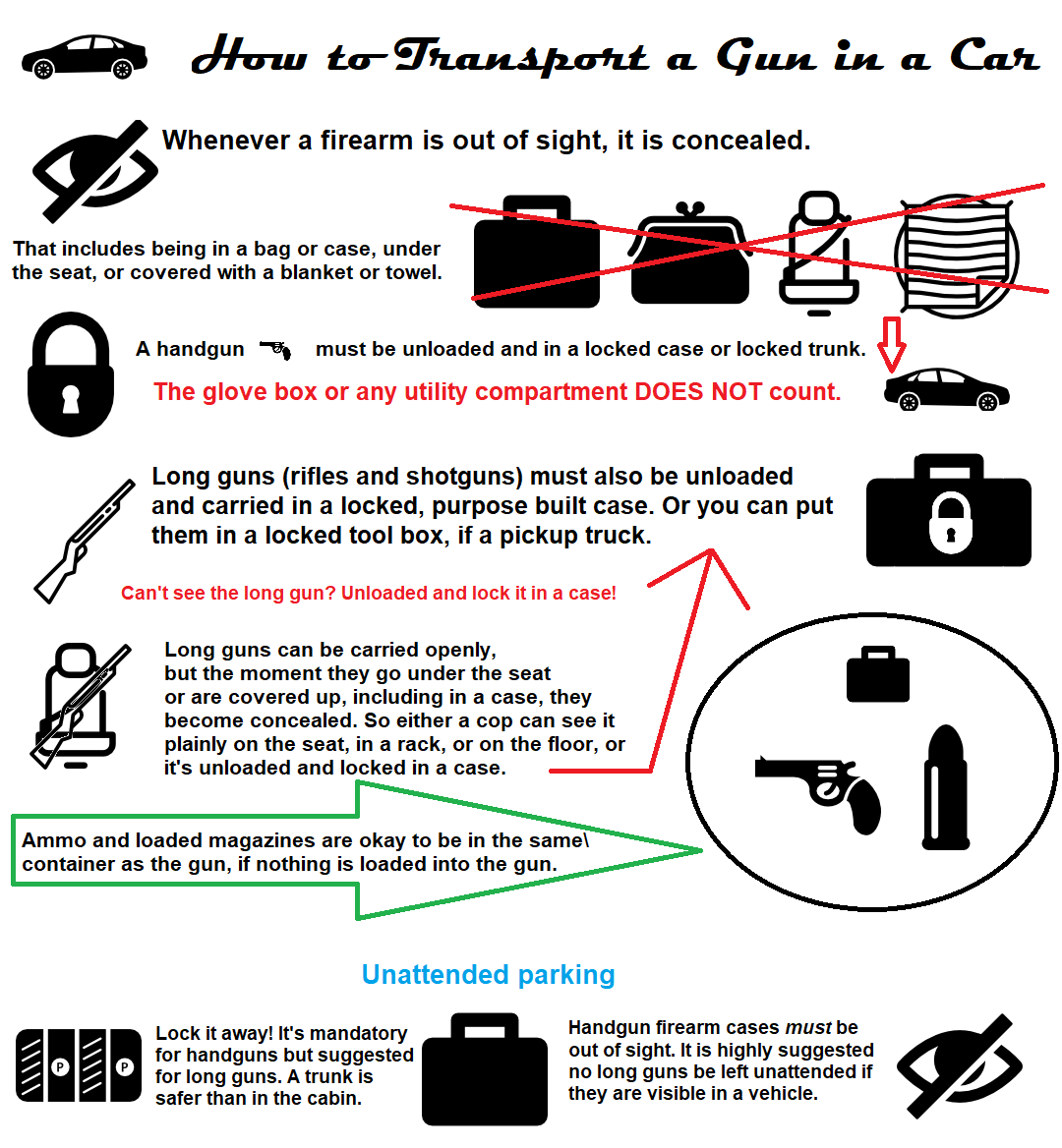
Handguns: When transporting a handgun in a vehicle, it must be unloaded and stored in a locked container. This container must be a fully enclosed case, not just a glove compartment or console. It can be a hard-sided case, a soft-sided case with a lock, or even a locked toolbox. The handgun must also be completely unloaded. Ammunition can be stored in the same locked container or separately, but it must not be loaded into the firearm. The firearm itself should not be readily accessible to the driver or any passenger. This means it should ideally be stored in the trunk or a locked cargo area of the vehicle.
Long Guns (Rifles and Shotguns): Similar rules apply to long guns. When transporting a rifle or shotgun in a vehicle, it must also be unloaded. Unlike handguns, long guns do not necessarily need to be in a locked container unless they are considered “assault weapons” or are being transported through a prohibited area. However, it is always a best practice to transport all firearms, including long guns, in a locked case to avoid any ambiguity and for enhanced security. Again, the firearm should not be readily accessible.
These transportation rules are critical for avoiding legal complications. Traveling with a firearm that is loaded, easily accessible, or not properly secured in a locked container can lead to immediate arrest and serious felony charges, even if you are just passing through and have no intention of using the firearm within the state.
Where Can (and Can’t) You Carry? Key Locations for Travelers
Even if you were a [California] resident with a CCW permit, there are numerous “gun-free zones” where carrying a firearm is strictly prohibited. For visitors, these zones become even more important as they represent areas where even legally transported firearms must remain secured and out of sight. Understanding these locations is essential for any traveler.
Prohibited Locations: A Comprehensive List
[California] law designates a broad array of locations as gun-free zones, impacting where a firearm can even be present, let alone carried. These include, but are not limited to:- Schools and Universities: All K-12 schools, colleges, and university campuses are strictly gun-free. This includes school grounds, buildings, and often extends to parking lots.
- Government Buildings: State and local government buildings, courthouses, polling places, and legislative facilities are off-limits.
- Airports: Federal regulations prohibit firearms in the sterile areas of airports. When flying, firearms must be unloaded, declared to the airline, placed in a locked, hard-sided container, and checked as baggage.
- Theme Parks and Attractions: Major tourist destinations like [Disneyland Park] in [Anaheim], [Universal Studios Hollywood] in [Los Angeles], and [Knott’s Berry Farm] strictly prohibit firearms on their premises. Security checks are common, and attempting to enter with a firearm will result in denied entry and potentially law enforcement involvement.
- Public Parks and Playgrounds: Many public parks, playgrounds, and recreational areas in [California] are designated as gun-free zones, especially those managed by cities or counties.
- Hospitals and Healthcare Facilities: Firearms are generally prohibited in medical facilities.
- Churches and Places of Worship: While some states allow firearms in places of worship, [California] law generally prohibits them, often at the discretion of the property owner or congregation.
- Any private property where firearms are prohibited by the owner: Businesses and private residences have the right to prohibit firearms on their premises, often indicated by signage. This includes many restaurants, stores, and entertainment venues.
- State and National Parks (with nuances): While federal law generally permits firearms in [National Parks] (like [Yosemite National Park] or [Death Valley National Park]) if state laws are followed, [California] state parks (like those along the [Pacific Coast Highway]) often have their own specific regulations regarding firearms, usually prohibiting their carry. Always check the specific park’s rules.
This extensive list underscores the pervasive nature of gun-free zones in [California]. For a traveler, this means that even if you legally transport a firearm to your destination, you will likely need to leave it securely stored at your accommodation for the vast majority of your tourist activities.
Storing Your Firearm Responsibly: Before and During Your Trip
Given the severe restrictions on carrying, responsible and secure storage of your firearm becomes paramount for any traveler to [California]. This isn’t just a matter of convenience; it’s a legal requirement and a critical aspect of safe travel, especially when staying in hotels, resorts, or rental accommodations.
Accommodation and Firearm Storage
When booking your stay, whether it’s at a luxury resort like the [Waldorf Astoria Beverly Hills], a boutique hotel in [Santa Monica], or an [Airbnb] in [Palm Springs], it’s wise to consider your firearm storage options. Many hotels have policies prohibiting firearms on their premises, even if stored in a room. While federal law (the Firearm Owners’ Protection Act, FOPA) provides some protections for interstate travel with firearms, it primarily applies to transportation through a state and doesn’t override local laws or private property rules regarding storage within an accommodation.
It’s highly recommended to contact your chosen accommodation in advance to inquire about their specific firearm policy. Be discreet and professional in your inquiry. If a hotel prohibits firearms, you will need to find an alternative, such as a different hotel or, if legally permissible, a secure off-site storage facility (though these are rare and complex to arrange for short-term visitors).
If firearms are permitted, or if you are staying in a private rental (e.g., [Airbnb], [VRBO]) where the owner permits it, your firearm must be stored securely. This means it should be:
- Unloaded: Always store your firearm unloaded.
- In a Locked Container: Use a secure, locked case or a hotel safe (if available and large enough). A locked case prevents unauthorized access, especially by children, and is a legal requirement for transportation.
- Separate from Ammunition: While not always legally required for storage in a private room, separating the firearm from its ammunition is a best practice for safety.
Never leave a firearm unsecured in your hotel room, vehicle, or rental property. Theft of firearms is a serious concern, and you could be held liable if your firearm is stolen and later used in a crime, especially if it was not stored securely.
Vehicle Storage Considerations
As discussed in the transportation section, keeping firearms unloaded and in a locked container in your vehicle’s trunk or a locked cargo area is essential when traveling through [California]. However, what about when your vehicle is parked at your hotel, a tourist attraction, or a restaurant? The same rules apply. A firearm left in a vehicle, even if parked, must still be unloaded and in a locked container. It should also be out of sight to deter theft. Leaving a firearm plainly visible, even if secured, is an invitation for vehicle break-ins.
For extended stays or when visiting multiple attractions where you won’t be returning to your accommodation frequently, consider the security of your vehicle. Is it parked in a secure lot? Is it visible? The safest option is always to transport the firearm to your accommodation and store it securely indoors, if permitted.
Legal Consequences and Best Practices for Visitors
The penalties for violating [California]’s firearm laws are severe and can range from hefty fines to lengthy prison sentences, often involving felony charges. For a visitor, such legal troubles can be catastrophic, leading to immediate arrest, impoundment of your vehicle, confiscation of your firearm, and a criminal record that could impact future travel and employment. The legal system in [California] is unforgiving of firearm violations, even for those who claim ignorance of the law.

Best Practices for Responsible Travelers
To ensure a smooth and legally compliant visit to [California] while traveling with a firearm, consider these best practices:
- Know Before You Go: Research [California]’s firearm laws thoroughly. Do not rely on assumptions based on laws in your home state. The [California Department of Justice] website is an excellent resource for detailed information.
- Consider Leaving It Home: The simplest way to avoid legal complications is not to bring a firearm into [California] at all, especially if your primary purpose is tourism. For most travelers, the restrictions on carrying and the pervasive gun-free zones make bringing a firearm impractical and risky.
- Strict Adherence to Transportation Laws: If you must bring a firearm, ensure it is always unloaded and stored in a locked container, ideally in the trunk of your vehicle, whenever it is being transported.
- No Open or Concealed Carry: Unless you are a [California] resident with a valid CCW permit (which is not applicable to most visitors), do not carry a loaded firearm, openly or concealed, in public.
- Respect Gun-Free Zones: Be aware of and respect all designated gun-free zones. This includes theme parks, government buildings, schools, and many private businesses.
- Communicate with Accommodations: If you plan to store a firearm at a hotel or rental, inquire about their policy in advance. Be prepared to seek alternative arrangements if they prohibit firearms.
- Seek Legal Counsel If Unsure: If you have specific, complex questions about your situation, consult a [California] attorney specializing in firearm law before your trip. This proactive step can save you significant trouble.
- Avoid Modifying Firearms: Do not attempt to modify your firearm to meet [California]’s “featureless” or “fixed magazine” requirements unless you are a [California] resident and fully understand the intricate laws. These modifications are complex and often lead to non-compliance for the uninitiated.
- Stay Updated: Firearm laws can change. Check for any recent legislative updates before your trip.