
Navigating the initial stages of obtaining a driver’s license is a significant milestone for many young individuals, marking a newfound sense of independence. In Florida, the path to this freedom is clearly defined by state regulations, particularly concerning the minimum age for obtaining a learner’s permit. The question often arises: “Can you get your permit at 14 in Florida?” The answer, as it stands with current Florida law, is no. Aspiring drivers must reach a specific age and fulfill certain requirements before they can legally begin their behind-the-wheel journey with a permit. This article will delve into the precise age requirements, the necessary steps, and the crucial programs available to young Floridians eager to learn how to drive.

Understanding Florida’s Learner’s Permit Age Requirements
The Florida Department of Highway Safety and Motor Vehicles (FLHSMV) clearly outlines the age at which individuals can begin the process of obtaining a learner’s permit. This structured approach is designed to ensure that drivers gain a foundational understanding of driving principles and road safety before they are permitted to operate a vehicle, even under supervision.
The Minimum Age for a Learner’s Permit
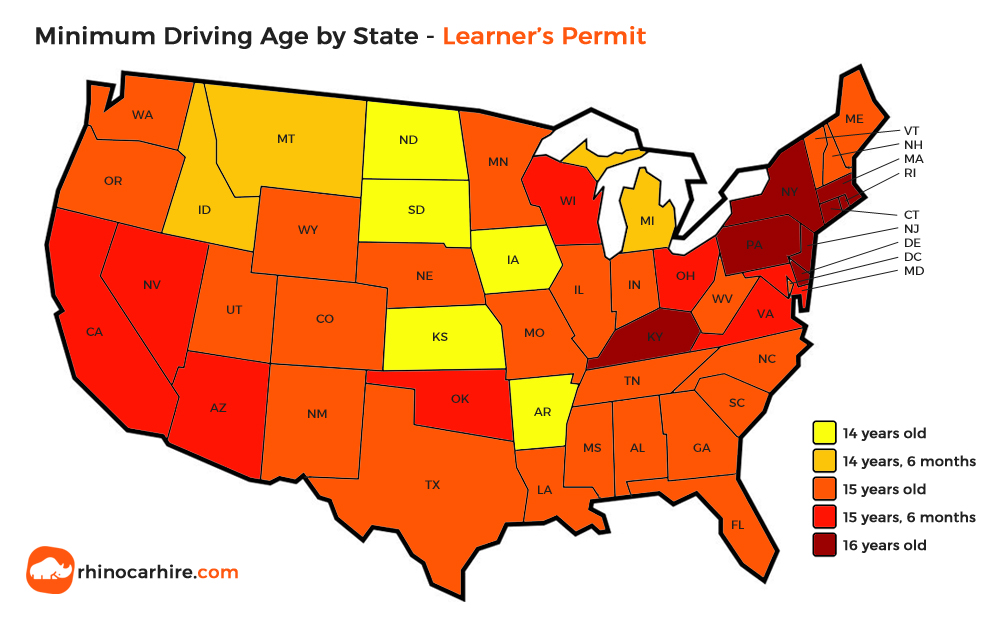
In Florida, the minimum age to obtain a learner’s permit, officially known as a Class E Learner’s License, is 15 years old. This means that individuals younger than 15, including 14-year-olds, are not eligible to apply for this permit. The one-year waiting period between obtaining a learner’s permit and being eligible for a full driver’s license underscores Florida’s commitment to a graduated driver licensing (GDL) system. This system is internationally recognized as an effective method for reducing crashes among novice drivers by gradually introducing them to driving privileges and responsibilities.
Graduated Driver Licensing (GDL) in Florida
Florida employs a comprehensive GDL program designed to enhance the safety of young drivers. The program consists of several stages, each with specific age and time requirements. The first stage is the learner’s permit, followed by a restricted driver’s license, and finally, a full, unrestricted driver’s license. This phased approach allows young drivers to gain experience in lower-risk conditions and gradually take on more driving responsibilities as their skills and maturity develop. Understanding these stages is crucial for any young person aspiring to drive in Florida.
The Path to Obtaining a Learner’s Permit at 15
Once an individual turns 15, they can begin the process of obtaining their learner’s permit. This involves several key steps, ensuring that they are prepared for the responsibilities that come with being a licensed driver.
The Required Driver Education Course
A mandatory component for obtaining a learner’s permit in Florida for individuals under 18 years old is the completion of a state-approved driver education course. This course is typically a Traffic Law and Substance Abuse Education (TLSAE) course, also known as the “First Time Driver” course. This foundational course educates new drivers on Florida’s traffic laws, the dangers of driving under the influence of alcohol or drugs, and essential defensive driving techniques. Upon successful completion, participants receive a certificate that is required to proceed with the permit application. Many high schools offer this course, and private driving schools throughout the state also provide it.
Passing the Required Knowledge Tests
To secure a learner’s permit, applicants must demonstrate their understanding of traffic laws and road signs by passing two crucial knowledge tests administered by the FLHSMV or an authorized third-party testing provider.
The Road Rules Test
This test assesses an applicant’s knowledge of Florida’s traffic laws, safe driving practices, and recognition of road signs. It is typically a multiple-choice test, and a passing score is required to move forward. The official Florida Driver Handbook is the primary resource for studying for this test. It provides comprehensive information on everything from right-of-way rules to speed limits and parking regulations.
The Road Signs Test
Often integrated into the Road Rules Test or administered separately, this test specifically focuses on the applicant’s ability to identify and understand the meaning of various traffic signs, signals, and pavement markings. Recognizing these visual cues is paramount for safe driving, ensuring drivers can react appropriately to changing road conditions and directives.
The Vision and Hearing Screening
Before a learner’s permit can be issued, applicants must undergo a vision and hearing screening. This is a standard safety measure to ensure that individuals have the necessary sensory capabilities to operate a vehicle safely. If an individual requires corrective lenses for vision, this will be noted on their permit, and they will be required to wear them while driving.
Requirements for the Learner’s Permit Application
With the prerequisite education and tests completed, aspiring drivers are ready to formally apply for their learner’s permit. This involves gathering specific documentation and visiting a Florida driver license service center.
Essential Documentation
Applicants must bring a specific set of documents to prove their identity, date of birth, and lawful presence in the United States. These typically include:
- Proof of Identity: A certified birth certificate or U.S. passport.
- Proof of Social Security: A Social Security card or other official document showing the Social Security number.
- Proof of Residential Address: Two different proofs of residential address in Florida, such as utility bills or bank statements.
- Proof of School Enrollment or Graduation: A valid school identification card, a diploma, or a certificate of completion from an approved high school or its equivalent. For those not currently enrolled, proof of lawful presence in the United States is required.
The FLHSMV website provides a detailed checklist of acceptable documents, and it is highly recommended that applicants review this list before their appointment to ensure a smooth application process.
The Permit Fee and Application Submission
A fee is associated with obtaining a learner’s permit. This fee covers the cost of processing the application, issuing the permit, and supporting the state’s driver licensing infrastructure. Applicants will submit their completed application form along with all required documentation and the appropriate fee at the driver license service center. At this point, their photograph will be taken, and their thumbprint will be collected.
Restrictions and Responsibilities of a Learner’s Permit Holder
Holding a learner’s permit is not simply a permission slip to drive; it comes with specific restrictions and significant responsibilities that are critical for the safety of the permit holder and others on the road. Adherence to these rules is paramount.
Supervision Requirements
A fundamental restriction for Florida learner’s permit holders is the requirement for supervision by a licensed driver who is at least 21 years old and occupies the front passenger seat. This means a 15-year-old with a permit cannot drive alone. The supervising driver must be capable of taking control of the vehicle if necessary and must be actively monitoring the permit holder’s driving. This supervised practice is a cornerstone of the GDL program, allowing new drivers to build confidence and skill under the guidance of an experienced driver.
Time and Passenger Restrictions
Florida learner’s permits also come with limitations on when and with whom the permit holder can drive. For the first 12 months after obtaining the permit, or until the driver turns 18, whichever comes first, permit holders are restricted from driving between the hours of 11:00 p.m. and 6:00 a.m., unless accompanied by a licensed driver 21 years or older. Furthermore, for the first 12 months of holding the permit, passengers are limited to immediate family members. After this initial 12-month period, a permit holder may drive at any time as long as they are accompanied by a licensed driver who is at least 21 years old and sitting in the front passenger seat. These restrictions are designed to minimize the risks associated with night driving and driving with distracting peer passengers, common factors in novice driver crashes.
Consequences of Violations
Violating the terms of a learner’s permit can lead to serious consequences. These may include fines, points on the driving record, extension of the permit holding period, or even suspension of permit privileges. It is imperative that all permit holders and their supervising drivers understand and strictly adhere to these regulations to ensure a safe and lawful driving experience. Familiarizing oneself with the official Florida Driver Handbook is the best way to stay informed about all rules and regulations.
In conclusion, while a 14-year-old cannot obtain a driver’s permit in Florida, the path to driving independence is well-structured and achievable upon reaching the age of 15. By completing the required education, passing the necessary tests, and adhering to the graduated driver licensing program’s stages and restrictions, young Floridians can safely and legally embark on their journey towards becoming licensed drivers.
LifeOutOfTheBox is a participant in the Amazon Services LLC Associates Program, an affiliate advertising program designed to provide a means for sites to earn advertising fees by advertising and linking to Amazon.com. Amazon, the Amazon logo, AmazonSupply, and the AmazonSupply logo are trademarks of Amazon.com, Inc. or its affiliates. As an Amazon Associate we earn affiliate commissions from qualifying purchases.