
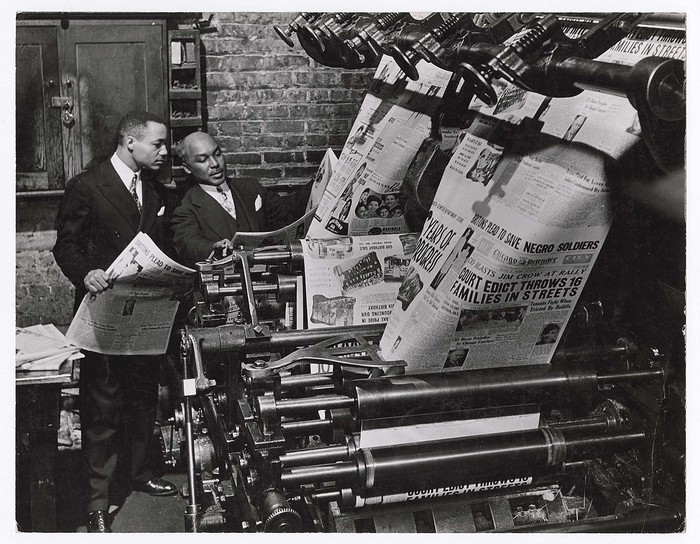
The story of The Chicago Defender is intricately woven into the fabric of American history, particularly concerning the Great Migration and the struggle for civil rights. Founded in 1905 by Robert S. Abbott, this influential weekly newspaper quickly became the most widely circulated African American newspaper in the United States. Its pages offered a potent voice to a community often ignored or misrepresented by mainstream media, chronicling injustices, celebrating achievements, and actively encouraging Black Americans to leave the oppressive American South for the promise of industrial jobs and greater freedom in northern cities like Chicago, Detroit, and New York City.

The question of whether The Chicago Defender defended labor unions is complex, reflecting the nuanced and often contradictory challenges faced by Black workers in the early 20th century. Its stance evolved significantly over time, influenced by shifts in the labor movement itself, the changing economic landscape, and the unwavering commitment of the newspaper to the advancement and empowerment of African Americans. For those interested in the rich history and cultural landmarks of Chicago, understanding The Defender’s role provides invaluable insight into the city’s development and the struggles that shaped its diverse communities, offering a glimpse into a crucial aspect of American lifestyle and societal evolution.
A Powerful Voice for the Voiceless: The Genesis of The Defender
When Robert S. Abbott launched The Chicago Defender, his mission was clear: to provide a platform for African Americans to speak truth to power, to document their lives, and to advocate for their rights. Born to formerly enslaved parents, Abbott was a lawyer by training who experienced firsthand the pervasive racial discrimination that limited opportunities for even educated Black professionals. Recognizing the power of the press, he started The Defender with just 25 cents, building it into a national powerhouse from his kitchen table on Chicago’s South Side.
The newspaper’s impact was immediate and profound. Its fearless reporting on lynchings, segregation, and other racial atrocities in the American South resonated deeply. More importantly, The Defender didn’t just report; it actively urged Black southerners to migrate north, painting vivid pictures of better jobs, educational opportunities, and a life free from Jim Crow laws. This proactive encouragement became a significant catalyst for the Great Migration, fundamentally reshaping the demographics and cultural landscapes of northern industrial cities. The promises of better wages and living conditions were a key draw, and The Defender played a pivotal role in shaping the “lifestyle” aspirations of millions.
The Economic Promise and Harsh Realities of Northern Cities
The promise of the North, however, often clashed with a harsh reality. While industrial jobs were available, especially during periods like World War I and World War II when European immigration slowed and war production ramped up, Black workers frequently faced the lowest-paying, most dangerous jobs. They were often the “last hired, first fired,” and subjected to wage discrimination. Housing discrimination was rampant, leading to overcrowded and segregated neighborhoods, which in turn fostered social tensions.
The role of labor unions in this environment was particularly complex. Historically, many mainstream unions, particularly those affiliated with the American Federation of Labor (AFL), either explicitly excluded Black workers or organized them into segregated, subordinate locals. This practice stemmed from racial prejudice among white union members and a fear that Black workers, often desperate for employment, would be used as strikebreakers, further undermining union power. This deeply ingrained discrimination presented a significant dilemma for The Chicago Defender and the communities it served. How could a newspaper dedicated to Black advancement reconcile with organizations that frequently blocked that advancement? This historical context is vital for anyone exploring Chicago’s landmarks and cultural sites, as it underscores the economic and social struggles that shaped the city.
Navigating the Labyrinth of Labor: The Defender’s Evolving Stance
The Chicago Defender’s initial stance towards organized labor was often one of cautious skepticism, if not outright opposition, primarily driven by the blatant racism pervasive within many unions. The paper’s priority was the economic upliftment of African Americans, which meant securing jobs, improving wages, and fostering dignity in labor. When unions barred Black workers, The Defender sometimes pragmatically advised Black individuals to take jobs as strikebreakers, not out of an anti-union ideology, but as a direct response to discriminatory hiring practices that left Black families without options. This was a controversial but understandable strategy in an era where Black workers were systematically denied entry into industries controlled by white-dominated unions.
Early Pragmatism and Critique of Exclusion
In its early decades, The Defender frequently highlighted union hypocrisy. It published editorials and news stories detailing instances where unions actively prevented Black workers from joining or participating, thereby denying them access to better wages, safer working conditions, and the collective bargaining power that white workers enjoyed. From the perspective of The Defender, if unions were not working for Black people, then alternative pathways to economic stability had to be pursued. This approach underscored the paper’s deep commitment to the “lifestyle” and wellbeing of its readership, even if it meant challenging established labor movements.
However, it’s crucial to distinguish this pragmatic response from an inherent opposition to the principles of organized labor. The Defender understood the power of collective action. Its critique was largely aimed at the discriminatory practices of specific unions rather than the concept of workers uniting for common goals. It often championed self-organization within the Black community and supported efforts to create inclusive unions where they emerged.
A Turning Point: The Rise of Industrial Unionism and the CIO
A significant shift in The Chicago Defender’s relationship with organized labor occurred in the 1930s with the rise of the Congress of Industrial Organizations (CIO). Unlike the craft-based American Federation of Labor, the CIO organized workers by industry, often encompassing all workers in a factory regardless of their specific trade. Crucially, the CIO adopted a more inclusive approach to race, actively seeking to organize Black workers alongside white workers. This was partly strategic, as Black workers made up a substantial portion of the workforce in industries like steel, auto, and meatpacking, and excluding them would weaken unionization efforts. But it also stemmed from a more progressive ideology that recognized the power of unity across racial lines.
Embracing the CIO: A New Path to Empowerment
The Chicago Defender largely embraced the CIO’s inclusive philosophy. The newspaper saw the CIO as a viable avenue for Black workers to gain real economic power, better wages, and improved working conditions without facing the same racial barriers prevalent in AFL unions. The Defender began to actively encourage its readers to join CIO unions, recognizing that genuine interracial solidarity within the labor movement could be a powerful force for social and economic justice. This marked a significant change from its earlier, more confrontational stance toward unions. The paper’s coverage shifted to highlight successful interracial strikes and union victories, showcasing how collective action could indeed benefit all workers, including African Americans. This new alliance also had implications for the “tourism” and “lifestyle” aspects of Chicago, as greater economic stability for its Black residents contributed to the city’s overall vibrancy and cultural richness.
A prime example of successful Black-led unionization, often praised by The Defender, was the Brotherhood of Sleeping Car Porters (BSCP). Led by the iconic A. Philip Randolph, the BSCP was the first African American labor union to sign a collective bargaining agreement with a major corporation (Pullman Company). The Defender consistently supported Randolph’s efforts, seeing the BSCP as a testament to the power of organized Black labor and a model for future unionization efforts.

Legacy and Lasting Impact
The Chicago Defender’s relationship with labor unions was a microcosm of the broader struggle for racial and economic justice in the United States. Initially, it was a voice of necessary critique against a labor movement that often perpetuated racial discrimination. As the labor landscape evolved, particularly with the rise of the CIO, The Defender demonstrated its adaptability and unwavering commitment to its core mission: the empowerment of African Americans. It moved from cautious skepticism to active advocacy for inclusive unions, recognizing them as powerful tools for achieving fair wages, better working conditions, and a more equitable society.
The newspaper’s influence cannot be overstated. By consistently reporting on labor issues from the perspective of Black workers, it not only informed its readership but also pressured both unions and employers to address racial inequalities. Its advocacy helped pave the way for greater integration of Black workers into the mainstream labor movement, contributing to broader civil rights advancements that would unfold in later decades. The history of The Chicago Defender is thus an essential chapter in understanding the complex interplay between race, labor, and social progress in America. For visitors to Illinois and Chicago, exploring this rich history offers a deeper appreciation of the city’s transformation from a bustling industrial hub to a diverse cultural landmark, shaped by the tireless efforts of publications like The Defender to champion justice and equity in all facets of life, including travel, lifestyle, and the pursuit of opportunity. Its legacy is a reminder of the enduring fight for inclusion, making it a powerful landmark in its own right, reflecting the historical journey of accommodation and belonging for many.
LifeOutOfTheBox is a participant in the Amazon Services LLC Associates Program, an affiliate advertising program designed to provide a means for sites to earn advertising fees by advertising and linking to Amazon.com. Amazon, the Amazon logo, AmazonSupply, and the AmazonSupply logo are trademarks of Amazon.com, Inc. or its affiliates. As an Amazon Associate we earn affiliate commissions from qualifying purchases.