
For many travelers dreaming of sun-drenched beaches, vibrant culture, and breathtaking natural beauty, the thought of an international trip often comes with the added complexity of passport requirements, visa applications, and the general bureaucracy of crossing borders. However, for citizens of the United States, there’s a unique jewel in the Caribbean that offers all the allure of an exotic escape without the need for a passport: Puerto Rico. This enticing island destination provides a seamless travel experience for millions, blending the conveniences of domestic travel with the rich tapestry of a distinct culture.

This comprehensive guide will unravel the specifics of travel documentation for [Puerto Rico], differentiating requirements for [U.S. citizens] and international visitors. Beyond the essential travel logistics, we’ll delve into why [Puerto Rico] remains an unparalleled choice for your next getaway, exploring its stunning [landmarks], diverse [accommodation] options, and the myriad [lifestyle] experiences it offers, all while simplifying your planning process.
The Definitive Answer for U.S. Citizens
The question “Do I need a passport for [Puerto Rico]?” is one of the most frequently asked by prospective travelers. For [United States] citizens, the answer is a resounding no. Traveling to [Puerto Rico] from the mainland [U.S.] is considered domestic travel, akin to flying between [Florida] and [California], or visiting [Hawaii]. This means you won’t pass through immigration or customs upon arrival or departure from [Puerto Rico] when traveling directly from or to the [U.S. mainland].
Understanding Puerto Rico’s Status
[Puerto Rico] is an unincorporated territory of the [United States], often referred to as a [U.S. Commonwealth]. This unique political status grants its residents [U.S. citizenship], uses the U.S. dollar as its currency, and falls under the jurisdiction of the [U.S.] federal government. Essentially, for [U.S. citizens], a trip to [Puerto Rico] is no different from a domestic flight in terms of documentation. You’ll depart from a [U.S.] airport and arrive at a [U.S.] airport, making the process incredibly straightforward. This status eliminates the need for a passport for [U.S. citizens], making it an accessible and attractive option for those seeking an international feel without the international travel hurdles. It’s an opportunity to immerse yourself in a distinct culture and language without ever leaving [U.S.] soil.
Required Identification for Domestic Travel
While a passport isn’t necessary for [U.S. citizens], you will still need a valid form of government-issued identification to board your flight. The Transportation Security Administration (TSA) requires all adult passengers 18 years and older to present a valid photo ID at the airport security checkpoint.
The most common and accepted forms of identification include:
- Driver’s License or State ID Card: Ensure it is current and valid.
- [REAL ID Act]-Compliant ID: As of May 7, 2025 (latest extension), a [REAL ID]-compliant driver’s license or state ID card will be required for domestic air travel. These cards typically have a star symbol at the top. If your state-issued ID is not yet [REAL ID]-compliant, make sure you have an alternative form of acceptable identification.
- [U.S.] Passport Card: While not a full passport book, this card is specifically designed for land and sea travel to certain adjacent countries and for domestic air travel.
- [U.S.] Military ID: For active duty military personnel and their dependents.
- Permanent Resident Card (Green Card): For lawful permanent residents.
- Other Federally Recognized IDs: This can include certain tribal IDs, HSPD-12 PIV cards, and more.
For minors (under 18 years old) traveling with an adult, the TSA does not require them to present identification. However, airlines may have their own policies, so it’s always wise to check with your specific carrier. It’s also a good practice to carry a copy of their birth certificate or a school ID for identification purposes, especially for family [travel]. Having proper identification for all travelers ensures a smooth check-in and security process, setting the stage for a stress-free journey to [Puerto Rico].
Travel Requirements for Non-U.S. Citizens
While [Puerto Rico] feels like an international destination, its status as a [U.S.] territory means that for international travelers, the entry requirements are the same as those for entering the [U.S. mainland]. This is a crucial distinction and often a point of confusion.
International Travelers to Puerto Rico
If you are not a [U.S. citizen] or a lawful permanent resident, you will indeed need a valid passport and potentially a visa to visit [Puerto Rico]. Your entry requirements will mirror those for any other [United States] destination, such as [New York City] or [Los Angeles].
Key considerations for international visitors include:
- Valid Passport: Your passport must be valid for at least six months beyond your intended period of stay in the [United States].
- [U.S.] Visa: Depending on your country of citizenship, you may need a non-immigrant visa (such as a B1/B2 tourist visa) to enter the [U.S.] and, consequently, [Puerto Rico].
- Visa Waiver Program / [ESTA]: Citizens of countries participating in the [Visa Waiver Program] can travel to the [United States] (including [Puerto Rico]) for tourism or business for stays of 90 days or less without obtaining a visa. However, they must obtain an approved travel authorization through the Electronic System for Travel Authorization ([ESTA]) prior to their departure. It is essential to apply for [ESTA] well in advance of your trip.
- Customs and Border Protection: All international travelers are subject to inspection by [Customs and Border Protection] officers upon entry into the [United States]. This includes providing biometric data (fingerprints and photographs) and answering questions about the purpose of your trip.
It’s vital for all non-[U.S. citizens] to thoroughly research and understand the specific entry requirements based on their nationality well before planning a trip to [Puerto Rico]. Consulting the official [U.S.] Department of State website or the [U.S.] embassy or consulate in your home country is highly recommended to ensure compliance and avoid any travel disruptions. While [Puerto Rico] offers a unique blend of [U.S.] convenience and [Caribbean] charm, for international visitors, it truly is an international trip requiring proper documentation.
Why Puerto Rico Feels Like an International Escape (Without the Passport Hassle)
Even without the stamp in your passport, [Puerto Rico] provides an immersive experience that feels distinctly foreign and endlessly captivating. Its unique position as a [U.S.] territory with a strong Latin American heritage creates a vibrant cultural fusion unlike anywhere else. This blend makes it an ideal destination for [U.S. citizens] seeking an exotic getaway without the complexities of true international [travel].
A Rich Cultural Tapestry
[Puerto Rico]’s culture is a vibrant mosaic woven from Spanish, African, and Taíno indigenous influences, with a modern thread of [U.S.] contemporary life. This fusion is evident in every aspect of the island, from its language to its [food] and music.
- Language: While English is widely spoken, especially in tourist areas and major cities, Spanish is the dominant language. Engaging with locals in Spanish, even with a few basic phrases, can significantly enrich your experience and offer a deeper connection to the island’s soul.
- Cuisine: [Puerto Rican] cuisine is a flavorful adventure, blending indigenous ingredients with European and African culinary traditions. Must-try dishes include [mofongo] (fried plantains mashed with garlic, broth, and often pork cracklings or seafood), [lechon] (slow-roasted whole pig), and bacalaitos (codfish fritters). The island’s culinary scene ranges from casual roadside kiosks to upscale [restaurants] within luxury [resorts].
- Music and Dance: Salsa, bomba, and plena rhythms are the heartbeat of [Puerto Rico]. You’ll find opportunities to enjoy live music and dancing in many towns, especially in [San Juan], creating an unforgettable atmosphere of joy and celebration.
Iconic Landmarks and Natural Wonders
[Puerto Rico] boasts an incredible diversity of landscapes and historical sites, offering something for every type of [traveler]. From ancient fortresses to lush rainforests and pristine beaches, the island is a treasure trove of exploration.
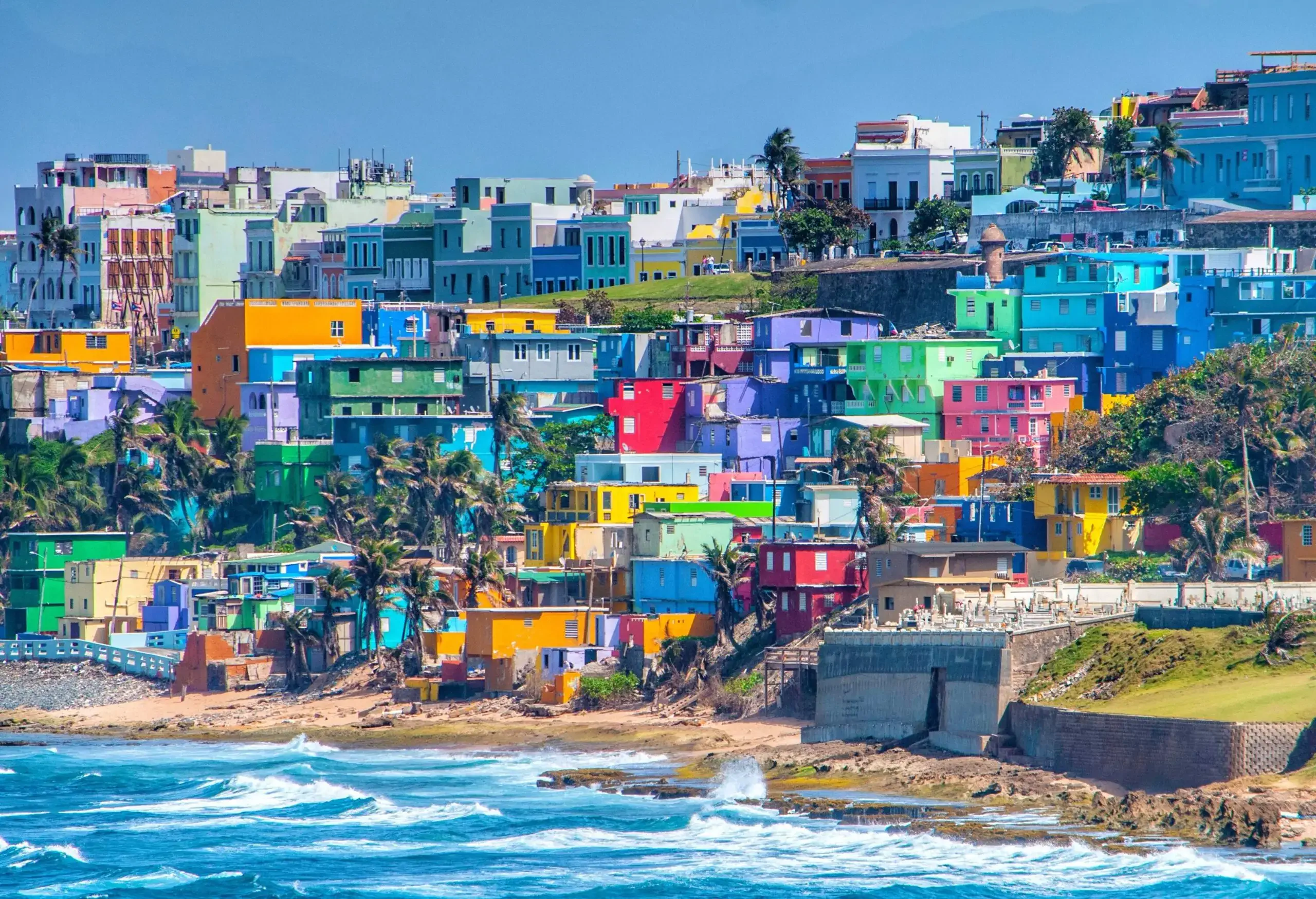
- [Old San Juan]: A UNESCO World Heritage site, [Old San Juan] is a beautifully preserved colonial city brimming with colorful Spanish architecture, cobblestone streets, and centuries of history. Explore the formidable fortresses of El Morro and San Cristóbal, wander through charming plazas, and discover hidden courtyards. The historic charm makes it a top [attraction].
- [El Yunque National Forest]: The only tropical rainforest in the [U.S. National Forest System], El Yunque National Forest is a haven for nature lovers. Hike through lush trails, discover hidden waterfalls, and marvel at the incredible biodiversity, including the iconic coqui frog.
- Bioluminescent Bays: [Puerto Rico] is home to three of the world’s five bioluminescent bays, where microscopic organisms light up the water with a magical glow when disturbed. A kayak tour through [Laguna Grande] in Fajardo or [Mosquito Bay] in Vieques offers an ethereal experience, a truly unique natural [landmark].
- Stunning Beaches: From the pristine white sands of Flamenco Beach on [Culebra Island] (often ranked among the world’s best) to the calm, family-friendly waters of Luquillo Beach on the main island, [Puerto Rico]’s coastline is a beach lover’s paradise. Many [hotels] and [resorts] are situated directly on these beautiful shores, offering direct access to sun and surf.
- Coffee Plantations & Rum Distilleries: Discover the rich history of [Puerto Rican] coffee by visiting a hacienda in the central mountains, or delve into the world of rum at famous distilleries like [Casa Bacardi]. These tours offer insight into local industries and often include tastings.
Accommodation and Lifestyle on the Island
[Puerto Rico] caters to every [lifestyle] and budget when it comes to [accommodation]. Whether you’re seeking [luxury travel], a budget-friendly escape, or a perfect family trip, you’ll find an array of options.
- Luxury Resorts: For those seeking an indulgent escape, [Puerto Rico] offers world-class luxury [resorts] such as Dorado Beach, a Ritz-Carlton Reserve and the Condado Vanderbilt Hotel. These properties provide opulent [suites], exceptional amenities, fine dining, and personalized service, often with stunning oceanfront views and private beaches.
- Boutique Hotels and Villas: Scattered throughout [Old San Juan] and other charming towns, boutique [hotels] offer a more intimate and personalized experience, often reflecting local architecture and design. For longer stays or group travel, private [villas] and vacation [apartments] provide flexibility and a home-away-from-home feel.
- Family-Friendly Options: Many [resorts], like El Conquistador Resort, are designed with [family trips] in mind, featuring kids’ clubs, water parks, and activities that cater to all ages.
- Budget Travel: Travelers on a budget can find numerous affordable [guesthouses], hostels, and smaller [hotels], particularly outside of the main tourist hubs. Exploring local eateries and public transportation can further enhance a budget-conscious trip.
- Reviews and Comparison: When [booking accommodation], it’s always advisable to read [reviews] and use [comparison] sites to find the best deals and ensure the property meets your expectations. The range of options means you can tailor your stay to your preferences, whether you prioritize [amenities], location, or cost.
Essential Travel Tips for Your Puerto Rico Adventure
Planning your trip to [Puerto Rico] goes beyond just knowing your passport requirements. Thoughtful preparation can significantly enhance your experience, allowing you to fully immerse yourself in the island’s charm.
Planning Your Trip
- Best Time to Visit: The peak tourist season typically runs from mid-December to May, offering cooler, drier weather. June to November is hurricane season, which can bring higher humidity, more rain, and the risk of tropical storms. However, traveling during the shoulder seasons (late spring, early fall) can offer good weather and fewer crowds.
- Getting Around: While ride-sharing services are available in [San Juan], renting a car is highly recommended if you plan to explore beyond the capital. This provides the flexibility to visit remote beaches, [El Yunque], and charming towns at your own pace. Be prepared for varying road conditions and local driving styles.
- Currency: As a [U.S.] territory, the U.S. dollar is the official currency. Major credit cards are widely accepted, and ATMs are readily available.
- Safety Tips: [Puerto Rico] is generally safe for tourists, but like any destination, it’s wise to take precautions. Be aware of your surroundings, especially at night, and avoid displaying valuable items. Follow local advice regarding swimming conditions, particularly at secluded beaches.
- Connectivity: Cell service is generally reliable, and Wi-Fi is common in [hotels], [restaurants], and [attractions]. You can use your [U.S.] cell plan without roaming charges, just like in the [U.S. mainland].
Maximizing Your Experience
- Embrace Local Culture: Don’t be afraid to step off the beaten path. Engage with locals, try street [food], listen to live music, and participate in local festivals. These authentic experiences will be the most memorable.
- Learn Basic Spanish Phrases: While English is spoken, knowing a few Spanish phrases like “hola” (hello), “gracias” (thank you), and “por favor” (please) will be appreciated and can enhance your interactions.
- Pack Smart: Pack light, breathable clothing suitable for warm, humid weather. Essential items include swimwear, comfortable walking shoes for exploring, sandals, a reusable water bottle, sunscreen, insect repellent, and a light rain jacket for unexpected showers, especially if visiting the rainforest.
- Travel Insurance: While domestic [travel] for [U.S. citizens] makes some aspects simpler, considering [travel insurance] is always a good idea. It can provide peace of mind for unforeseen circumstances like medical emergencies, trip cancellations, or lost luggage.
In conclusion, for [United States] citizens, the allure of [Puerto Rico] is heightened by the ease of [travel] – no passport required, just a valid government-issued ID. This allows for a seamless journey to an island that feels wonderfully foreign, brimming with a unique culture, stunning natural beauty, and a wealth of experiences. From the historic cobblestones of [Old San Juan] to the misty peaks of [El Yunque National Forest] and the vibrant bioluminescent bays, [Puerto Rico] offers an unforgettable escape without the international travel complexities. For international visitors, standard [U.S.] entry requirements apply, ensuring a consistent border experience. Regardless of your origin, [Puerto Rico] stands ready to captivate and enchant, promising an adventure that feels both exotic and welcoming. Start planning your [Puerto Rican] adventure today, and prepare to discover an island paradise where the vibrant spirit of the [Caribbean] meets the familiar comforts of the [United States].