
Planning a vibrant escape to the sun-drenched beaches and historic streets of Puerto Rico? One of the most common questions travelers from the United States ask is, “Do I need a passport to visit [Puerto Rico]?” The straightforward answer for U.S. citizens is a resounding no. As a U.S. territory, [Puerto Rico] offers a unique blend of exotic Caribbean charm and seamless domestic travel for those residing in the continental [United States].
This means that for millions of Americans, the dream of exploring ancient fortresses, hiking through lush rainforests, and indulging in a rich, vibrant culture is as accessible as a domestic flight. Forget the hassle of international passport applications, visa requirements, or currency exchanges (the U.S. Dollar is the official currency). This article will delve into the specifics of what identification you will need, illuminate [Puerto Rico]’s special status, and provide a comprehensive guide to planning an unforgettable trip, covering everything from accommodation and attractions to local culture and essential travel tips. Whether you’re considering a luxurious resort stay, an adventurous exploration of natural wonders, or a deep dive into local gastronomy, understanding the travel requirements is your first step towards an incredible [Puerto Rico] experience.
Understanding Puerto Rico’s Unique Status
To fully grasp why a passport isn’t typically required for U.S. citizens traveling to [Puerto Rico], it’s essential to understand its political relationship with the [United States]. [Puerto Rico] is an unincorporated territory of the [United States], which means it is subject to the authority of the U.S. Congress, but is not part of any U.S. state, nor is it an independent nation. This status grants its residents U.S. citizenship.
The granting of U.S. citizenship to [Puerto Rico] residents dates back to the Jones-Shafroth Act of 1917. This landmark legislation established a civil government and granted statutory U.S. citizenship to all persons born in [Puerto Rico] on or after April 11, 1899. Consequently, U.S. citizens traveling to [Puerto Rico] are not considered to be entering a foreign country. This simplifies the travel process considerably, making it an ideal destination for those seeking an international feel without the complexities often associated with overseas journeys.
This unique territorial status influences various aspects of travel. For instance, air travel between the continental [United States] and [Puerto Rico] is treated as a domestic flight by airlines and airport security. This distinction saves travelers the time and effort typically involved in obtaining a passport, making spontaneous trips or last-minute getaways much more feasible. It also means that customs checks for U.S. citizens are generally not required upon arrival or departure from [Puerto Rico], further streamlining the travel experience.
However, while the passport requirement is waived, proper identification is still absolutely necessary, especially for air travel. The Transportation Security Administration ([TSA]) maintains strict rules for identification at airport checkpoints, regardless of whether your destination is domestic or a U.S. territory.
Required Identification for U.S. Citizens
While a passport is not mandatory, you will need a valid form of government-issued identification to board your flight to [Puerto Rico]. The most commonly accepted forms of ID for U.S. citizens include:
- [Real ID]-Compliant Driver’s License or State ID Card: This is the most common and convenient form of identification. Ensure your driver’s license or state ID card is compliant with the [Real ID] Act, which became fully enforced in May 2025. A [Real ID] card is marked with a star at the top. If your license is not [Real ID]-compliant, you will need to present an alternative acceptable form of identification.
- U.S. Passport or Passport Card: Although not required, a U.S. passport or passport card is, of course, a perfectly acceptable form of identification for domestic air travel. Many travelers choose to carry their passport for emergencies or simply because it’s their preferred form of ID.
- U.S. Military ID: Active-duty military personnel, veterans, and their dependents can use their U.S. military ID card.
- Permanent Resident Card (Green Card): Lawful permanent residents of the [United States] can use their Permanent Resident Card.
- Other [TSA]-Approved IDs: A full list of acceptable documents can be found on the [TSA] website, including certain tribal identification cards, HSPD-12 PIV cards, and airline-issued identification.
Traveling with Minors: For children under 18 traveling with an adult, the [TSA] generally does not require them to present identification for domestic flights. However, airlines may have their own policies, and it’s always prudent to carry a copy of the child’s birth certificate or a legal guardianship document, especially if the child is traveling with only one parent or a non-parent adult. This can help to avoid any potential issues with airline personnel or if unexpected situations arise. For unaccompanied minors, specific airline policies and identification requirements will apply.
Always double-check the latest identification requirements with the [TSA] and your chosen airline before your trip, as regulations can sometimes change. Having your proper identification in order ensures a smooth and stress-free journey from check-in to your arrival in [Puerto Rico].
Travel Requirements for Non-U.S. Citizens
The “no passport needed” rule applies exclusively to U.S. citizens and lawful permanent residents. If you are a citizen of any other country, the travel requirements for entering [Puerto Rico] are essentially the same as those for entering the continental [United States]. This means that non-U.S. citizens will need a valid passport and, depending on their country of origin, may also require a visa.
- Passport: All international travelers, regardless of their nationality, must present a valid passport from their home country to enter [Puerto Rico]. The passport should be valid for at least six months beyond your intended stay.
- Visa:
- Visa Waiver Program ([ESTA]): Citizens of countries participating in the Visa Waiver Program ([ESTA]) can visit the [United States] (and thus [Puerto Rico]) for tourism or business for up to 90 days without a visa, provided they have an approved [ESTA] (Electronic System for Travel Authorization) authorization. This application must be completed online prior to travel.
- Visa Required: Citizens of countries not part of the Visa Waiver Program will need to obtain a visa from a U.S. embassy or consulate in their home country before traveling. The type of visa required (e.g., B-2 for tourism) will depend on the purpose of your visit.
- Return Ticket: Proof of onward or return travel is often required.
- Proof of Funds: You may also need to demonstrate that you have sufficient funds to cover your expenses during your stay.
It is crucial for non-U.S. citizens to thoroughly research and confirm the specific entry requirements applicable to their nationality well in advance of their planned travel dates. Regulations can vary and may be subject to change. Consulting the official website of the U.S. Department of State or contacting the nearest U.S. embassy or consulate is highly recommended to ensure compliance and avoid any issues upon arrival.
Beyond Passports: Essential Travel Tips for Puerto Rico
With the essential identification questions addressed, it’s time to dive into planning the exciting details of your [Puerto Rico] adventure. From getting there to finding the perfect place to stay and exploring breathtaking landmarks, here’s a comprehensive guide to maximize your experience on this beautiful island. [Puerto Rico] caters to all types of travelers, offering a mix of luxury travel, budget travel options, family trips, and even suitable environments for business stays.
Getting There: Flights and Airports
Traveling to [Puerto Rico] is convenient, with several airports serving the island. The primary gateway is Luis Muñoz Marín International Airport ([SJU]) located in [Carolina], just outside [San Juan]. This bustling airport offers numerous direct flights from major cities across the [United States], making it easily accessible.
- Luis Muñoz Marín International Airport ([SJU]), [Carolina]: As the largest and busiest airport, [SJU] is served by most major U.S. airlines, including American, Delta, United, Southwest, JetBlue, and Spirit. It’s your best bet for the widest selection of flights and competitive pricing. From [SJU], you can easily reach [San Juan]’s popular districts like [Old San Juan], [Condado], and [Isla Verde] via taxi, ride-sharing services, or rental car.
- Rafael Hernández Airport ([BQN]), [Aguadilla]: Located on the west coast, [BQN] is a great option if your primary destination is the western part of the island, known for its surfing beaches and more laid-back vibe, such as [Rincón]. Spirit Airlines and JetBlue often fly into [BQN].
- Mercedita International Airport ([PSE]), [Ponce]: Situated on the south coast, [PSE] serves the city of [Ponce] and the surrounding southern region. It offers fewer direct flights but can be convenient for exploring the unique culture and architecture of the south.
Booking your flights in advance is always recommended, especially during peak travel seasons (winter, spring break, and major holidays) to secure the best fares and availability. Comparison websites can help you find good deals, and signing up for airline fare alerts can also be beneficial.
Accommodation: Where to Stay
[Puerto Rico] boasts a diverse range of accommodations, from sprawling luxury resorts to quaint boutique hotels and practical vacation rentals, catering to every budget and travel style. Popular areas for accommodation include:
- [San Juan] (including [Old San Juan], [Condado], [Isla Verde]):
- [Old San Juan]: For history and charm, consider boutique hotels like [Hotel El Convento], set in a beautifully restored 17th-century convent. It’s perfect for those who want to be amidst cobblestone streets, vibrant architecture, and historical landmarks.
- [Condado] & [Isla Verde]: These areas offer a vibrant resort strip with numerous high-rise hotels and apartments right on the beach. You’ll find a mix of luxury brands, family-friendly resorts, and options for business stays with extensive amenities, pools, and dining experiences. Think Hilton, Marriott, and independent boutique hotels.
- Dorado: For ultimate luxury travel and seclusion, [Dorado Beach, a Ritz-Carlton Reserve] offers exquisite suites and villas, private beaches, and world-class golf courses.
- Fajardo: Home to the magnificent [El Conquistador Resort], this eastern town is a hub for adventure, offering access to the nearby [El Yunque National Forest] and ferries to the smaller islands of [Vieques] and [Culebra]. Many resorts here feature extensive water parks and private islands.
- Rincón: On the west coast, [Rincón] is famous for its excellent surfing conditions and bohemian atmosphere. Accommodation here tends to be more laid-back, with guesthouses, small hotels, and vacation rentals popular among surfers and those seeking a quieter escape.
- Vieques & Culebra: For an even more off-the-beaten-path experience, consider staying on these smaller islands. [Vieques] offers rustic charm and the famous [Mosquito Bay] bioluminescent bay, with a mix of guesthouses and boutique hotels. [Culebra] is renowned for [Flamenco Beach] and has a limited but charming selection of rentals and small inns.
When choosing your accommodation, consider the type of experience you desire. Are you looking for all-inclusive amenities, a budget-friendly apartment, or a luxurious villa with stunning views? Reading reviews and comparing options on booking platforms will help you find the perfect match for your trip.
Exploring the Island: Top Attractions and Experiences
[Puerto Rico] is an island rich in history, natural beauty, and vibrant culture. Its landmarks and attractions offer something for every traveler.
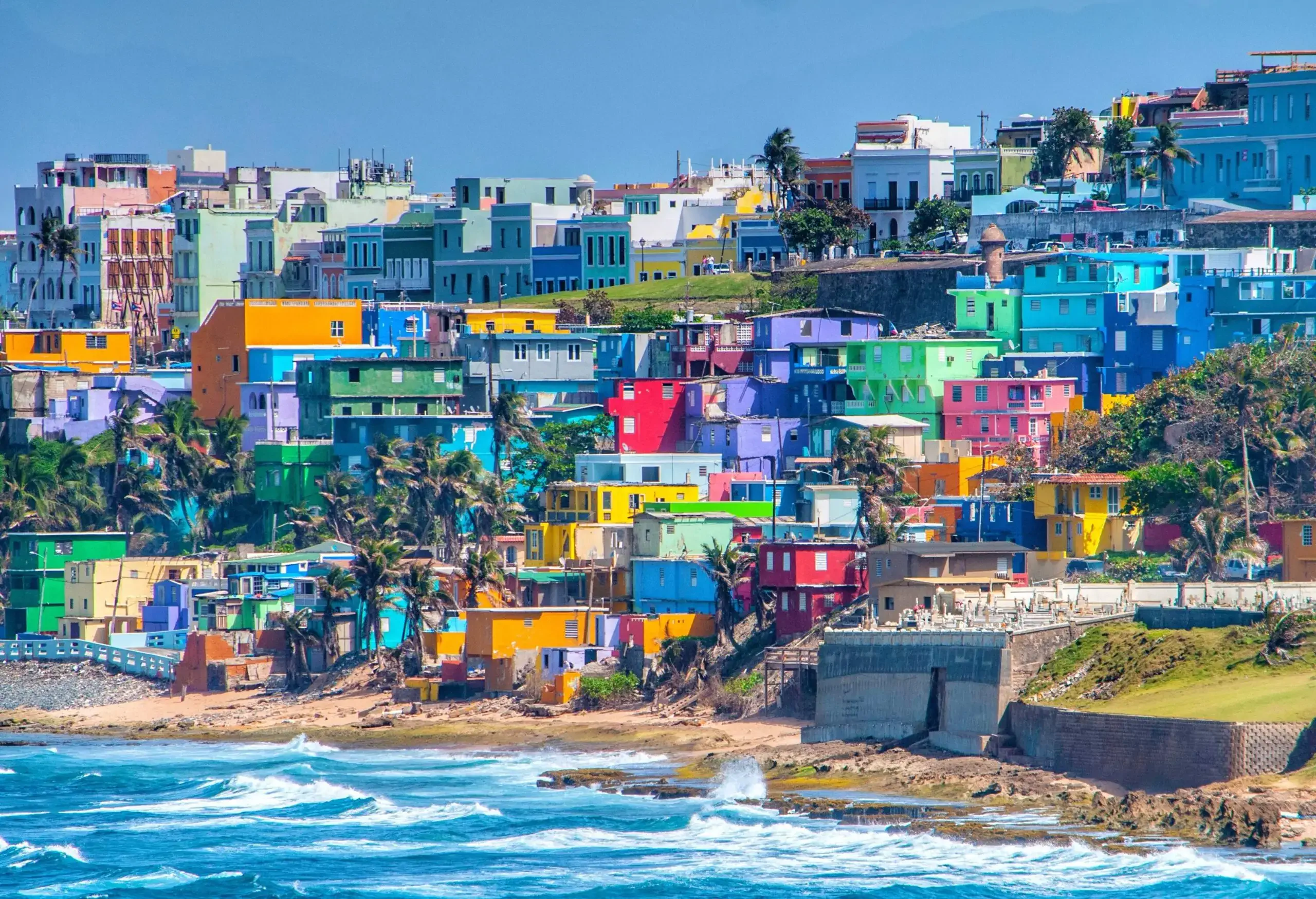
- [Old San Juan]: A UNESCO World Heritage site, [Old San Juan] is a must-visit. Wander through its colorful cobblestone streets, admire the Spanish colonial architecture, and explore impressive fortifications like [El Morro] (Castillo San Felipe del Morro) and [Castillo San Cristóbal]. Don’t miss the charming plazas, boutique shops, and delicious local eateries.
- [El Yunque National Forest]: The only tropical rainforest in the U.S. National Forest system, [El Yunque National Forest] is a paradise for nature lovers. Hike through lush trails to discover waterfalls, exotic flora and fauna, and breathtaking panoramic views. It’s an essential experience for anyone seeking nature and adventure.
- Bioluminescent Bays: [Puerto Rico] is home to three of the world’s five bioluminescent bays, where microorganisms light up the water at night. [Mosquito Bay] in [Vieques] is considered the brightest, while [Laguna Grande] in [Fajardo] and [La Parguera] in [Lajas] offer equally magical experiences with boat or kayak tours.
- Stunning Beaches: From the iconic crescent of [Flamenco Beach] on [Culebra] (often ranked among the world’s best) to the calm waters of [Luquillo Beach] and the lively shores of [Condado Beach], [Puerto Rico] offers an abundance of beautiful beaches for swimming, sunbathing, and water sports.
- Ponce: Explore the “Pearl of the South,” [Ponce], known for its unique architecture, including the iconic red-and-black Parque de Bombas firehouse, and its impressive art museum.
- Culinary Delights: [Puerto Rico]’s food scene is a major attraction. Indulge in traditional dishes like mofongo (fried plantains mashed with garlic and pork cracklings), lechón (roasted suckling pig), alcapurrias (fried fritters), and delicious seafood. Coffee culture is also strong, with excellent local brews. Food tours in [Old San Juan] are a fantastic way to experience this.
- Adventure Activities: Beyond hiking and swimming, [Puerto Rico] offers ziplining through rainforest canopies, surfing lessons in [Rincón], snorkeling and diving in vibrant coral reefs (especially around [Culebra] and [Vieques]), and kayaking.
Practicalities and Lifestyle Considerations
To ensure a smooth and enjoyable trip, keep these practical tips in mind:
- Currency & Banking: The official currency is the [U.S. Dollar]. ATMs are widely available, and credit cards are accepted at most establishments. Tipping customs are similar to the continental [United States].
- Language: Both [Spanish] and [English] are official languages. While [Spanish] is predominant, [English] is widely spoken, especially in tourist areas like [San Juan], [Condado], and major resorts. Knowing a few basic [Spanish] phrases can enhance your experience and is always appreciated.
- Safety: [Puerto Rico] is generally a safe destination for tourists. However, like any travel destination, it’s wise to take standard precautions: be aware of your surroundings, especially at night; avoid flashing valuables; and secure your belongings. Pay attention to local weather advisories, particularly during hurricane season (June to November).
- Transportation: Renting a car offers the most flexibility for exploring the island, especially outside of [San Juan]. Major car rental agencies are available at the airports. In [San Juan], taxis and ride-sharing services ([Uber], Lyft) are readily available. Public transportation is limited. Driving is on the right side of the road, and road signs are in [Spanish], but common symbols are universal.
- Connectivity: U.S. cell phone plans typically work seamlessly in [Puerto Rico] without roaming charges, treating it as a domestic call. Wi-Fi is common in hotels, cafes, and restaurants.
- Health & Wellness: [Puerto Rico] adheres to U.S. health standards. Tap water is generally safe to drink in most areas, but bottled water is always an option. Travel insurance is recommended for unexpected medical emergencies or trip cancellations. Mosquito-borne illnesses can occur, so take precautions like using insect repellent.
Conclusion
So, to reiterate, if you are a U.S. citizen, the answer to “Do you need a passport for [Puerto Rico]?” is a clear and convenient no. This unique status as a U.S. territory allows for hassle-free travel, requiring only a valid government-issued photo ID, such as a [Real ID]-compliant driver’s license. For non-U.S. citizens, a passport and potentially a visa are necessary, mirroring the entry requirements for the continental [United States].
[Puerto Rico] truly offers the best of both worlds: the ease of domestic travel with the exhilarating experience of a distinct international culture. From the ancient fortifications of [Old San Juan] to the verdant trails of [El Yunque National Forest], the enchanting glow of its bioluminescent bays, and the pristine sands of [Flamenco Beach], the island is a treasure trove of destinations, attractions, and experiences. Whether you’re seeking luxury resorts with top-tier amenities, charming boutique hotels, or adventurous eco-tourism, [Puerto Rico]’s accommodation options cater to every preference. Its rich local culture, tantalizing food scene, and vibrant lifestyle make it an irresistible choice for family trips, romantic getaways, or solo explorations.
With these travel tips and an understanding of the entry requirements, you’re now well-equipped to plan an unforgettable journey to [Puerto Rico]. Pack your bags, grab your ID, and prepare to immerse yourself in the warmth, rhythm, and beauty of this extraordinary [Caribbean] gem. Your adventure awaits!