
California, often celebrated as the land of innovation, stunning landscapes, and diverse lifestyles, beckons millions of travelers and aspiring residents each year. From the sun-drenched beaches of Southern California to the majestic redwoods of the north, and the vibrant urban centers of Los Angeles and San Francisco, the Golden State offers an unparalleled tapestry of experiences. For couples considering a move, a long-term stay, or even just a romantic getaway, understanding the legal nuances of relationships within this dynamic state can be surprisingly important, particularly when it comes to the concept of common law marriage.
The question of whether California recognizes common law marriage is one that frequently arises, perhaps due to popular culture, a misunderstanding of state laws, or the fact that some other United States jurisdictions do uphold such unions. For those planning a lifestyle change, navigating a new accommodation situation, or even just exploring the local culture, clarity on this legal point is essential. In short, the answer is a resounding no – California does not have common law marriage. However, the full explanation involves a deeper dive into the state’s legal history, its robust approach to formalizing relationships, and the alternatives available to couples who choose not to undergo a traditional marriage ceremony.
This understanding is not merely a dry legal fact; it has tangible implications for everything from property rights and healthcare decisions to estate planning and even how couples might approach booking long-term accommodations or planning their finances when establishing a life in a new California city like San Diego or Sacramento.
Understanding Common Law Marriage and California’s Stance
To fully grasp why California stands apart, it’s crucial to first define what common law marriage actually entails. Historically, a common law marriage is a legal framework where a couple is considered legally married without having gone through a formal civil or religious ceremony. The core requirements typically involve:
- Intent to Marry: Both parties must intend to be married and hold themselves out to the public as husband and wife (or spouses).
- Cohabitation: The couple must live together.
- Holding Out: They must present themselves to others (friends, family, community) as a married couple.
The concept of common law marriage originated in England centuries ago, born out of necessity in times when formal ceremonies were less accessible. It was a practical way to recognize enduring relationships. Many United States jurisdictions adopted this tradition, but over time, many states have abolished it in favor of more formal marriage procedures.
A Look Back: California’s Historical Context
California has a unique legal history, shaped by its time under Spanish and Mexican rule before becoming part of the United States following the Mexican-American War. While some of these historical legal systems had provisions that might vaguely resemble informal unions, California officially abolished common law marriage in 1895. Since then, the state has consistently required a formal marriage ceremony, whether civil or religious, followed by the registration of a marriage license, for a union to be recognized as legally binding.
This legislative decision was driven by a desire for clarity and certainty in marital status, aiming to prevent the complexities and disputes that often arose from trying to prove a common law marriage after the fact. The state’s focus shifted towards formal processes that provide clear documentation and a definitive date for the beginning of a legal marriage.
States That Still Recognize Common Law Marriage
While California does not, it’s worth noting that a handful of United States jurisdictions still do recognize common law marriage. These include Colorado, the District of Columbia, Iowa, Kansas, Montana, New Hampshire (for inheritance purposes only), Oklahoma, Rhode Island, South Carolina, Texas, and Utah, and also Pennsylvania for those formed prior to January 1, 2005.
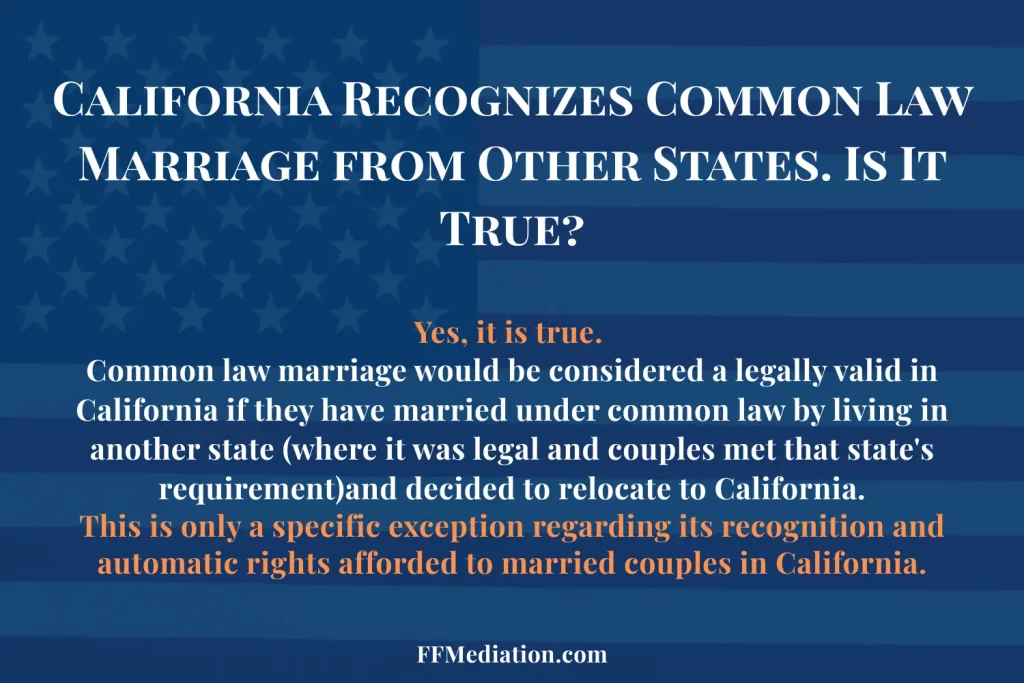
This means that if a couple establishes a valid common law marriage in one of these states and then moves to California, California will recognize that marriage as legal. This is due to the “Full Faith and Credit Clause” of the United States Constitution, which generally requires states to respect the “public acts, records, and judicial proceedings of every other state.” So, while you can’t form a common law marriage in California, one legally formed elsewhere will still hold water in the Golden State. This is an important distinction for couples undertaking interstate moves or those exploring new living arrangements.

The Legal Landscape of California Relationships
Since common law marriage is off the table, what legal structures does California offer for couples seeking to formalize their relationships without a traditional marriage? The state has been at the forefront of providing comprehensive alternatives, primarily through its Domestic Partnerships scheme.
Marriage in California: The Traditional Path
For most couples, the path to a legally recognized union in California involves obtaining a marriage license from a county clerk and then solemnizing the marriage through a ceremony. This ceremony can be performed by a judge, commissioner, clergy member, or even a friend or family member who has been deputized for a day. After the ceremony, the license is returned to the county recorder for official registration, making the marriage a matter of public record. This process ensures clarity and provides all the legal rights and responsibilities associated with marriage.
Domestic Partnerships: A Comprehensive Alternative
California has been a pioneer in offering Domestic Partnerships as a way for couples to obtain many of the same rights and responsibilities as married couples, without necessarily getting married. Initially designed primarily for same-sex couples before marriage equality became nationwide, California’s Domestic Partnerships are now available to:
- Same-sex couples.
- Opposite-sex couples where one or both partners are 62 years of age or older.
Registering a Domestic Partnership with the California Secretary of State grants couples nearly identical rights, protections, and benefits (and obligations) under state law as married couples. This includes aspects related to property, healthcare, parental rights, and inheritance. It’s a significant legal commitment, and dissolution requires a process similar to divorce. This option is particularly appealing for couples who wish to solidify their union legally but for personal, cultural, or financial reasons, prefer not to use the term “marriage.”
Implications for Couples Living in California
The absence of common law marriage and the availability of Domestic Partnerships have profound implications for couples living in California, impacting various aspects of their lifestyle, finances, and future planning. This is especially true for those moving to the state or considering a long-term stay, whether for work in Silicon Valley, leisure in Napa Valley, or exploring the vibrant arts scene in Hollywood.
Property and Financial Considerations
For unmarried couples in California, property acquired during the relationship is generally not considered community property. In a marriage or Domestic Partnership, assets acquired during the union are typically considered community property and are divided equally upon separation. For unmarried cohabitants, however, property ownership defaults to individual ownership or is determined by how titles are held (e.g., joint tenancy, tenants in common) and any written agreements between the parties.
This means that if an unmarried couple purchases a home in a scenic location like near Lake Tahoe or along the Pacific Coast Highway, without a formal legal agreement, disputes over ownership can arise if the relationship ends. The same applies to bank accounts, investments, and other significant assets. It highlights the importance of cohabitation agreements or property agreements for unmarried couples in California to protect their respective interests and avoid potential legal battles. These agreements can clarify intentions regarding property, finances, and support in case of separation.

Healthcare Decisions and Benefits
In California, a spouse or registered domestic partner typically has legal rights to make healthcare decisions for their partner if they are incapacitated. For unmarried couples, this is not automatic. Without a legal document like an Advance Healthcare Directive or a Power of Attorney for Healthcare, an unmarried partner may not have the authority to make critical medical decisions, access medical information, or even visit their partner in certain healthcare settings. This can be a major concern, particularly for those considering retirement in a California locale or embracing a long-term stay.
Similarly, many employer-sponsored health insurance plans and other benefits (like bereavement leave) are extended to spouses and registered domestic partners but often not to unmarried partners unless specifically stated by the employer.
Estate Planning and Inheritances
Without a formal marriage or Domestic Partnership, inheritance laws in California do not recognize unmarried partners as legal heirs. If one partner passes away without a will, their assets will be distributed according to the state’s intestacy laws, typically going to surviving children, parents, or siblings, but not to an unmarried partner. This can lead to significant hardship and unintended consequences, especially if the couple shared a home or other major assets.
For unmarried couples, comprehensive estate planning, including wills, trusts, and beneficiary designations on accounts, is absolutely critical to ensure that their wishes are honored and their partner is provided for.
Travel and Accommodation Considerations
While less about legal standing and more about practicalities, the distinction between married/registered partners and unmarried cohabitants can subtly influence travel and accommodation experiences. For instance, some travel insurance policies, hotel loyalty programs, or even certain visa applications might have different provisions or ease of access for legally recognized couples. While it rarely prevents couples from traveling together or booking a suite at a luxurious Beverly Hills resort, understanding these nuances can prevent minor inconveniences or provide peace of mind. For those on extended trips or considering long-term apartment rentals, clarity on relationship status can impact leases, background checks for co-signers, and other bureaucratic processes.
Navigating Legal Nuances: Tips for Residents and Visitors
For anyone considering a move to California, whether for a few months or a lifetime, understanding these relationship laws is a vital piece of the puzzle. It’s part of embracing the local culture and ensuring a smooth transition into the California lifestyle.
For Unmarried Couples Moving to California
- Consider a Domestic Partnership: If you desire the legal protections and benefits of marriage without undergoing a formal marriage ceremony, registering a Domestic Partnership in California is a robust option. Discuss if this aligns with your personal and financial goals.
- Draft Comprehensive Agreements: Regardless of whether you pursue a Domestic Partnership, unmarried couples should strongly consider drawing up legal documents such as:
- Cohabitation Agreements: Clearly outlining financial responsibilities, property ownership, and what happens in case of separation.
- Wills and Trusts: To ensure your assets are distributed according to your wishes.
- Advance Healthcare Directives and Powers of Attorney: Granting your partner the authority to make medical and financial decisions if you cannot.
- Seek Legal Advice: Consult with a California family law attorney. They can provide personalized advice based on your specific situation, helping you understand your rights and obligations and draft the necessary documents. This is a sound investment for peace of mind.
For Couples With an Out-of-State Common Law Marriage
If you have established a valid common law marriage in another state and are moving to California, rest assured that California will recognize your union. However, it’s still prudent to:
- Gather Documentation: Keep clear records of your common law marriage, such as joint tax returns, insurance policies, and any documents where you hold yourselves out as married in the state where the common law marriage was formed. This documentation will be vital if you ever need to prove your marital status in California (e.g., for divorce, inheritance, or benefits).
- Understand California Law: While your marriage is recognized, the specifics of how California law applies to married couples (e.g., community property laws, divorce procedures) will govern your relationship once you reside in the state. Familiarize yourself with these differences, and consult a California Family Code attorney if needed.
For Visitors and Short-Term Stays
For those simply visiting California for a vacation, exploring landmarks like the Golden Gate Bridge, experiencing the magic of Disneyland, or enjoying the scenic beauty of Yosemite National Park, the nuances of common law marriage won’t typically impact your travel experience. However, an awareness of the state’s legal framework can still be a fascinating aspect of understanding local culture and might inform long-term considerations if a short trip sparks the desire for a longer stay. For instance, knowing that formal recognition is key might influence how you think about extending your stay or investing in property.
Conclusion
The vibrant and forward-thinking state of California does not recognize common law marriage. Since 1895, the state has mandated formal procedures—a marriage license and ceremony—to establish a legal marital union. However, California offers robust alternatives like Domestic Partnerships that provide many of the same rights and responsibilities as marriage under state law.
For couples embarking on a new chapter in the Golden State, whether relocating to a bustling city like San Francisco or settling into a quieter life in Sonoma County, understanding these legal distinctions is crucial for smart lifestyle planning. From property ownership and healthcare directives to estate planning, proactive legal steps are essential for ensuring security and peace of mind. While California’s diverse attractions, from Universal Studios Hollywood to the tranquil beauty of Big Sur, offer countless experiences, navigating its legal landscape requires a clear understanding of its unique approach to relationships. By doing so, couples can fully embrace all the opportunities and adventures that California has to offer, confident in their shared future.