
While the golden state of California is renowned for its sun-drenched beaches, iconic landmarks, and vibrant culture, many travelers and even residents might wonder about its legal framework, particularly regarding common law marriage. Often, the allure of California lies in its diverse travel experiences, from exploring the bustling streets of Los Angeles to the serene beauty of Yosemite National Park. Amidst planning a luxurious stay at a resort in Napa Valley or a budget-friendly apartment in San Diego, understanding the legal nuances of relationships can be surprisingly relevant, especially for those considering long-term stays or even relocating. This article delves into whether California recognizes common law marriage and what that means for couples choosing to build their lives in this dynamic state.

Understanding Common Law Marriage
Common law marriage, also known as informal marriage, is a legal framework where a couple can be considered married without a formal ceremony or marriage license. This type of marriage is typically established when a couple lives together, presents themselves to the public as married, and intends to be married. Historically, common law marriage originated in England and was adopted by many United States jurisdictions. However, over time, most states have abolished it, opting for the more traditional route of civil or religious ceremonies.
The Status of Common Law Marriage in California
To directly answer the question: California does not currently recognize common law marriage. This means that simply living together for an extended period, even if you refer to each other as husband and wife or have children together, does not automatically create a legally recognized marriage in California. For a marriage to be valid in California, it must be solemnized, which involves obtaining a marriage license and having the ceremony performed by an authorized officiant.
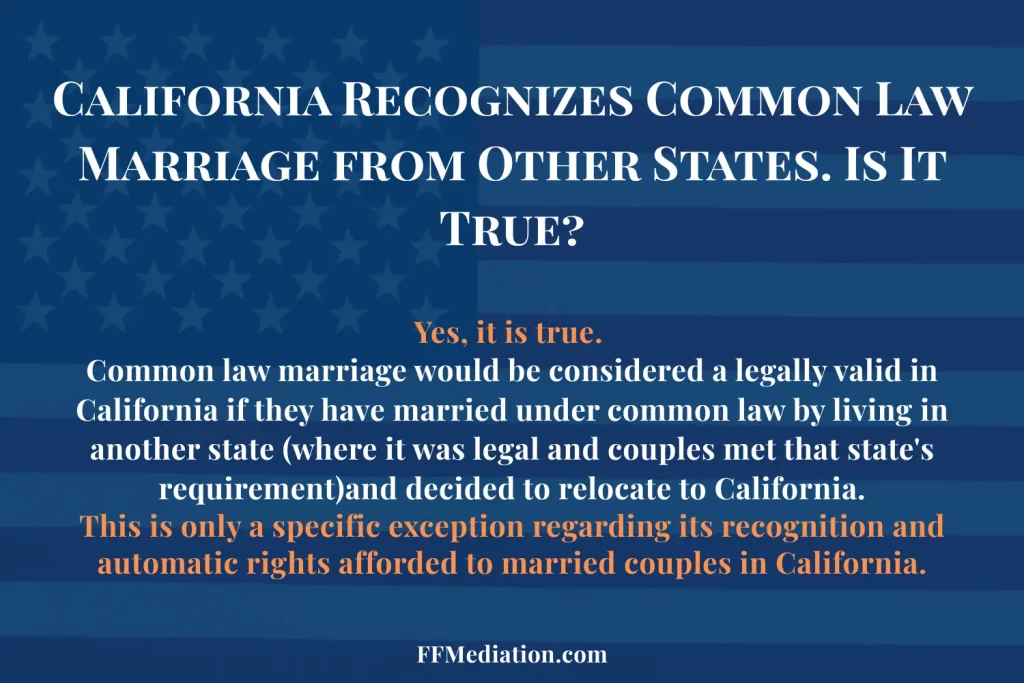
However, this doesn’t mean that relationships that resemble common law marriages have no legal standing whatsoever in California. The state does, however, recognize common law marriages that were legally established in other states or jurisdictions that do permit them.
Valid Marriages Established Elsewhere
If a couple legally entered into a common law marriage in a state that recognizes it (such as Colorado or Iowa, for example), and then moves to California, California will generally honor that marriage. This principle is based on the Full Faith and Credit Clause of the U.S. Constitution, which requires states to respect the public acts, records, and judicial proceedings of every other state. The crucial element here is that the common law marriage must have been validly established according to the laws of the state where it was created. Simply claiming to be married or living together in California without fulfilling the legal requirements of a formal marriage will not suffice.
Beyond Common Law: California’s Approach to Unmarried Couples
While California doesn’t offer common law marriage, it has developed legal doctrines to protect individuals in long-term, committed relationships that haven’t been formalized through marriage. These protections primarily fall under the umbrella of domestic partnerships and palimony lawsuits.
Domestic Partnerships: A Formal Alternative
California offers a legal status called a domestic partnership, which provides many of the same rights and responsibilities as marriage. This option is available to same-sex couples and opposite-sex couples where at least one partner is over the age of 62. To form a domestic partnership, couples must meet specific eligibility requirements and file a Declaration of Domestic Partnership with the California Secretary of State.
Benefits of Domestic Partnership
A registered domestic partnership grants partners access to a range of legal and financial benefits, mirroring those typically associated with marriage. These can include:
- Healthcare benefits: The ability to be covered under a partner’s health insurance plan.
- State tax benefits: While federal benefits are still evolving for domestic partners, state tax benefits are available.
- Property rights: Similar rights regarding community property and inheritance as married couples.
- Hospital visitation and decision-making: The right to make medical decisions for a partner.
- Dissolution proceedings: The process for ending a domestic partnership is similar to divorce, involving legal division of assets and debts.
For couples who are committed but perhaps hesitant about traditional marriage, or for those who qualify, a domestic partnership offers a recognized legal framework for their relationship within California. This is a crucial distinction for individuals planning extended stays or building a lifestyle in the state, providing a layer of legal security often associated with marriage.
Palimony: Unmarried Partner Support Claims
The term “palimony” is derived from “pal” and “alimony” and refers to financial support awarded to an unmarried partner after a relationship ends. In California, while not a codified law like marriage, courts have recognized claims for financial support based on express or implied agreements between unmarried cohabiting partners.
The Basis for Palimony Claims
A palimony claim typically arises when an unmarried couple lives together in a marriage-like relationship for a significant period, and one partner alleges that there was an agreement, either verbal or written, that financial support would be provided if the relationship ended. This agreement could be for ongoing support, a share of assets acquired during the relationship, or compensation for services rendered within the relationship (such as homemaking or childcare).
To succeed in a palimony lawsuit, the claimant generally needs to prove:
- A stable and long-term relationship: The couple must have cohabited and engaged in a relationship akin to marriage.
- An express or implied agreement: There must be evidence of an agreement for financial support or property sharing upon separation. This can be difficult to prove and often relies on circumstantial evidence, testimony, and documentation.
- Consideration: The agreement must have been based on something of value, such as companionship, domestic services, or the abandonment of career opportunities by one partner.
- Breach of agreement: The relationship ended, and the other partner failed to uphold their end of the agreement.
While palimony is not guaranteed and can be challenging to litigate, it represents California’s acknowledgment that long-term, committed relationships outside of formal marriage can have significant financial and personal implications that may warrant legal recourse. This offers a form of protection for individuals who may have based their lifestyle choices on the assumption of continued support from their partner, particularly if one partner has been financially dependent.
Navigating Relationships and Legalities in California
For travelers, tourists, and long-term residents of California, understanding the legal landscape of relationships is essential, especially when it comes to significant life decisions. Whether planning a destination wedding in San Francisco or a relaxed getaway to a villa in Malibu, the legal recognition of partnerships is a vital aspect of life planning.
Planning Your Life in the Golden State
For couples considering moving to California or establishing a more permanent residence, formalizing their relationship is the clearest path to legal recognition and protection.
- Marriage: The most straightforward way to ensure legal recognition of a relationship is through marriage. This involves obtaining a marriage license from a county clerk’s office and having a ceremony performed by an authorized individual. This provides a universally recognized legal status with comprehensive rights and protections at both the state and federal levels.
- Domestic Partnership: For those who qualify, registering as domestic partners offers a robust legal framework that mirrors many aspects of marriage. This is an excellent option for same-sex couples or older opposite-sex couples seeking formal recognition.
- Cohabitation Agreements: For unmarried couples who do not qualify for or choose not to enter into a domestic partnership, creating a cohabitation agreement can be highly beneficial. This legally binding contract outlines how assets and debts will be handled in the event of separation, ensuring clarity and preventing potential disputes. These agreements are particularly valuable for individuals with significant assets or complex financial arrangements.
Legal Considerations for Travelers
Even for short-term visitors, understanding the distinction is important. If a couple has a common law marriage legally recognized in their home state, they should carry documentation to prove its validity, should the need arise. However, it’s crucial to remember that California law itself will not create or recognize a common law marriage for couples residing or visiting within its borders.

Conclusion
In essence, while California’s vibrant lifestyle, from luxury hotel stays in Beverly Hills to exploring national parks like Redwood National Park, offers a myriad of experiences, its legal stance on relationships is clear. California does not recognize common law marriage. To be legally married in California, a formal ceremony and marriage license are required. However, the state does provide legal alternatives like domestic partnerships and avenues for financial support for unmarried partners through palimony claims, demonstrating a commitment to recognizing committed relationships in various forms. For anyone building a life or making significant commitments in the Golden State, understanding these legal distinctions is paramount for ensuring security and clarity.