
For decades, the image of Los Angeles has been inextricably linked with its sprawling freeway system, a metropolis where a car was not just a convenience, but an absolute necessity. The very notion of public transportation, particularly a subway, in a city synonymous with gridlock and car culture, often sparks disbelief or confusion among visitors and even some residents. Yet, the answer to the question, “Does Los Angeles have a subway?” is a resounding yes. More than just a simple underground train, LA boasts a surprisingly extensive and continuously expanding public rail network that is slowly but surely transforming the way people experience the City of Angels.
This comprehensive guide aims to demystify Los Angeles’ public transit system, highlight its incredible utility for travelers, and show how embracing the Metro can unlock a deeper, more authentic, and far less stressful exploration of one of the world’s most dynamic urban landscapes. From iconic landmarks to hidden gems, understanding the Metro allows visitors to navigate the city’s vastness with ease, offering a sustainable and often quicker alternative to bumper-to-bumper traffic. As the city evolves, so too does its infrastructure, making public transit an increasingly viable and attractive option for everything from luxury travel to budget-conscious adventures, family trips, and even business stays.
Navigating the Urban Sprawl: The Metro Rail System
The idea of a vast, car-centric city like Los Angeles having a significant public transport system often surprises newcomers. However, the Los Angeles County Metropolitan Transportation Authority, more commonly known as LA Metro, operates one of the busiest and most extensive public transportation networks in the United States. While the system includes a vast Metro Bus network, it is the Metro Rail and Metro Liner (bus rapid transit) lines that truly offer a subway-like experience, connecting key areas across the county.
A Network Beyond Freeways: Understanding the Metro Lines
The Metro Rail system is a multi-modal network comprising heavy rail (subway), light rail (surface trains), and bus rapid transit lines, each identified by a letter and distinct color. While many visitors equate “subway” with entirely underground lines, in Los Angeles, this specifically refers to the B Line (Red) and D Line (Purple), which primarily run underground through major arteries like Hollywood and Downtown LA.
- B Line (Red): This heavy rail line truly embodies the “subway” experience. It stretches from Union Station in Downtown LA, passing through Koreatown, and continuing all the way to North Hollywood. It’s a crucial artery for accessing Hollywood’s iconic attractions.
- D Line (Purple): Also a heavy rail subway, the Purple Line runs concurrently with the Red Line from Union Station to Wilshire/Western in Koreatown. Its ongoing extension is a major development for future transit in LA.
- A Line (Blue): As the oldest of the light rail lines, the Blue Line connects Downtown LA with Long Beach, offering a scenic journey that passes through industrial areas and residential neighborhoods.
- C Line (Green): This light rail line primarily runs along the median of the I-105 freeway in Southern Los Angeles County, providing access to areas near Los Angeles International Airport (LAX) via a shuttle connection.
- E Line (Expo): A hugely popular light rail line, the Expo Line links Downtown LA with Santa Monica, traversing through Exposition Park and the bustling westside. This line has been a game-changer for accessing the beach without a car.
- K Line (Crenshaw/LAX): The newest light rail line, the K Line currently serves communities like Crenshaw, Inglewood, and El Segundo, with a highly anticipated future connection to LAX.
Navigating the Metro Rail is surprisingly straightforward. Riders utilize a reloadable TAP card, which can be purchased at any Metro station vending machine or various retail outlets. Fares are affordable, especially compared to the cost of gas and parking in LA, and daily or weekly passes offer excellent value for tourists planning extensive use of the system. The Metro website and apps provide real-time updates and trip planners, making navigation even easier for those unfamiliar with the city.
Key Destinations Accessible by Rail
One of the greatest advantages of the LA Metro is its ability to connect travelers to a myriad of major attractions, landmarks, and vibrant neighborhoods, bypassing notorious traffic bottlenecks. This convenience significantly enhances the tourism experience, allowing for more time exploring and less time stuck in transit.
Starting with the B Line (Red):
- Hollywood Walk of Fame and TCL Chinese Theatre: Get off at the Hollywood/Highland station for immediate access to these iconic Hollywood landmarks, offering a classic LA experience without the parking woes.
- Universal Studios Hollywood: The Universal City/Studio City station is a short walk and shuttle ride away from this world-renowned theme park, making it an incredibly accessible attraction.
- NoHo Arts District: The North Hollywood station places you right in the heart of this thriving cultural hub, home to numerous theaters, art galleries, and cafes.
For attractions in Downtown LA, multiple lines converge at Union Station and other downtown stops, providing excellent accessibility:
- Grand Central Market and Angels Flight Railway: Easily reached from the Pershing Square station (B, D Lines) or Grand Park/Civic Center station (B, D Lines), these offer a taste of LA’s culinary scene and historic charm.
- Walt Disney Concert Hall, The Broad, and Museum of Contemporary Art (MOCA): All are within walking distance of the Civic Center/Grand Park station (B, D Lines), making Downtown LA a cultural hotspot accessible by subway.
- LA Live and Crypto.com Arena: The Pico station (A, E Lines) provides direct access to this entertainment complex, perfect for catching a game or concert.
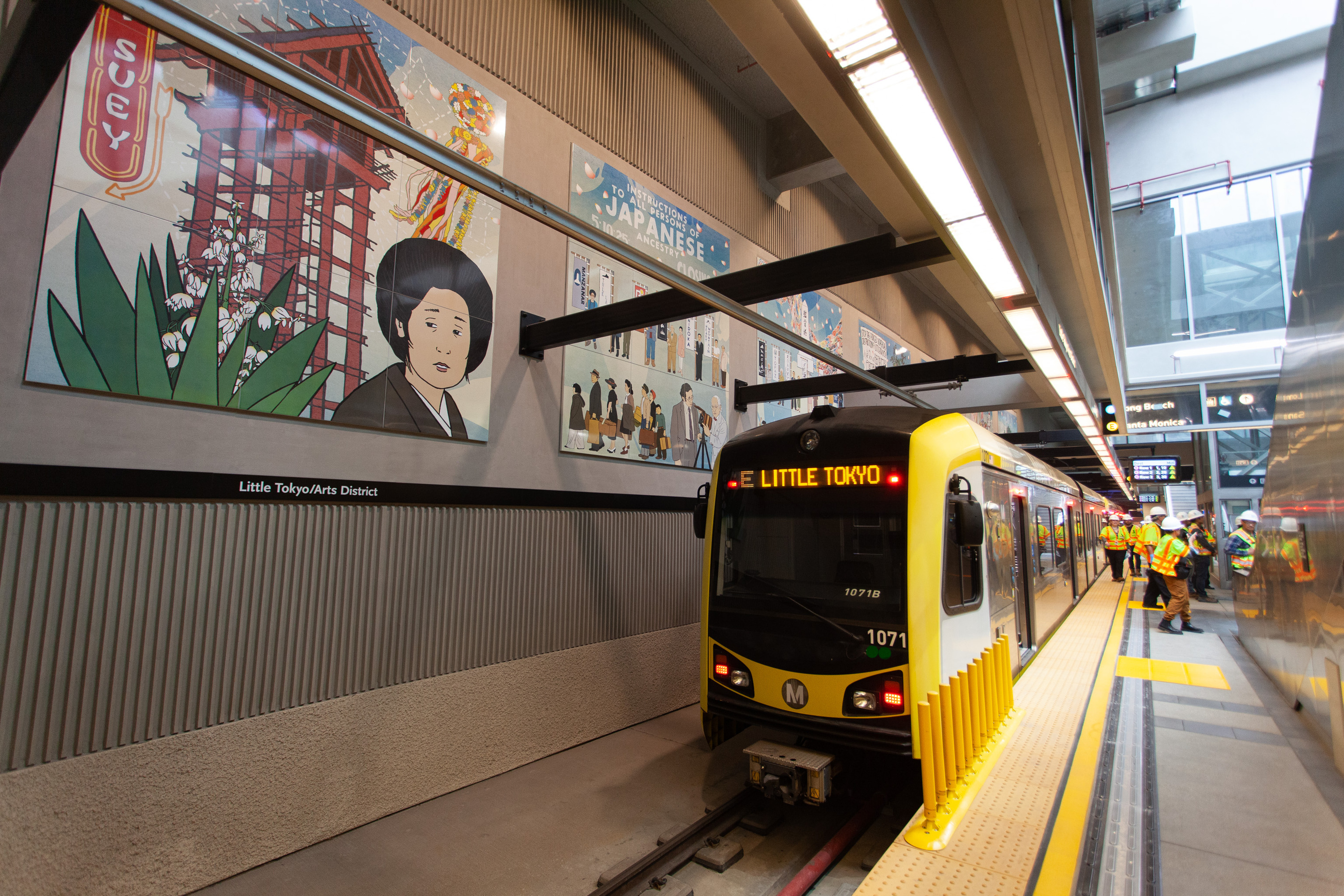
The E Line (Expo) opens up the Westside:
- Santa Monica Pier and Beaches: The Downtown Santa Monica station puts you just steps away from the iconic pier, the vibrant 3rd Street Promenade, and the beautiful Pacific Ocean.
- Exposition Park: The Expo Park/USC station delivers you to a cultural and educational nexus, home to the Natural History Museum of Los Angeles County, the California Science Center (including the Space Shuttle Endeavour), and the Rose Garden.
The A Line (Blue) takes you south:
- Long Beach: The Downtown Long Beach station provides easy access to the Aquarium of the Pacific, the historic Queen Mary, and the city’s waterfront attractions.
This extensive network means that many of LA’s must-see spots are within a convenient Metro ride, making it an ideal choice for both first-time visitors and seasoned explorers looking for a different perspective on the city.
Enhancing Your Los Angeles Experience: Beyond Driving
Embracing Los Angeles’ Metro system is more than just a logistical choice; it’s a lifestyle decision that profoundly impacts your travel experience. Beyond simply getting from point A to point B, choosing public transit unlocks a range of benefits that align perfectly with modern travel trends emphasizing sustainability, authenticity, and efficiency.
Lifestyle & Travel: The Benefits of Public Transit in LA
The decision to opt for public transit in a city traditionally dominated by cars offers numerous advantages for travelers, influencing budget, time, and overall experience.
- Saving Time and Money: Los Angeles traffic is legendary, and not in a good way. Navigating freeways can be a significant source of stress and wasted time. The Metro, especially the subway lines, offers a consistent and often faster travel time, bypassing surface street congestion. Furthermore, renting a car, paying for gas, and enduring exorbitant parking fees can quickly inflate a travel budget. Metro fares are significantly more economical, leaving more funds for dining, attractions, or accommodation upgrades. This makes it an excellent option for budget travelers, but also for luxury travelers who value efficiency and seamless movement.
- Eco-Friendly Travel: In an era of increasing environmental awareness, choosing public transit aligns with responsible tourism practices. Reducing your carbon footprint by opting for trains over individual car trips contributes to a more sustainable way of exploring destinations. This aspect appeals to a growing demographic of eco-conscious travelers who seek to minimize their impact while enjoying their journeys.
- Immersive Experience: Stepping out of a private car and onto public transport immediately immerses you in the local rhythm of Los Angeles. You’ll encounter diverse communities, hear different languages, and witness the everyday life of Angelenos. This offers a more authentic travel experience than being isolated within a vehicle, providing unique photo opportunities and interactions that enrich your journey. It allows for a deeper appreciation of LA’s vibrant local culture and diverse food scene.
- Stress-Free Exploration: Forget the anxiety of finding parking, deciphering complex traffic laws, or dealing with aggressive drivers. The Metro allows you to relax, enjoy the ride, and focus on your destination rather than the journey’s logistics. This is particularly beneficial for family trips, where minimizing stress contributes to a more enjoyable experience for everyone.
- Safety Tips for Travelers: While generally safe, like any major urban transit system, it’s wise to practice common sense precautions. Be aware of your surroundings, especially during off-peak hours or in less crowded stations. Keep valuables secure and visible. Travel in groups if possible, particularly at night. Stations and trains are generally well-lit and monitored, but vigilance is always recommended.
Seamless Connections: Hotels and Accommodation Near Metro Stations
For any traveler prioritizing convenience and efficient exploration, selecting accommodation close to a Metro station is a strategic move. The website’s focus on “Hotels,” “Accommodation,” and “Booking” directly ties into this aspect, as proximity to transit can be a key decision factor.
- Downtown LA: As the hub of the Metro system, Downtown LA offers an abundance of hotels ranging from luxury resorts to stylish boutique hotels and budget-friendly options, many within easy walking distance of a Metro station. Staying here provides unparalleled access to multiple lines, allowing quick travel to Hollywood, Santa Monica, and beyond.
- Hollywood: Hotels along the Hollywood Boulevard corridor are often steps away from the B Line (Red Line), making it incredibly convenient to explore the area’s iconic sights and reach other parts of the city. This area is perfect for those who want to immerse themselves in the entertainment capital.
- Koreatown: Located along both the B and D Lines, Koreatown offers a vibrant culinary scene and a unique cultural experience. Accommodation options here often provide great value and excellent transit access.
- North Hollywood: The terminus of the B Line, North Hollywood is a gateway to the San Fernando Valley and its burgeoning Arts District. It’s an ideal choice for travelers attending shows or exploring beyond the typical tourist circuit.
- Santa Monica: While typically pricier, staying near the E Line stations in Santa Monica allows direct access to the beaches and pedestrian areas, with convenient rail connections back to Downtown LA.
Whether seeking a plush suite, a family-friendly resort, or a budget apartment, looking for properties close to Metro stations significantly enhances the overall travel experience, simplifying daily commutes and maximizing exploration time. Websites specializing in accommodation booking and comparison often highlight properties with good public transport links, making it easier for travelers to plan their stay.
The Future of Urban Mobility in the City of Angels
Los Angeles’ commitment to public transportation is not a fleeting trend but a fundamental shift in urban planning, driven by the need to address traffic congestion, improve air quality, and prepare for future growth. The future vision for LA Metro is ambitious and transformative.
Ongoing Expansion and Vision
LA Metro is in a continuous state of expansion, with several major projects underway that promise to further integrate the rail network and make even more of Los Angeles accessible without a car. These projects are not just about adding new lines; they are about fundamentally reshaping the city’s relationship with public transit.
- Purple Line Extension (D Line): This is one of the most critical ongoing projects. Extending the D Line further west from Wilshire/Western to Beverly Hills, Century City, and ultimately Westwood/VA Medical Center (near UCLA) will unlock some of LA’s wealthiest and most popular districts. This “subway to the sea” (or nearly) will allow direct rail access to areas previously only reachable by car, significantly impacting tourism, local commerce, and lifestyle. Phases are opening incrementally, with the full extension anticipated before the 2028 Olympic Games.
- Eastside Transit Corridor (E Line Extension): Plans are also in motion to further extend the E Line into East Los Angeles, serving more communities and enhancing connectivity.
- Regional Connector Transit Project: This project, which recently opened, has been a game-changer. It physically connects the A (Blue) Line, E (Expo) Line, and L (Gold) Line through Downtown LA, allowing for seamless, one-seat rides across vastly different parts of the city. For example, you can now travel directly from Long Beach to Azusa or Santa Monica to Little Tokyo without transferring, dramatically improving travel times and convenience.
The long-term vision for LA Metro is to create a truly world-class transit network that can rival those of other global cities. This forward-thinking approach is especially critical as Los Angeles prepares to host the 2028 Olympic Games, for which an efficient public transport system will be paramount for moving athletes, spectators, and officials. These developments will not only benefit residents but will profoundly enhance the experience for tourists, opening up new destinations and making existing ones far more accessible.
Connecting to LAX: A Game-Changer
One of the most anticipated and significant developments for travelers is the direct rail connection to Los Angeles International Airport (LAX). For years, reaching LAX by public transport involved multiple transfers, often including a bus shuttle from the nearest Metro station. This is all changing with the Crenshaw/LAX Line (K Line) and the forthcoming Automated People Mover (APM).
The K Line already provides service to a station near the airport, but the APM will be a direct, automated transit system that connects the K Line and the C Line (Green) to all LAX terminals, rental car facilities, and parking structures. This means that travelers will soon be able to take a train directly to and from LAX, completely bypassing the infamous airport traffic and costly ride-shares or shuttle buses. This will be a transformative improvement for both arrivals and departures, offering unprecedented convenience and a stress-free start or end to any trip to Los Angeles. It will fundamentally alter the perception of LAX accessibility and significantly boost the appeal of using public transit for airport transfers, a crucial consideration for both business travelers and families.
Conclusion
So, does Los Angeles have a subway? Absolutely, and much more. The LA Metro Rail system is a dynamic, growing network that offers a compelling alternative to the traditional car-centric experience of the City of Angels. Far from being an afterthought, public transit is becoming an increasingly integral part of how both residents and visitors navigate this vast metropolis.
For travelers, embracing the Metro means more than just saving time and money; it means unlocking a richer, more immersive, and environmentally conscious way to explore Los Angeles’ diverse destinations, iconic landmarks, and vibrant local culture. From the bustling streets of Hollywood and the cultural hubs of Downtown LA to the relaxed beaches of Santa Monica, many of the city’s treasures are now directly accessible by rail.

As LA Metro continues its ambitious expansion, particularly with the direct LAX connection and the Purple Line Extension, the perception of Los Angeles as a purely car-dependent city is rapidly changing. We encourage you to ditch the rental car, grab a TAP card, and discover the surprising convenience and distinct charm of experiencing Los Angeles from its growing public transit system. It’s a journey that promises to redefine your understanding of this iconic global city, offering a fresh perspective on its incredible attractions and unique lifestyle.