
The Mississippi River, a titan of North American waterways, captivates with its sheer scale and historical significance. Flowing through the heart of the United States, it serves as a vital artery for commerce, a breathtaking natural wonder, and a cradle of diverse ecosystems and cultures. While its immense length and width are often subjects of awe, a question frequently arises for travelers, nature enthusiasts, and even locals alike: “How deep is the Mississippi River?” The answer, much like the river itself, is complex, dynamic, and depends on a variety of factors, ranging from its specific location to the ever-shifting geological forces at play.
Exploring the depths of the Mississippi River isn’t merely an academic exercise; it’s a journey into understanding its power, its ecological importance, and its role in shaping the landscapes and communities it touches. For those planning a visit to cities like New Orleans, St. Louis, or Memphis, or considering a cruise along its waters, knowing about its depth provides valuable context. It influences navigation, the types of vessels that can traverse it, and the very nature of the life it supports.
This article will delve into the various aspects that determine the Mississippi River’s depth, explore its average and extreme depths, and touch upon how these measurements impact travel, tourism, and the broader lifestyle associated with this magnificent river.
Understanding the Variables: What Dictates River Depth?
The depth of any river, and particularly one as vast as the Mississippi, is not a static measurement. It’s a constantly changing entity influenced by a confluence of natural and human-made factors. Understanding these variables is key to appreciating why a single definitive answer to “How deep is the Mississippi River?” is elusive.
Natural Influences on Depth
The fundamental geological makeup of the riverbed plays a primary role. The Mississippi River flows through a variety of terrains, from the rocky bluffs of its upper reaches to the soft alluvial plains of its lower basin. These different geological formations dictate how easily the river can erode and carve its channel, thus influencing its depth.
Sedimentation and Erosion: The Mississippi River is renowned for its sediment load. As water flows, it picks up and carries particles of sand, silt, and clay. In slower-moving sections or areas where the river widens, these sediments can be deposited, leading to shallower areas. Conversely, in faster-flowing sections, especially those with steeper gradients or constrictions, the river’s current can erode the riverbed, creating deeper channels. This constant interplay between erosion and deposition creates a dynamic profile for the river.
Seasonal Variations and Flow Rate: The volume of water flowing through the Mississippi River fluctuates significantly throughout the year. Heavy rainfall, snowmelt from its vast watershed, and the release of water from upstream dams can drastically increase the river’s flow rate and, consequently, its depth. During periods of high flow, the river can swell, inundating its banks and becoming deeper, especially in its main channel. Conversely, during droughts or drier seasons, the water level can recede, making certain areas shallower.
Tributaries and Confluences: The Mississippi River is fed by numerous tributaries, the most significant being the Missouri River and the Ohio River. When these large tributaries join the Mississippi, they contribute a massive volume of water, which can influence both the flow and the depth of the main stem. The confluence of the Ohio River with the Mississippi just south of Cairo, Illinois, is a particularly notable point where the Mississippi effectively doubles in volume, leading to a dramatic increase in depth.
Human Interventions and Their Impact
While nature is the primary architect of the Mississippi River’s depth, human activities have also played a significant role in shaping it, particularly for navigational purposes.
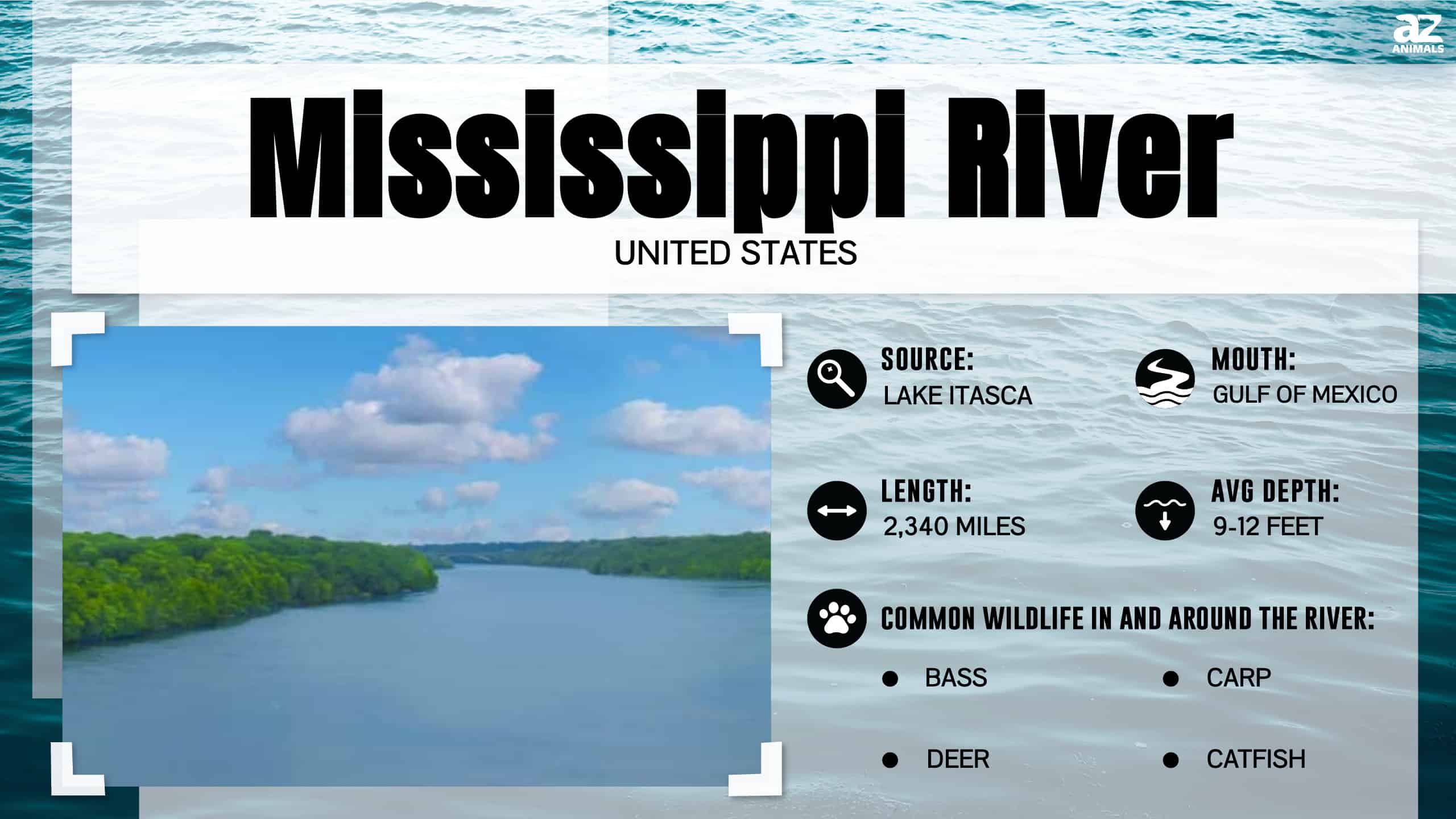
Navigation and Dredging: The Mississippi River is one of the most important commercial waterways in the United States. To accommodate large cargo ships, barges, and cruise liners, extensive dredging operations are undertaken by the U.S. Army Corps of Engineers. Dredging involves removing sediment and debris from the riverbed to maintain a minimum channel depth, ensuring safe passage for commercial traffic. This process artificially deepens certain sections of the river. The standard authorized depth for the main shipping channel is often maintained at around 9 feet, but this can vary, and deeper channels are created in key areas.
Dam Construction and Water Management: While the Mississippi River itself has fewer large dams compared to some of its tributaries like the Missouri River, water management structures and smaller dams on its tributaries do influence its overall flow and, by extension, its depth. The control of water release from reservoirs upstream can impact the downstream water levels and sediment transport.
Measuring the Depths: Average, Extreme, and Navigational Depths
When one asks “How deep is the Mississippi River?”, it’s important to consider the different ways its depth is measured and understood. There isn’t a single, constant figure, but rather a range and a series of important benchmarks.
Average Depth: A General Understanding
The average depth of the Mississippi River is a figure that offers a general sense of its scale, but it’s crucial to remember that this is an aggregate measurement across a vast and varied waterway. Across its entire 2,320-mile (3,734 km) journey from its source at Lake Itasca, Minnesota, to its mouth at the Gulf of Mexico, the Mississippi River is often cited as having an average depth of around 30 feet (9 meters).
However, this average can be misleading. The river’s character changes dramatically along its course.

- Upper Mississippi River: In its upper reaches, closer to Lake Itasca, the Mississippi River is a relatively narrow and shallow stream. Here, depths can be as little as a few feet, especially during dry periods. As it flows south, widening and collecting water from tributaries, its depth gradually increases. Sections near St. Paul, Minnesota, for instance, might average around 20-25 feet.
- Middle Mississippi River: As the river moves through states like Iowa, Illinois, and Missouri, its depth begins to increase more significantly. By the time it passes St. Louis, where the Missouri River merges with it, the Mississippi is considerably deeper. This is also where the influence of locks and dams, particularly on the Upper Mississippi, starts to play a more defined role in regulating depths.
- Lower Mississippi River: Below the confluence with the Ohio River near Cairo, Illinois, the Mississippi River is at its most powerful and voluminous. This is where the river truly earns its reputation as a mighty waterway. Depths in this section are significantly greater, often averaging 50 feet (15 meters) or more. This is the section most heavily utilized by large commercial vessels.
Extreme Depths: The Deepest Points
While an average provides a broad picture, the extreme depths offer insights into the river’s raw power and geological history. The Mississippi River possesses areas that are exceptionally deep.
One of the most commonly cited deep points is near Natchez, Mississippi. Here, the river has been measured at depths exceeding 200 feet (61 meters). This immense depth is a result of powerful currents eroding the riverbed over millennia, compounded by the river’s immense volume of water in this region. Other deep pockets can be found throughout the Lower Mississippi, often in areas where the river is actively undercutting its banks or where geological formations create scoured areas.
The sheer depth in these areas is astonishing and underscores the river’s capacity to shape the land. For context, 200 feet is roughly equivalent to the height of a 20-story building. These deep channels are crucial for navigation and are home to unique aquatic life adapted to these conditions.
Navigational Depths: The Lifeline of Commerce
For the shipping industry and cruise lines, navigational depth is the most critical measure. The U.S. Army Corps of Engineers works tirelessly to maintain a minimum navigable depth along the entire length of the Mississippi River.
- Authorized Channel Depth: The primary objective is to maintain an authorized depth of at least 9 feet (2.7 meters) throughout the navigation system, from Minneapolis, Minnesota, to South Pass, Louisiana, at the mouth of the river. This depth is sufficient for most barges carrying bulk commodities like grain, coal, and petroleum.
- Deeper Channels for Larger Vessels: In more critical shipping lanes and ports, particularly along the Lower Mississippi, the Corps aims for and achieves significantly greater depths. For instance, the channel in the Port of New Orleans is maintained at depths of 45 to 55 feet (13.7 to 16.8 meters) to accommodate the largest ocean-going vessels. This deep-water access is vital for international trade.
- Dynamic Maintenance: It’s important to reiterate that maintaining these navigational depths is an ongoing battle against natural sedimentation. Dredging is a continuous process, with crews working around the clock in many areas to clear channels and ensure uninterrupted flow of commerce.
Experiencing the Mississippi River: Travel, Tourism, and Lifestyle
The varying depths of the Mississippi River directly influence the types of travel, tourism, and lifestyle experiences available along its banks and on its waters. From luxury cruises to adventurous kayaking, the river’s dimensions shape its accessibility and appeal.
River Cruises and Boating Experiences
The Mississippi River is a quintessential destination for river cruising, offering a unique perspective on the heartland of America. Modern riverboats, like those operated by American Cruise Lines or Viking River Cruises, are designed to navigate the river’s depths.
- Comfort and Accessibility: These vessels are typically designed with shallow drafts relative to their size, allowing them to access a wide range of ports and historical towns. The depth of the main channel ensures that even larger cruise ships can navigate safely between major cities like St. Louis, Memphis, and New Orleans.
- Unique Perspectives: Passengers enjoy unparalleled views of the riverbanks, historic plantations, and the vibrant ecosystems. The ability to sail through diverse landscapes, from the wooded bluffs of the upper river to the vast delta region, is a testament to the river’s varied depths and navigability.
- Smaller Craft Adventures: For those seeking more intimate experiences, smaller boats, kayaks, and canoes are popular. In shallower sections of the Upper Mississippi, especially in backwaters and tributaries, these crafts allow for exploration of areas inaccessible to larger vessels. Paddling through tranquil marshes or navigating narrower channels offers a different, yet equally rewarding, perspective on the river’s natural beauty.
Landmarks and Natural Attractions
The Mississippi River is bordered by a wealth of natural wonders and historic landmarks, many of which are intrinsically linked to its presence and its depth.
- Riverfront Parks and Observation Points: Cities like St. Louis with its iconic Gateway Arch, Memphis with its Beale Street riverfront, and New Orleans with its historic French Quarter all boast prominent riverfronts. These areas often feature parks, promenades, and historical sites that offer stunning views of the river’s expanse. The apparent depth from these vantage points can be deceiving, hinting at the vastness below.
- Wildlife Refuges and Ecosystems: The Mississippi River basin is a critical flyway for migratory birds and a habitat for diverse aquatic life. Deep channels provide sanctuary for larger fish species, while shallower areas support diverse plant life and smaller fish that are the base of the food chain. National Wildlife Refuges, such as the Upper Mississippi River National Wildlife and Fish Refuge, protect these vital habitats, which are shaped by the river’s changing depths and flow patterns.
- Historical Significance: The river’s depth has played a crucial role in the history of the United States, facilitating exploration, trade, and settlement. From the voyages of Hernando de Soto to the steamboat era and the vital role it played during the Civil War, the Mississippi River has been a central stage. Understanding its depths is to understand its capacity to carry goods, armies, and people across vast distances.
Lifestyle and Cultural Connections
The Mississippi River is more than just a body of water; it’s a cultural force that shapes the lifestyle of the communities along its banks.
- River Cities and Their Identity: Towns and cities situated along the Mississippi often have a distinct identity tied to the river. Life in cities like Vicksburg, Mississippi, or Baton Rouge, Louisiana, is lived in rhythm with the river’s ebb and flow. This includes local festivals, seafood traditions influenced by the river’s bounty, and a deep respect for its power.
- Economic Importance: The river’s navigability, dependent on its maintained depths, is the lifeblood of many regional economies. Industries rely on its capacity to move goods efficiently and affordably. This economic engine influences employment, infrastructure development, and the overall prosperity of river towns.
- Recreational Pursuits: Beyond commercial activity, the river supports a vibrant recreational lifestyle. Fishing, boating, and simply enjoying the scenic beauty are popular pastimes. The accessibility of different sections for various activities is directly related to their depth and current. Whether it’s a family picnic by a placid, shallower stretch or a deep-sea fishing excursion out into the delta, the river’s dimensions cater to a broad spectrum of interests.
In conclusion, the question “How deep is the Mississippi River?” opens a fascinating exploration into hydrology, geography, engineering, and the very essence of this iconic waterway. From its humble beginnings to its mighty confluence with the Gulf of Mexico, the Mississippi River is a constantly evolving entity. Its depths, varying from mere feet to over 200 feet, are a testament to the dynamic forces of nature and the ingenuity of human intervention, all contributing to its enduring significance as a vital lifeline for commerce, nature, and culture in the United States.