
The story of Florida’s journey to statehood is a fascinating tapestry woven with threads of exploration, colonial rivalries, political maneuvering, and a significant act of American expansion. Far from a straightforward acquisition, Florida’s transition from a Spanish colony to an American state involved centuries of shifting allegendas and a pivotal moment that dramatically reshaped the territorial landscape of the United States. This narrative is deeply intertwined with the very essence of what makes Florida such a unique and beloved destination, a place where diverse cultures and rich histories converge, offering unparalleled experiences for every traveler. From its sun-drenched beaches to its vibrant cities, the allure of Florida today is, in part, a legacy of its complex past.
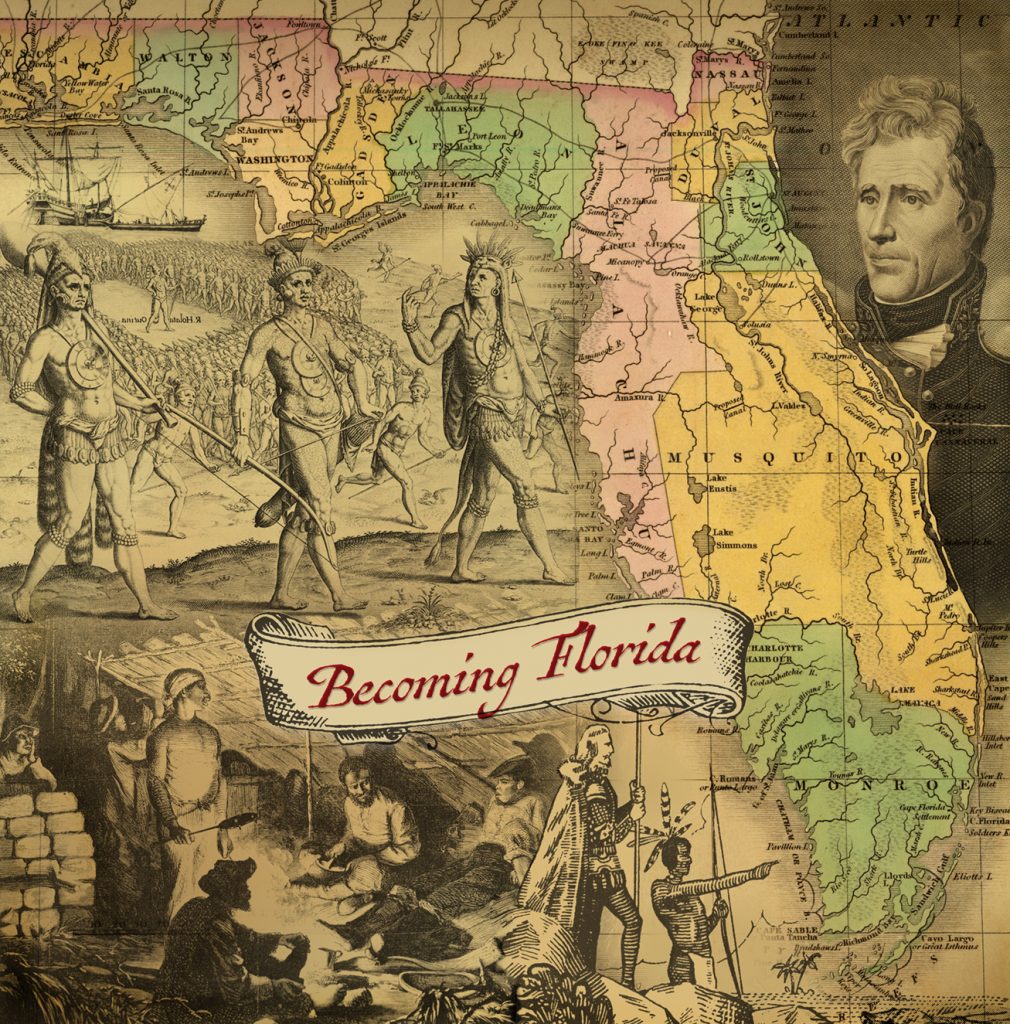
The Early Encounters and Colonial Claims
Long before it was a glimmer in the eye of American expansionists, Florida was a land of mystery and allure for European powers. The indigenous peoples, such as the Timucua and Calusa, had thrived in this abundant peninsula for millennia, developing sophisticated societies and intricate knowledge of the land and its waterways. Their story, though often tragically overshadowed, forms the foundational layer of Florida’s history, a history now explored through its many historical sites and cultural centers that draw visitors seeking an authentic connection to the region’s roots.
The arrival of Juan Ponce de León in 1513 marked the beginning of European claims. Spurred by tales of riches and the legendary Fountain of Youth, Ponce de León landed near present-day St. Augustine, planting the Spanish flag and claiming the territory for Spain. He named the land “La Florida” in honor of the Easter season, Pascua Florida, or the “Flowery Easter.” This initial exploration set the stage for a protracted period of Spanish influence, characterized by ambitious, albeit often unsuccessful, colonization efforts. The Spanish established missions, attempted to convert the indigenous populations, and faced the harsh realities of the unfamiliar environment.
However, Spain was not the only European power with designs on this strategic territory. The French, under René Goulaine de Laudonnière, established a Huguenot colony at Fort Caroline on the St. Johns River in 1564. This presence was a direct challenge to Spanish dominance and ignited a fierce rivalry. The Spanish, under Pedro Menéndez de Avilés, responded with swift and brutal force, attacking and destroying Fort Caroline in 1565. This act cemented Spanish control for centuries, leading to the establishment of St. Augustine as the oldest continuously inhabited European-established settlement in the United States. Today, St. Augustine’s historic district, with its cobblestone streets and colonial architecture, serves as a living testament to this era, attracting history buffs and casual tourists alike who come to wander through its charming lanes and soak in its past.
The Eras of Spanish and British Rule
For over two centuries, Florida remained under Spanish rule, a period marked by a steady, albeit slow, development. The Spanish focused on establishing a network of missions across the territory, aiming to spread Christianity and solidify their presence. These missions, while often imposing on the indigenous way of life, played a significant role in shaping the cultural and geographical landscape of early Florida. Visitors to Florida can still find echoes of this missionary period in place names and the enduring influence of Catholicism in certain regions.
Despite their long tenure, the Spanish faced continuous pressure. The English, expanding their colonial empire from the north, began to view Florida as a strategic buffer and a potential source of valuable resources. The rivalry intensified, culminating in the Seven Years’ War (also known as the French and Indian War). As a consequence of this global conflict, Great Britain gained control of East Florida and West Florida through the Treaty of Paris in 1763.
The British period, though shorter, brought about significant changes. The British encouraged settlement, offering land grants to attract new colonists. They also focused on developing the territory’s economy through agriculture, particularly sugar and indigo plantations, and logging. This era saw the establishment of new towns and a shift in the demographic makeup of Florida. The impact of British rule can be seen in the architectural styles of some of the older buildings and the enduring influence of the English language and legal systems. However, the British struggled to maintain control, particularly during the American Revolutionary War, as loyalist and patriot factions clashed within Florida. The Spanish, allied with the French and Americans, eventually recaptured West Florida in 1781.
The American Acquisition: A Strategic Masterstroke
The early 19th century witnessed a burgeoning interest from the newly formed United States in acquiring Florida. The territory, still largely under Spanish control, was seen as a potential haven for runaway slaves and a base for Native American raids into American territory, particularly from the Seminole tribes. Furthermore, Spanish control of East Florida and West Florida presented a significant impediment to American trade and expansion along the Gulf Coast.
The figure of Andrew Jackson looms large in this chapter of Florida’s history. As the military governor of the newly acquired Louisiana Territory and a celebrated general, Jackson was deeply concerned about the instability on Florida’s border. He launched unauthorized military incursions into Spanish Florida, most notably during the First Seminole War (1817-1818). His aggressive actions, including the execution of two British subjects whom he accused of inciting the Seminoles, sent shockwaves through both Madrid and Washington D.C.
While Jackson’s actions were controversial, they effectively demonstrated Spain’s inability to control its Florida territories and highlighted the vulnerability of the region. This created a diplomatic opening for the United States. Secretary of State John Quincy Adams, a shrewd negotiator, leveraged Jackson’s military pressure to his advantage. He engaged in intense negotiations with the Spanish minister, Luis de Onís y González-Vara.
The Adams-Onís Treaty: Ceding Florida to the U.S.
The culmination of these diplomatic efforts was the signing of the Adams-Onís Treaty in 1819, also known as the Transcontinental Treaty. This pivotal agreement saw Spain cede East Florida and West Florida to the United States. In return, the United States agreed to assume responsibility for claims by American citizens against the Spanish government, amounting to approximately $5 million. More importantly, the treaty established a clear boundary between American territory and New Spain (which later became Mexico), extending westward to the Pacific Ocean along the 42nd parallel.
The acquisition of Florida was a significant territorial gain for the United States, nearly doubling the size of the nation. It provided the burgeoning country with vast new lands for settlement and economic development, as well as strategic ports and access to the Gulf of Mexico. For Florida, it marked the end of over three centuries of Spanish and brief British rule, ushering in a new era under American governance. The transition, however, was not immediate. It took several years for the United States to fully establish its authority, organize its new territory, and address the complexities of land claims and governance.
From Territory to Statehood: The Path to Admission
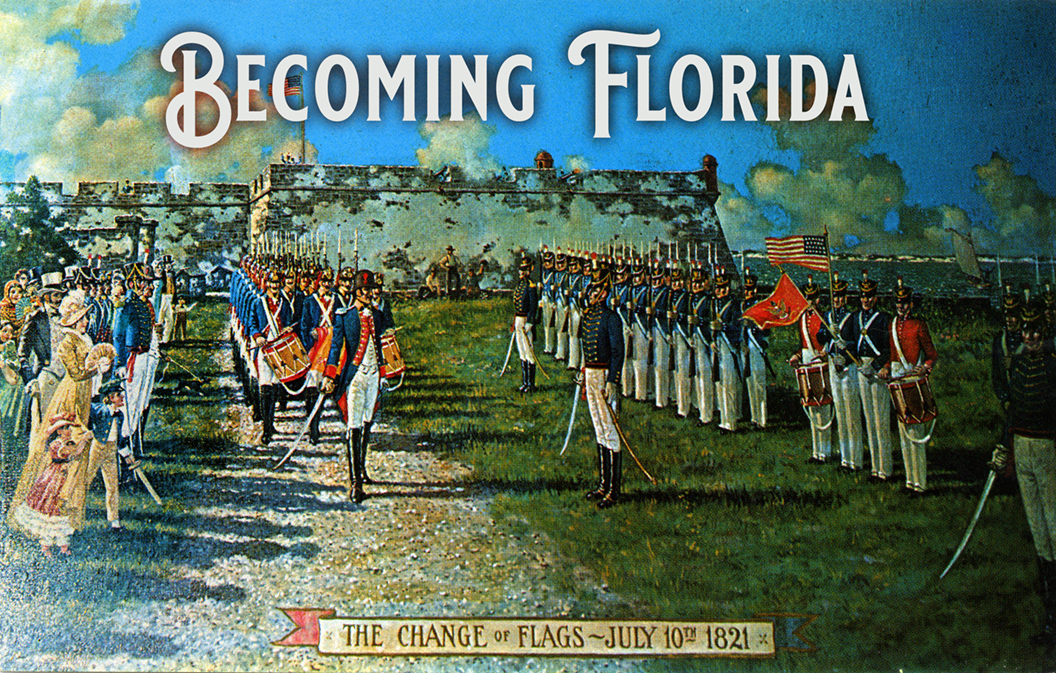
Following the ratification of the Adams-Onís Treaty in 1821, Florida became an organized territory of the United States. Andrew Jackson himself served as the first military governor of the new territory, tasked with establishing American administration and asserting federal authority. This period was characterized by rapid change and significant challenges. The Seminole people, resisting displacement and encroachment on their lands, continued to pose a formidable challenge, leading to the protracted and costly Second Seminole War (1835-1842). This conflict, one of the longest and most expensive wars fought by the United States against indigenous peoples, deeply impacted the development of Florida and left a lasting scar on its history.
The Road to the Thirty-Seventh Star
The process of becoming a state involved a period of territorial governance, during which Florida developed its own constitution and governmental structures. Settlers poured into the territory, drawn by the promise of fertile land for agriculture, particularly for cotton and sugar plantations. The development of infrastructure, such as roads and canals, began to connect the disparate regions of the peninsula. Cities like Tallahassee, established as the territorial capital in 1824, and Pensacola, a vital naval port, began to grow.
The debate over statehood was influenced by national political currents, particularly the growing sectional tensions over slavery. As a slave-holding territory, Florida’s admission as a state was closely watched by both pro-slavery and abolitionist factions in Congress. The balance of power between free and slave states was a constant concern in national politics, and Florida’s entry was carefully timed to maintain this equilibrium.
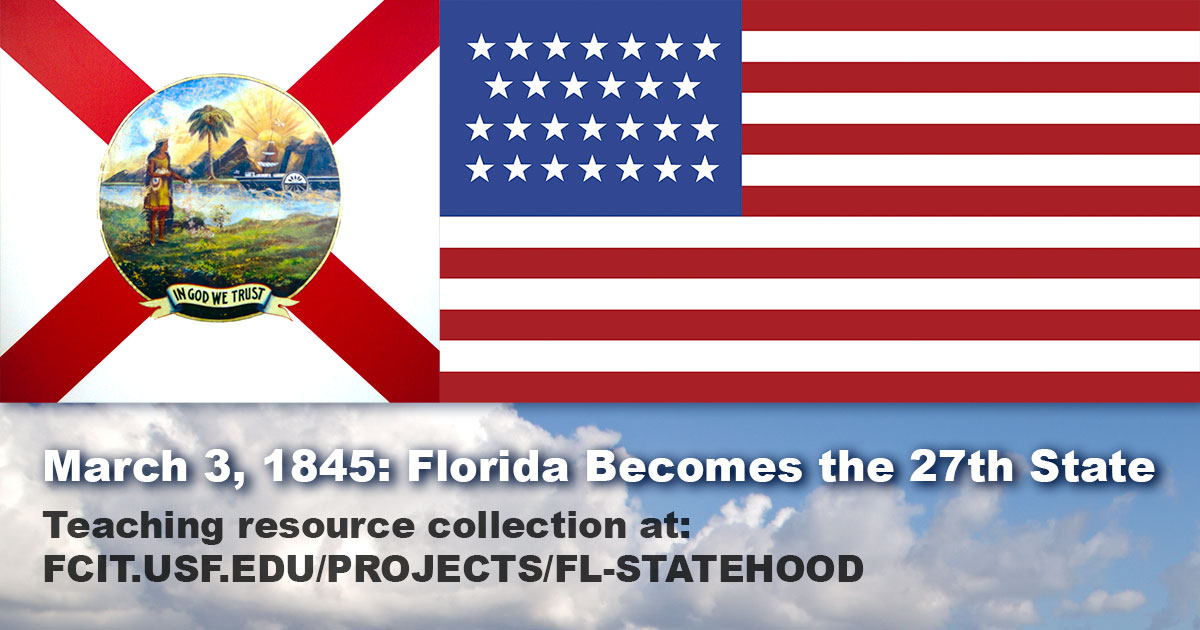
After years of petitioning and meeting the requirements for statehood, Florida was finally admitted to the Union as the 27th state on March 3, 1845. This marked the culmination of a long and often tumultuous journey, transforming Florida from a frontier territory into an integral part of the growing American nation. The legacy of this transition is evident today in Florida’s diverse population, its rich cultural heritage, and its enduring status as a premier destination for travelers seeking both relaxation and adventure, a place where the echoes of its past are woven into the vibrant tapestry of its present. From the historic charm of St. Augustine to the natural wonders of the Everglades, Florida’s story of becoming a state is a narrative of transformation that continues to shape its identity and captivate visitors from around the globe.