
The allure of Hawaii today is undeniable. With its pristine beaches, volcanic landscapes, vibrant culture, and world-class resorts, it stands as a premier destination for travelers seeking everything from serene relaxation to thrilling adventures. Yet, beneath the surface of this idyllic paradise lies a rich, complex history that profoundly shaped its identity, culminating in its status as the 50th state of the United States. Understanding this journey from an independent kingdom to a U.S. state not only enriches the travel experience but also offers a deeper appreciation for the unique Hawaiian culture, its people, and the very landmarks that draw millions each year. From ancient Polynesian navigators to pivotal geopolitical events, the path to statehood is a captivating narrative of exploration, foreign influence, and the unwavering spirit of an island nation. This article delves into the historical milestones that transformed the Hawaiian Islands from a sovereign monarchy to an integral part of the American fabric, exploring how these events continue to resonate in its modern tourism and lifestyle landscape.
From Ancient Kingdoms to Western Influence: The Seeds of Change
The story of Hawaii begins long before any Western ship graced its shores. Around 300 to 800 AD, skilled Polynesian voyagers embarked on remarkable journeys across the Pacific, guided by stars and currents, eventually discovering and settling the remote archipelago. These early inhabitants developed a sophisticated society, rich in oral traditions, intricate social structures, and a deep reverence for the land and sea. Each island, from the lush valleys of Kauai to the fiery peaks of Hawaii Island (often called the Big Island), developed its own distinct chiefdoms, leading to occasional inter-island conflicts but fostering unique cultural expressions.
By the late 18th century, a visionary leader named Kamehameha I emerged from the Big Island. Through strategic alliances and military prowess, he successfully united all the major Hawaiian Islands under a single rule, establishing the Kingdom of Hawaii in 1810. This pivotal achievement marked a new era of peace and stability, creating a unified identity that would endure for generations. Travelers today can immerse themselves in this ancient legacy by visiting sites like the Puuhonua o Honaunau National Historical Park on the Big Island, a sacred place of refuge that offers a glimpse into pre-contact Hawaiian life and law. The grandeur of the unified kingdom is also reflected in the architecture and stories preserved at Iolani Palace in Honolulu, the only official residence of royalty in the United States.
The Arrival of Outsiders and Growing Tensions
The year 1778 forever altered the course of Hawaiian history with the arrival of Captain James Cook, a British explorer. His accidental discovery of the islands opened the floodgates to Western contact, bringing with it both opportunities and unforeseen challenges. European and American traders, whalers, and missionaries soon followed, eager to exploit Hawaii’s strategic location in the Pacific. While these interactions introduced new technologies, goods, and a written language, they also brought devastating diseases that decimated the indigenous population and gradually eroded traditional Hawaiian societal structures.
The mid-19th century saw a significant increase in American influence, particularly through the burgeoning sugar industry. American businessmen, many of whom were descendants of early missionaries, established vast sugar plantations across islands like Maui and Oahu. These “Sugar Lords” wielded immense economic power, pressuring the Hawaiian monarchy to adopt policies favorable to their interests, including land ownership changes that often disadvantaged native Hawaiians. The demand for labor on these plantations also led to waves of immigration from Asia, introducing a multicultural mosaic that defines Hawaii’s diverse population and culinary scene today. Visitors to places like the Maui Tropical Plantation can still explore the legacy of these agricultural enterprises and taste local produce that reflects this history.
This era of increasing foreign dominance put immense strain on the sovereign Kingdom of Hawaii. Successive monarchs attempted to navigate the complex geopolitical landscape, balancing independence with the growing demands of foreign powers. However, the economic might and political ambitions of American expatriates would ultimately prove overwhelming.
The Overthrow of the Monarchy and Annexation
The late 19th century marked a tumultuous period for the Kingdom of Hawaii, as internal political strife combined with external pressures to push the monarchy toward its collapse. The year 1887 saw the forced adoption of the ” Bayonet Constitution,” an oppressive document imposed upon King Kalakaua by a group of non-native businessmen and citizens, severely limiting the monarch’s power and disenfranchising many native Hawaiians. This event clearly demonstrated the growing power of foreign interests within the kingdom.
When Queen Liliuokalani ascended to the throne in 1891, she bravely sought to restore power to the monarchy and the Hawaiian people by proposing a new constitution. Her efforts, however, were met with fierce resistance from the pro-American element, led by individuals such as Sanford B. Dole.
The Coup d’État and the Republic of Hawaii
In January 1893, a group of American and European businessmen, supported by the presence of U.S. Marines from the USS Boston, orchestrated a coup d’état. They overthrew Queen Liliuokalani and the Kingdom of Hawaii, establishing a provisional government. Despite widespread protests from native Hawaiians and an initial investigation by U.S. President Grover Cleveland that deemed the overthrow illegal, the provisional government solidified its control.
In 1894, the provisional government declared itself the Republic of Hawaii, with Sanford B. Dole as its first and only president. The primary goal of this new republic was annexation by the United States. However, strong anti-imperialist sentiment in the United States Congress initially prevented this from happening. The tide turned with the outbreak of the Spanish-American War in 1898. The strategic importance of Hawaii as a coaling station and naval base in the Pacific became undeniable. Fueled by this military necessity and the lobbying efforts of pro-annexation forces, the United States Congress passed a Joint Resolution annexing the Hawaiian Islands on July 7, 1898.
This annexation fundamentally altered the trajectory of Hawaii’s political and cultural landscape. The Iolani Palace, once a symbol of a thriving monarchy, became a poignant reminder of a lost sovereignty, yet it stands today as a testament to Hawaiian resilience and an essential landmark for understanding this pivotal period. Visitors to Honolulu can tour its majestic halls and learn firsthand about the final days of the monarchy, connecting deeply with the historical narrative.

The Road to Statehood: From Territory to the 50th Star
Following annexation, Hawaii officially became a U.S. territory in 1900, known as the Territory of Hawaii. For the next six decades, the islands would operate under federal governance, adapting to American laws and institutions while maintaining a distinct cultural identity. This period saw continued economic growth, particularly in the sugar and pineapple industries, and the gradual development of a nascent tourism sector. Early luxury hotels began to appear in areas like Waikiki Beach, attracting wealthy mainland Americans seeking exotic getaways.
The territory’s strategic military importance was dramatically underscored on December 7, 1941, with the devastating Attack on Pearl Harbor on Oahu. This surprise assault by the Imperial Japanese Navy plunged the United States into World War II and transformed Hawaii into a vital hub for military operations in the Pacific. Thousands of servicemen were stationed on the islands, further integrating Hawaii into the American defense system and fostering a stronger sense of connection with the mainland. Today, the Pearl Harbor National Memorial remains one of Hawaii’s most visited sites, a solemn and powerful reminder of this turning point in global history and Hawaii’s role within it.
The Push for Statehood
After World War II, the movement for Hawaiian statehood gained significant momentum. Supporters argued that Hawaii’s contributions during the war, its growing population, economic stability, and strong democratic institutions warranted full integration into the United States. Native Hawaiians and long-term residents, regardless of their ethnic background, increasingly desired the full voting rights and representation that statehood would provide.
However, the path was not without obstacles. Concerns about Hawaii’s non-contiguous location, its racially diverse population, and its historical lack of direct connection to the mainland fueled debates in Washington D.C.. Southern senators, in particular, feared that admitting a non-white majority state would disrupt the racial balance of power in Congress. Some also questioned the loyalty of its largely Asian-American population, a sentiment that lingered from the wartime internment policies. Despite these reservations, the strategic importance of Hawaii in the Cold War era and the successful admission of Alaska as the 49th state paved the way.
Becoming the Aloha State
In March 1959, the United States Congress passed the Hawaii Admission Act, which President Dwight D. Eisenhower signed into law. This act stipulated that the people of Hawaii must vote on whether to accept statehood. A plebiscite was held in June 1959, and the results were overwhelmingly in favor of statehood, with 94.3% of the votes cast supporting the measure. This decisive mandate from the people sealed Hawaii’s fate.
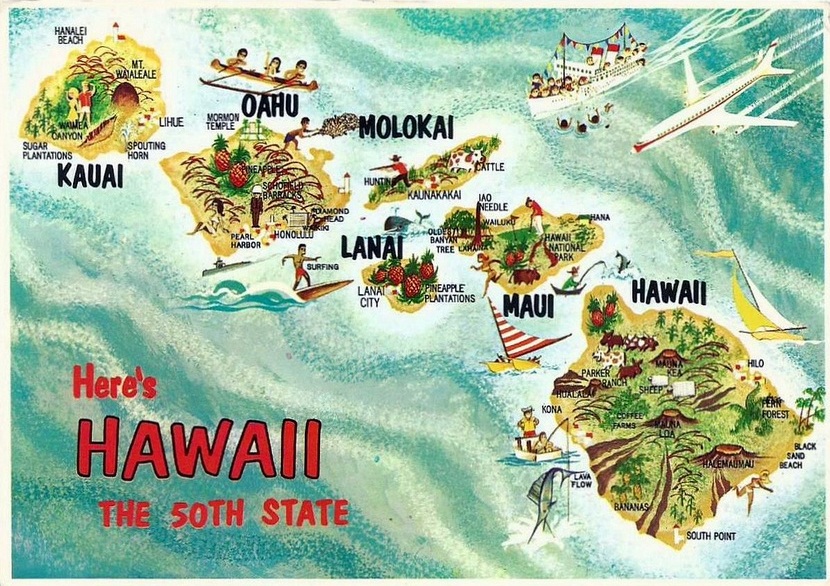
On August 21, 1959, Hawaii officially became the 50th state of the United States. The transition was met with celebrations across the islands, marking the culmination of decades of political struggle and evolution. This momentous event not only granted full political representation to its citizens but also supercharged Hawaii’s burgeoning tourism industry, transforming it into the global magnet for travelers it is today. The direct air routes, federal infrastructure development, and increased marketing as a domestic destination fundamentally changed Hawaii’s economic landscape, shifting it from an agricultural powerhouse to a premier travel and accommodation hub.
Hawaii’s Enduring Legacy: Culture, Tourism, and the Aloha Spirit
The journey of Hawaii from an independent kingdom to a U.S. state is a compelling narrative of resilience, adaptation, and cultural preservation. This rich history is not merely a collection of dates and events; it is the very foundation upon which modern Hawaii is built, influencing its unique appeal as a travel destination, its vibrant local culture, and the authentic experiences it offers.
Today, visitors to the Hawaiian Islands are immersed in a living history. Landmarks such as Iolani Palace and the Pearl Harbor National Memorial offer tangible connections to pivotal moments, while the traditions of hula, lei making, and luau feasts at places like the Polynesian Cultural Center reflect the enduring strength of indigenous Hawaiian identity. Even the language, once suppressed, is experiencing a resurgence, enriching the cultural fabric that tourists encounter.
The rise of Hawaii as a global tourism giant is directly linked to its statehood. Improved infrastructure, streamlined travel, and significant investment transformed destinations like Waikiki Beach into bustling centers of hospitality. From the luxurious suites of the Grand Wailea on Maui to the serene resorts along Kauai’s north shore, accommodation options abound, catering to every lifestyle and budget. The history of pineapple and sugar plantations, once the economic backbone, has now evolved into popular tourist attractions offering tours and tastings, showcasing the islands’ agricultural heritage.
Exploring Hawaii today means engaging with a destination shaped by centuries of migration, cultural exchange, and political transformation. The “aloha spirit”—a philosophy of kindness, harmony, humility, and patience—permeates daily life and interactions, reflecting the deep-seated values of its people who have navigated extraordinary changes. Whether hiking to the summit of Diamond Head, marveling at the active volcanoes in Hawaii Volcanoes National Park, or simply enjoying a sunset from a Waikiki balcony, every experience in Hawaii carries echoes of its unique past. The question of “How did Hawaii become a state?” is not just a historical inquiry; it’s an invitation to understand the profound layers of culture, resilience, and captivating beauty that make the Aloha State an unparalleled destination for travel, relaxation, and cultural immersion.
