
The allure of [Hawaii] is undeniable. With its pristine beaches, volcanic landscapes, and vibrant culture, it stands as a dream destination for travelers worldwide. From luxury resorts in [Waikiki] to the rugged trails of [Maui], the islands offer an unparalleled escape. Yet, beneath the surface of this tropical paradise lies a rich, complex, and often tumultuous history that shaped its destiny and ultimately led to its inclusion as the 50th state of the [United States]. Understanding how this remote Polynesian kingdom transformed into a U.S. territory and then a state is to delve into a compelling narrative of monarchy, geopolitical strategy, economic ambition, and cultural resilience. It’s a journey that explains why, today, [Hawaii] uniquely blends its indigenous heritage with American influence, offering visitors a distinctive cultural experience alongside its natural wonders.
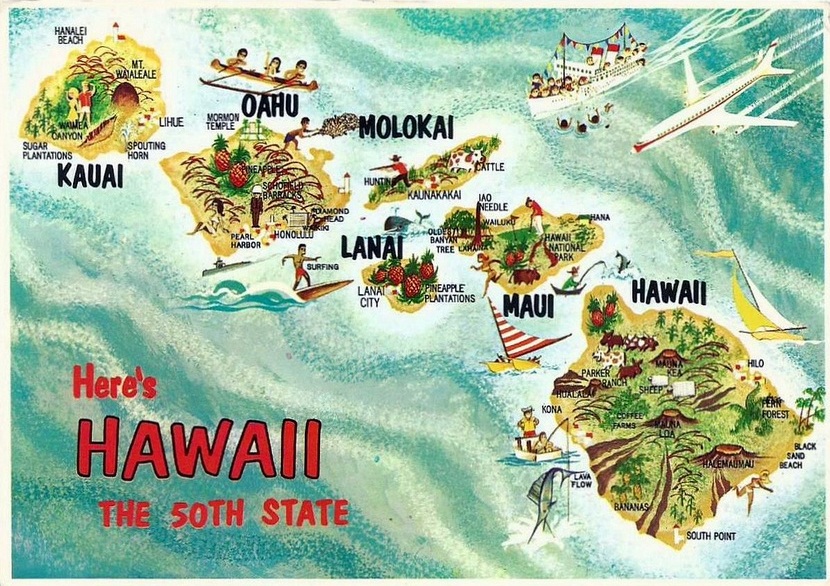
The Kingdom of Hawaii: A Sovereign Legacy
Before becoming a U.S. state, [Hawaii] was a sovereign kingdom, unified under a powerful monarchy that nurtured a unique Polynesian culture for centuries. This legacy is still palpable, impacting the local culture, cuisine, and many historical landmarks that travelers can explore today.
Early Polynesian Settlement and European Arrival
The Hawaiian Islands were first settled by Polynesians, who navigated vast stretches of the [Pacific Ocean] using sophisticated seafaring techniques. They established a complex society characterized by a strict social hierarchy, a rich oral tradition, and a deep spiritual connection to the land (ʻāina) and sea. For centuries, these islands thrived in isolation, developing unique customs, language, and artistic expressions. The arrival of [Captain James Cook] in 1778 marked a pivotal moment, introducing the islands to the Western world. Initially welcomed, Cook’s presence ultimately led to increased contact with European powers and, inevitably, a gradual erosion of traditional Hawaiian ways of life.
However, it was the strategic brilliance and formidable will of [King Kamehameha I] that truly shaped the early kingdom. Through a series of fierce battles and strategic alliances, he successfully unified the warring island chiefdoms, establishing the Kingdom of [Hawaii] in 1810. This was a monumental achievement, creating a stable political entity that would navigate the increasing pressures from foreign interests. [Kamehameha]’s reign laid the groundwork for a recognized monarchy that would stand for nearly a century, developing trade relations and establishing a system of governance that balanced traditional practices with emerging Western influences. Visitors to [Hawaii] can still trace his legacy, from statues honoring him to the historic sites on the [Big Island] that commemorate his unifying conquests.
A Monarchy Under Pressure
Following [Kamehameha I]’s death, his successors faced the monumental task of preserving Hawaiian sovereignty amidst escalating foreign encroachment. The 19th century saw an influx of American missionaries, whalers, and merchants, whose presence profoundly altered Hawaiian society and its economy. Missionaries introduced Christianity, literacy, and Western social customs, while merchants and whalers established lucrative trade routes, particularly in sandalwood and later, sugar. The fertile volcanic soil and tropical climate proved ideal for sugar cultivation, leading to the rapid growth of vast plantations, primarily owned by American and European businessmen.
These foreign entrepreneurs, often referred to as the “Big Five” (Castle & Cooke, Alexander & Baldwin, C. Brewer & Co., American Factors (Amfac), and Matson Navigation Company), gradually amassed significant economic and political power. They demanded labor, often importing workers from [China], [Japan], and the [Philippines], further diversifying Hawaii’s population and cultural landscape. This economic shift created a powerful, non-Hawaiian elite with vested interests in the islands’ governance. Hawaiian monarchs, such as [King Kalākaua] and later [Queen Liliʻuokalani], found themselves in an increasingly precarious position, attempting to modernize the kingdom and protect their people’s rights while grappling with the overwhelming economic and political might of foreign residents and the looming shadow of the [United States]. The tension between Hawaiian sovereignty and foreign economic ambition would ultimately prove to be the monarchy’s undoing.

The Path to Annexation: A Century of Intrigue
The story of Hawaii’s annexation is one of political maneuvering, economic leverage, and a forceful overthrow that irrevocably altered the course of Hawaiian history. It’s a narrative often debated, highlighting a complex interplay of international law, self-determination, and American expansionism.
The Bayonet Constitution and the End of Monarchy
A critical turning point arrived in 1887 with the infamous [Bayonet Constitution]. Forced upon [King Kalākaua] by an armed militia of white, non-native Hawaiian businessmen and politicians, this document drastically curtailed the monarch’s power and disenfranchised most native Hawaiians and Asian immigrants, while granting voting rights to wealthy non-citizens. The constitution effectively transferred real political power to the white elite, solidifying their control over the kingdom’s legislative and economic affairs. This event is a stark reminder of the fragile state of Hawaiian sovereignty and the immense pressure exerted by foreign residents.
The full weight of this power shift fell upon [Queen Liliʻuokalani], [King Kalākaua]’s sister and successor. A staunch nationalist and a brilliant composer (her most famous song, “Aloha ʻOe,” is tinged with melancholy and longing), she ascended to the throne in 1891 with a resolute desire to restore the monarchy’s authority and protect the rights of her people. Her attempts to promulgate a new constitution that would re-establish native Hawaiian voting rights and restore royal power were met with fierce opposition from the white, pro-annexation faction, known as the “Committee of Safety.” In January 1893, this group, with the tacit support and presence of U.S. Minister [John L. Stevens] and the landing of U.S. Marines from the USS Boston, orchestrated a coup d’état. [Queen Liliʻuokalani], facing overwhelming force and seeking to avoid bloodshed, reluctantly surrendered her throne under protest, appealing to the [United States] for justice. She famously stated, “I yield my authority until such time as the Government of the United States shall, upon the facts being presented to it, undo the action of its representative and reinstate me in the authority which I claim as the constitutional sovereign of the Hawaiian Islands.” This poignant moment is deeply etched into Hawaiian memory and is commemorated at sites like [Iolani Palace] in [Honolulu], the only official residence of royalty in the [United States].
The Republic of Hawaii
Following the overthrow of the monarchy, the Committee of Safety established a provisional government. Their ultimate goal was immediate annexation by the [United States]. However, their plans faced an unexpected obstacle in U.S. President [Grover Cleveland]. A staunch anti-imperialist, [Cleveland] was appalled by the circumstances of the coup and launched an investigation. He concluded that the overthrow was illegal and that [Minister Stevens] had acted improperly. [Cleveland] strongly advocated for the reinstatement of [Queen Liliʻuokalani], but the provisional government, led by [Sanford B. Dole] (a U.S.-born lawyer and pineapple entrepreneur), refused. They dug in their heels, defying [Cleveland]’s wishes.
Unable to legally restore the monarchy without resorting to military intervention (which [Cleveland] was unwilling to do), the provisional government declared the formation of the [Republic of Hawaii] in 1894, with [Sanford B. Dole] as its president. This republic, though internationally recognized, was largely controlled by the same white elite who had orchestrated the overthrow. It served as a holding pattern, maintaining stability and preparing the groundwork for future annexation, patiently waiting for a more sympathetic administration in [Washington D.C.]. During this period, the foundations of modern Hawaiian agriculture, particularly pineapples (as exemplified by the [Dole Plantation], now a popular tourist attraction), were further solidified, intertwining the islands’ economy ever more tightly with American markets.
Annexation and Statehood: The Final Chapters
The road from an independent republic to a U.S. territory and finally a state was protracted, influenced by global events and evolving American foreign policy.
The Spanish-American War and Strategic Importance
The geopolitical landscape shifted dramatically in 1898 with the outbreak of the [Spanish-American War]. This conflict, fought primarily in the [Caribbean] and the [Pacific Ocean], underscored the critical strategic importance of [Hawaii] as a coaling station and naval base for projection of American power. With U.S. forces engaged in the [Philippines] and other distant theaters, the need for a mid-Pacific hub became undeniable. Suddenly, the arguments for annexation, which had previously been met with skepticism by some, gained significant traction.
Pro-annexationists, including a new U.S. President, [William McKinley], seized this opportunity. They argued that [Hawaii] was vital for national security and its position would safeguard American interests in Asia. The debates in Congress were intense, with anti-imperialists still raising concerns about the moral implications of the overthrow and the question of self-determination for the Hawaiian people. However, the prevailing mood of Manifest Destiny and the perceived strategic necessity outweighed these objections.
The Newlands Resolution and Official Annexation
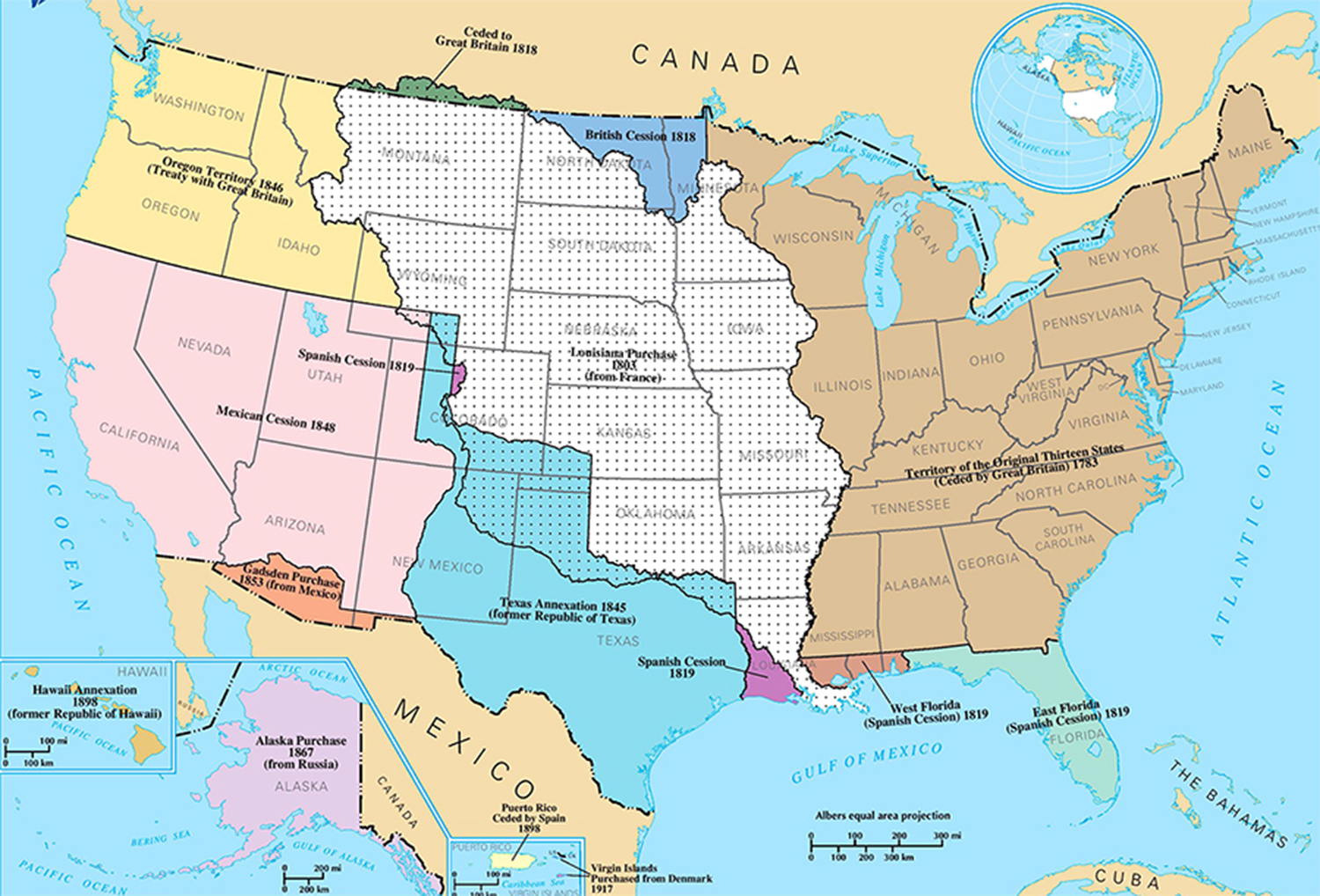
Unable to secure a two-thirds majority in the Senate for a formal treaty of annexation, proponents pursued an alternative legislative route: a joint resolution of Congress. This led to the passage of the [Newlands Resolution] on July 7, 1898. This resolution, which required only a simple majority in both the House and Senate, formally annexed the [Republic of Hawaii] to the [United States]. On August 12, 1898, a ceremony was held at [Iolani Palace] to signify the transfer of sovereignty. The Hawaiian flag was lowered, and the American flag was raised, officially establishing [Hawaii] as a [U.S. territory]. This act was deeply controversial, seen by many Native Hawaiians as an illegal seizure of their homeland, a sentiment that persists in certain circles today. The annexation effectively ended over a century of Hawaiian monarchy and independent governance, embedding the islands firmly within the American sphere.
The Journey to Statehood
For over sixty years, [Hawaii] existed as a [U.S. territory], a period marked by significant economic growth driven by the sugar and pineapple industries, the expansion of military presence (culminating in the tragic attack on [Pearl Harbor] during [World War II]), and a continued influx of diverse populations. The territorial period saw the development of infrastructure, the establishment of American legal and educational systems, and the gradual integration of Hawaiian residents into the American political framework, albeit without full voting representation in Congress.
The call for statehood grew steadily throughout the 20th century. Native Hawaiians, who had initially resisted annexation, eventually joined the movement for statehood, believing that full political representation within the [United States] would better serve their interests and help protect their culture. The pivotal moment arrived after [World War II], when the strategic importance of [Hawaii] and the loyalty of its diverse citizenry, demonstrated through military service, became undeniable. Finally, on August 21, 1959, after decades of advocacy and political debate, [Hawaii] was admitted to the Union as the 50th state. This historic event marked the culmination of a long and often contentious journey, transforming a secluded Pacific kingdom into an integral part of the American fabric.
Hawaii Today: A Legacy of History and Hospitality
Today, [Hawaii] stands as a testament to its vibrant past, a stunning confluence of Polynesian heritage, Asian influences, and American culture. Its unique history is not just confined to textbooks; it’s woven into the very fabric of the islands, enriching the experience for millions of visitors each year. Travel to [Hawaii] offers more than just breathtaking scenery; it provides an opportunity to engage with a living history.
For those interested in the royal past, a visit to [Iolani Palace] in [Honolulu] on the island of [Oahu] is essential. This magnificent structure, the only official residence of royalty in the [United States], allows visitors to step back in time and imagine the lives of [King Kalākaua] and [Queen Liliʻuokalani]. Nearby, the [Kamehameha Schools], though private, stand as a testament to the legacy of the monarchy’s vision for the education of its people. Iconic landmarks like the USS Arizona Memorial at [Pearl Harbor] offer a somber reminder of a more recent, yet equally significant, chapter in the islands’ history, drawing millions annually to reflect on [World War II]’s impact.
The islands also cater to every facet of the modern traveler’s lifestyle. Luxury seekers can indulge in world-class accommodations at resorts like the [Hilton Hawaiian Village Waikiki Beach Resort] or [The Royal Hawaiian, a Luxury Collection Resort, Waikiki], both offering unparalleled amenities and stunning views of [Waikiki Beach] and the iconic [Diamond Head]. Budget travelers can find comfortable apartments and guesthouses, while families enjoy resorts with extensive kids’ programs and activities. Beyond the beach, tourism thrives on local culture – attending a luau, learning to surf, or exploring the unique culinary scene that blends traditional Hawaiian ingredients with Asian and American influences. From the bustling streets of [Honolulu] to the serene beauty of [Kauai] or the volcanic grandeur of the [Big Island], each destination within [Hawaii] tells a part of its story.
Understanding how [Hawaii] became part of the [United States] adds a profound layer to any visit. It transforms a simple vacation into an immersive experience, allowing travelers to appreciate the resilience of the Hawaiian people, the beauty of their culture, and the intricate historical forces that shaped this unparalleled paradise. It’s a place where ancient traditions meet modern comforts, where the echoes of a kingdom coexist with the vibrancy of a state, offering a truly unique and unforgettable journey.
LifeOutOfTheBox is a participant in the Amazon Services LLC Associates Program, an affiliate advertising program designed to provide a means for sites to earn advertising fees by advertising and linking to Amazon.com. Amazon, the Amazon logo, AmazonSupply, and the AmazonSupply logo are trademarks of Amazon.com, Inc. or its affiliates. As an Amazon Associate we earn affiliate commissions from qualifying purchases.