
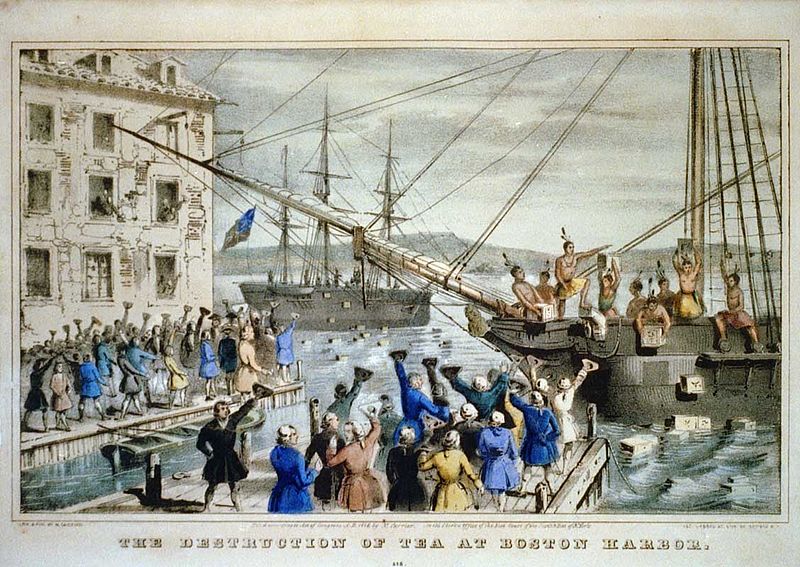
The crisp, cold night of December 16, 1773, witnessed an act of defiance that would forever etch itself into the annals of history. In the burgeoning colonial port of Boston, a group of American patriots, disguised as Mohawk Indians, boarded three ships – the Dartmouth, Eleanor, and Beaver – and systematically dumped 342 chests of tea, an estimated 92,000 pounds, into the frigid waters of Boston Harbor. This audacious act, famously known as the Boston Tea Party, was a powerful protest against British taxation without representation and the perceived monopoly of the East India Company. What unfolded next, across the Atlantic in Great Britain, was a reaction that not only shaped the destiny of thirteen colonies but also laid the groundwork for a new nation, influencing everything from global trade routes to the very idea of travel and self-governance. Understanding this pivotal moment offers not just historical insight, but a deeper appreciation for the landmarks and cultural experiences that define modern-day United States and its enduring ties to Great Britain.

The Immediate Outcry in Great Britain
News of the Boston Tea Party traveled slowly across the ocean, but when it arrived, it struck Great Britain with the force of a thunderclap. The reaction was swift, widespread, and overwhelmingly negative. Far from seeing it as a legitimate protest, the British government, British Parliament, and much of the public viewed the event as an intolerable act of vandalism, anarchy, and outright rebellion.
A Nation Stunned and Outraged
The immediate sentiment in London and across Great Britain was one of profound outrage and disbelief. The destruction of property belonging to the powerful East India Company was seen not just as an attack on a trading entity, but as a direct assault on the sovereignty and authority of the Crown. King George III himself was reportedly furious, viewing the incident as a blatant challenge to his rule and an insult to the British Empire. This perception was reinforced by the fact that the tea had been imported legally under the Tea Act of 1773, which actually lowered the price of tea for colonists, albeit while maintaining a small tax. From the British perspective, the colonists were ungrateful and lawless, rejecting a beneficial trade arrangement purely out of spite and a desire to undermine imperial control.
Members of British Parliament, particularly those with vested interests in the colonies or the East India Company, voiced their indignation. They argued that if such acts of defiance were allowed to go unpunished, it would set a dangerous precedent, unraveling the very fabric of colonial governance and making trade and travel within the empire fraught with uncertainty. For a maritime power like Great Britain, ensuring the safety of its shipping and the adherence to its laws across its vast dominions was paramount for economic prosperity and maintaining its global standing. The disruption in Boston was seen as a threat to this intricate network, affecting everything from trade routes to the reliability of colonial ports as destinations for British merchants and travelers.
Economic Ramifications and Political Pressure
Beyond the symbolic affront, the Boston Tea Party represented a significant financial blow. The destroyed tea was valued at approximately £10,000, an enormous sum at the time, equivalent to millions in today’s currency. This loss fell directly on the already struggling East India Company, a major player in British imperial trade and a cornerstone of the nation’s economy. The company was on the brink of bankruptcy, and the Tea Act had been designed, in part, to help bail it out by granting it a monopoly on tea sales in the colonies. The destruction of the tea thus exacerbated the company’s financial woes, creating immense pressure on the British Parliament to act decisively to protect British commercial interests and restore order.
Political figures like Prime Minister Lord North were under intense scrutiny. There was a prevailing sentiment that previous, more lenient responses to colonial protests, such as the repeal of the Stamp Act and most of the Townshend Acts, had only emboldened the colonists. Many in British Parliament believed that a strong, uncompromising response was necessary to reassert British authority and prevent further challenges. This meant moving beyond mere condemnation to implement punitive measures that would make an example of Boston and Massachusetts, thereby sending a clear message to all thirteen colonies. The debate wasn’t just about colonial rights; it was about the very structure of the empire, the efficacy of its laws, and the viability of British global trade and influence, themes that deeply resonate with understanding international tourism and lifestyle today.
Punitive Measures: The Intolerable Acts
In response to the Boston Tea Party, the British Parliament passed a series of harsh laws in 1774, which the colonists quickly dubbed the “Intolerable Acts.” From the British perspective, these were simply “Coercive Acts,” designed to restore order and ensure compliance. They represented a dramatic escalation of tensions and fundamentally altered the relationship between Great Britain and its American colonies.
Stripping Boston of its Autonomy
The Intolerable Acts comprised several distinct pieces of legislation, each targeting different aspects of colonial life and governance, primarily in Massachusetts.
-
Boston Port Act: This was arguably the most direct and economically devastating of the acts. It closed Boston Harbor to all commercial traffic until the colonists paid for the destroyed tea and the customs duties owed. The closure of the port, a vital artery for trade and travel, meant economic paralysis for the city. Ships couldn’t enter or leave, effectively cutting off Boston from the outside world and plunging its merchants, laborers, and residents into hardship. For a city that thrived on maritime commerce and was a gateway for goods and people, this was a crippling blow, impacting everything from the availability of basic necessities to the ability to conduct business and welcome travelers.
-
Massachusetts Government Act: This act drastically curtailed self-governance in Massachusetts. It revoked the colony’s charter, giving the royal governor, Thomas Gage, unprecedented power. Town meetings, a cornerstone of local democratic participation and community life, were severely restricted, and many appointed positions were now to be filled by the Crown rather than elected by the people. This was a direct attack on the colonial lifestyle and political autonomy, essentially turning Massachusetts into a military occupation zone under the direct control of London.
-
Administration of Justice Act: Also known as the “Murder Act” by colonists, this law allowed British officials accused of crimes in Massachusetts to be tried in Great Britain or another colony, rather than by local juries. The intent was to ensure fairer trials for British soldiers and officials, whom the British government believed would not receive justice from biased colonial juries. However, colonists saw this as granting impunity to British officials, further eroding their legal rights and fostering an environment of fear and injustice.
-
Quartering Act: While an earlier Quartering Act (1765) had already existed, the 1774 version expanded its scope. It required colonists to provide housing, provisions, and supplies for British troops. This meant soldiers could be quartered in private homes, barns, or vacant buildings without the owner’s consent. This imposition was not only an economic burden but also a deeply resented invasion of privacy and personal liberty, transforming colonial homes into involuntary accommodations for military forces.
-
Quebec Act: Although not directly related to punishing Massachusetts, the Quebec Act was passed around the same time and perceived by colonists as another “intolerable” measure. It expanded the territory of Quebec southward into the Ohio River Valley, recognized Roman Catholicism, and established a non-representative government for the province. American colonists, predominantly Protestant, saw this as a threat to their religious freedom and westward expansion, fearing that British favoritism towards Catholicism and authoritarian governance could spread to their own colonies. This act also showcased British strategic thinking regarding the broader North American continent, impacting future settlement and regional dynamics for generations of travelers.
Impact on Colonial Life and Travel
The Intolerable Acts had a profound and immediate impact on the daily lives of colonists, especially in Boston. The closure of the port brought the vibrant city to a standstill. Merchants faced ruin, sailors and dockworkers lost their livelihoods, and the entire economy faltered. Food and supplies became scarcer and more expensive, leading to widespread hardship. This situation made any form of non-essential travel or tourism to Boston impossible, transforming what was once a bustling port city into a place of deprivation and military occupation.
The presence of increased British troops, necessitated by the Quartering Act and the need to enforce the new laws, heightened tensions. The sense of being under military occupation created an atmosphere of fear and resentment. For residents, freedom of movement was curtailed, and public gatherings were viewed with suspicion. The acts fundamentally changed the lifestyle of Massachusetts colonists, forcing them to adapt to severe restrictions on their personal freedoms, economic activities, and political participation. These measures, far from achieving their intended goal of isolating and punishing Boston, inadvertently ignited a wider colonial resistance.
Escalation to Conflict: The Road to Revolution
The British reaction to the Boston Tea Party, particularly the Intolerable Acts, proved to be a catastrophic miscalculation. What Great Britain intended as a means to assert control and restore order instead served as a powerful unifying force among the colonies, pushing them further down the path toward armed conflict and independence.
Unintended Consequences and Colonial Unity
Instead of isolating Massachusetts, the Intolerable Acts rallied the other colonies to its defense. The severity of the British measures was widely perceived as a direct threat to the liberties of all colonies, not just Massachusetts. If Boston could be punished so harshly for a protest, what was to stop the same fate from befalling Philadelphia, New York, or Charleston? This shared fear and outrage spurred unprecedented cooperation.
Across the colonies, committees of correspondence, which had been established to facilitate communication and coordinate resistance, swung into full action. They called for a boycott of British goods and organized aid for the beleaguered citizens of Boston, sending food, supplies, and money. This outpouring of solidarity demonstrated a nascent sense of American identity, transcending individual colonial loyalties. The Intolerable Acts were the final straw for many, transforming a localized protest into a continental movement for change.
The most significant immediate response was the convening of the First Continental Congress in September 1774 in Philadelphia. Delegates from twelve of the thirteen colonies (Georgia did not send representatives initially) gathered to discuss a unified response to British policies. This landmark assembly debated grievances, asserted colonial rights, and established the Continental Association, which called for a complete boycott of British goods and an end to exports to Great Britain if the acts were not repealed. This collective action showcased a powerful shift from petitioning to organized resistance, fundamentally altering the political landscape and the framework for inter-colonial “travel” and communication.
The Spark of War
The British response to the First Continental Congress was dismissive. They viewed the colonial assemblies as rebellious bodies without legitimate authority. Far from backing down, Great Britain began to reinforce its military presence in the colonies, particularly around Boston, where General Thomas Gage, the military governor of Massachusetts, sought to enforce royal authority and confiscate colonial arms.
This escalating military buildup inevitably led to confrontation. On April 19, 1775, British troops marched from Boston to Lexington and Concord, aiming to seize colonial military supplies and capture rebel leaders. What transpired that day, the Battles of Lexington and Concord, marked the true beginning of the American Revolutionary War. The “shot heard ’round the world” at Lexington Green ignited a conflict that would last for eight long years, ultimately leading to the birth of the United States as an independent nation. The British reaction to the Boston Tea Party had, through a series of increasingly harsh measures, transformed a colonial protest into a full-blown revolution.
Legacy and Modern-Day Echoes
The British reaction to the Boston Tea Party left an indelible mark on history, forever shaping the trajectory of both the United States and Great Britain. Today, the legacy of these events provides rich experiences for travelers seeking to immerse themselves in pivotal moments of global history.
Revisiting Historical Sites
For modern travelers, the sites connected to the Boston Tea Party and the subsequent British reaction offer powerful historical insights. Boston itself is a living museum of the American Revolution, with numerous landmarks easily accessible. The Freedom Trail provides a walking tour that connects many of these crucial locations. Visitors can stand in the very spot where colonists debated their grievances at the Old South Meeting House, or imagine the heated discussions that occurred in Faneuil Hall. The Boston Tea Party Ships & Museum offers an interactive, immersive experience, allowing visitors to board replicas of the tea ships and even throw tea chests overboard, bringing history to life. Nearby, the Paul Revere House stands as a testament to the individuals who played crucial roles in the escalating conflict.
Venturing beyond Boston, travelers can visit Lexington Green and Concord to experience the battlefields where the first shots of the revolution were fired. These sites, preserved and maintained, allow visitors to reflect on the immense courage and sacrifice of those who fought for independence. The historical significance of these destinations makes them essential stops for anyone interested in American history, offering a tangible connection to the past. Many hotels in Boston and its surrounding areas cater specifically to history enthusiasts, offering packages that include guided tours and easy access to these iconic landmarks, blending comfortable accommodation with deep historical immersion.

Understanding Global History Through Travel
Visiting these historical sites is more than just a sightseeing trip; it’s an opportunity to understand the profound impact of political decisions and popular resistance on the course of nations. The British reaction to the Boston Tea Party demonstrates how misjudgment and an inflexible approach to governance can inadvertently fuel the very rebellion they seek to suppress. For those interested in political science, international relations, or simply the evolution of human societies, these events offer invaluable lessons.
Travel to these destinations encourages a deeper understanding of “local culture” born from conflict and revolutionary ideals. It highlights how events in one part of the world (a colonial port in North America) can trigger far-reaching consequences in another (Great Britain), ultimately reshaping global political landscapes and fostering new travel patterns and economic relationships. The legacy of the Boston Tea Party is a testament to the power of civil disobedience and the enduring human quest for freedom and self-determination. It underscores how historical events lay the foundation for modern national identities, tourism narratives, and the very concept of a sovereign state, making these destinations vital for both education and enriching lifestyle experiences.
The British reaction to the Boston Tea Party was a pivotal moment, transforming a bold act of colonial defiance into the undeniable catalyst for the American Revolutionary War. What began as outrage in Great Britain manifested in punitive measures, which in turn ignited an unparalleled unity among the American colonies. This chain of events not only forged a new nation but also created a historical narrative that continues to draw travelers from around the globe. By exploring the iconic landmarks and engaging with the stories of this revolutionary era, we gain a deeper appreciation for the complex interplay of power, protest, and patriotism that shaped the world we inhabit today, making these sites essential destinations for any historically-minded explorer.