
The Hawaiian Islands, a breathtaking archipelago in the middle of the vast Pacific Ocean, are a testament to the incredible power of geological forces. These islands, a dream destination for travelers and a sanctuary for nature lovers, didn’t just appear; they were meticulously crafted over millions of years by volcanic activity deep beneath the ocean’s surface. Understanding their formation unlocks a deeper appreciation for the stunning landscapes, vibrant ecosystems, and unique culture that define this Polynesian paradise.
The story of Hawaii’s creation is a classic example of a geological phenomenon known as a “hotspot.” Unlike islands formed at tectonic plate boundaries, like the fiery volcanoes of the Ring of Fire where plates collide or pull apart, Hawaii’s origin lies in a stationary plume of molten rock rising from the Earth’s mantle.

The Birth of the Islands: A Fiery Foundation
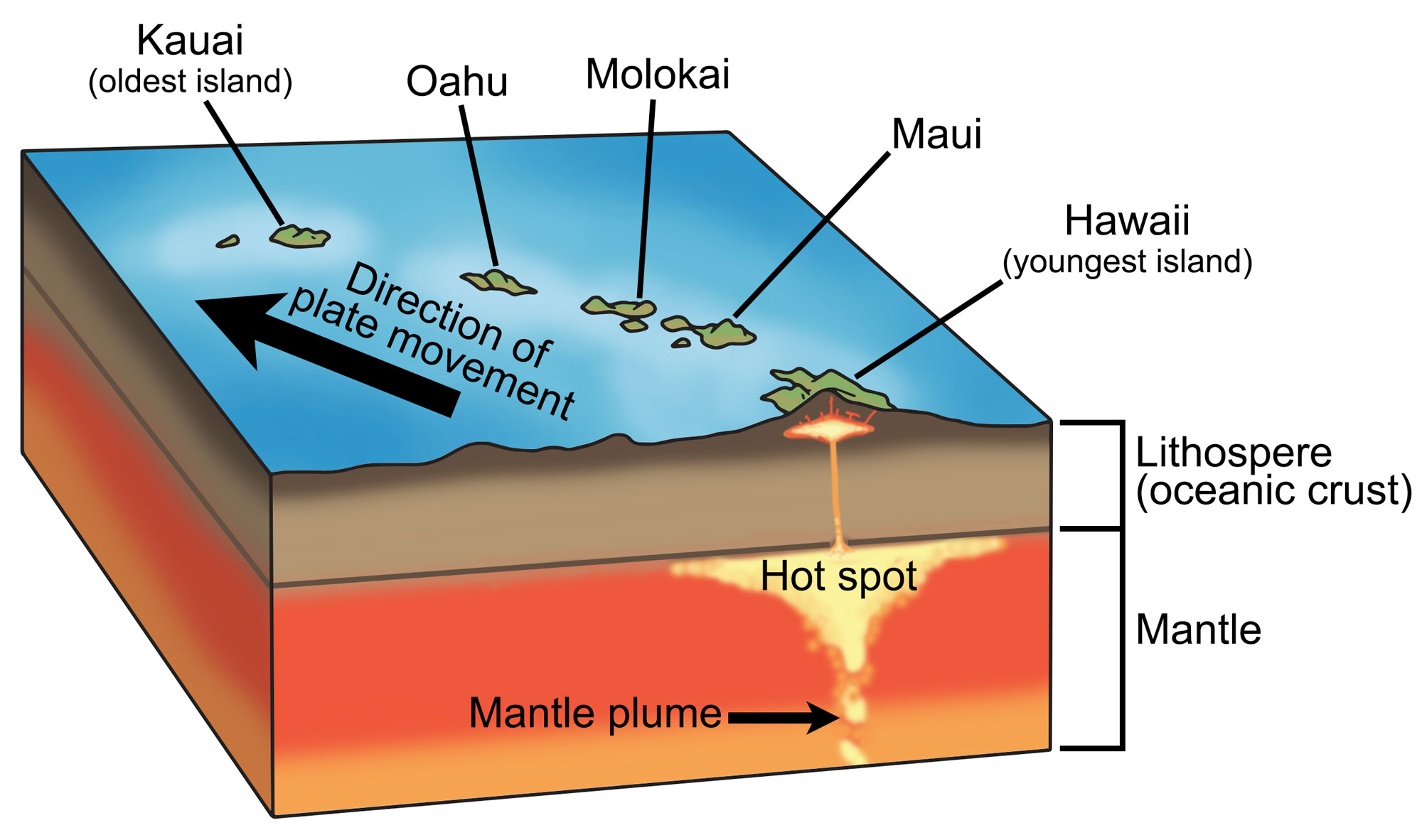
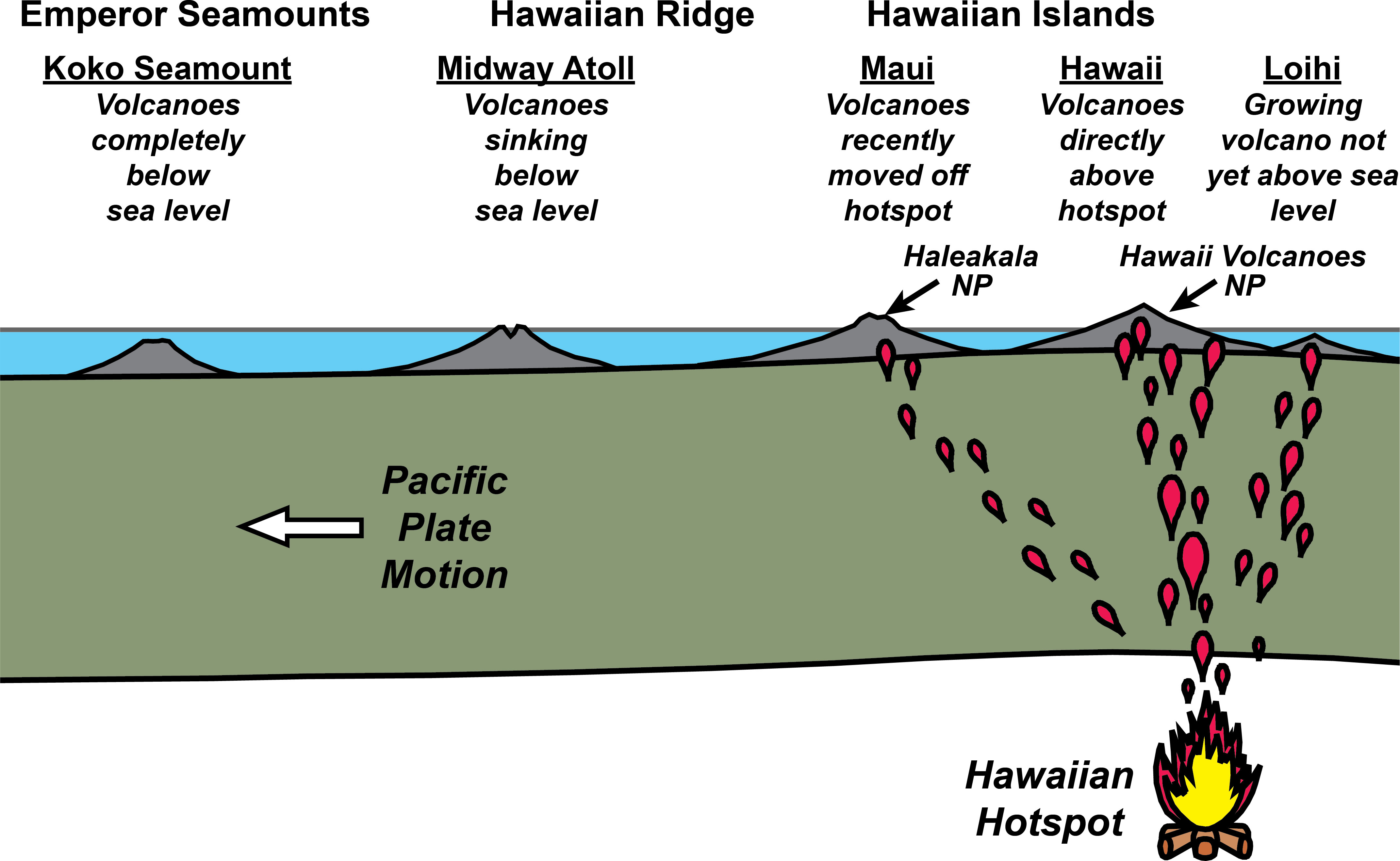
The Earth’s crust is divided into massive plates that constantly move and interact. Beneath the Pacific Plate, a region of unusually hot magma, known as a hotspot, has remained relatively fixed for millions of years. As the Pacific Plate drifted westward over this stationary hotspot, the intense heat from the mantle melted the overlying rock, creating magma. This magma, being less dense than the surrounding rock, rose to the surface.
The Perpetual Eruption: Building Mountains from the Sea
When this magma erupted through the ocean floor, it began to build up layer by layer. Each eruption of lava cooled and solidified, adding to the growing mass. Over immense periods, these underwater volcanic eruptions coalesced to form seamounts, which eventually grew tall enough to breach the ocean’s surface, thus giving birth to islands.
The process is akin to a giant industrial printer continuously depositing ink onto a moving sheet of paper. The hotspot is the stationary print head, and the Pacific Plate is the moving paper. As the plate moves, the erupting magma creates a new island over the hotspot, while the older islands, now carried away from the heat source by the plate’s movement, become dormant and begin to erode. This explains why the youngest islands, still actively experiencing volcanic activity, are found at the southeastern end of the archipelago, while the older, more eroded islands are located to the northwest.
The Big Island, also known as Hawaii Island, is the youngest and most volcanically active of the Hawaiian Islands. It is home to Mauna Loa, the world’s largest volcano by mass and volume, and Kīlauea, one of the most active volcanoes on Earth. These active volcanoes continue to add new land to the island, a process that can be witnessed firsthand by visitors, offering a rare glimpse into Earth’s formative processes. The dynamic nature of Hawaii Island means that its landscapes are constantly evolving, with new lava flows shaping the terrain and creating entirely new geological features.
A Chain of Islands: The Northwestward Migration
The Hawaiian Islands stretch in a long, curved chain approximately 1,500 miles long. This curvature is a direct result of the Pacific Plate’s rotational movement over the hotspot. As the plate has shifted over time, the hotspot has created a succession of islands, each progressively older than the one to its southeast.
This unique geological history has resulted in a remarkable diversity among the Hawaiian Islands. Each island, shaped by its age and distance from the hotspot, boasts its own distinct topography, flora, and fauna.
-
The Southeastern Islands ( Hawaii Island, Maui, Oahu, Kauai, and Niihau) are the youngest and most geologically active. They are characterized by towering volcanoes, recent lava flows, and rugged, nascent landscapes. Maui, for instance, is home to the dormant Haleakalā National Park, a massive shield volcano offering otherworldly volcanic landscapes. Oahu, while featuring older volcanic structures like the Diamond Head crater, is the most populated and developed, serving as the political and economic hub of the state. Kauai, the “Garden Isle,” is the oldest of the main Hawaiian Islands, showcasing dramatic erosion with its lush valleys and the magnificent Waimea Canyon, often referred to as the “Grand Canyon of the Pacific.”
-
The Northwestern Hawaiian Islands (a string of smaller islands, atolls, and reefs stretching towards Japan) are much older. These islands have been carried far from the hotspot by the Pacific Plate’s motion and have undergone significant erosion. Many have sunk back beneath the waves, forming coral reefs and atolls. This chain, protected as the Papahānaumokuākea Marine National Monument, is a critical habitat for numerous marine species and holds profound cultural significance for Native Hawaiians.
The Architects of Erosion: Shaping the Islands
Once an island has moved away from the direct influence of the hotspot, its fiery genesis begins to yield to the persistent forces of erosion. The tropical climate, with its abundant rainfall and trade winds, plays a crucial role in sculpting the volcanic landscapes.
The Power of Water and Wind
Rainwater, a constant feature of Hawaii’s tropical environment, carves intricate valleys and canyons into the soft volcanic rock. Rivers and streams flow down the mountainsides, wearing away at the land and carrying sediment to the sea. The relentless trade winds also contribute to erosion, gradually shaping coastlines and depositing sand to form beaches.
On islands like Kauai, the effects of erosion are dramatically evident. The sheer cliffs of the Na Pali Coast and the deep chasms of Waimea Canyon are stunning examples of how wind and water can transform a volcanic edifice into a landscape of breathtaking beauty and complexity. Over millions of years, these forces can wear down even the most massive volcanoes, eventually reducing them to low-lying atolls or submerging them entirely.
The Coral Reefs: A Living Legacy
As the volcanic islands erode and sink, they provide a foundation for the growth of coral reefs. Coral polyps, tiny marine invertebrates, secrete calcium carbonate to build hard skeletons. Over time, these skeletons accumulate, forming extensive coral reef systems that teem with marine life.
These reefs not only contribute to the unique biodiversity of the Hawaiian Islands but also play a vital role in protecting the shorelines from wave erosion. The vibrant coral gardens surrounding the islands offer unparalleled opportunities for snorkeling and diving, allowing visitors to explore a world bursting with color and activity. Many resorts, such as the Four Seasons Resort Oahu at Ko Olina, offer direct access to these pristine marine environments, providing guests with unforgettable aquatic experiences.
Implications for Tourism and Exploration
The geological story of the Hawaiian Islands directly influences the diverse travel experiences available to visitors. From the active volcanic landscapes of Hawaii Island to the lush, eroded beauty of Kauai, each island offers a unique encounter with the Earth’s dynamic forces.
Experiencing Volcanic Wonders
For those fascinated by geology and raw natural power, a visit to Hawaii Island is a must. Hawaiʻi Volcanoes National Park allows visitors to witness active lava flows, steam vents, and the dramatic summit caldera of Kīlauea. Hiking across solidified lava fields and exploring volcanic craters offers a tangible connection to the island’s fiery origins. Staying at a hotel like the Volcano House, which is situated within the park, provides an unparalleled proximity to these natural marvels.
Exploring Eroded Landscapes
The older islands offer a different, yet equally compelling, perspective on Hawaii’s geological evolution. The verdant valleys, towering sea cliffs, and dramatic canyons are a testament to the power of erosion over millennia. Exploring the Road to Hana on Maui reveals cascading waterfalls, lush rainforests, and stunning coastal vistas carved by time and the elements. Similarly, Kauai’s Waimea Canyon and Na Pali Coast are prime examples of nature’s artistry, sculpted by eons of wind and rain. Accommodations like the Grand Hyatt Kauai Resort & Spa provide a luxurious base from which to explore these magnificent, water-shaped landscapes.
The Cycle of Life and Land
The continuous cycle of volcanic creation and erosional transformation means that the Hawaiian Islands are always evolving. This dynamic process has not only shaped the land but also fostered incredible biodiversity. As new land emerges and old land erodes, unique ecosystems develop, adapted to specific geological conditions and microclimates. This ongoing geological narrative is fundamental to understanding the natural beauty, the cultural heritage, and the very essence of what makes the Hawaiian Islands such an extraordinary destination for travel, exploration, and lifelong learning. The story of their formation is an invitation to witness the Earth in action, a living laboratory of geological processes that continues to inspire awe and wonder.
LifeOutOfTheBox is a participant in the Amazon Services LLC Associates Program, an affiliate advertising program designed to provide a means for sites to earn advertising fees by advertising and linking to Amazon.com. Amazon, the Amazon logo, AmazonSupply, and the AmazonSupply logo are trademarks of Amazon.com, Inc. or its affiliates. As an Amazon Associate we earn affiliate commissions from qualifying purchases.