
The story of California’s acquisition by the United States is a fascinating saga of exploration, ambition, conflict, and transformation. Today, California stands as one of the world’s most sought-after destinations, a vibrant hub of culture, innovation, and breathtaking natural beauty. From the sun-drenched beaches of Southern California to the majestic forests of the north, its diverse landscapes attract millions of visitors annually, eager to experience everything from the glamour of Hollywood to the serene vineyards of Napa Valley. Yet, beneath this modern allure lies a rich and complex history, one shaped by centuries of competing claims and a pivotal conflict that redrew the map of North America. Understanding how this vast and valuable territory came under American sovereignty is not merely a historical exercise; it offers crucial insights into the evolving cultural tapestry, the iconic landmarks, and the distinctive lifestyle that characterize the Golden State today, making it a premier destination for travel, tourism, and diverse accommodation experiences.

The Lure of the West: Early Explorations and Claims
Before its acquisition by the United States, California was a sparsely populated, yet strategically significant, frontier territory. Its fertile lands, extensive coastline, and potential for trade routes to Asia made it a prize coveted by several global powers, even if its true value wasn’t fully understood until much later.
Spanish Colonial Influence
The earliest European claims to California originated with Spain. In 1542, Juan Rodríguez Cabrillo was the first European to explore the California coast, claiming it for the Spanish Crown. However, it wasn’t until the late 18th century that Spain began to actively colonize Alta California (Upper California) out of concern for Russian and British encroachment. The colonization effort was spearheaded by missionaries like Father Junípero Serra and military leaders such as Gaspar de Portolá. Their primary tools were a chain of 21 missions, presidios (military forts), and pueblos (civilian towns), stretching from San Diego to Sonoma. Iconic structures like the San Diego Mission and the Carmel Mission stand today as poignant landmarks reflecting this colonial era, attracting visitors interested in local culture and history. The Spanish period established ranching as a dominant economic activity and laid the groundwork for many of California’s future cities. When Mexico gained independence from Spain in 1821, Alta California became a remote northern province of the newly formed Mexican Republic. During the Mexican era, the mission lands were secularized and granted to prominent families, creating vast ranchos and a distinctive Californio culture that blended Spanish traditions with indigenous influences. This rich historical backdrop offers a unique dimension for travelers seeking authentic cultural experiences and a deeper understanding of California’s roots.
American Expansionist Ambitions
As the 19th century progressed, the concept of Manifest Destiny took firm root in the United States. This belief held that American expansion across the North American continent was divinely ordained, destined to spread democracy and capitalism from the Atlantic to the Pacific. California, with its access to the Pacific Ocean and potential for vast natural resources, became a crucial target for this expansion. American fur trappers, traders, and explorers began to trickle into Alta California in the 1820s and 1830s, mapping its terrain and reporting back on its potential. Figures like Jedediah Smith and later John C. Frémont, whose expeditions were often seen as thinly veiled acts of reconnaissance, generated significant interest back east. President James K. Polk, a fervent expansionist, made the acquisition of California a cornerstone of his foreign policy. He was particularly concerned that Great Britain might also eye the territory, further fueling American urgency. The growing number of American settlers in the region, coupled with Mexico’s increasingly tenuous control over its distant province, set the stage for inevitable confrontation. This era of exploration and initial settlement highlights the intrepid spirit that defines a particular kind of lifestyle traveler, those who seek out remote destinations and are drawn to stories of pioneering adventure, often staying in charming, historic inns or rustic lodges that preserve the feel of the frontier.
Seeds of Conflict: The Bear Flag Revolt and Border Tensions
The relationship between the United States and Mexico was already strained by disputes over the border with Texas, which had recently been annexed by the U.S. after gaining independence from Mexico. Against this backdrop of broader geopolitical tension, local events in California ignited the flames of a larger conflict.
The Bear Flag Revolt
In June 1846, even before news of the official declaration of the Mexican-American War reached California, a group of American settlers, agitated by rumors of Mexican efforts to expel them, launched a pre-emptive strike. Led by figures like William B. Ide and likely encouraged by the presence of John C. Frémont’s exploring party, these settlers captured the Mexican garrison at Sonoma. On June 14, 1846, they raised a crudely fashioned flag featuring a grizzly bear and a star, proclaiming the short-lived California Republic. This event, known as the Bear Flag Revolt, was a symbolic act of defiance against Mexican authority and effectively served as a local precursor to the larger war. The site in Sonoma where the revolt took place is now a state historic park, drawing visitors who want to connect with this pivotal moment in California history. It’s a perfect destination for history buffs, who might opt for boutique hotels or charming bed and breakfasts in the heart of Wine Country, blending historical exploration with gastronomic tourism.
Escalating Diplomatic Failures
The Bear Flag Revolt was a localized flashpoint within a much broader diplomatic breakdown. President Polk had repeatedly attempted to purchase California and New Mexico from Mexico, but these offers were rebuffed due to rising nationalist sentiment in Mexico City and Mexico’s understandable reluctance to cede vast territories. The primary point of contention, however, was the border of Texas. When American troops, under General Zachary Taylor, advanced into the disputed territory between the Nueces River and the Rio Grande, hostilities erupted. Following a skirmish, Polk declared that Mexico had “shed American blood upon American soil,” providing the pretext for war. While the main theater of the Mexican-American War unfolded in Texas and central Mexico, California became a significant secondary front, crucial for achieving America’s continental aspirations. The failure of diplomacy underscores how geopolitical ambitions often lead to conflict, changing the course of history and shaping future travel landscapes. For those interested in this aspect of history, exploring border towns and their historical narratives provides a unique tourism experience, often complemented by unique local culture and food.
The Mexican-American War and the Treaty of Guadalupe Hidalgo
The Mexican-American War, fought from 1846 to 1848, was the decisive event that led to California’s acquisition. It was a conflict born out of territorial disputes and American expansionist desires, with profound implications for both nations.
Military Engagements in California
Upon the outbreak of the Mexican-American War, American forces quickly moved to secure California. Commodore John D. Sloat, commanding the U.S. Pacific Squadron, sailed into Monterey Bay on July 7, 1846, and raised the American flag, declaring California for the United States. He was soon joined by Commodore Robert F. Stockton, who took command and orchestrated a rapid takeover of key Mexican settlements, including Los Angeles and San Diego. Meanwhile, General Stephen W. Kearny led the “Army of the West” overland from New Mexico, arriving in California to reinforce American control. While initially met with little resistance, local Californio forces, led by figures like Andrés Pico and José Antonio Carrillo, mounted a spirited, though ultimately unsuccessful, counter-insurgency. Notable battles included the Battle of San Pasqual in December 1846, where Kearny’s forces suffered significant casualties, and the Battles of Rio San Gabriel and La Mesa in January 1847, which solidified American control over Los Angeles. These engagements marked the end of Mexican resistance in California. Today, the sites of these historical clashes, often marked by plaques and monuments, offer a compelling backdrop for visitors interested in military history and the expansion of the United States. Such journeys can be enhanced by staying in well-appointed hotels or cozy apartments in cities like San Diego or Los Angeles, allowing easy access to both historical landmarks and modern attractions.
The Treaty of Guadalupe Hidalgo
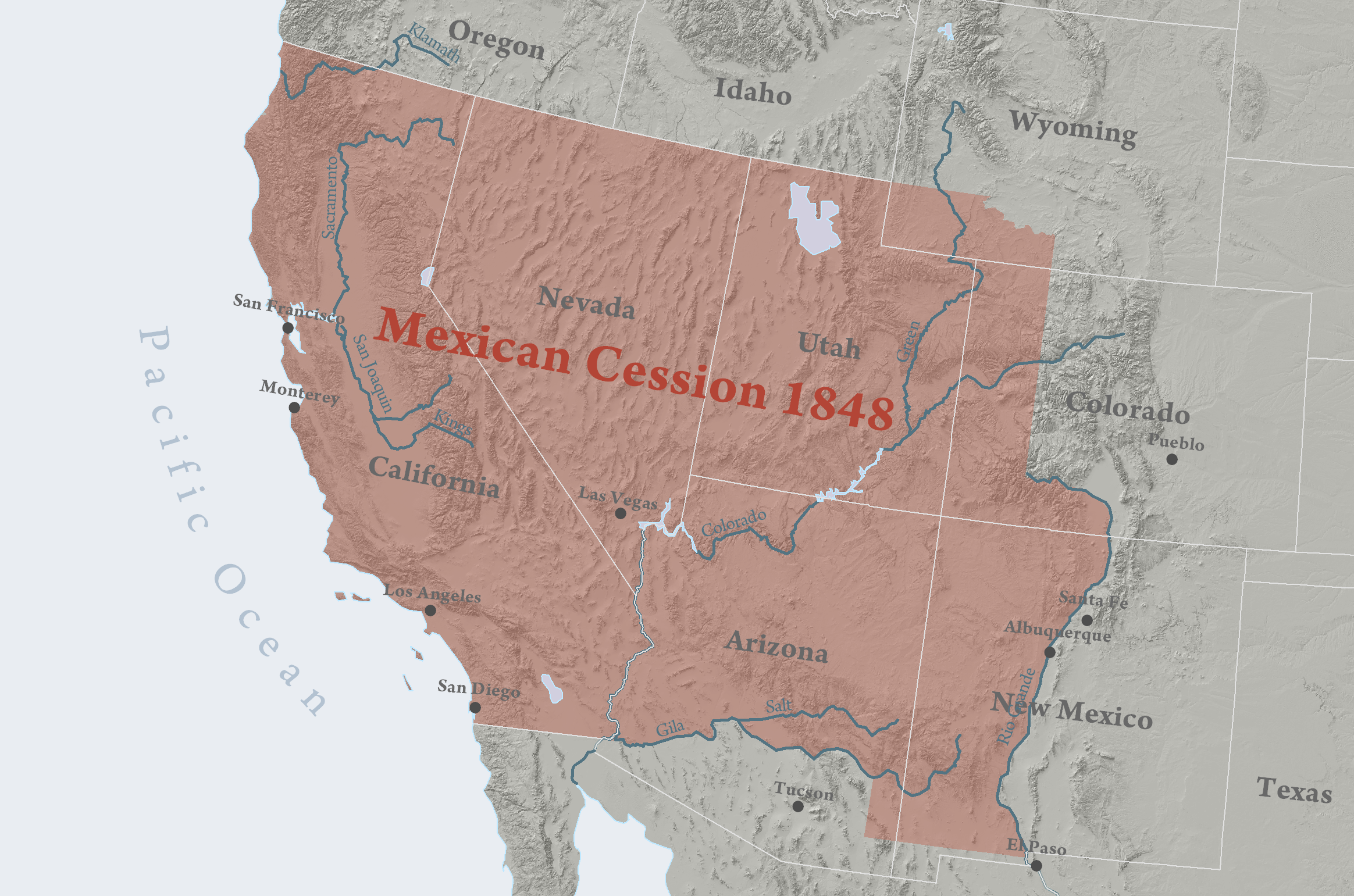
The war officially concluded with the signing of the Treaty of Guadalupe Hidalgo on February 2, 1848. This momentous agreement, negotiated between the United States and Mexico in Guadalupe Hidalgo (now a neighborhood in Mexico City), confirmed the United States’ annexation of Texas and, most significantly, compelled Mexico to cede vast territories totaling approximately 525,000 square miles. This enormous land transfer, known as the Mexican Cession, included all of present-day California, Nevada, Utah, and parts of Arizona, New Mexico, Colorado, and Wyoming. In exchange, the United States paid Mexico $15 million and agreed to assume $3.25 million in claims that American citizens had against the Mexican government. The Treaty of Guadalupe Hidalgo fundamentally reshaped the geopolitical landscape of North America and officially completed the territorial expansion of the United States to the Pacific Ocean. For California, this treaty was the definitive act of acquisition, paving the way for its rapid transformation and eventual statehood. The legacy of this treaty is still felt today, influencing cultural identities and property rights across the Southwest. It’s a crucial piece of history for anyone visiting the region, offering context to the blend of cultures found in modern California and other states within the Mexican Cession, providing a unique angle for cultural tourism.
The Gold Rush and California’s Statehood: A Rapid Transformation
Coincidentally, just days before the Treaty of Guadalupe Hidalgo was signed, an event occurred in California that would accelerate its development beyond anyone’s wildest dreams.
Discovery at Sutter’s Mill
On January 24, 1848, James W. Marshall, a carpenter working for John Sutter, discovered flecks of gold in the American River near Coloma while building a sawmill for Sutter. This discovery at Sutter’s Mill ignited the California Gold Rush, one of the most significant mass migrations in human history. News of the gold strike, initially met with skepticism, spread rapidly, first within California, then across the United States, and finally around the world. The prospect of instant wealth lured hundreds of thousands of “forty-niners” (named for the year 1849) to California by land and sea. This influx of people transformed the once-remote territory overnight. Ghost towns and historic mining communities throughout the Gold Country, such as Columbia and Placerville, are now popular attractions, offering a tangible connection to this frenetic era. Visitors can pan for gold, explore historic buildings, and immerse themselves in the rugged lifestyle of the miners, often opting for unique accommodation in restored historic inns or charming boutique hotels that evoke the period.
A Flood of Newcomers and Statehood
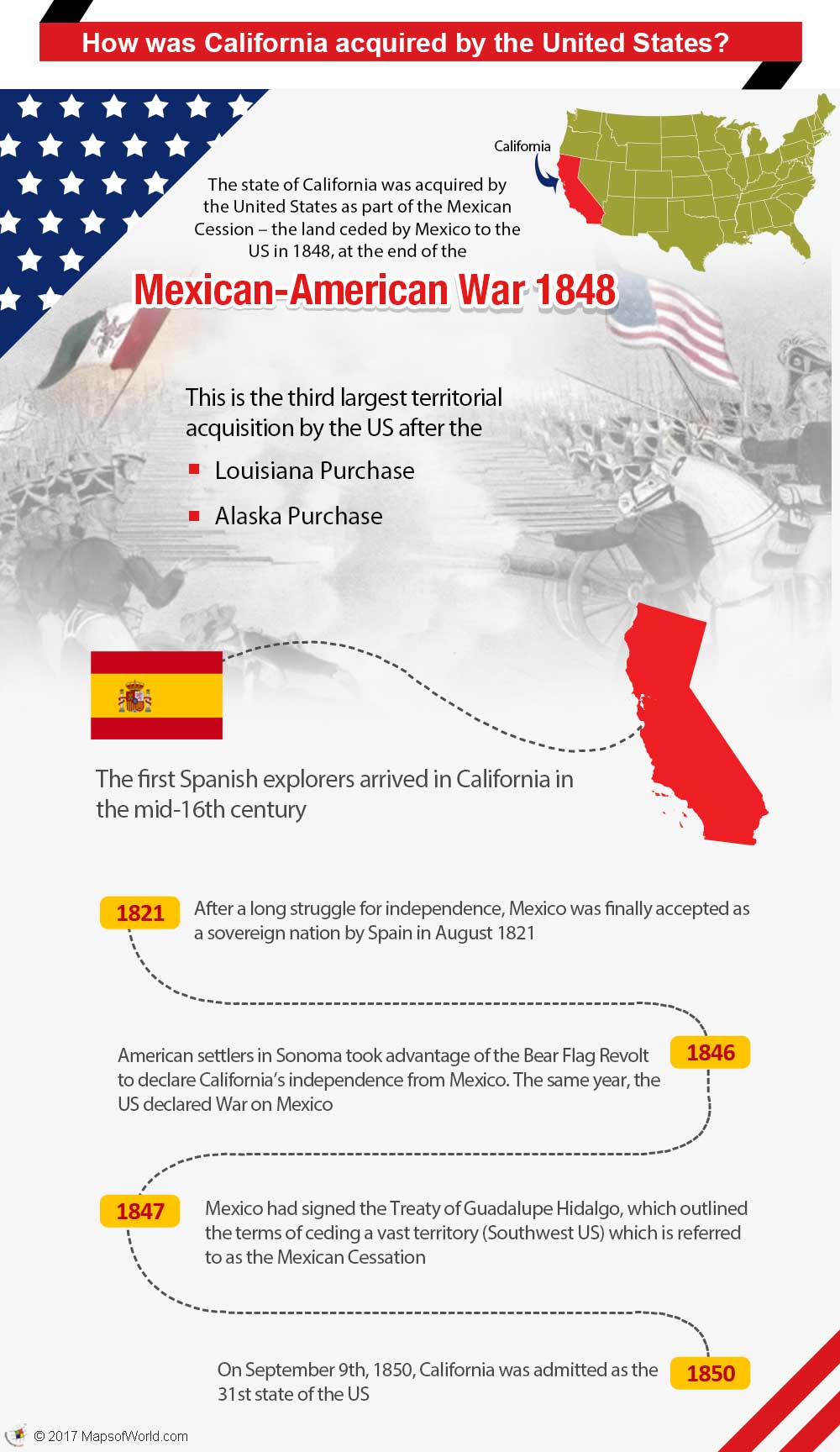
The Gold Rush brought unprecedented population growth and cultural diversity to California. Cities like San Francisco, a sleepy port town before 1848, exploded in size, becoming a bustling metropolis and a gateway to the goldfields. The population boom created an urgent need for governance and infrastructure. Despite being newly acquired and lacking a formal territorial government, the sheer number of residents and the rapid development propelled California towards statehood at an astonishing pace. In 1849, a constitutional convention was held, and a state constitution was drafted. On September 9, 1850, as part of the Compromise of 1850 (a series of legislative measures aimed at balancing free and slave states), California was admitted to the Union as the 31st state, entering as a free state. This rapid ascent from a sparsely populated Mexican province to a full-fledged American state in just over two years is unparalleled in U.S. history. The legacy of the Gold Rush and subsequent statehood is evident in California’s diverse demographics, entrepreneurial spirit, and its enduring appeal as a land of opportunity. Today, San Francisco continues to be a top destination, offering a wide range of hotels from luxury resorts to budget-friendly apartments, catering to every type of traveler interested in its dynamic history and vibrant present.
California Today: A Legacy of Acquisition and a Premier Travel Destination
The historical process through which the United States acquired California is not merely a chapter in a history book; it is the foundational narrative that continues to shape the state’s identity, its cultural richness, and its profound appeal as a global travel destination.
Cultural Tapestry and Historical Sites
California’s acquisition story left an indelible mark on its local culture, creating a unique blend of indigenous, Spanish, Mexican, and American influences. This rich tapestry is celebrated in its architecture, cuisine, traditions, and the names of its cities and landmarks. Visitors can explore the remnants of the Spanish mission system, such as the beautiful Mission San Juan Capistrano, or delve into the Californio ranching era at preserved haciendas. The historical districts of cities like San Diego’s Old Town or Los Angeles’ El Pueblo de Los Angeles Historical Monument offer immersive experiences into this multi-layered past. Even the very concept of California as a “golden” land harks back to the transformative Gold Rush era. These historical sites are not just static monuments; they are vibrant spaces where local food, music, and arts reflect the diverse origins of the state’s population. For travelers seeking a deeper connection to their chosen destination, these landmarks offer invaluable insights into the forces that forged modern California.
Modern Travel and Tourism
Today, California thrives as a powerhouse of tourism, offering an unparalleled array of attractions and experiences for every type of traveler. Its acquisition history has directly contributed to its status as a multifaceted destination. The diverse geography, from the deserts of Palm Springs to the towering redwoods of Northern California and the iconic national parks like Yosemite and Joshua Tree, offers endless opportunities for outdoor activities and adventure.
For those seeking a luxury travel lifestyle, world-class resorts in Beverly Hills or exclusive villas in Laguna Beach provide opulent amenities and unparalleled service. Napa Valley offers gourmet food and wine tourism experiences, with boutique hotels nestled among picturesque vineyards.
Budget travel options are equally abundant, from charming Airbnb apartments in San Francisco to rustic cabins near the national parks. Family trips flock to Disneyland in Anaheim or the vibrant beaches of Santa Monica, while business stays are easily accommodated in the modern suites and convention-ready hotels of Los Angeles and Silicon Valley. From comprehensive travel guides to detailed booking tips for long-term stays, the infrastructure exists to support every traveler’s needs. The blending of historical narratives with modern amenities, stunning natural attractions, and a diverse cultural scene makes California an endlessly fascinating and rewarding place to visit, truly a reflection of its dramatic past and the vibrant present it has created.
In conclusion, California’s journey to becoming part of the United States was a rapid and transformative process, driven by American expansionism and solidified by the Mexican-American War and the Treaty of Guadalupe Hidalgo. The serendipitous discovery of gold immediately after its acquisition propelled it into an era of unprecedented growth, quickly elevating it to statehood. This unique history has endowed California with a distinctive character, a blend of cultures, and a landscape dotted with historical landmarks that stand as testaments to its dramatic past. Today, this rich heritage, combined with its natural wonders and innovative spirit, ensures that California remains a premier global destination for travel and tourism, inviting millions to explore its history, enjoy its diverse lifestyle offerings, and experience its world-class accommodations and attractions.
LifeOutOfTheBox is a participant in the Amazon Services LLC Associates Program, an affiliate advertising program designed to provide a means for sites to earn advertising fees by advertising and linking to Amazon.com. Amazon, the Amazon logo, AmazonSupply, and the AmazonSupply logo are trademarks of Amazon.com, Inc. or its affiliates. As an Amazon Associate we earn affiliate commissions from qualifying purchases.