
The story of how the United States acquired Texas is a captivating saga of ambition, conflict, and the relentless march of westward expansion, deeply intertwined with cultural exchange and the quest for new beginnings. Today, Texas stands as a vibrant hub of culture, history, and natural beauty, drawing travelers from across the globe to explore its unique blend of cowboy heritage, cosmopolitan cities like San Antonio and Austin, and iconic landmarks such as The Alamo. Yet, behind its modern appeal lies a tumultuous past, a complex narrative that saw it transform from a remote Spanish frontier to an independent republic, and finally, to the 28th state of the American union. This journey wasn’t a simple transaction but a series of dramatic events, driven by the dreams of settlers, the policies of nations, and the battles fought for sovereignty. Understanding this history not only illuminates the roots of Texan identity but also offers a profound appreciation for the diverse influences that shape this remarkable destination, making it a must-visit for anyone interested in the rich tapestry of North American history and travel.
Early Spanish and Mexican Influence: A Frontier of Opportunity
Long before it was part of the United States, the vast territory known as Tejas was a distant and often overlooked frontier of Spain’s expansive colonial empire. For centuries, Spanish missionaries and soldiers established outposts, primarily to protect against French encroachment and to convert indigenous populations, but permanent settlement remained sparse. The landscape, characterized by vast plains, rugged mountains, and fertile river valleys, held immense potential, yet its remoteness made it challenging to control and develop from distant Mexico City.
The geopolitical landscape shifted dramatically in 1821 when Mexico successfully won its independence from Spain. Suddenly, the new Mexican government inherited this expansive, sparsely populated northern territory. Eager to strengthen its hold, develop the land, and create a buffer against potential foreign incursions or Native American raids, Mexico adopted a progressive immigration policy. This policy, known as the empresario system, offered large land grants to individuals who pledged to bring in American and European settlers. These new colonists were required to convert to Catholicism, become Mexican citizens, and abide by Mexican laws. This set the stage for a wave of migration that would forever alter the demographic and political future of Texas.
The Lure of Tejas: American Settlement Begins
The opportunity presented by the empresario system proved irresistible to many Americans, particularly those from the southern United States. Economic pressures, the desire for cheap, fertile land, and the spirit of adventure fueled a steady stream of migrants westward. For families seeking a fresh start or new avenues for agricultural prosperity, especially cotton cultivation, Tejas represented a promising frontier. The prospect of acquiring vast tracts of land for a fraction of the cost in the United States was a powerful motivator, promising a lifestyle of abundance and opportunity.
Among the most significant figures in this early period was Stephen F. Austin, often revered as the “Father of Texas.” Following his father Moses Austin’s dying wish, Stephen negotiated with the new Mexican government to honor the original land grant. In 1821, he led the first authorized American colonists into Texas, settling along the Brazos River. His colony, centered around San Felipe de Austin, became a model for future settlements, attracting thousands more. These early settlers, including doctors, farmers, artisans, and merchants, laid the foundations for communities, schools, and local governance, creating a burgeoning American presence within Mexican territory. Today, visitors can explore historical sites and museums that tell the story of these pioneering families, offering a glimpse into the arduous yet hopeful lifestyle of early Texan settlers and the challenges they faced in this rugged land. These heritage sites are not just landmarks; they are portals to understanding the foundational culture of modern Texas, appealing to travelers keen on experiencing authentic historical experiences.
Seeds of Conflict: Cultural Clashes and Revolutionary Stirrings
Despite the initial success of the empresario system, inherent tensions began to emerge between the American settlers and the Mexican government. These tensions, fueled by cultural differences, political disagreements, and economic disparities, gradually simmered and eventually boiled over into open conflict. The American settlers, many of whom had brought enslaved people with them, found Mexican laws, which were generally against slavery, to be restrictive. They were also accustomed to a common-law legal system and a greater degree of self-governance than what the centralized Mexican government was willing to grant.
The Mexican government, on its part, grew increasingly wary of the burgeoning American population. The sheer numbers of new arrivals, who often maintained strong cultural ties to the United States and showed little inclination to fully integrate into Mexican society, raised concerns about sovereignty and loyalty. By the late 1820s and early 1830s, fears of American expansionism, particularly after the United States’ purchase of Louisiana and the negotiation of the Adams-Onís Treaty which clarified the border, led Mexico to implement stricter controls.
Growing Tensions and the Path to Independence
Key among Mexico’s efforts to assert control was the Law of April 6, 1830, which aimed to curb American immigration, impose customs duties, and reinforce federal authority. This law was met with significant resentment by the colonists, who saw it as an infringement on their rights and a threat to their economic livelihoods. The political landscape in Mexico itself was also unstable, with frequent changes in leadership and shifting ideologies between federalism and centralism. When General Antonio López de Santa Anna rose to power, eventually consolidating authority and centralizing the government, it further alienated the Texan colonists who desired more autonomy.
Attempts at peaceful resolution, including Stephen F. Austin’s diplomatic missions to Mexico City, ultimately failed. Austin himself was imprisoned for a time, further exacerbating distrust. The colonists, many of whom had already developed a strong sense of a unique Texan identity distinct from both the United States and Mexico, began to consider more drastic measures. The first shots of the revolution are often cited as the Battle of Gonzales in October 1835, where Texan settlers famously defended a cannon with a flag emblazoned “Come and Take It,” marking a definitive break from Mexican rule. This period of rising tensions is a fascinating area for travelers interested in political history and the psychology of colonial resistance, with many small towns in Texas preserving monuments and museums dedicated to these early flashpoints.
The Texas Revolution: Battles for Freedom
The ensuing Texas Revolution was a series of dramatic military engagements that ultimately secured Texan independence. The conflict quickly escalated, with Texan forces achieving early victories, but also suffering devastating losses. The most iconic and tragic event was the Siege of The Alamo in March 1836. A small band of Texan defenders, including legendary figures like Davy Crockett and Jim Bowie, held out for 13 days against Santa Anna’s vastly superior forces before being overrun and killed to the last man. The sacrifice at the Alamo, though a military defeat, became a powerful rallying cry: “Remember the Alamo!” It galvanized Texan resolve and instilled a fierce determination for independence.
Shortly after the Alamo, another tragedy unfolded at Goliad. Texan forces, under Colonel James Fannin, surrendered to Mexican troops and were subsequently executed under Santa Anna’s orders. The Goliad Massacre further fueled the Texans’ desire for vengeance and freedom.
The tide of the revolution turned decisively on April 21, 1836, at the Battle of San Jacinto. Under the brilliant leadership of General Sam Houston, the Texan army launched a surprise attack on Santa Anna’s forces, routing the Mexican army in just 18 minutes and capturing Santa Anna himself. This decisive victory secured Texas’s independence. Days before the battle, on March 2, 1836, Texan delegates had already met at Washington-on-the-Brazos to formally declare independence, drafting a constitution and forming an interim government. These historical sites, including the preserved mission at The Alamo, the Goliad State Park, and the San Jacinto Battleground State Historic Site, are significant landmarks for tourists. They offer immersive experiences, from guided tours and reenactments to comprehensive museums, allowing visitors to walk in the footsteps of history and truly feel the weight of the events that shaped Texas. For those interested in historical tourism, these destinations provide an unparalleled opportunity to connect with the past and understand the sacrifices made for Texan freedom.

The Lone Star Republic: A Decade of Sovereignty
With victory at San Jacinto, Texas emerged as an independent nation – the Republic of Texas. For nearly a decade, from 1836 to 1845, it navigated the treacherous waters of international diplomacy, economic hardship, and internal strife, proudly flying its “Lone Star” flag. This period was marked by the immense challenge of building a nation from scratch, grappling with issues ranging from governance and defense to economic stability and territorial claims.
Governing a Young Nation
The early years of the Republic were turbulent. Sam Houston was overwhelmingly elected as its first president, tasked with establishing a functional government, organizing a military, and fostering diplomatic relations. The Republic faced monumental challenges: a crippling national debt, constant border disputes with Mexico (which refused to recognize its independence), and ongoing conflicts with Native American tribes. The capital city moved several times during this period, reflecting the instability and strategic considerations of the young nation, from Columbia to Houston, and finally to Austin, a site chosen for its central location and scenic beauty, though still vulnerable on the frontier.
Houston’s presidency was largely characterized by efforts to maintain peace with Native American groups, pursue annexation by the United States, and avoid further conflict with Mexico. His successor, Mirabeau B. Lamar, held a more aggressive stance, advocating for an independent and expansive Texas, pushing for military campaigns against Native Americans, and attempting to extend Texan control over disputed territories, including parts of present-day New Mexico. These contrasting leadership styles highlighted the internal divisions and competing visions for the Republic’s future. For travelers today, exploring the historic districts of Houston and Austin offers a tangible connection to this era, with many buildings and landmarks dating back to the Republic. The Texas State Capitol building in Austin, for example, stands as a testament to the state’s enduring legacy of self-governance and serves as a major tourist attraction.
The Quest for Annexation
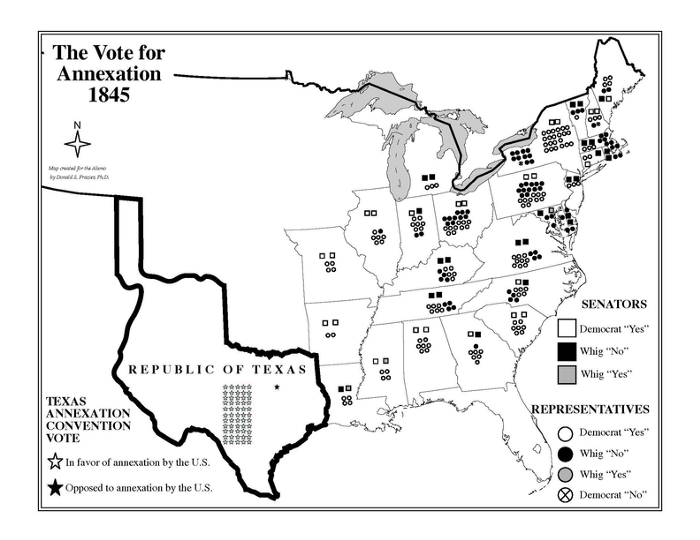
From its very inception, the question of annexation by the United States loomed large for the Republic of Texas. Many Texans, predominantly those of American origin, desired to join the Union, seeing it as the most viable path to security and prosperity. However, annexation was a contentious issue within the United States. The primary obstacle was the deeply divisive issue of slavery. Texas would enter as a slave state, upsetting the delicate balance between free and slave states in the U.S. Congress and igniting fierce political debates, particularly among the Democratic Party and the Whig Party. Anti-slavery advocates strongly opposed annexation, fearing it would expand the institution of slavery and potentially lead to war with Mexico.
Furthermore, the United States hesitated to absorb Texas due to concerns about provoking Mexico, which still considered Texas a rebellious province. Successive U.S. administrations, including that of President Andrew Jackson and President Martin Van Buren, deferred the issue. This prolonged delay, however, prompted the Republic of Texas to explore other options. Great Britain and France, interested in limiting U.S. expansion and securing trade opportunities, began to cultivate diplomatic ties with Texas, even offering to mediate recognition from Mexico in exchange for Texas remaining an independent nation and abolishing slavery. This international interest added a complex layer to the annexation debate, turning the fate of Texas into a strategic chess game on the North American continent. The political maneuvering and diplomatic exchanges of this era are fascinating for visitors interested in international relations and the formation of national borders, highlighting the global context of Texas’s journey to statehood.
The Path to Statehood: Annexation and War
The destiny of Texas ultimately hinged on a confluence of political ambition, expansionist ideology, and a series of critical decisions made in Washington D.C. The decade of Texan independence highlighted the challenges of maintaining sovereignty for a nascent nation, especially one coveted by a powerful neighbor and still disputed by its former sovereign. The stage was set for Texas to finally become part of the United States, but not without significant political fallout and, ultimately, military conflict.
The Controversial Annexation of Texas
The stalemate over Texan annexation in the United States began to shift in the early 1840s. President John Tyler, a strong proponent of expansion, made a renewed push for annexation. He viewed Texas not only as a strategic gain but also as a means to enhance Southern power and secure the nation’s southwestern frontier. After a treaty for annexation was defeated in the Senate in 1844, largely due to continued anti-slavery sentiment and fear of war with Mexico, the issue became a central theme of the 1844 presidential election.
The election of James K. Polk, a staunch expansionist who campaigned on a platform of “Manifest Destiny” (the belief in the inevitable westward expansion of the United States), sent a clear signal. Before Polk even took office, the outgoing President Tyler, interpreting Polk’s victory as a mandate, pushed through annexation via a joint resolution of U.S. Congress. This method, requiring only a simple majority in both houses rather than a two-thirds Senate majority for a treaty, circumvented the opposition. On December 29, 1845, Texas officially became the 28th state of the United States. This act was seen by many Texans as the culmination of their struggle for independence and a secure future, promising a lifestyle of stability and growth. For the travel enthusiast, understanding this political maneuvering provides a deeper context to the current state of affairs and the cultural amalgamation that defines Texas today, reflecting on how decisions made in distant capitals shaped local destinies.

The Mexican-American War and Border Resolution
As anticipated, Mexico viewed the annexation of Texas as an act of war and a blatant violation of its sovereignty. The immediate flashpoint was the disputed border. Texas claimed its southern border extended to the Rio Grande, while Mexico maintained the border was the Nueces River, further north. When President Polk dispatched U.S. troops under General Zachary Taylor into the disputed territory between the two rivers, skirmishes ensued, providing Polk with the pretext to declare war in May 1846.
The ensuing Mexican-American War was fought over two years and resulted in a decisive victory for the United States. The war officially ended with the signing of the Treaty of Guadalupe Hidalgo in February 1848. Under the terms of this treaty, Mexico formally recognized the Rio Grande as the southern boundary of Texas and ceded vast territories to the United States, including all or parts of present-day California, Nevada, Utah, Arizona, New Mexico, Colorado, Wyoming, and Kansas. In return, the U.S. paid Mexico $15 million and assumed about $3.25 million in claims by U.S. citizens against Mexico.
This war not only secured Texas’s place within the Union and solidified its southern border but also significantly expanded the territory of the United States, fulfilling the vision of Manifest Destiny. The conflict had profound and lasting effects on both nations, shaping their borders, demographics, and national identities. Today, the legacy of this conflict can be explored through various historical markers, museums, and cultural sites throughout Texas and the wider American Southwest, offering travelers insights into the complex interactions between cultures and nations. These locations offer a unique experience for those interested in the cultural and historical impact of these transformative events, providing a deeper understanding of the diverse heritage that makes Texas such a compelling destination for tourism.
The journey of Texas from a Spanish frontier to a U.S. state is a compelling narrative of perseverance, conflict, and the forging of identity. From the early Spanish missions that dot the landscape, still standing as remarkable landmarks, to the iconic battlefields of the Texas Revolution and the historic cities that served as its capitals, every step of this journey contributes to the vibrant culture and rich history that define the state today. For the modern traveler, Texas offers an unparalleled opportunity to explore this past, to walk through preserved historical sites, discover the roots of its unique lifestyle, and engage with the stories of the diverse peoples who shaped its destiny. Whether you are seeking historical immersion, cultural exploration, or simply a destination steeped in a dramatic and unforgettable past, Texas promises an enriching travel experience that brings history to life.
LifeOutOfTheBox is a participant in the Amazon Services LLC Associates Program, an affiliate advertising program designed to provide a means for sites to earn advertising fees by advertising and linking to Amazon.com. Amazon, the Amazon logo, AmazonSupply, and the AmazonSupply logo are trademarks of Amazon.com, Inc. or its affiliates. As an Amazon Associate we earn affiliate commissions from qualifying purchases.